70 books match the query 'Mexican American authors' and 5 start with s
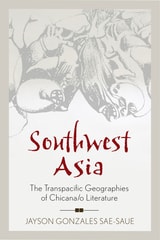
cover of Southwest Asia: The Transpacific Geographies of Chicana/o Literature

Southwest Asia

The Transpacific Geographies of Chicana/o Literature

Jayson Gonzales Sae-Saue

Rutgers University Press, 2016
Chicana/o literature is justly acclaimed for the ways it voices opposition to the dominant Anglo culture, speaking for communities ignored by mainstream American media. Yet the world depicted in these texts is not solely inhabited by Anglos and Chicanos; as this groundbreaking new book shows, Asian characters are cast in peripheral but nonetheless pivotal roles.  
 
Southwest Asia investigates why key Chicana/o writers, including Américo Paredes, Rolando Hinojosa, Oscar Acosta, Miguel Méndez, and Virginia Grise, from the 1950s to the present day, have persistently referenced Asian people and places in the course of articulating their political ideas. Jayson Gonzales Sae-Saue takes our conception of Chicana/o literature as a transnational movement in a new direction, showing that it is not only interested in North-South migrations within the Americas, but is also deeply engaged with East-West interactions across the Pacific.  He also raises serious concerns about how these texts invariably marginalize their Asian characters, suggesting that darker legacies of imperialism and exclusion might lurk beneath their utopian visions of a Chicana/o nation. 
 
Southwest Asia provides a fresh take on the Chicana/o literary canon, analyzing how these writers have depicted everything from interracial romances to the wars Americans fought in Japan, Korea, and Vietnam.  As it examines novels, plays, poems, and short stories, the book makes a compelling case that Chicana/o writers have long been at the forefront of theorizing U.S.–Asian relations. 
 
[more]
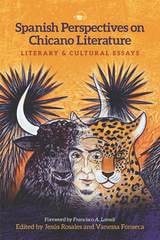
cover of Spanish Perspectives on Chicano Literature: Literary and Cultural Essays

Spanish Perspectives on Chicano Literature

Literary and Cultural Essays

Vanessa Fonseca and Jesús Rosales

The Ohio State University Press, 2017

In their comprehensive study Spanish Perspectives on Chicano Literature: Literary and Cultural Essays, editors Jesús Rosales and Vanessa Fonseca provide a fresh set of perspectives on the field of Chicano literary and cultural studies. Composed of essays by scholars who live and work in the United States in addition to those who work primarily in Spain, the book examines how Spanish literary critics view and study Chicano literature. In general, these critics demonstrate a deep interest in Chicano culture in relation to its American, Mexican, and Spanish identities, or multiple cultural mestizajes.
 
 
For Chicanos this interest is intriguing, for they see Spain’s vision of the Chicano both with inviting enthusiasm and justifiable reservation—enthusiasm because this interest shows a humanistic concern in understanding their social issues (national identity, bilingualism, immigration, feminism, and so on) in relation to Spain’s own, and reservation because there still prevails an “open wound” from their historical connection with that country. In other words, a lingering Spanish colonial presence still exists in the Chicano psyche. These Spanish perspectives are important to consider as Chicano literature reflects on its place in twenty-first-century America and its transnational and global aspirations.
 
[more]
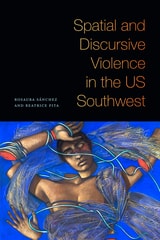
cover of Spatial and Discursive Violence in the US Southwest

Spatial and Discursive Violence in the US Southwest

Rosaura Sánchez and Beatrice Pita

Duke University Press, 2020
In Spatial and Discursive Violence in the US Southwest Rosaura Sánchez and Beatrice Pita examine literary representations of settler colonial land enclosure and dispossession in the history of New Mexico, Texas, and Oklahoma. Sánchez and Pita analyze a range of Chicano/a and Native American novels, films, short stories, and other cultural artifacts from the eighteenth century to the present, showing how Chicano/a works often celebrate an idealized colonial Spanish past as a way to counter stereotypes of Mexican and Indigenous racial and ethnic inferiority. As they demonstrate, these texts often erase the participation of Spanish and Mexican settlers in the dispossession of Indigenous lands. Foregrounding the relationship between literature and settler colonialism, they consider how literary representations of land are manipulated and redefined in ways that point to the changing practices of dispossession. In so doing, Sánchez and Pita prompt critics to reconsider the role of settler colonialism in the deep history of the United States and how spatial and discursive violence are always correlated.
[more]
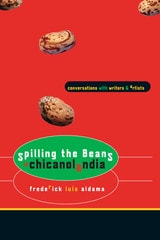
cover of Spilling the Beans in Chicanolandia: Conversations with Writers and Artists

Spilling the Beans in Chicanolandia

Conversations with Writers and Artists

By Frederick Luis Aldama

University of Texas Press, 2006

Since the 1980s, a prolific "second wave" of Chicano/a writers and artists has tremendously expanded the range of genres and subject matter in Chicano/a literature and art. Building on the pioneering work of their predecessors, whose artistic creations were often tied to political activism and the civil rights struggle, today's Chicano/a writers and artists feel free to focus as much on the aesthetic quality of their work as on its social content. They use novels, short stories, poetry, drama, documentary films, and comic books to shape the raw materials of life into art objects that cause us to participate empathetically in an increasingly complex Chicano/a identity and experience.

This book presents far-ranging interviews with twenty-one "second wave" Chicano/a poets, fiction writers, dramatists, documentary filmmakers, and playwrights. Some are mainstream, widely recognized creators, while others work from the margins because of their sexual orientations or their controversial positions. Frederick Luis Aldama draws out the artists and authors on both the aesthetic and the sociopolitical concerns that animate their work. Their conversations delve into such areas as how the artists' or writers' life experiences have molded their work, why they choose to work in certain genres and how they have transformed them, what it means to be Chicano/a in today's pluralistic society, and how Chicano/a identity influences and is influenced by contact with ethnic and racial identities from around the world.
[more]
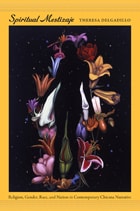
cover of Spiritual Mestizaje: Religion, Gender, Race, and Nation in Contemporary Chicana Narrative

Spiritual Mestizaje

Religion, Gender, Race, and Nation in Contemporary Chicana Narrative

Theresa Delgadillo

Duke University Press, 2011

Gloria Anzaldúa’s narrative and theoretical innovations, particularly her concept of mestiza consciousness, have influenced critical thinking about colonialism, gender, history, language, religion, sexuality, spirituality, and subjectivity. Yet Anzaldúa’s theory of spiritual mestizaje has not been extensively studied until now. Taking up that task, Theresa Delgadillo reveals spiritual mestizaje as central to the queer feminist Chicana theorist’s life and thought, and as a critical framework for interpreting contemporary Chicana literary and visual narratives. First mentioned by Anzaldúa in her pioneering book Borderlands/La Frontera, spiritual mestizaje is a transformative process of excavating bodily memory to develop a radical, sustained critique of oppression and renew one’s relation to the sacred. Delgadillo analyzes the role of spiritual mestizaje in Anzaldúa’s work and in relation to other forms of spirituality and theories of oppression. Illuminating the ways that contemporary Chicana narratives visualize, imagine, and enact Anzaldúa’s theory and method of spiritual mestizaje, Delgadillo interprets novels, memoir, and documentaries. Her critical reading of literary and visual technologies demonstrates how Chicanas challenge normative categories of gender, sexuality, nation, and race by depicting alternative visions of spirituality.
[more]