Results by title
60 books match the query 'Middle Eastern Studies' and 4 start with s
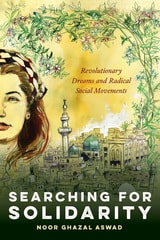
Searching for Solidarity
Revolutionary Dreams and Radical Social MovementsNoor Ghazal Aswad
The Ohio State University Press, 2025
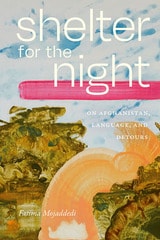
Shelter for the Night
On Afghanistan, Language, and DetoursFatima Mojaddedi
Duke University Press, 2026
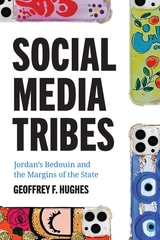
Social Media Tribes
Jordan's Bedouin and the Margins of the StateGeoffrey F. Hughes
University of Texas Press, 2026
An examination of the uses of social media in Jordan through the experiences of Bedouin tribespeople.
It has become something of a cliché to say that social media is making us tribal. But what do self-styled tribespeople themselves think about social media, and how might they help us better understand the role of the internet in our current political moment? Drawing on in-depth ethnographic fieldwork among Bedouin in Jordan, Social Media Tribes underscores the varied but broadly intelligible ways in which distinctive groups domesticate social media to suit their needs.
Organized around key concepts in Bedouin life (including tribalism, envy, and mercy), Social Media Tribes moves between Facebook-mediated tribal truces, upstart online media platforms, palatial urban villas where self-appointed sheikhs dispense justice, and street clashes organized over WhatsApp in rural communities ignored by state development projects. A meticulous researcher and insightful participant-observer, Geoffrey Hughes reframes social media as part of a global renegotiation of the state-society divide that both preceded the emergence of social media platforms and, in turn, feeds off of them. In this telling, the internet represents a new frontier that, like older frontiers, heralds both novel freedoms and novel forms of social control.

Streets of a Million Martyrs
Everyday Poetics and Politics in Urban AlgeriaStephanie Love
University of Chicago Press, 0
Follows ordinary people as they move through the Algerian city of Oran, navigating the politically charged context of postcolonialism.
In this book, anthropologist Stephanie Love examines ordinary Algerians’ hope for a better future through what she calls “everyday urban poetics,” focusing on the country’s second-largest city of Oran. Examining linguistic forms including placenames, jokes, metaphors, anecdotes, and code-switches along with urban forms including monuments, buildings, and street layouts, Love shows how popular imaginaries of resistance are inscribed in Oran’s language and cityscapes.
Love argues that these everyday urban poetics constitute a street-based language that has helped Algerians find ways around oppressive censorship, reckon with painful pasts, and develop what she views as a politically fertile creative insurgency. This is particularly true in the wake of the 2019 uprising known as Hirak (“the movement”) that found Algerians challenging the legitimacy of the postcolonial regime through large-scale demonstrations and protests. Analyzing phenomena as diverse as efforts to preserve buildings and monuments, the informal renaming of streets and landmarks, and the development of women-led associations encouraging education and open discourse, Love shows how new forms of political life can be developed and sharpened in everyday speech.