Results by title
100 books match the query 'Missions' and 6 start with s
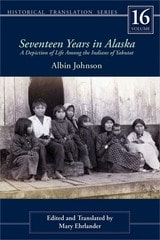
Seventeen Years in Alaska
A Depiction of Life Among the Indians of YakutatAlbin Johnson
University of Alaska Press, 2014
Seventeen Years in Alaska is Johnson’s eyewitness account of this tumultuous time. It is a captivating narrative of an ancient people facing rapid change and of the missionaries working to stem a corrupting tide. His journals offer a candid look at the beliefs and lives of missionaries, and they ultimately reveal the profound effect that he and other missionaries had on the Tlingit. Tracing nearly two decades of spiritual hopes and earthbound failures, Johnson’s memoir is a fascinating portrait of a rapidly changing world in one of the most far-flung areas of the globe.
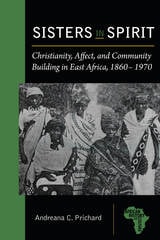
Sisters in Spirit
Christianity, Affect, and Community Building in East Africa, 1860–1970Andreana C. Prichard
Michigan State University Press, 2017
Sojourners in a Strange Land
Jesuits and Their Scientific Missions in Late Imperial ChinaFlorence C. Hsia
University of Chicago Press, 2009
Though Jesuits assumed a variety of roles as missionaries in late imperial China, their most memorable guise was that of scientific expert, whose maps, clocks, astrolabes, and armillaries reportedly astonished the Chinese. But the icon of the missionary-scientist is itself a complex myth. Masterfully correcting the standard story of China Jesuits as simple conduits for Western science, Florence C. Hsia shows how these missionary-scientists remade themselves as they negotiated the place of the profane sciences in a religious enterprise.
Sojourners in a Strange Land develops a genealogy of Jesuit conceptions of scientific life within the Chinese mission field from the sixteenth through eighteenth centuries. Analyzing the printed record of their endeavors in natural philosophy and mathematics, Hsia identifies three models of the missionary man of science by their genres of writing: mission history, travelogue, and academic collection. Drawing on the history of early modern Europe’s scientific, religious, and print culture, she uses the elaboration and reception of these scientific personae to construct the first collective biography of the Jesuit missionary-scientist’s many incarnations in late imperial China.

Songs of Power and Prayer in the Columbia Plateau
The Jesuit, the Medicine Man, and the Indian Hymn SingerChad S. Hamill
Oregon State University Press, 2012
In Chad Hamill’s narrative, a Jesuit and his two Indian “grandfathers”—one a medicine man, the other a hymn singer—engage in a collective search for the sacred. The priest becomes a student of the medicine man. The medicine man becomes a Catholic. The Indian hymn singer brings indigenous songs to the Catholic mass. Using song as a thread, these men weave together two worlds previously at odds, realizing a promise born two centuries earlier within the prophecies of Circling Raven and Shining Shirt.
Songs of Power and Prayer reveals how song can bridge worlds: between the individual and Spirit, the Jesuits and the Indians. Whether sung in an indigenous ceremony or adapted for Catholic Indian services, song abides as a force that strengthens Native identity and acts as a conduit for power and prayer.
A First Peoples: New Directions in Indigenous Studies book

Sonora
A Description of the ProvinceIgnaz Pfefferkorn; Foreword by Bernard L. Fontana; Translated and Annotated by Theodore E. Treutlein
University of Arizona Press, 1989
"To be read for enjoyment; nevertheless, the historian will find in it a wealth of information that has been shrewdly appraised, carefully sifted, and creditably related."—Catholic Historical Review
"Of interest not only to the historian but to the geographer and anthropologist."—Pacific Historical Review
Stitches on Time
Colonial Textures and Postcolonial TanglesSaurabh Dube
Duke University Press, 2004
Dube provides incisive accounts of the interactions between North American evangelical missionaries and Christian converts of central India, and between colonial legal systems and Indian popular laws. He reflects on the difficulties of history writing by considering the production and reception of recent Hindu nationalist histories. Assessing the work of the South Asian Subaltern Studies Collective, he offers substantial critical readings of major writings by Ranajit Guha, Dipesh Chakrabarty, Partha Chatterjee, and others. Dube develops the concept and practice of a “history without warranty” as a means of rigorously rethinking categories such as modernity, colonialism, the West, the postcolonial, and the nation.