Results by title
121 books match the query 'Motion picture industry' and 5 start with s
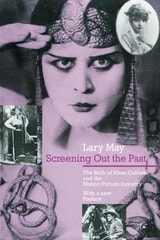
Screening Out the Past
The Birth of Mass Culture and the Motion Picture IndustryLary May
University of Chicago Press, 1983
"A scrupulously argued, clearly written account of Hollywood's role in bringing America skipping and giggling from the Victorian world into the twentieth century."—Philip French, London Sunday Observer
"It is impossible to follow a narrow trail through the movies. The vistas keep opening, and May, linking movies to mass society, finds and makes new perceptions on emerging women, the rise of the studios, the special growth and appeal of Los Angeles, the nature of studio leadership and the early and persistent imputed corrupting power of film."—Charles Champlin, Los Angeles Times
"Lary May . . . has provided a set of new and rich insights into the changing patterns of American culture, 1890-1929. . . . His concentration on social and cultural history indirectly provides answers to questions which have baffled political historians for several decades."—David W. Noble, Minneapolis Tribune
"[Screening Out the Past is] a scrupulously argued, clearly written account of Hollywood's role in bringing America skipping and giggling from the Victorian world into the twentieth century. May is splendid on the psychology of the immigrant movie moguls, on Douglas Fairbanks and Mary Pickford as post Great War role models, and many other things."—Philip French, London Sunday Observor
"Altogether, the book represents the most successful blending of movie and cultural history to date."—Benjamin McArthur, Journal of Social History
[more]
Screenwriting
Horton, Andrew
Rutgers University Press, 2014
Screenwriters often joke that “no one ever paid a dollar at a movie theater to watch a screenplay.” Yet the screenplay is where a movie begins, determining whether a production gets the “green light” from its financial backers and wins approval from its audience. This innovative volume gives readers a comprehensive portrait of the art and business of screenwriting, while showing how the role of the screenwriter has evolved over the years.
Reaching back to the early days of Hollywood, when moonlighting novelists, playwrights, and journalists were first hired to write scenarios and photoplays, Screenwriting illuminates the profound ways that screenwriters have contributed to the films we love. This book explores the social, political, and economic implications of the changing craft of American screenwriting from the silent screen through the classical Hollywood years, the rise of independent cinema, and on to the contemporary global multi-media marketplace. From The Birth of a Nation (1915), Gone With the Wind (1939), and Gentleman’s Agreement (1947) to Chinatown (1974), American Beauty (1999), and Lost in Translation (2003), each project began as writers with pen and ink, typewriters, or computers captured the hopes and dreams, the nightmares and concerns of the periods in which they were writing.
As the contributors take us behind the silver screen to chronicle the history of screenwriting, they spotlight a range of key screenplays that changed the game in Hollywood and beyond. With original essays from both distinguished film scholars and accomplished screenwriters, Screenwriting is sure to fascinate anyone with an interest in Hollywood, from movie buffs to industry professionals.
[more]
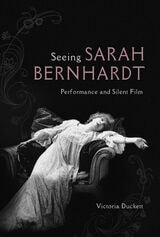
Seeing Sarah Bernhardt
Performance and Silent FilmVictoria Duckett
University of Illinois Press, 2015
The most famous stage actress of the nineteenth century, Sarah Bernhardt enjoyed a surprising renaissance when the 1912 multi-reel film Queen Elizabeth vaulted her to international acclaim. The triumph capped her already lengthy involvement with cinema while enabling the indefatigable actress to reinvent herself in an era of technological and generational change. Placing Bernhardt at the center of the industry's first two decades, Victoria Duckett challenges the perception of her as an anachronism unable to appreciate film's qualities. Instead, cinema's substitution of translated title cards for her melodic French deciphered Bernhardt for Anglo-American audiences. It also allowed the aging actress to appear in the kinds of longer dramas she could no longer physically sustain onstage. As Duckett shows, Bernhardt contributed far more than star quality. Her theatrical practice on film influenced how the young medium changed the visual and performing arts. Her promoting of experimentation, meanwhile, shaped the ways audiences looked at and understood early cinema. A leading-edge reappraisal of a watershed era, Seeing Sarah Bernhardt tells the story of an icon who bridged two centuries--and changed the very act of watching film.
[more]
Shaping the Future of African American Film
Color-Coded Economics and the Story Behind the NumbersMonica White Ndounou
Rutgers University Press, 2014
Received the Distinction Honor for the 2016 C. Calvin Smith Book Award from the Southern Conference on African American Studies, Inc.
In Hollywood, we hear, it’s all about the money. It’s a ready explanation for why so few black films get made—no crossover appeal, no promise of a big payoff. But what if the money itself is color-coded? What if the economics that governs film production is so skewed that no film by, about, or for people of color will ever look like a worthy investment unless it follows specific racial or gender patterns? This, Monica Ndounou shows us, is precisely the case. In a work as revealing about the culture of filmmaking as it is about the distorted economics of African American film, Ndounou clearly traces the insidious connections between history, content, and cash in black films.
How does history come into it? Hollywood’s reliance on past performance as a measure of potential success virtually guarantees that historically underrepresented, underfunded, and undersold African American films devalue the future prospects of black films. So the cycle continues as it has for nearly a century. Behind the scenes, the numbers are far from neutral. Analyzing the onscreen narratives and off-screen circumstances behind nearly two thousand films featuring African Americans in leading and supporting roles, including such recent productions as Bamboozled, Beloved, and Tyler Perry’s Diary of a Mad Black Woman, Ndounou exposes the cultural and racial constraints that limit not just the production but also the expression and creative freedom of black films. Her wide-ranging analysis reaches into questions of literature, language, speech and dialect, film images and narrative, acting, theater and film business practices, production history and financing, and organizational history.
By uncovering the ideology behind profit-driven industry practices that reshape narratives by, about, and for people of color, this provocative work brings to light existing limitations—and possibilities for reworking stories and business practices in theater, literature, and film.
[more]
Stardust Monuments
The Saving and Selling of HollywoodAlison Trope
Dartmouth College Press, 2012
Stardust Monuments spotlights the enduring efforts to memorialize and canonize the history and meaning of Hollywood and American film culture. In this engaging analysis, Alison Trope explores the tensions between art and commerce as they intersect in a range of nonprofit and for-profit institutions and products. An insightful tour of Hollywood’s past, present, and future, Stardust Monuments examines the establishment of film libraries and museums beginning in the mid 1930s, the many failed attempts to open a Hollywood museum ranging from the 1960s to today, and the more successful recent corporate efforts to use Hollywood’s past in theme restaurants and parks, classic movie channels, and DVD boxed sets. This fascinating narrative details the ongoing struggle to champion and codify Hollywood’s legacy, a struggle engaged in by Hollywood stars and corporate executives, as well as memorabilia collectors and users of IMDb.
[more]