Results by title
111 books match the query 'Museum Studies' and 5 start with s
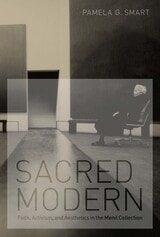
Sacred Modern
Faith, Activism, and Aesthetics in the Menil CollectionBy Pamela G. Smart
University of Texas Press, 2010
Renowned as one of the most significant museums built by private collectors, the Menil Collection in Houston, Texas, seeks to engage viewers in an acutely aesthetic, rather than pedagogical, experience of works of art. The Menil's emphasis on being moved by art, rather than being taught art history, comes from its founders' conviction that art offers a way to reintegrate the sacred and the secular worlds. Inspired by the French Catholic revivalism of the interwar years that recast Catholic tradition as the avant-garde, Dominique and John de Menil shared with other Catholic intellectuals a desire to reorder a world in crisis by imbuing modern cultural forms with religious faith, binding the sacred with the modern.
Sacred Modern explores how the Menil Collection gives expression to the religious and political convictions of its founders and how "the Menil way" is being both perpetuated and contested as the Museum makes the transition from operating under the personal direction of Dominique de Menil to the stewardship of career professionals. Taking an ethnographic approach, Pamela G. Smart analyzes the character of the Menil aesthetic, the processes by which it is produced, and the sensibilities that it is meant to generate in those who engage with the collection. She also offers insight into the extraordinary impact Dominique and John de Menil had on the emergence of Houston as a major cultural center.
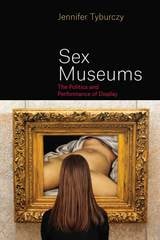
Sex Museums
The Politics and Performance of DisplayJennifer Tyburczy
University of Chicago Press, 2015
All museums are sex museums. In Sex Museums, Jennifer Tyburczy takes a hard look at the formation of Western sexuality—particularly how categories of sexual normalcy and perversity are formed—and asks what role museums have played in using display as a technique for disciplining sexuality. Most museum exhibits, she argues, assume that white, patriarchal heterosexuality and traditional structures of intimacy, gender, and race represent national sexual culture for their visitors. Sex Museums illuminates the history of such heteronormativity at most museums and proposes alternative approaches for the future of public display projects, while also offering the reader curatorial tactics—what she calls queer curatorship—for exhibiting diverse sexualities in the twenty-first century.
Tyburczy shows museums to be sites of culture-war theatrics, where dramatic civic struggles over how sex relates to public space, genealogies of taste and beauty, and performances of sexual identity are staged. Delving into the history of erotic artifacts, she analyzes how museums have historically approached the collection and display of the material culture of sex, which poses complex moral, political, and logistical dilemmas for the Western museum. Sex Museums unpacks the history of the museum and its intersections with the history of sexuality to argue that the Western museum context—from its inception to the present—marks a pivotal site in the construction of modern sexual subjectivity.
Spirit of the Place
From Mauthausen to MomaPéter György
Central European University Press, 2008
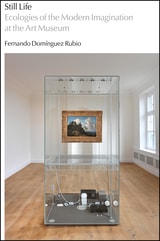
Still Life
Ecologies of the Modern Imagination at the Art MuseumFernando Domínguez Rubio
University of Chicago Press, 2020
Still Life offers a fascinating and detailed ethnographic account of what it takes to prevent these disasters from happening. Going behind the scenes at MoMA, Domínguez Rubio provides a rare view of the vast technological apparatus—from climatic infrastructures and storage facilities, to conservation labs and machine rooms—and teams of workers—from conservators and engineers to guards and couriers—who fight to hold artworks still.
As MoMA reopens after a massive expansion and rearranging of its space and collections, Still Life not only offers a much-needed account of the spaces, actors, and forms of labor traditionally left out of the main narratives of art, but it also offers a timely meditation on how far we, as a society, are willing to go to keep the things we value from disappearing into oblivion.
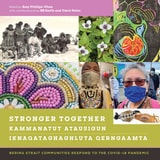
Stronger Together / Kammanatut Atausigun / Iknaqataghaghluta Qerngaamta
Bering Strait Communities Respond to the COVID-19 PandemicAmy Phillips-Chan
University of Alaska Press, 2024
The featured artists narrativize works inspired by the pandemic, from walrus ivory masks and sealskin face coverings to scenes of subsistence activities and informal family portraits. Full-color illustrations enliven the text with vibrant images of local community members, activities, and artwork from those who call this northern expanse of rolling tundra and icy seas home.
Stronger Together features hopeful and redemptive behind-the-scenes perspectives of how remote Alaskan communities endured the COVID-19 pandemic and appeals to anyone looking for hopeful and redemptive stories of this time, as well as museum, public arts, and culture program administrators; student and scholars of Indigenous and Alaska Native languages and culture; the Alaska anthropology community; artists and art enthusiasts; and those with a general interest in Alaska.