Results by title
72 books match the query 'Museums' and 3 start with s
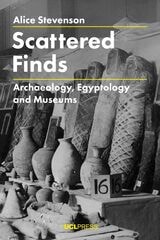
Scattered Finds
Archaeology, Egyptology and MuseumsAlice Stevenson
University College London, 2018
Between the 1880s and 1980s, British excavations at locations across Egypt resulted in the discovery of hundreds of thousands of ancient objects that were subsequently sent to some 350 institutions worldwide. These finds included unique discoveries at iconic sites such as the tombs of ancient Egypt’s first rulers at Abydos, Akhenaten, and Nefertiti’s city of Tell el-Amarna and rich Roman Era burials in the Fayum. This book explores the politics, personalities, and social histories that linked fieldwork in Egypt with the varied organizations around the world that received finds. Case studies range from Victorian municipal museums and women’s suffrage campaigns in the United Kingdom to the development of some of the United States’s largest institutions, and from university museums in Japan to new institutions in post-independence Ghana. By juxtaposing a diversity of sites for the reception of Egyptian cultural heritage over the period of a century, this book presents new ideas about the development of archaeology, museums and the construction of Egyptian heritage. It also addresses the legacy of these practices, raises questions about the nature of the authority over such heritage today and argues for a stronger ethical commitment to its stewardship.
[more]
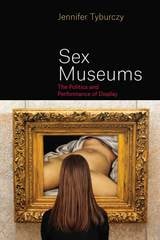
Sex Museums
The Politics and Performance of DisplayJennifer Tyburczy
University of Chicago Press, 2015
Winner of the 29th annual Lambda Literary Award for LGBT Studies
All museums are sex museums. In Sex Museums, Jennifer Tyburczy takes a hard look at the formation of Western sexuality—particularly how categories of sexual normalcy and perversity are formed—and asks what role museums have played in using display as a technique for disciplining sexuality. Most museum exhibits, she argues, assume that white, patriarchal heterosexuality and traditional structures of intimacy, gender, and race represent national sexual culture for their visitors. Sex Museums illuminates the history of such heteronormativity at most museums and proposes alternative approaches for the future of public display projects, while also offering the reader curatorial tactics—what she calls queer curatorship—for exhibiting diverse sexualities in the twenty-first century.
Tyburczy shows museums to be sites of culture-war theatrics, where dramatic civic struggles over how sex relates to public space, genealogies of taste and beauty, and performances of sexual identity are staged. Delving into the history of erotic artifacts, she analyzes how museums have historically approached the collection and display of the material culture of sex, which poses complex moral, political, and logistical dilemmas for the Western museum. Sex Museums unpacks the history of the museum and its intersections with the history of sexuality to argue that the Western museum context—from its inception to the present—marks a pivotal site in the construction of modern sexual subjectivity.
[more]
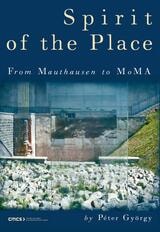
Spirit of the Place
From Mauthausen to MomaPéter György
Central European University Press, 2008
These essays are case-studies, the cases unraveling our cultural roots, memory itself. If a museum is the subject, then for instance the way the museum changes face, function, its manner of speech; how, a repository of collections and the cultural memory of humankind itself turns into one of the objects, memories, a custodian and exponent of its own history, or the opposite: how it connects with its modernized environs and changing audience: us. How has, or might the sanctum be transformed into a public venue, go from an inward looking, reverential enclosure to a space full of life. In other studies included here the author speaks of spatial and incarnate remembrance: the radical difference between a monument and a memorial. The duality of “always remembering” and “never forgetting”: a past depersonalized and dehistoricized as it was seized and processed. Of the layers of meaning attached to concentration camps, transmuting essence of artworks, and the difficult, the contradictory but inescapable processing of history and the past, of self-identical existence in history. So that we know we are alive. And how that is so.
[more]