Results by title
50 books match the query 'Music and race' and 5 start with s
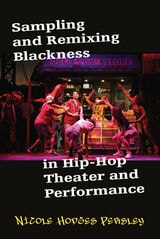
Sampling and Remixing Blackness in Hip-Hop Theater and Performance
Nicole Hodges Persley
University of Michigan Press, 2021
Sampling and Remixing Blackness is a timely and accessible book that examines the social ramifications of cultural borrowing and personal adaptation of Hip-hop culture by non-Black and non-African American Black artists in theater and performance. In a cultural moment where Hip-hop theater hits such as Hamilton offer glimpses of Black popular culture to non-Black people through musical soundtracks, GIFs, popular Hip-hop music, language, clothing, singing styles and embodied performance, people around the world are adopting a Blackness that is at once connected to African American culture--and assumed and shed by artists and consumers as they please. As Black people around the world live a racial identity that is not shed, in a cultural moment of social unrest against anti-blackness, this book asks how such engagements with Hip-hop in performance can be both dangerous and a space for finding cultural allies. Featuring the work of some of the visionaries of Hip-hop theater including Lin-Manuel Miranda, Sarah Jones and Danny Hoch, this book explores the work of groundbreaking Hip-hop theater and performance artists who have engaged Hip-hop's Blackness through popular performance. The book challenges how we understand the performance of race, Hip-hop and Blackness in the age of Instagram, TikTok and Facebook. In a cultural moment where racial identity is performed through Hip-hop culture's resistance to the status quo and complicity in maintaining it, Hodges Persley asks us to consider who has the right to claim Hip-hop's blackness when blackness itself is a complicated mixtape that offers both consent and resistance to transgressive and inspiring acts of performance.
Segregating Sound
Inventing Folk and Pop Music in the Age of Jim CrowKarl Hagstrom Miller
Duke University Press, 2010
In a cultural history filled with musicians, listeners, scholars, and business people, Miller describes how folklore studies and the music industry helped to create a “musical color line,” a cultural parallel to the physical color line that came to define the Jim Crow South. Segregated sound emerged slowly through the interactions of southern and northern musicians, record companies that sought to penetrate new markets across the South and the globe, and academic folklorists who attempted to tap southern music for evidence about the history of human civilization. Contending that people’s musical worlds were defined less by who they were than by the music that they heard, Miller challenges assumptions about the relation of race, music, and the market.
Sounds of Black Switzerland
Blackness, Music, and Unthought VoicesJessie Cox
Duke University Press, 2025
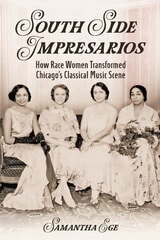
South Side Impresarios
How Race Women Transformed Chicago's Classical Music SceneSamantha Ege
University of Illinois Press, 2024
Ege focuses on composers like Florence Price, Nora Holt, and Margaret Bonds not as anomalies but as artists within an expansive cultural flowering. Overcoming racism and sexism, Black women practitioners instilled others with the skill and passion to make classical music while Race women like Maude Roberts George, Estella Bonds, Neota McCurdy Dyett, and Beulah Mitchell Hill built and fostered institutions central to the community. Ege takes readers inside the backgrounds, social lives, and female-led networks of the participants while shining a light on the scene’s audiences, supporters, and training grounds. What emerges is a history of Black women and classical music in Chicago and the still-vital influence of the world they created.
A riveting counter to a history of silence, South Side Impresarios gives voice to an overlooked facet of the Black Chicago Renaissance.
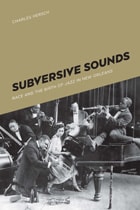
Subversive Sounds
Race and the Birth of Jazz in New OrleansCharles B. Hersch
University of Chicago Press, 2008
Subversive Sounds probes New Orleans’s history, uncovering a web of racial interconnections and animosities that was instrumental to the creation of a vital American art form—jazz. Drawing on oral histories, police reports, newspaper accounts, and vintage recordings, Charles Hersch brings to vivid life the neighborhoods and nightspots where jazz was born.
This volume shows how musicians such as Jelly Roll Morton, Nick La Rocca, and Louis Armstrong negotiated New Orleans’s complex racial rules to pursue their craft and how, in order to widen their audiences, they became fluent in a variety of musical traditions from diverse ethnic sources. These encounters with other music and races subverted their own racial identities and changed the way they played—a musical miscegenation that, in the shadow of Jim Crow, undermined the pursuit of racial purity and indelibly transformed American culture.
“More than timely . . . Hersch orchestrates voices of musicians on both sides of the racial divide in underscoring how porous the music made the boundaries of race and class.”—New Orleans Times-Picayune