Results by title
129 books match the query 'Natural resources' and 5 start with s
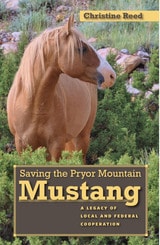
Saving the Pryor Mountain Mustang
A Legacy of Local and Federal CooperationChrstine Reed
University of Nevada Press, 2015
Saving the Pryor Mountain Mustang explores the unique and ongoing relationship between locals and the federal government, highlighting the Lovell citizens’ philosophy of cooperation instead of the typical mistrust that exists between wild horse advocates and federal agencies. The book provides a rich analysis of how a determined group of people saved an endangered wild horse herd. The book will have wide appeal to wild horse activists, scholars of local and federal governance, and western history enthusiasts.
Science and Ecosystem Management in the National Parks
Edited by William L. Halvorson and Gary E. Davis
University of Arizona Press, 1996
Science and Ecosystem Management in the National Parks presents twelve case studies of long-term research conducted in and around national parks that address major natural resource issues. These cases demonstrate how the use of longer time scales strongly influence our understanding of ecosystems and how interpretations of short-term patterns in nature often change when viewed in the context of long-term data sets. Most importantly, they show conclusively that scientific research significantly reduces uncertainty and improves resource management decisions. Chosen by scientists and senior park managers, the cases offer a broad range of topics, including: air quality at Grand Canyon; interaction between moose and wolf populations on Isle Royale; control of exotic species in Hawaiian parks; simulation of natural fire in the parks of the Sierra Nevada; and the impact of urban expansion on Saguaro National Monument.
Because national parks are increasingly beset with conflicting views of their management, the need for knowledge of park ecosystems becomes even more critical--not only for the parks themselves, but for what they can tell us about survival in the rest of our world. This book demonstrates to policymakers and managers that decisions based on knowledge of ecosystems are more enduring and cost effective than decisions derived from uninformed consensus. It also provides scientists with models for designing research to meet threats to our most precious natural resources. "If we can learn to save the parks," observe Halvorson and Davis, "perhaps we can learn to save the world."
Society and Natural Resources
A Summary of KnowledgeMichael J. Manfredo
University Press of Colorado, 2023
This book is a reprint of the original edited volume first published in 2004. In thirty-one chapters, the edited volume documents the exciting period of the emerging interdisciplinary field of society and natural resource scholarship from 1986 to 2004. It was published in part to commemorate the tenth International Symposium on Society and Resources Management (ISSRM) in Keystone, Colorado. ISSRM has brought together natural resource professionals, social science researchers, non-government agencies, private sector organizations, and students on a biennial basis since 1986. The book presents the most significant contributions to the symposia hosted by Pennsylvania State University, Colorado State University, University of Wisconsin-Madison, Texas A&M University, University of Illinois at Urbana-Champaign, Oregon State University, University of Missouri at Columbia, Western Washington University, and Indiana University. The first International ISSRM was held in Belize, Australia, and Italy and started a fruitful cross-continental exchange on society and natural resources showcased in this book.
Contributors: Jim Absher, Kathleen Andereck, Jill Belsky, John Bergstrom, Carter Betz, Alan Bright, Perry J. Brown, Tommy Brown, Mark Brunson, Rabel Burdge, Fred Buttel, KristinCheek, Chia-Kuen Cheng, Tony Cheng, David Cole, H Ken Cordell, Terry Daniel, Steven Daniels, Dan Decker, Robert Ditton, John Dwyer, Alan Ewert, Don Field, Myron Floyd, R Bruce Gill, Alan Graefe, Gary Green, Doug Jackson-Smith, Rebecca Johnson, Richard Knopf, Rick Krannich, Jessica Leahy, Xinran You Lehto, John Loomas, Al Luloff, Mike Manfredo, Robert Manning, Sarah McCaffrey, Stephen McCool, Yoon-Jung Oh, Joseph O'Leary, Carol Saunders, Steve Selin, Bruce Shindler, George Stankey, Bill Stewart, Vicky Sturtevant, Jonathan Taylor, Suzanne Taylor, Tara Teel, Brijesh Thapa, Gene Theodori, Carla Koons Trentelman, Jerry Vaske, Joanne Vining, Doug Whittaker, Dan Williams

Soviet Natural Resources in the World Economy
Edited by Robert G. Jensen, Theodore Shabad, and Arthur W. Wright
University of Chicago Press, 1983
The authors examine the mineral and forest resources that the Soviet Union has developed and may yet develop to provide exports during the 1980s. They discuss the regional dimension of these resources, especially in Siberia and the Soviet Far East; individual mineral raw materials, such as petroleum, natural gas, timber, iron ore, manganese, and gold; and finally the role of raw materials in Soviet foreign trade.
The authors, representing the United States, Canada, and Great Britain, are primarily geographers, but they include economists, political scientists, and a geologist. Their work is based on primary sources (for most of these reports, current information is no longer being released to researchers) and on interviews with Soviet officials.
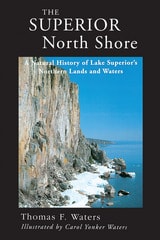
Superior North Shore
A Natural History of Lake Superior’s Northern Lands and WatersThomas F. Waters
University of Minnesota Press, 1999