Results by title
2817 books match the query 'Nature' and 165 start with s
Sacred Leaves of Candomblé
African Magic, Medicine, and Religion in BrazilBy Robert A. Voeks
University of Texas Press, 1997
Winner, Hubert Herring Book Award, Pacific Coast Council on Latin American Studies
Candomblé, an African religious and healing tradition that spread to Brazil during the slave trade, relies heavily on the use of plants in its spiritual and medicinal practices. When its African adherents were forcibly transplanted to the New World, they faced the challenge not only of maintaining their culture and beliefs in the face of European domination but also of finding plants with similar properties to the ones they had used in Africa.
This book traces the origin, diffusion, medicinal use, and meaning of Candomblé's healing pharmacopoeia—the sacred leaves. Robert Voeks examines such topics as the biogeography of Africa and Brazil, the transference—and transformation—of Candomblé as its adherents encountered both native South American belief systems and European Christianity, and the African system of medicinal plant classification that allowed Candomblé to survive and even thrive in the New World. This research casts new light on topics ranging from the creation of African American cultures to tropical rain forest healing floras.
Sacred Place
W Scott Olsen
University of Utah Press, 1996
Some of today's most significant writers and poets explore the relation between what we call the sacred and what we witness in the apparent world.
This unprecedented anthology brings together a provocative mix of new and well known writers whose poetry and prose broaches the possibility of something "bigger" going on, something more significant at stake. Is some powerful agency at work in what we see or are we just wishing (or fearing) that there were? Who can say? Who would dare? What’s most intriguing about the selections in this volume is that the authors do dare. What’s most attractive about them is that they resist answering that dare with reductions. They prefer the swoon of multiple possibilities over the relative comfort of conclusions. Various as they are, the works collected in The Sacred Place share a common reverence for the word itself, and perhaps best of all—they share a common understanding that no one of them comprehends fully what that means. They seem to desire instead a sense that the humble stuff surrounding us affords a likely enough habitation for the sacred, even now.

Sagebrush Collaboration
How Harney County Defeated the Takeover of the Malheur Wildlife RefugePeter Walker
Oregon State University Press, 2018
Every American is co-owner of the most magnificent estate in the world—federal public forests, grazing lands, monuments, national parks, wildlife refuges, and other public places. The writer Wallace Stegner famously referred to public lands as “America’s best idea,” but there have always been some who oppose the idea for ideological reasons, or because they have a vested economic interest. In the current decade, federal public lands have been under physical threat as never before, with armed standoffs and takeovers that the US government has proved stunningly unsuccessful at prosecuting in federal courts.
One such incident was the takeover of the Malheur National Wildlife Refuge in Harney County, Oregon, in 2016. Armed militants seized the headquarters of the refuge for forty-one days and occupied the community for three months. Militants threatened and harassed local residents, pledging to “give back” the land to unnamed “rightful owners” in their effort to enact a fringe interpretation of the US Constitution.
Drawing on more than two years of intensive fieldwork, Sagebrush Collaboration shows that the militants failed in their objectives because the sensible and hardworking citizens of Harney County had invested decades in collaboratively solving the very problems that the militia used to justify their anti–federal government revolution.
In Sagebrush Collaboration, Peter Walker offers the first book-length study of why the 2016 takeover of the Malheur National Wildlife Refuge failed. His nuanced and deeply researched account provides the full context for the takeover, including the response from local and federal officials and the grassroots community resistance. It will be essential reading for years to come for anyone who wants to understand the ongoing battle over the future of America’s public lands.

Sailing with Noah
Stories from the World of ZoosJeffrey P. Bonner
University of Missouri Press, 2013
Saints, Sinners, and Sovereign Citizens
The Endless War over the West's Public LandsJohn L. Smith
University of Nevada Press, 2026
The grazing rights battle between Nevada rancher Cliven Bundy and the federal government, resulting in a tense, armed standoff between Bundy’s supporters and federal law enforcement officers, garnered international media attention in 2014. Saints, Sinners, and Sovereign Citizens places the Bundy conflict into the larger context of the Sagebrush Rebellion and the long struggle over the use of federal public lands in the American West.
Author John L. Smith skillfully captures the drama of the Bundy legal tangle amid the current political climate. Although no shots were fired during the standoff itself, just weeks later self-proclaimed Bundy supporters murdered two Las Vegas police officers and a civilian. In Eastern Oregon, other Bundy supporters occupied the federal offices of the Malheur National Wildlife Refuge, and one of them died in a hail of bullets.
While examining the complex history of federal public land policies, Smith exposes both sides of this story. He shows that there are passionate true believers on opposite sides of the insurrection, along with government agents and politicians in Washington complicit in efforts to control public lands for their wealthy allies and campaign contributors. With the promise of billions of dollars in natural resource profits and vast tracts of environmentally sensitive lands hanging in the balance, the West’s latest range war is the most important in the nation’s history. This masterful exposé raises serious questions about the fate of America’s public lands and the vehement arguments that are framing the debate from all sides.
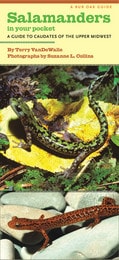
Salamanders in Your Pocket
A Guide to Caudates of the Upper MidwestTerry L. VanDeWalle and Suzanne L. Collins
University of Iowa Press, 2013
Common mudpuppies and lesser sirens spend their entire lives in water, never losing the gills that they developed as larvae; the lungless four-toed salamander distracts predators by detaching its tail; the eastern newt discourages predators by secreting poisonous chemicals from its skin; the flat-bodied hellbender, which can reach twenty-nine inches in length, breathes by absorbing oxygen through the folds of its skin. These, plus the well-named slimy, zigzag, tiger, and other salamanders in this guide, are now threatened by loss of habitat, pollution, and a deadly fungus.
Terry VanDeWalle provides a complete description of each species as well as distinguishing characteristics for twenty-one subspecies, from the striking orange and yellow spots of the spotted salamander to the lichenlike patches of the green salamander to the prominent rounded head of the mole salamander. He also includes information about the salamanders’ range and habitat preferences, from twilight zones of limestone caves and crevices to seepages and spring-fed bogs. His comparisons of similar species and his comprehensive key are most helpful for identifying individuals in the field. Superb photographs by Suzanne Collins make this new guide the perfect companion for outdoor expeditions in all kinds of moist environments.
Salleyland
Wildlife Adventures in Swamps, Sandhills, and ForestsWhit Gibbons
University of Alabama Press, 2023
WINNER OF THE SOUTH CAROLINA OUTDOOR PRESS ASSOCIATION'S EXCELLENCE IN CRAFT FOR THE BEST OUTDOOR BOOK AWARD
Adventures and misadventures exploring nature on a patch of “worthless” abandoned farmland
Following his retirement from academic life, renowned naturalist and writer Whit Gibbons and his family purchased a tract of abandoned farmland where the South Carolina piedmont meets the coastal plain. Described as backcountry scrubland, it was originally envisioned as a family retreat, but soon the property became Gibbons’s outdoor learning laboratory where he was often aided by his four grandchildren, along with a host of enthusiastic visitors.
Inspired by nature’s power to excite, educate, and provide a sense of place in the world, Gibbons invites readers to learn about their surrounding environments by describing his latest adventures and sharing expert advice for exploring the world in which we live. Peppered throughout with colorful personal anecdotes and told with Gibbons’s affable style and wit, Salleyland: Wildlife Adventures in Swamps, Sandhills, and Forests is more than a personal memoir or a record of place. Rather, it is an exercise in learning about a patch of nature, thereby reminding us to open our eyes to the complexity and wonder of the natural world.
Starting with the simple advice of following your own curiosity, Gibbons discusses different opportunities and methods for exploring one’s surroundings, introduces key ecological concepts, offers advice for cultivating habitat, explains the value of and different approaches to keeping lists and field journals, and celebrates the advances that cell phone photography and wildlife cameras offer naturalists of all levels. With Gibbons’s guidance and encouragement, readers will learn to embrace their inner scientists, equipped with the knowledge and encouragement to venture beyond their own front doors, ready to discover the secrets of their habitat, regardless of where they live.
Salmon Is Everything
Community-Based Theatre in the Klamath WatershedTheresa May with Susanne Burcell, Kathleen McCovey, and Jean O'Hara
Oregon State University Press, 2014
Salmon Is Everything simultaneously illuminates the logistics of a crisis in the third largest watershed in the Pacific Northwest—the premature death of more than 30,000 salmon on the Lower Klamath River in 2002—and documents what happened when one community decided to use art to amplify the experiences of its members. The fish kill had unprecedented impact throughout the watershed, and for many tribal communities it signified an ongoing loss of traditional cultural practices. But in the political and ecological upheaval that followed, the role of salmon in tribal life went largely unacknowledged, which inspired the collaboration between May and members of the Yurok, Hoopa Valley, and Karuk tribes, as well as farmers, ranchers, and others invested in the Klamath watershed.
Salmon is Everything will appeal to readers interested in the environmental and cultural history of the Pacific Northwest and the ecological and civil challenges its communities face. For artists and activists, it’s a useful case study. Salmon is Everything offers a unique interdisciplinary resource for high school and college level courses in environmental studies, Native American studies, and theatre arts education.
Salmon and Acorns Feed Our People
Colonialism, Nature, and Social ActionKari Marie Norgaard
Rutgers University Press, 2019
Since time before memory, large numbers of salmon have made their way up and down the Klamath River. Indigenous management enabled the ecological abundance that formed the basis of capitalist wealth across North America. These activities on the landscape continue today, although they are often the site of intense political struggle. Not only has the magnitude of Native American genocide been of remarkable little sociological focus, the fact that this genocide has been coupled with a reorganization of the natural world represents a substantial theoretical void. Whereas much attention has (rightfully) focused on the structuring of capitalism, racism and patriarchy, few sociologists have attended to the ongoing process of North American colonialism. Salmon and Acorns Feed Our People draws upon nearly two decades of examples and insight from Karuk experiences on the Klamath River to illustrate how the ecological dynamics of settler-colonialism are essential for theorizing gender, race and social power today.
Salmon is Everything
Community-Based Theatre in the Klamath WatershedTheresa May with Susanne Burcell, Kathleen McCovey, and Jean O'Hara
Oregon State University Press, 2018
Salmon Is Everything simultaneously illuminates the logistics of a crisis in the third largest watershed in the Pacific Northwest—the premature death of more than 30,000 salmon on the Lower Klamath River in 2002—and documents what happened when one community decided to use art to amplify the experiences of its members. The fish kill had unprecedented impact throughout the watershed, and for many tribal communities it signified an ongoing loss of traditional cultural practices. But in the political and ecological upheaval that followed, the role of salmon in tribal life went largely unacknowledged, which inspired the collaboration between May and members of the Yurok, Hoopa Valley, and Karuk tribes, as well as farmers, ranchers, and others invested in the Klamath watershed.
Salmon is Everything will appeal to readers interested in the environmental and cultural history of the Pacific Northwest and the ecological and civil challenges its communities face. For artists and activists, it’s a useful case study. Salmon is Everything offers a unique interdisciplinary resource for high school and college level courses in environmental studies, Native American studies, and theatre arts education.
New materials in this second edition include additional essays by Native faculty and actors, an updated introduction by the author, minor textual corrections throughout, and a new online resource guide.
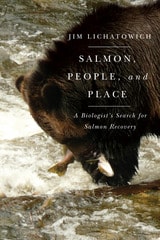
Salmon, People, and Place
A Biologist's Search for Salmon RecoveryJim Lichatowich
Oregon State University Press, 2013
In Salmon, People, and Place, acclaimed fisheries biologist Jim Lichatowich eloquently exposes the misconceptions underlying salmon management and recovery programs that have fueled the catastrophic decline in Northwest salmon populations for more than a century. These programs will continue to fail, he suggests, so long as they regard salmon as products and ignore their essential relationship with their habitat.
But Lichatowich offers hope. In Salmon, People, and Place he presents a concrete plan for salmon recovery, one based on the myriad lessons learned from past mistakes. What is needed to successfully restore salmon, Lichatowich states, is an acute commitment to healing the relationships among salmon, people, and place.
A significant contribution to the literature on Pacific salmon, Salmon, People, and Place: A Biologist’s Search for Salmon Recovery is an essential read for anyone concerned about the fate of this Pacific Northwest icon.
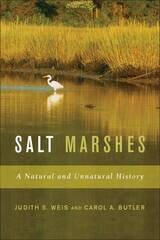
Salt Marshes
A Natural and Unnatural HistoryWeis, Judith S
Rutgers University Press, 2009
Now championed as critical habitats for plants, animals, and people because of the environmental service and protection they provide, these ecological wonders were once considered unproductive wastelands, home solely to mosquitoes and toxic waste, and mistreated for centuries by the human population. Exploring the fascinating biodiversity of these boggy wetlands, Salt Marshes offers readers a wealth of essential information about a variety of plants, fish, and animals, the importance of these habitats, consequences of human neglect and thoughtless development, and insight into how these wetlands recover.
Judith S. Weis and Carol A. Butler shed ample light on the human impact, including chapters on physical and biological alterations, pollution, and remediation and recovery programs. In addition to a national and global perspective, the authors place special emphasis on coastal wetlands in the Atlantic and Gulf regions, as well as the San Francisco Bay Area, calling attention to their historical and economic legacies.
Written in clear, easy-to-read language, Salt Marshes proves that the battles for preservation and conservation must continue, because threats to salt marshes ebb and flow like the water that runs through them.
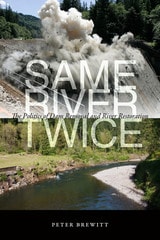
Same River Twice
The Politics of Dam Removal and River RestorationPeter Brewitt
Oregon State University Press, 2019
How did this happen? Same River Twice answers this question by telling the stories of three major Northwestern dam removals – the politics, people, hopes, and fears that shaped three rivers and their communities. Brewitt begins each story with the dam’s construction, shows how its critics gained power, details the conflicts and controversies of removal, and explores the aftermath as the river re-established itself.
Each dam removal offers a unique case study. On the Elwha and Rogue Rivers, dam removal was a multi-decade political brawl; on the Sandy River it was swift and amicable. A key controversy in every case was the loss of the recreational lake created by the dam. Local communities loved their lakes and felt that they were natural, public spaces rather than industrial creations. They fought dam removal with passion and ingenuity. To be successful, dam removal advocates had to learn to weld together mega-coalitions that embraced most interest groups and moved forward together.
While the dams profiled here are all in the Pacific Northwest, dam removal is a national and international phenomenon, and Brewitt’s findings apply everywhere. Written for both a scholarly and a general audience, Same River Twice presents invaluable case studies for scholars of environmental politics, wildlife and public land professionals, environmental activists, and anyone interested in the intersection of politics, public policy, and dam removal.
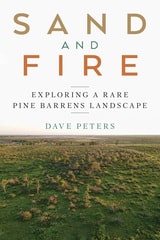
Sand and Fire
Exploring a Rare Pine Barrens LandscapeDave Peters
Wisconsin Historical Society Press, 2023
While many people are familiar with the federally protected St. Croix and Namekagon Rivers of northwestern Wisconsin, few know about the Namekagon Barrens, a rare pine barrens landscape within a few miles of their confluence. A tiny remnant of the millions of barrens acres that once covered the region, the Namekagon Barrens Wildlife Area lies in the heart of the state’s Northwest Sands, a band of pine and oak stretching from Bayfield on Lake Superior to St. Croix Falls on the Wisconsin–Minnesota border. Unfathomable amounts of glacial sand and repeated fires over thousands of years shaped a land of scrub oak and jack pine, blueberries and sweet fern, creating an ideal habitat for wolves and sharp-tailed grouse.
Just as compelling is the land’s rich human history, from Paleo-Indian hunters to Ojibwe berry pickers, loggers to early road builders, and immigrants whose farming efforts failed to the wildlife habitat specialists who manage it today. The book, told in memoir style and featuring color photographs by the author, sets the land’s unusual natural history as the backdrop for a multilayered story about the impact of people on this vulnerable landscape.
Silver winner of the 2023 Midwest Book Award for History
"Peters invites his readers on a journey across time and space, to the glacial formation of the Namekagon Barrens into the present. . . . The book is replete with beautiful photographs, useful maps, and a number of other images that seem to appear on nearly every other page. This book should appeal to a wide public readership while at the same time being a useful primer for academics and researchers."
—Hayden L. Nelson, Environmental History
Saving Animals
Multispecies Ecologies of Rescue and CareElan Abrell
University of Minnesota Press, 2021
A fascinating and unprecedented ethnography of animal sanctuaries in the United States
In the past three decades, animal rights advocates have established everything from elephant sanctuaries in Africa to shelters that rehabilitate animals used in medical testing, to homes for farmed animals, abandoned pets, and entertainment animals that have outlived their “usefulness.” Saving Animals is the first major ethnography to focus on the ethical issues animating the establishment of such places, where animals who have been mistreated or destined for slaughter are allowed to live out their lives simply being animals.
Based on fieldwork at animal rescue facilities across the United States, Elan Abrell asks what “saving,” “caring for,” and “sanctuary” actually mean. He considers sanctuaries as laboratories where caregivers conceive and implement new models of caring for and relating to animals. He explores the ethical decision making around sanctuary efforts to unmake property-based human–animal relations by creating spaces in which humans interact with animals as autonomous subjects. Saving Animals illustrates how caregivers and animals respond by cocreating new human–animal ecologies adapted to the material and social conditions of the Anthropocene.
Bridging anthropology with animal studies and political philosophy, Saving Animals asks us to imagine less harmful modes of existence in a troubled world where both animals and humans seek sanctuary.
Saving Grand Canyon
Dams, Deals, and a Noble MythByron E. Pearson
University of Nevada Press, 2019
2020 Spur Awards Finalist Contemporary Nonfiction, Western Writers of America
The Grand Canyon has been saved from dams three times in the last century. Unthinkable as it may seem today, many people promoted damming the Colorado River in the canyon during the early twentieth century as the most feasible solution to the water and power needs of the Pacific Southwest. These efforts reached their climax during the 1960s when the federal government tried to build two massive hydroelectric dams in the Grand Canyon. Although not located within the Grand Canyon National Park or Monument, they would have flooded lengthy, unprotected reaches of the canyon and along thirteen miles of the park boundary.
Saving Grand Canyon tells the remarkable true story of the attempts to build dams in one of America’s most spectacular natural wonders. Based on twenty-five years of research, this fascinating ride through history chronicles a hundred years of Colorado River water development, demonstrates how the National Environmental Policy Act came to be, and challenges the myth that the Sierra Club saved the Grand Canyon. It also shows how the Sierra Club parlayed public perception as the canyon’s savior into the leadership of the modern environmental movement after the National Environmental Policy Act became law.
The tale of the Sierra Club stopping the dams has become so entrenched—and so embellished—that many historians, popular writers, and filmmakers have ignored the documented historical record. This epic story puts the events from 1963–1968 into the broader context of Colorado River water development and debunks fifty years of Colorado River and Grand Canyon myths.
Saving Lake Tahoe
An Environmental History of a National TreasureMichael J. Makley
University of Nevada Press, 2014
Left alone, nature healed itself, and by the 1960s mature forests once again surrounded the lake and its water clarity improved, with visibility more than one hundred feet deep. However, Tahoe’s wonders brought a new kind of threat: millions of annual visitors and incessant development, including ski resorts and casinos. Saving Lake Tahoe looks at the interaction through the years between human activities and Tahoe’s natural ecosystems. It is a dramatic story of ecological disasters and near misses, political successes and failures. Utilizing primary sources and interviews with key figures, Makley provides a meticulously researched account of the battles surrounding the management of the Tahoe basin.
Makley takes the story up to the present, describing the formation and evolution of a new type of governing body, the bistate Tahoe Regional Planning Agency, and groundbreaking efforts to utilize science in establishing policy. He depicts the passionate fights between those who seek to preserve the environment and advocates of individual property rights. Although Tahoe remains unique in its splendor, readers will understand why, with continued pressure for development, reversing environmental deterioration and improving the lake water’s clarity remain elusive goals.
Saving Migrant Birds
Developing Strategies for the FutureBy John Faaborg
University of Texas Press, 2002
In the 1980s, numerous scientific surveys documented both declining bird populations, especially among Neotropical songbirds that winter in the tropics, and the loss of tropical rain forest habitat. Drawing the seemingly obvious conclusion, scientists and environmental activists linked songbird declines to loss of tropical habitats and alerted the world to an impending ecological catastrophe. Their warnings led to the establishment of the Neotropical Migratory Bird Conservation Program, also known as Partners in Flight, the self-proclaimed largest conservation effort in history.
Looking back over more than a decade of efforts to save migrant birds, John Faaborg offers the first serious evaluation of the state of songbird populations today, the effectiveness of conservation programs such as Partners in Flight, and the reliability and completeness of scientific research on migrant birds. Taking neither an alarmist nor a complacent approach, he shows that many factors besides habitat loss affect bird populations and that Neotropical migrants as a group are not declining dramatically, though some species adapt to habitat alteration more successfully than others. Faaborg's state-of-the-art survey thus clarifies the kinds of information we will need and the conservation efforts we should undertake to ensure the long-term survival of Neotropical migrant birds.
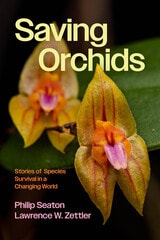
Saving Orchids
Stories of Species Survival in a Changing WorldPhilip Seaton and Lawrence W. Zettler
University of Chicago Press, 2025
A gorgeously illustrated ode to the beauty and significance of orchids—and to those fighting to save these unique plants across the globe.
Until recently, a myriad of lifeforms enriched our lives. In some places, listening to a nighttime chorus of frogs in the neighborhood marsh was an archetypal touchstone of childhood. Children would search for tadpoles, just steps away from native Lady’s Tresses orchids. Year by year, the chorus became quieter. Today, only a few frogs and orchids remain. Is this the world we want our children to inherit? Do we want orchids to slip through our fingers and, eventually, to vanish?
For biologists Philip Seaton and Lawrence W. Zettler, and the intrepid orchid defenders they introduce in this book, the answer is no. Seaton and Zettler have traveled the world over the past three decades, studying orchids—flagship species for plant conservation. Stunningly illustrated, this book is a culmination of stories about the people—young and old alike—dedicated to protecting these remarkable plants from extinction. In the 19th century, collectors removed, shipped, and sold vast numbers of orchids from the wild. Today, scientists strive to reverse this harm—to protect and rebuild remnants of orchids’ original habitats against human disruption, including climate change. Seaton and Zettler reveal these plants’ bizarre pollination partners, risky liaisons with fungi, and adaptation to human domestication to show that learning orchids’ scientific secrets—and finding human helpers—is key to these plants’ survival.
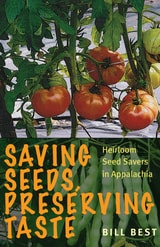
Saving Seeds, Preserving Taste
Heirloom Seed Savers in AppalachiaBill Best
Ohio University Press, 2013
The Brown Goose, the White Case Knife, Ora’s Speckled Bean, Radiator Charlie’s Mortgage Lifter—these are just a few of the heirloom fruits and vegetables you’ll encounter in Bill Best’s remarkable history of seed saving and the people who preserve both unique flavors and the Appalachian culture associated with them. As one of the people at the forefront of seed saving and trading for over fifty years, Best has helped preserve numerous varieties of beans, tomatoes, corn, squashes, and other fruits and vegetables, along with the family stories and experiences that are a fundamental part of this world. While corporate agriculture privileges a few flavorless but hardy varieties of daily vegetables, seed savers have worked tirelessly to preserve genetic diversity and the flavors rooted in the Southern Appalachian Mountains—referred to by plant scientists as one of the vegetative wonders of the world.
Saving Seeds, Preserving Taste will introduce readers to the cultural traditions associated with seed saving, as well as the remarkable people who have used grafting practices and hand-by-hand trading to keep alive varieties that would otherwise have been lost. As local efforts to preserve heirloom seeds have become part of a growing national food movement, Appalachian seed savers play a crucial role in providing alternatives to large-scale agriculture and corporate food culture. Part flavor guide, part people’s history, Saving Seeds, Preserving Taste will introduce you to a world you’ve never known—or perhaps remind you of one you remember well from your childhood.
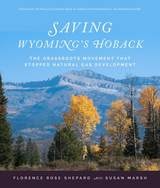
Saving Wyoming's Hoback
The Grassroots Movement that Stopped Natural Gas DevelopmentFlorence R. Shepard and Susan L. Marsh
University of Utah Press, 2016
Winner of the Wallace Stegner Prize in Environmental Humanities
In late 2012, more than one hundred people gathered to hear a long-awaited announcement: the Trust for Public Land had succeeded in preventing natural gas development in the remote Hoback Basin of Wyoming. This landmark agreement—purchasing leases from Plains Exploration Company—would not have come to pass without the extraordinary will and expertise of local citizens. Unchallenged, the proposed natural gas development in the national forest near the hamlet of Bondurant, Wyoming, would have brought roads, pipelines, water and air pollution, and a complete change in the character of the landscape and its communities.
Saving Wyoming's Hoback tells the story of the Hoback and Noble Basins in northwestern Wyoming and of the citizens who worked together to protect the land that they loved. Retired schoolteachers, mine workers, big game hunting outfitters, and other stakeholders brought together their knowledge of the area to achieve a single goal: to prevent the industrialization of the wild country that was their home. While some disagreed about specifics, their work as individuals and as coalitions is an inspiring example of how determined citizens can make a difference.
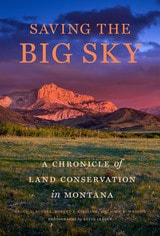
Saving the Big Sky
A Chronicle of Land Conservation in MontanaBruce A. Bugbee
Oregon State University Press, 2025
Winner of the 2026 Western Writers of America Spur Award for Best Western Contemporary Nonfiction
Winner of the 2025 Nature and the Environment National Outdoor Book Award
“The essential purpose of Saving the Big Sky is to inspire the reader to help conserve even more of Montana,” write Bruce Bugbee, Robert Kiesling, and John Wright in this compelling study of how six million acres of biodiverse land were conserved in Montana over the past fifty years. Indigenous and non-Indigenous knowledge about land stewardship has evolved and since the 1970s tribes, nonprofit organizations, land trusts, and government agencies have conserved land in many creative ways. Beautifully illustrated with more than ninety color photographs and thirty detailed maps, Saving the Big Sky showcases land conservation achievements across eight regions of the state: the Rocky Mountain Front, the Blackfoot Valley, the Greater Yellowstone, the Missoula Region, the Helena Region, Northwest Montana, the Flathead Indian Reservation, and the American Prairie.
Land protection is shown to work best when large, intact, connected landscapes can be conserved, rather than small, fragmented, isolated parcels. Conservationists have found that landowners in Montana more widely accept conservation easements and other voluntary, financially compensating tools that respect private property rights. The brilliant images and striking before-and-after maps featured here celebrate the ranches, farms, wildlife habitats, and scenic open spaces that are forever safeguarded.
In documenting conservation accomplishments and suggesting what more can be done, Saving the Big Sky invites readers to participate in conserving Montana—or whatever cherished landscape they call home.
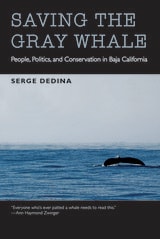
Saving the Gray Whale
People, Politics, and Conservation in Baja CaliforniaSerge Dedina
University of Arizona Press, 2000
More than a study of conservation politics, Dedina's book puts a human face on wildlife conservation. The author lived for two years with residents of Baja communities to understand their attitudes about wildlife conservation and Mexican politics, and he accompanied many in daily activities to show the extent to which the local economy depends on whalewatching. "It is ironic," observes Dedina, "that residents of some of the most isolated fishing villages in North America are helping to redefine our relationship with wild animals. Americans and Europeans brought the gray whale population to the brink of extinction. The inhabitants of San Ignacio Lagoon and Magdalena Bay are helping us to celebrate the whales' survival." By showing us how these animals have helped shape the lifeways of the people with whom they share the lagoons, Saving the Gray Whale demonstrates that gray whales represent both a destructive past and a future with hope.
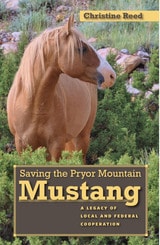
Saving the Pryor Mountain Mustang
A Legacy of Local and Federal CooperationChrstine Reed
University of Nevada Press, 2015
Saving the Pryor Mountain Mustang explores the unique and ongoing relationship between locals and the federal government, highlighting the Lovell citizens’ philosophy of cooperation instead of the typical mistrust that exists between wild horse advocates and federal agencies. The book provides a rich analysis of how a determined group of people saved an endangered wild horse herd. The book will have wide appeal to wild horse activists, scholars of local and federal governance, and western history enthusiasts.
Say This of Horses
A Selection of PoemsC.E. Greer
University of Iowa Press, 2007
Divided into six sections, Say This of Horses considers horses in a multitude of times and places. “Antiquity” explores the forging of the earliest mythical ties between horses and humans. “Here, Now” places horses in the present, where their physical presence is most acutely felt. “Esssence” explores the metaphysical qualities of horses. “Harnessed” contains a selection of poems about horses in war, at work, and in sport and recreation. “Mirrors” shows them as imaginative symbols. Finally, “Lenses” moves into the realm of abstraction and fantasy.
The selections within this far-reaching collection are joyous, moving, erudite, and at times profoundly sad. Poems by Henry Wadsworth Longfellow, W. S. Merwin, Tess Gallagher, Yusef Komunyakaa, Pablo Neruda, Anne Sexton, Wallace Stevens, May Sarton, Jane Kenyon, and James Dickey, among many others, are sure to delight and surprise readers familiar with or just exploring the rich literature on horses.
Contributors include:
Guillaume Apollinaire, Gwendolyn Brooks, Lawrence Ferlinghetti, C.E. Greer, Donald Hall, Joy Harjo, Imru’ al-Qays, Ted Kooser, Philip Larkin, Ann McCarthy de Zavala, Rainer Maria Rilke, Patiann Rogers, William Carlos Williams
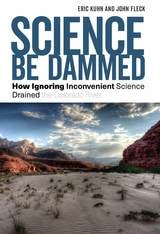
Science Be Dammed
How Ignoring Inconvenient Science Drained the Colorado RiverEric Kuhn and John Fleck
University of Arizona Press, 2019
Arguing that the science of the early twentieth century can shed new light on the mistakes at the heart of the over-allocation of the Colorado River, authors Eric Kuhn and John Fleck delve into rarely reported early studies, showing that scientists warned as early as the 1920s that there was not enough water for the farms and cities boosters wanted to build. Contrary to a common myth that the authors of the Colorado River Compact did the best they could with limited information, Kuhn and Fleck show that development boosters selectively chose the information needed to support their dreams, ignoring inconvenient science that suggested a more cautious approach.
Today water managers are struggling to come to terms with the mistakes of the past. Focused on both science and policy, Kuhn and Fleck unravel the tangled web that has constructed the current crisis. With key decisions being made now, including negotiations for rules governing how the Colorado River water will be used after 2026, Science Be Dammed offers a clear-eyed path forward by looking back.
Understanding how mistakes were made is crucial to understanding our contemporary problems. Science Be Dammed offers important lessons in the age of climate change about the necessity of seeking out the best science to support the decisions we make.
Science Fusion in Contemporary Mexican Literature
Brian T. Chandler
Bucknell University Press, 2024
Science by the People
Participation, Power, and the Politics of Environmental KnowledgeAya H. Kimura
Rutgers University Press, 2019
Citizen science—research involving nonprofessionals in the research process—has attracted both strong enthusiasts and detractors. Many environmental professionals, activists, and scholars consider citizen science part of their toolkit for addressing environmental challenges. Critics, however, contend that it represents a corporate takeover of scientific priorities. In this timely book, two sociologists move beyond this binary debate by analyzing the tensions and dilemmas that citizen science projects commonly face. Key lessons are drawn from case studies where citizen scientists have investigated the impact of shale oil and gas, nuclear power, and genetically engineered crops. These studies show that diverse citizen science projects face shared dilemmas relating to austerity pressures, presumed boundaries between science and activism, and difficulties moving between scales of environmental problems. By unpacking the politics of citizen science, this book aims to help people negotiate a complex political landscape and choose paths moving toward social change and environmental sustainability.
Science on Ice
Four Polar ExpeditionsChris Linder
University of Chicago Press, 2011
An oceanographer and award-winning photographer, Linder chronicles four polar expeditions in this richly illustrated volume: to a teeming colony of Adélie penguins, through the icy waters of the Bering Sea in spring, beneath the pack ice of the eastern Arctic Ocean, and over the lake-studded surface of the Greenland Ice Sheet. Each trip finds Linder teamed up with a prominent science journalist, and together their words and pictures reveal the day-to-day details of how science actually gets done at the poles. Breathtaking images of the stark polar landscape alternate with gritty, close-up shots of scientists working in the field, braving physical danger and brutal conditions, and working with remarkable technology designed to survive the poles—like robotic vehicles that chart undersea mountain ranges—as they gather crucial information about our planet's distant past, and the risks that climate change poses for its future.
The result is a combination travel book and paean to the hard work and dedication that underlies our knowledge of life on earth. Science on Ice takes readers to the farthest reaches of our planet; science has rarely been more exciting—or inspiring.
Science, Conservation, and National Parks
Edited by Steven R. Beissinger, David D. Ackerly, Holly Doremus, and Gary E. Machlis
University of Chicago Press, 2016
Examining the major challenges of parks and protected areas throughout the world, contributors provide answers to a number of key conservation questions, such as: How should stewardship address climate change, urban encroachment and pollution, and invasive species? How can society, especially youth, become more engaged with nature and parks, and are there models to guide interactions between parks and their neighbors? What are appropriate conservation objectives for parks in the Anthropocene? Charting a course for the parks of the next century, Science, Conservation, and National Parks is certain not only to catalyze the continued evolution of US park conservation policy, but also to be an inspiration for parks, conservation, and management worldwide.
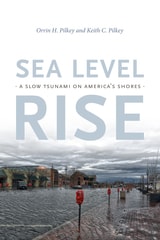
Sea Level Rise
A Slow Tsunami on America's ShoresOrrin H. Pilkey and Keith C. Pilkey
Duke University Press, 2019
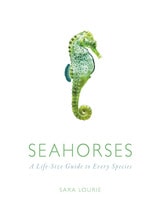
Seahorses
A Life-Size Guide to Every SpeciesSara A. Lourie
University of Chicago Press, 2016
Seahorses celebrates the remarkable variety of seahorse species as well as their exquisiteness. 57 species, including seadragons and pipefish, are presented in lush, life-size photographs alongside descriptive drawings, and each entry includes detailed and up-to-date information on natural history and conservation. Sara Lourie, a foremost expert on seahorse taxonomy, presents captivating stories of species that range from less than an inch to over a foot in height, while highlighting recent discoveries and ecological concerns. Accessibly written, but comprehensive in scope, this book will be a stunning and invaluable reference on seahorse evolution, biology, habitat, and behavior.
Masters of camouflage and rarely seen, seahorses continue to be a fascinating subject of active research. This visually rich and informative book is certain to become the authoritative guide to these charming and unusual wonders of the sea, beloved at aquariums the world over.
Search for a Common Language
Environmental Writing and Educationedited by Melody Graulich & Paul Crumbley
Utah State University Press, 2005
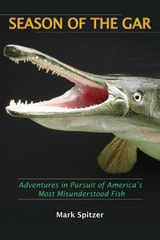
Season of the Gar
Adventures in Pursuit of America's Most Misunderstood FishMark Spitzer
University of Arkansas Press, 2010
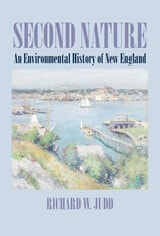
Second Nature
An Environmental History of New EnglandRichard W. Judd
University of Massachusetts Press, 2014
Winner of the 2014 New England Historical Association's James P. Hanlan Book Award
Bounded by the St. Lawrence Valley to the north, Lake Champlain to the west, and the Gulf of Maine to the east, New England may be the most cohesive region in the United States, with a long and richly recorded history. In this book, Richard W. Judd explores the mix of ecological process and human activity that shaped that history over the past 12,000 years. He traces a succession of cultures through New England's changing postglacial environment down to the 1600s, when the arrival of Europeans interrupted this coevolution of nature and culture.
A long period of tension and warfare, inflected by a variety of environmental problems, opened the way for frontier expansion. This in turn culminated in a unique landscape of forest, farm, and village that has become the embodiment of what Judd calls “second nature”—culturally modified landscapes that have superseded a more pristine “first nature.”
In the early 1800s changes in farm production and industrial process transformed central New England, while burgeoning markets at the geographical margins brought rapid expansion in fishing and logging activities. Although industrialization and urbanization severed connections to the natural world, the dominant cultural expression of the age, Romanticism, provided new ways of appreciating nature in the White Mountains and Maine woods. Spurred by these Romantic images and by a long tradition of local resource management, New England gained an early start in rural and urban conservation.
In the 1970s environmentalists, inspired by a widespread appreciation for regional second-nature landscapes, moved quickly from battling pollution and preserving wild lands to sheltering farms, villages, and woodlands from intrusive development. These campaigns, uniquely suited to the region's land-use history, ecology, and culture, were a fitting capstone to the environmental history of New England.
Secrets of the Greatest Snow on Earth, Second Edition
Weather, Climate Change, and Finding Deep Powder in Utah's Wasatch Mountains and Around the WorldJim Steenburgh
Utah State University Press, 2023
Utah has long claimed to have the greatest snow on Earth—the state itself has even trademarked the phrase. In Secrets of the Greatest Snow on Earth, Jim Steenburgh investigates Wasatch weather, exposing the myths, explaining the reality, and revealing how and why Utah’s powder lives up to its reputation. Steenburgh also examines ski and snowboard regions beyond Utah, providing a meteorological guide to mountain weather and snow climates around the world.
Chapters explore mountain weather, avalanches and snow safety, historical accounts of weather events and snow conditions, and the basics of climate and weather forecasting. In this second edition, Steenburgh explains what creates the best snow for skiing and snowboarding using accurate and accessible language and 150 color photographs and illustrations, making Secrets of the Greatest Snow on Earth a helpful tool for planning vacations and staying safe during mountain adventures.
This edition is updated with two new chapters covering microclimates and climate change in greater depth. Steenburgh addresses the declining snowpack and the future of snow across the western United States, as well as the declining snow and ice in several regions of the world—the European Alps in particular. Snowriders, weather enthusiasts, meteorologists, students of snow science, and anyone who dreams of deep powder and bluebird skies will want to get their gloves on this new edition of Secrets of the Greatest Snow on Earth.
Praise for the first edition:
“Everything you always wanted to know about how snow forms and how to follow forecasts so you see
how much an”d where is in the book. It’s a must-have for any fan of snow, sure to get you excited about
winter, and give you a bevy of conversation topics for the chairlift ride.”
—Utah Adventure Journal
“For backcountry enthusiasts that find themselves infatuated with weather patterns, snow-water
equivalents, microclimates, and Utah, this book is a dream come true.”
—The Backcountry Skiing Blog
“Steenburgh shares a career’s worth of knowledge in this book. His love of both snow science and skiing
is obvious, and he adds humor and personality to the scientific discussion.”
—First Tracks!! Online Skiing Magazine
“When it comes to snow, the details—both small- and large-scale—do matter. If we all observed our
surroundings with as much curiosity and enthusiasm as Steenburgh, the world could be a much better-
tended place.”
—American Scientist
Secrets of the Greatest Snow on Earth
Weather, Climate Change, and Finding Deep Powder in Utah's Wasatch Mountains and around the WorldJim Steenburgh
Utah State University Press, 2014
Chapters explore mountain weather, avalanches and snow safety, historical accounts of weather events and snow conditions, and the basics of climate and weather forecasting. Steenburgh explains what creates the best snow for skiing and snowboarding in accurate and accessible language and illustrates his points with 150 color photographs, making Secrets of the Greatest Snow on Earth a helpful tool for planning vacations and staying safe during mountain adventures. Snowriders, weather enthusiasts, meteorologists, students of snow science, and anyone who dreams of deep powder and bluebird skies will want to get their gloves on Secrets of the Greatest Snow on Earth.
Watch Book Trailer!(Special thanks to Ski Utah)
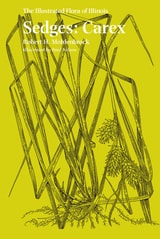
Sedges
CarexRobert H. Mohlenbrock. Illustrated by Paul Nelson
Southern Illinois University Press, 1999
Unique in several respects, Carex is by far the most numerous genus of plants in Illinois. Because of the vast number of species, the similarity of many of the species, and the relatively small size of the critical reproductive structures, the members of this genus are extremely confusing to identify. This book, with its detailed descriptions, key, and precise illustrations, should aid the interested person in the identification of these plants.
Since more than three-fourths of the species of Carex in Illinois are inhabitants of wetlands, an understanding of the genus is critical for those working in wetlands. Amateur and professional botanists will find the information extremely valuable, as well as environmental and conservation groups, garden clubs, farm bureaus, home extension groups, scout organizations, and school libraries. Persons working in natural areas programs and in rare and endangered species programs and those working on environmental impact assessments and wildlife management projects will also find the information pertinent.
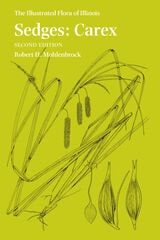
Sedges
CarexRobert H. Mohlenbrock
Southern Illinois University Press, 2011
Since the volume’s original publication in 1999, thirty-four additional species of plants have been recognized in Illinois. Some are discoveries from recent field work, some are from more thorough searches of herbaria, and others are from different taxonomic philosophies.
For each species of Carex in Illinois, there is a full illustration showing the habit of the plant and close-ups of various vegetative and reproductive structures that are crucial for the identification of the individual species. There is also a complete description of each species as well as a detailed discussion of the nomenclature and habitats. Range maps show the county distribution of each species in Illinois. A new and detailed key is provided for identification of the species.
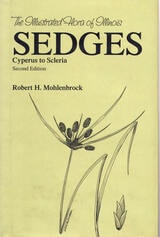
Sedges
Cyperus to ScleriaRobert H. Mohlenbrock
Southern Illinois University Press, 2001
This second edition of Sedges: Cyperus to Scleria brings up to date the identification of species of sedges in Illinois (except Carex) since publication of the first edition in 1976.
During the intervening years, several additions to the sedge flora of Illinois have been made, and many new distributional records have been added. Also, a large number of nomenclatural changes have taken place, resulting in several alterations of scientific names. New illustrations have been provided for all of the additions.
In his introductory material, Robert H. Mohlenbrock discusses the morphology of sedges and the habitats where they can be found. Although the semitechnical keys and descriptions are familiar to experienced botanists, he has simplified them as much as possible to accommodate the novice in sedge identification. He has also included a new key to the sedges and to each genus in which additional species have been added.
For each species, Mohlenbrock has provided a description, statement of habitat and range, Illinois distribution map, discussion, synonymy, and line illustrations showing its diagnostic features. Sedges: Cyperus to Scleria contains 128 illustrations.
Seeds of Power
Environmental Injustice and Genetically Modified Soybeans in ArgentinaAmalia Leguizamón
Duke University Press, 2020
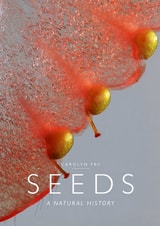
Seeds
A Natural HistoryCarolyn Fry
University of Chicago Press, 2016
With Seeds, Carolyn Fry offers a celebration of these vital but unassuming packages of life. She begins with a sweeping tour through human history, designed to help us understand why we should appreciate and respect these floral parcels. Wheat, corn, and rice, she reminds us, supply the foundations of meals eaten by people around the world. Countless medicines, oils, clothing materials, and building supplies are available only because of the versatility and variety of seed-bearing plants. Fry then provides a comprehensive history of the evolution of seeds, explaining the myriad ways that they have adapted, survived, and thrived across the globe. Delving deeper into the science of seeds, she reveals the fascinating processes of dormancy, reproduction, germination, and dispersal, and showcases the estimable work conservationists are doing today to gather and bank seeds in order to prevent species from going extinct.
Enriched by a stunning array of full-color images, Seeds offers a comprehensive exploration of some of the most enduring and essential players in the natural world.

Seeing Nature
Exploring 34 Parks and Preserves in Philadelphia and the Surrounding Delaware ValleyAnne Sarah Bekker and Edward Sibley Barnard
Temple University Press, 2026
Seeing Nature is a guide to natural wonders found in 34 parks and preserves within Philadelphia and the Delaware Valley. Readers are introduced to a variety of habitats, which host an incredible diversity of animals, plants, and fungi. Beautifully illustrated with more than 1,500 captioned color photographs, this informative guide describes over 1,000 species, from grassland birds to carnivorous plants. Suggested routes and maps for each walk guide the way at each site. More in-depth looks at many special features within these places are offered through photographic spreads that illustrate:
- the ancient trees of Carpenter’s Woods
- the charismatic wading and marsh birds of John Heinz National Wildlife Refuge
- the life of the vernal pools and wetlands of Five Mile Woods
- the dragonflies and damselflies of Piney Hollow Preservation Area
- the new life after a fire at Tom’s Pond in Wharton State Forest
- the riot of colorful mushrooms of Franklin Parker Preserve
- the forest wildflowers of Manderfield Preserve
- and much, much more.
New and seasoned naturalists alike will be inspired to explore and get involved in conserving the special places this region has to offer. Information about the ecology and conservation history of each park and preserve is also included.
Self-Devouring Growth
A Planetary Parable as Told from Southern AfricaJulie Livingston
Duke University Press, 2019
Serengeti III
Human Impacts on Ecosystem DynamicsEdited by A. R. E. Sinclair, Craig Packer, Simon A. R. Mduma, and John M. Fryxel
University of Chicago Press, 2008
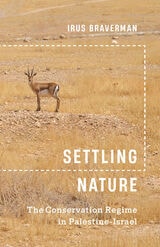
Settling Nature
The Conservation Regime in Palestine-IsraelIrus Braverman
University of Minnesota Press, 2023
A study of Palestine-Israel through the unexpected lens of nature conservation
Settling Nature documents the widespread ecological warfare practiced by the state of Israel. Recruited to the front lines are fallow deer, gazelles, wild asses, griffon vultures, pine trees, and cows—on the Israeli side—against goats, camels, olive trees, hybrid goldfinches, and akkoub—which are affiliated with the Palestinian side. These nonhuman soldiers are all the more effective because nature camouflages their tactical deployment as such.
Drawing on more than seventy interviews with Israel’s nature officials and on observations of their work, this book examines the careful orchestration of this animated warfare by Israel’s nature administration on both sides of the Green Line. Alongside its powerful protection of wildlife biodiversity, the territorial reach of Israel’s nature protection is remarkable: to date, nearly 25 percent of the country’s total land mass is assigned as a park or a reserve. Settling Nature argues that the administration of nature advances the Zionist project of Jewish settlement and the corresponding dispossession of non-Jews from this space.
Seven Summers
A Naturalist Homesteads in the Modern WestJulia Corbett
University of Utah Press, 2013
Seven Summers is the story of a naturalist-turned-professor who flees city life each summer with her pets and power tools to pursue her lifelong dream—building a cabin in the Wyoming woods. With little money and even less experience, she learns that creating a sanctuary on her mountain meadow requires ample doses of faith, patience, and luck. This mighty task also involves a gradual and sometimes painful acquisition of flexibility and humility in the midst of great determination and naive enthusiasm.
For Corbett, homesteading is not about wresting a living from the land, but respecting and immersing herself in it—observing owls and cranes, witnessing seasons and cycles, and learning the rhythms of wind and weather in her woods and meadow. The process changes her in unexpected ways, just as it did for women homesteaders more than a century ago. The more she works with wood, the more she understands the importance of “going with the grain” in wood as well as in life. She must learn to let go, to move through loss and grief, to trust her voice, and to balance independence and dependence. Corbett also gains a better understanding of her fellow Wyomingites, a mix of ranchers, builders, gas workers, and developers, who share a love of place but often hold decidedly different values. This beautifully written memoir will appeal to readers who appreciate stories of the western landscape, independent women, or the appreciation of the natural world.
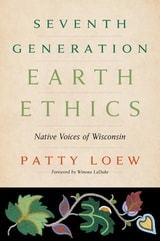
Seventh Generation Earth Ethics
Native Voices of WisconsinPatty Loew
Wisconsin Historical Society Press, 2025
Indigenous perspectives on sustainability, culture, and community
In this collection of twelve biographies, one from each of the Native nations in Wisconsin, author Patty Loew (Bad River Ojibwe) introduces readers to prominent figures in Native sustainability—people whose life’s work reflects the traditional ecological knowledge and cultural values of their people.
Born out of Loew’s thirty years as a journalist and historian, Seventh Generation Earth Ethics highlights individuals who helped to sustain and nurture their nations.
Walter Bresette, Red Cliff Ojibwe, community activist
Hilary Waukau, Menominee, environmental warrior
Frances Van Zile, Mole Lake (Sokaogon) Ojibwe, keeper of the water
James Schlender, Lac Courte Oreilles Ojibwe, treaty rights guardian
Jose Rose, Bad River Ojibwe, elder, environmentalist, and scholar
Dorothy Davids, Stockbridge-Munsee Community Band of Mohican Indians, educator
William Gollnick, Oneida, culture keeper
Thomas St. Germaine, Lac du Flambeau Ojibwe, attorney
Truman Lowe, Ho-Chunk, organic sculpture artist
Jenny and Mary Thunder, Forest County Potawatomi, medicine women
Wanda McFaggen, St. Croix Ojibwe, Tribal Historic Preservationist
Caroline Andler, Brothertown Indian Nation, genealogist
The indigenous people whose lives are depicted in Seventh Generation Earth Ethics understood the cultural gravity that kept their people rooted to their ancestral lands and acted in ways that ensured the growth and success of future generations.
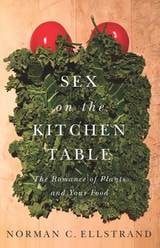
Sex on the Kitchen Table
The Romance of Plants and Your FoodNorman C. Ellstrand
University of Chicago Press, 2018
In Sex on the Kitchen Table, Norman C. Ellstrand takes us on a vegetable-laced tour of this entire sexual adventure. Starting with the love apple (otherwise known as the tomato) as a platform for understanding the kaleidoscopic ways that plants can engage in sex, successive chapters explore the sex lives of a range of food crops, including bananas, avocados, and beets, finally ending with genetically engineered squash—a controversial, virus-resistant vegetable created by a process that involves the most ancient form of sex. Peppered throughout are original illustrations and delicious recipes, from sweet and savory tomato pudding to banana puffed pancakes, avocado toast (of course), and both transgenic and non-GMO tacos.
An eye-opening medley of serious science, culinary delights, and humor, Sex on the Kitchen Table offers new insight into fornicating flowers, salacious squash, and what we owe to them. So as we sit down to dine and ready for that first bite, let us say a special grace for our vegetal vittles: let’s thank sex for getting them to our kitchen table.
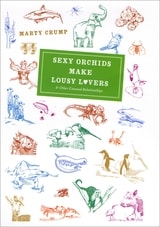
Sexy Orchids Make Lousy Lovers
& Other Unusual RelationshipsMarty Crump
University of Chicago Press, 2009
Vampire bats that regurgitate blood for roosting buddies. Mosquitoes that filch honeydew droplets from ants. Reptiles that enforce chastity on their lovers with copulatory plugs. Capuchin monkeys that use millipede secretions as mosquito repellent. The natural world is full of unusual relationships, and negotiation between life-forms striving to survive is evolution at its most diverse, entertaining, and awe-inspiring.
Picking up where her highly popular Headless Males Make Great Lovers left off, tropical field biologist Marty Crump takes us on another voyage of discovery into the world of unusual natural histories, this time focusing on extraordinary interactions involving animals, plants, fungi, and bacteria. Sexy Orchids Make Lousy Lovers& Other Unusual Relationships illuminates the ceaseless give-and-take between species. Occasionally, both interacting parties benefit, like when hornbills and dwarf mongooses hunt together for food. Other times, like when mites ride in hummingbirds’ nostrils to reach their next meal of nectar, one individual benefits and the other is neither helped nor harmed. But sometimes one individual benefits at the expense of the other; you need only recall your last sinus infection to understand how that works.
Throughout, Crump brings her trademark spunk and zest to these stories of intimate exchange. She introduces readers to penguins that babysit, pseudoscorpions that ride and mate under the wings of giant harlequin beetles, and parasitic fungi that bend insects to their will. A lively companion to Crump’s earlier work, Sexy Orchids Make Lousy Lovers& Other Unusual Relationships captures the bizarre and befuddling aspects of the behavior of animals, plants, and microbes. After this entertaining romp through the world of natural relationships, you’ll never look at an orchid the same way again.