Results by title
337 books match the query 'North America' and 20 start with s
Salt in Eastern North America and the Caribbean
History and ArchaeologyEdited by Ashley A. Dumas and Paul N. Eubanks
University of Alabama Press, 2021
Case studies examining the archaeological record of an overlooked mineral
Salt, once a highly prized trade commodity essential for human survival, is often overlooked in research because it is invisible in the archaeological record. Salt in Eastern North America and the Caribbean: History and Archaeology brings salt back into archaeology, showing that it was valued as a dietary additive, had curative powers, and was a substance of political power and religious significance for Native Americans. Major salines were embedded in collective memories and oral traditions for thousands of years as places where physical and spiritual needs could be met. Ethnohistoric documents for many Indian cultures describe the uses of and taboos and other beliefs about salt.
The volume is organized into two parts: Salt Histories and Salt in Society. Case studies from prehistory to post-Contact and from New York to Jamaica address what techniques were used to make salt, who was responsible for producing it, how it was used, the impact it had on settlement patterns and sociopolitical complexity, and how economies of salt changed after European contact. Noted salt archaeologist Heather McKillop provides commentary to conclude the volume.
.

Secrets of the Greatest Snow on Earth, Second Edition
Weather, Climate Change, and Finding Deep Powder in Utah's Wasatch Mountains and Around the WorldJim Steenburgh
Utah State University Press, 2023
Utah has long claimed to have the greatest snow on Earth—the state itself has even trademarked the phrase. In Secrets of the Greatest Snow on Earth, Jim Steenburgh investigates Wasatch weather, exposing the myths, explaining the reality, and revealing how and why Utah’s powder lives up to its reputation. Steenburgh also examines ski and snowboard regions beyond Utah, providing a meteorological guide to mountain weather and snow climates around the world.
Chapters explore mountain weather, avalanches and snow safety, historical accounts of weather events and snow conditions, and the basics of climate and weather forecasting. In this second edition, Steenburgh explains what creates the best snow for skiing and snowboarding using accurate and accessible language and 150 color photographs and illustrations, making Secrets of the Greatest Snow on Earth a helpful tool for planning vacations and staying safe during mountain adventures.
This edition is updated with two new chapters covering microclimates and climate change in greater depth. Steenburgh addresses the declining snowpack and the future of snow across the western United States, as well as the declining snow and ice in several regions of the world—the European Alps in particular. Snowriders, weather enthusiasts, meteorologists, students of snow science, and anyone who dreams of deep powder and bluebird skies will want to get their gloves on this new edition of Secrets of the Greatest Snow on Earth.
Praise for the first edition:
“Everything you always wanted to know about how snow forms and how to follow forecasts so you see
how much an”d where is in the book. It’s a must-have for any fan of snow, sure to get you excited about
winter, and give you a bevy of conversation topics for the chairlift ride.”
—Utah Adventure Journal
“For backcountry enthusiasts that find themselves infatuated with weather patterns, snow-water
equivalents, microclimates, and Utah, this book is a dream come true.”
—The Backcountry Skiing Blog
“Steenburgh shares a career’s worth of knowledge in this book. His love of both snow science and skiing
is obvious, and he adds humor and personality to the scientific discussion.”
—First Tracks!! Online Skiing Magazine
“When it comes to snow, the details—both small- and large-scale—do matter. If we all observed our
surroundings with as much curiosity and enthusiasm as Steenburgh, the world could be a much better-
tended place.”
—American Scientist

Secrets of the Greatest Snow on Earth
Weather, Climate Change, and Finding Deep Powder in Utah's Wasatch Mountains and around the WorldJim Steenburgh
Utah State University Press, 2014
Chapters explore mountain weather, avalanches and snow safety, historical accounts of weather events and snow conditions, and the basics of climate and weather forecasting. Steenburgh explains what creates the best snow for skiing and snowboarding in accurate and accessible language and illustrates his points with 150 color photographs, making Secrets of the Greatest Snow on Earth a helpful tool for planning vacations and staying safe during mountain adventures. Snowriders, weather enthusiasts, meteorologists, students of snow science, and anyone who dreams of deep powder and bluebird skies will want to get their gloves on Secrets of the Greatest Snow on Earth.
Watch Book Trailer!(Special thanks to Ski Utah)
Settler City Limits
Indigenous Resurgence and Colonial Violence in the Urban Prairie WestHeather Dorries
Michigan State University Press, 2019
Settling the Frontier
Urban Development in America's Borderlands, 1600–1830Joseph P. Alessi
Westholme Publishing, 2025
In 1811, while escorting members of John Jacob Astor’s Pacific Fur Company up the Columbia River, their Chinookan guide refused to advance beyond a particular point that marked a boundary between his people and another indigenous group. Long before European contact, Native Americans created and maintained recognized borders, ranging from family hunting and fishing properties to larger tribal territories to vast river valley regions. Within the confines of these respective borders, the native population often established permanent settlements that acted as the venues for the major political, economic, and social activities that took place in virtually every part of precolonial North America. It was the location of these native settlements that played a major role in the establishment of the first European, and later, American frontier towns.
In Settling the Frontier: Urban Development in America’s Borderlands, 1600–1830, historian Joseph P. Alessi examines how the Pecos, Mohawk, Ohioan, and Chinook tribal communities aided Europeans and Americans in the founding of five of America’s earliest border towns—Santa Fe (New Mexico), Fort Amsterdam (New York City), Fort Orange (Albany, New York), Fort Pitt (Pittsburgh, Pennsylvania), and Fort Astoria (Portland, Oregon). Filling a void in scholarship about the role of Native American communities in the settlement of North America, Alessi reveals that, although often resistant to European and American progress or abused by it, Indians played an integral role in motivating and assisting Europeans with the establishment of frontier towns. In addition to the location of these towns, the native population was often crucial to the survival of the settlers in unfamiliar and unforgiving environments. As a result, these new towns became the logistical and economic vanguards for even greater development and exploitation of North America.

Shadow of the Hunter
Richard K. Nelson
University of Chicago Press, 1983

Shawnee
Ceremonialism Native American TribeJames H. Howard
Ohio University Press, 1981
In this first comprehensive account of Shawnee culture, Dr. Howard assembled data concerning the tribe by utilizing published accounts, documents, maps, photographs, and paintings; and by visiting present-day Shawnees and participating in their ceremonies, games and everyday activities. The work is embellished with musical notations of Shawnee songs, maps, heirloom photographs and several photographs taken by the author during his fieldwork. Of particular interest is a remarkable series of paintings of Shawnee life by gifted Shawnee artist, Earnest Spybuck.
Shawnese Traditions
C. C. Trowbridge's AccountEdited by Vernon Kinietz and Erminie Voegelin
University of Michigan Press, 1939

Singing the Lord's Song in a Strange Land
Hymnody in the History of North American ProtestantismEdith L. Blumhofer
University of Alabama Press, 2008
Music and song are important parts of worship, and hymns have long played a central role in Protestant cultural history. This book explores the ways in which Protestants have used and continue to use hymns to clarify their identity and define their relationship with America and to Christianity. Representing seven groups—Baptists, Presbyterians, Lutherans, Mennonites, Holiness, Hispanics, and Evangelicals—the nine essays reveal how hymns have helped immigrants to establish new identities, contributed to the body of worship resources, and sustained ethnic identity.
Individual essays address the music of the Old-Fashioned Revival Hour, America’s longest running and most successful independent radio program; singing among Swedish evangelicals in America; the German hymn tradition as transformed by Mennonite immigrants; the ways hymnody reinforces themes of the Wesleyan holiness movement; the history of Mercer’s Cluster (1810), a southern hymnal that gave voice to slaves, women, and native Americans; and the Presbyterian hymnal tradition in Canada formed by Scottish immigrants.

Sir Robert Borden
CanadaMartin Thornton
Haus Publishing, 2010

Sixty Years' War for the Great Lakes, 1754-1814
David Curtis Skaggs
Michigan State University Press, 2001
The Sixty Years' War for the Great Lakes contains twenty essays concerning not only military and naval operations, but also the political, economic, social, and cultural interactions of individuals and groups during the struggle to control the great freshwater lakes and rivers between the Ohio Valley and the Canadian Shield. Contributing scholars represent a wide variety of disciplines and institutional affiliations from the United States, Canada, and Great Britain.
Collectively, these important essays delineate the common thread, weaving together the series of wars for the North American heartland that stretched from 1754 to 1814. The war for the Great Lakes was not merely a sideshow in a broader, worldwide struggle for empire, independence, self-determination, and territory. Rather, it was a single war, a regional conflict waged to establish hegemony within the area, forcing interactions that divided the Great Lakes nationally and ethnically for the two centuries that followed.
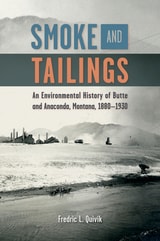
Smoke and Tailings
An Environmental History of Butte and Anaconda, Montana, 1880–1930Fredric L. Quivik
University of Nevada Press, 2026
Butte’s history, a long-standing subject of historical inquiry, gains new depth as Quivik examines the technological developments pioneered by local mining companies. He challenges the simplistic narrative of a powerful corporation imposing its will on helpless agricultural communities. Local communities mounted strong opposition to the industry’s polluting methods; Quivik acknowledges this dynamic while also revealing efforts by the Anaconda Copper Mining Company to address environmental issues. The company developed and implemented technical solutions to minimize resource waste and mitigate damage, driven by both economic interests and litigation pressures. While these advancements lessened some of the environmental harm, they were insufficient to prevent long-term consequences. The operations in Butte and Anaconda ultimately created the largest Superfund complex in the United States, requiring billions of dollars in remediation.
Quivik’s nuanced approach opens the “black box” of technology, showing how innovations both alleviated and exacerbated the environmental challenges of mining, milling, and smelting. In addition to contributing to the rich literature on smelter smoke, this book breaks new ground by examining the underexplored environmental impacts of tailings, offering a fresh perspective on the intersection of industry, technology, and environmental change. The cultural landscapes of Butte and Anaconda retain many features of the region’s history of both environmental degradation and remediation. Smoke and Tailings is an essential addition to the study of Butte’s industrial and ecological history.
Smugglers, Brothels, and Twine
Historical Perspectives on Contraband and Vice in North America’s BorderlandsEdited by Elaine Carey and Andrae M. Marak
University of Arizona Press, 2011
By studying the historical flows of contraband and vice across North American borders, the contributors seek to bring a greater understanding of borderlanders, the actual agents of historical change who often remain on the periphery of most historical analyses that focus on the state or on policy.
To examine the political, economic, and social shifts resulting from the transnational movement of goods, people, and ideas, these contributions employ the analytical categories of race, class, modernity, and gender that underlie this evolution. Chapters focus on the ways power relations created opportunities for engaging in “deviance,” thus questioning the constructs of economic reality versus concepts of criminal behavior. Looking through the lens of transnational flows of contraband and vice, the authors develop a new understanding of nation, immigration, modernization, globalization, consumer society, and border culture.
Sociology for the Twenty-first Century
Continuities and Cutting EdgesEdited by Janet L. Abu-Lughod
University of Chicago Press, 1999
The chapters in part 1 revise theory and methods to comprehend the economic and political institutions that increasingly dominate the lives of individuals and groups, arguing that these giants must be made more democratically accountable. Part 2 explores the social effects that growing globalization, transnationalization, and information technologies are having on politics, economics, and the environment. The final chapters compare how new immigrants from increasingly diversified backgrounds are being absorbed in Canada and the United States, exploring the impact that immigrants are having on preexisting ethnic minorities and on the dominant political culture.
While it is a major attempt to refocus the discipline of sociology, the book's clear, nontechnical style and its attention to issues of central concern to all citizens make it also highly accessible to nonspecialists.
Contributors are Janet L. Abu-Lughod, Tomas Almaguer, Giovanni Arrighi, Gilles Bourque, Randall Collins, Jules Duchastel, Joe Feagin, Harriet Friedmann, Pierre Hamel, Moon-Kie Jung, Joel Levine, Henri Lustiger-Thaler, Louis Maheu, Joel Perlmann, Saskia Sassen, Gideon Sjoberg, Dorothy Smith, Roger Waldinger, and Barry Wellman.

Sociopolitical Aspects of Canal Irrigation in the Valley of Oaxaca
Susan H. Lees
University of Michigan Press, 1973

Southern Religion and Christian Diversity in the Twentieth Century
Wayne Flynt, Foreword by Charles A. Israel and John Giggie
University of Alabama Press, 2016
Essays by the distinguished historian of southern religion Wayne Flynt, that illuminate the often overlooked complexity among southern Protestants.
Throughout its dramatic history, the American South has wrestled with issues such as poverty, social change, labor reform, civil rights, and party politics, and Flynt’s writing reaffirms religion as the lens through which southerners understand and attempt to answer these contentious questions. In Southern Religion and Christian Diversity in the Twentieth Century, however, Flynt gently but persuasively dispels the myth—comforting to some and dismaying to others—of religion in the South as an inert cairn of reactionary conservatism.
Flynt introduces a wealth of stories about individuals and communities of faith whose beliefs and actions map the South’s web of theological fault lines. In the early twentieth century, North Carolinian pastor Alexander McKelway became a relentless crusader against the common practice of child labor. In 1972, Rev. Dr. Ruby Kile, in a time of segregated churches led by men, took the helm of the eight-member Powderly Faith Deliverance Center in Jefferson County, Alabama and built the fledgling group into a robust congregation with more than 700 black and white worshippers. Flynt also examines the role of religion in numerous pivotal court cases, such as the US Supreme Court school prayer case Engel v. Vitale, whose majority opinion was penned by Justice Hugo Black, an Alabamian. These fascinating case studies and many more illuminate a religious landscape of far more varied texture and complexity than is commonly believed.
Southern Religion and Christian Diversity in the Twentieth Century offers much to readers and scholars interested in the South, religion, and theology. Writing with his hallmark wit, warmth, and erudition, Flynt’s Southern Religion and Christian Diversity in the Twentieth Century is a vital record of gospel-inspired southerners whose stories revivify sclerotic assumptions about the narrow conformity of southern Christians.
Sovereign Selves
American Indian Autobiography and the LawDavid J. Carlson
University of Illinois Press, 2005
Carlson argues that by drawing on the conventions of early colonial treaty-making, nineteenth- and early twentieth-century Indian autobiographers sought to adapt and redefine the terms of Indian law as a way to assert specific property-based and civil rights. Focusing primarily on the autobiographical careers of two major writers (William Apess and Charles Eastman), Sovereign Selves traces the way that their sustained engagement with colonial legal institutions gradually enabled them to produce a new rhetoric of "Indianness."
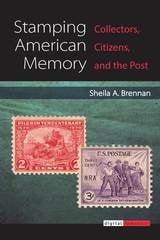
Stamping American Memory
Collectors, Citizens, and the PostSheila A. Brennan
University of Michigan Press, 2018
In the age of digital communications, it can be difficult to imagine a time when the meaning and imagery of stamps was politically volatile. While millions of Americans collected stamps from the 1880s to the 1940s, Stamping American Memory is the first scholarly examination of stamp collecting culture and how stamps enabled citizens to engage their federal government in conversations about national life in early-twentieth-century America. By examining the civic conversations that emerged around stamp subjects and imagery, this work brings to light the role that these underexamined historical artifacts have played in carrying political messages.
Sheila A. Brennan crafts a fresh synthesis that explores how the US postal service shaped Americans’ concepts of national belonging, citizenship, and race through its commemorative stamp program. Designed to be saved as souvenirs, commemoratives circulated widely and stood as miniature memorials to carefully selected snapshots from the American past that also served the political needs of small interest groups. Stamping American Memory brings together the histories of the US postal service and the federal government, collecting, and philately through the lenses of material culture and memory to make a significant contribution to our understanding of this period in American history.
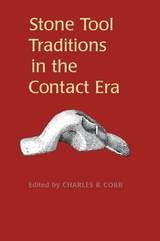
Stone Tool Traditions in the Contact Era
Edited by Charles Richard Cobb
University of Alabama Press, 2003
Explores the impact of European colonization on Native American and Pacific Islander technology and culture
This is the first comprehensive analysis of the partial replacement of flaked stone and ground stone traditions by metal tools in the Americas during the Contact Era. It examines the functional, symbolic, and economic consequences of that replacement on the lifeways of native populations, even as lithic technologies persisted well after the landing of Columbus. Ranging across North America and to Hawai'i, the studies show that, even with wide access to metal objects, Native Americans continued to produce certain stone tool types—perhaps because they were still the best implements for a task or because they represented a deep commitment to a traditional practice.Chapters are ordered in terms of relative degree of European contact, beginning with groups that experienced brief episodes of interaction, such as the Wichita-French meeting on the Arkansas River, and ending with societies that were heavily influenced by colonization, such as the Potawatomi of Illinois. Because the anthology draws comparisons between the persistence of stone tools and the continuity of other indigenous crafts, it presents holistic models that can be used to explain the larger consequences of the Contact Era.
Marvin T. Smith, of Valdosta State University has stated that, “after reading this volume, no archaeologist will ever see the replacement of lithic technology by metal tools as a simple matter of replacement of technologically inferior stone tools with their superior metal counterparts. This is cutting-edge scholarship in the area of contact period studies.”
Surviving in Two Worlds
Contemporary Native American VoicesBy Lois Crozier-Hogle and Darryl Babe Wilson
University of Texas Press, 1997
Surviving in Two Worlds brings together the voices of twenty-six Native American leaders. The interviewees come from a variety of tribal backgrounds and include such national figures as Oren Lyons, Arvol Looking Horse, John Echohawk, William Demmert, Clifford Trafzer, Greg Sarris, and Roxanne Swentzell.
Their interviews are divided into five sections, grouped around the themes of tradition, history and politics, healing, education, and culture. They take readers into their lives, their dreams and fears, their philosophies and experiences, and show what they are doing to assure the survival of their peoples and cultures, as well as the earth as a whole. Their analyses of the past and present, and especially their counsels for the future, are timely and urgent.