Results by title
55 books match the query 'Northwest, Pacific' and 4 start with s
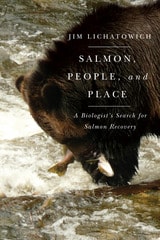
Salmon, People, and Place
A Biologist's Search for Salmon RecoveryJim Lichatowich
Oregon State University Press, 2013
Each year wild Pacific salmon leave their oceanic feeding grounds and swim hundreds of miles back to their home rivers. The salmon’s annual return is a place-defining event in the Pacific Northwest, with immense ecological, economic, and social significance. However, despite massive spending, efforts to significantly alter the endangered status of salmon have failed.
In Salmon, People, and Place, acclaimed fisheries biologist Jim Lichatowich eloquently exposes the misconceptions underlying salmon management and recovery programs that have fueled the catastrophic decline in Northwest salmon populations for more than a century. These programs will continue to fail, he suggests, so long as they regard salmon as products and ignore their essential relationship with their habitat.
But Lichatowich offers hope. In Salmon, People, and Place he presents a concrete plan for salmon recovery, one based on the myriad lessons learned from past mistakes. What is needed to successfully restore salmon, Lichatowich states, is an acute commitment to healing the relationships among salmon, people, and place.
A significant contribution to the literature on Pacific salmon, Salmon, People, and Place: A Biologist’s Search for Salmon Recovery is an essential read for anyone concerned about the fate of this Pacific Northwest icon.
[more]
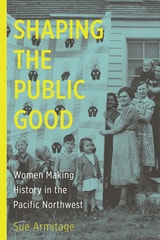
Shaping the Public Good
Women Making History in the Pacific NorthwestSue Armitage
Oregon State University Press, 2015
Carved into a rock overlooking the Columbia River stands the arresting image of Tsagaglalal, or “She Who Watches,” an ancient female chief. As the Wishram people recount, when men replaced women in positions of power, Tsagaglalal was turned to stone by Coyote so that she could forever guide her community and guard its development.
Using the story of She Who Watches as her guide, Armitage shows that even though women were barred from positions of public authority until recently, they have always worked quietly and informally to assure the stability and security of their families and communities. Women’s community-building and cooperative skills have been decisive in developing the societies of the Pacific Northwest—Washington, Oregon, Idaho, western Montana, and British Columbia. Like She Who Watches, women have never been mere observers, but watchful guardians and active shapers of the public good.
Drawing on her three decades of research and teaching and based on hundreds of secondary sources, Armitage’s account explores the varied ways in which, beginning in the earliest times and continuing to the present, women of all races and ethnicities have made the history of our region. An accessible introduction for general readers and scholars alike, Shaping the Public Good restores a missing piece of Pacific Northwest history by demonstrating the part that women—“the famous, the forgotten, and all the women in between”—have always played in establishing their families and building communities.
[more]
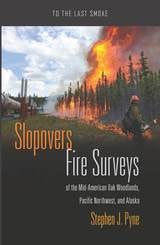
Slopovers
Fire Surveys of the Mid-American Oak Woodlands, Pacific Northwest, and AlaskaStephen J. Pyne
University of Arizona Press, 2019
America is not simply a federation of states but a confederation of regions. Some have always held national attention, some just for a time. Slopovers examines three regions that once dominated the national narrative and may now be returning to prominence.
The Mid-American oak woodlands were the scene of vigorous settlement in the late eighteenth and early nineteenth centuries and thus the scene of changing fire practices. The debate over the origin of the prairies—by climate or fire—foreshadowed the more recent debate about fire in oak and hickory hardwoods. In both cases, today’s thinking points to the critical role of fire.
The Pacific Northwest was the great pivot between laissez-faire logging and state-sponsored conservation and the fires that would accompany each. Then fire faded as an environmental issue. But it has returned over the past decade like an avenging angel, forcing the region to again consider the defining dialectic between axe and flame.
And Alaska—Alaska is different, as everyone says. It came late to wildland fire protection, then managed an extraordinary transfiguration into the most successful American region to restore something like the historic fire regime. But Alaska is also a petrostate, and climate change may be making it the vanguard of what the Anthropocene will mean for American fire overall.
Slopovers collates surveys of these three regions into the national narrative. With a unique mixture of journalism, history, and literary imagination, renowned fire expert Stephen J. Pyne shows how culture and nature, fire from nature and fire from people, interact to shape our world with three case studies in public policy and the challenging questions they pose about the future we will share with fire.
[more]
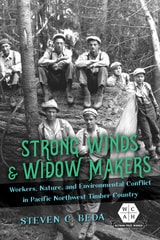
Strong Winds and Widow Makers
Workers, Nature, and Environmental Conflict in Pacific Northwest Timber CountrySteven C. Beda
University of Illinois Press, 2023
Winner of the 2022 Philip Taft Labor History Book Prize
Often cast as villains in the Northwest's environmental battles, timber workers in fact have a connection to the forest that goes far beyond jobs and economic issues. Steven C. Beda explores the complex true story of how and why timber-working communities have concerned themselves with the health and future of the woods surrounding them. Life experiences like hunting, fishing, foraging, and hiking imbued timber country with meanings and values that nurtured a deep sense of place in workers, their families, and their communities. This sense of place in turn shaped ideas about protection that sometimes clashed with the views of environmentalists--or the desires of employers. Beda's sympathetic, in-depth look at the human beings whose lives are embedded in the woods helps us understand that timber communities fought not just to protect their livelihood, but because they saw the forest as a vital part of themselves.
Often cast as villains in the Northwest's environmental battles, timber workers in fact have a connection to the forest that goes far beyond jobs and economic issues. Steven C. Beda explores the complex true story of how and why timber-working communities have concerned themselves with the health and future of the woods surrounding them. Life experiences like hunting, fishing, foraging, and hiking imbued timber country with meanings and values that nurtured a deep sense of place in workers, their families, and their communities. This sense of place in turn shaped ideas about protection that sometimes clashed with the views of environmentalists--or the desires of employers. Beda's sympathetic, in-depth look at the human beings whose lives are embedded in the woods helps us understand that timber communities fought not just to protect their livelihood, but because they saw the forest as a vital part of themselves.
[more]