Results by title
65 books match the query 'Oral tradition' and 9 start with s
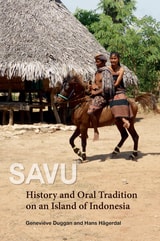
Savu
History and Oral Tradition on an Island of IndonesiaGeneviève Duggan and Hans Hägerdal
National University of Singapore Press, 2018
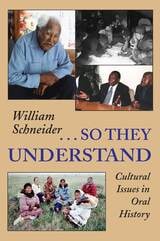
So They Understand
William Schneider
Utah State University Press, 2002
Illustrated with numerous stories collected from Alaska, the Yukon, and South Africa and further enlivened by the author's accessible style and experiences as a longtime oral historian and archivist, So They Understand is a comprehensive study of the special challenges and concerns involved in documenting, representing, preserving, and interpreting oral narratives. The title of the book comes from a quotation by Chief Peter John, the traditional chief of the Tanana Chiefs region in central Alaska: "In between the lines is something special going on in their minds, and that has got to be brought to light, so they understand just exactly what is said."
William Schneider discusses how stories work in relation to their cultures and performance settings, sorts out different types of stories-from broad genres such as personal narratives and life histories to such more specific and less-often considered types as presentations at hearings and other public gatherings-and examines a variety of critical issues, including the roles and relationships of storytellers and interviewers, accurate representation and preservation of stories and their performances, understanding and interpreting their cultural backgrounds and meanings, and intellectual property rights. Throughout, he blends a diverse selection of stories, including his own, into a text rich with pertinent examples.
William Schneider is curator of oral history and associate in anthropology at the Rasmuson Library, University of Alaska Fairbanks, where he introduced oral history "jukeboxes," innovative interactive, multimedia computer files that present and cross-reference audio oral history and related photos and maps. Among other works, his publications include, as editor, Kusiq: An Eskimo Life History from the Arctic Coast of Alaska and, with Phyllis Morrow, When Our Words Return: Writing, Hearing, and Remembering Oral Traditions of Alaska and the Yukon.
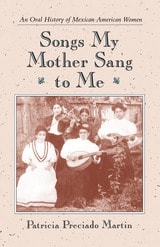
Songs My Mother Sang to Me
An Oral History of Mexican American WomenPatricia Preciado Martin
University of Arizona Press, 1992
Martin's quest took her to ranches, mining towns, and cities throughout southern Arizona, for she sought to document as varied an experience of the contributions of Mexican American women as possible. The interviews covered family history and genealogy, childhood memories, secular and religious traditions, education, work and leisure, environment and living conditions, rites of passage, and personal values. Each of the ten oral histories reflects not only the spontaneity of the interview and personality of each individual, but also the friendship that grew between Martin and her subjects.
Songs My Mother Sang to Me collects voices not often heard and brings to print accounts of social change never previously recorded. These women document more than the details of their own lives; in relating the histories of their ancestors and communities, they add to our knowledge of the culture and contributions of Mexican American people in the Southwest.
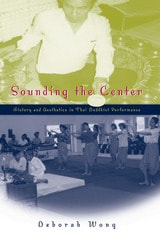
Sounding the Center
History and Aesthetics in Thai Buddhist PerformanceDeborah Wong
University of Chicago Press, 2001
Drawing on her extensive fieldwork, Wong lays out the ritual in detail: the way it is enacted, the foods and objects involved, and the people who perform it, emphasizing the way the performers themselves discuss and construct aspects of the ceremony.
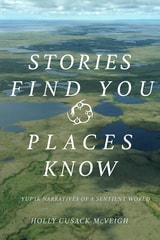
Stories Find You, Places Know
Yup'ik Narratives of a Sentient WorldHolly Cusack-McVeigh
University of Utah Press, 2017
For the Yup’ik people, places are also social actors that react to human actions and emotions. Stories tell how people learn about each other through encounters on the land, and thereby places also learn about people. Places comment on human behavior through the land's responses to specific actions. Stories variously reveal ideas about human associations and relationships between humans and nonhuman beings. Pointing to a systematic correlation between places and narrative elements that has not been previously explored, this volume makes a unique contribution to the literature on place.
Winner of the Brian McConnell Book Award from the International Society for Contemporary Legend Research.
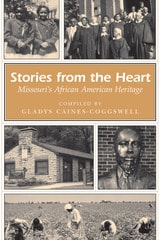
Stories from the Heart
Missouri's African American HeritageCompiled by Gladys Caines-Coggswell
University of Missouri Press, 2009
All along the river, from the front porches of Hannibal to the neighborhoods of St. Louis to the cotton fields of the Bootheel and west to Kansas City, stories are being told.
This collection of family stories and traditional tales brings to print down-home stories about all walks of African American life. Passed down from grandparents and great-grandparents, they have been lovingly gathered by Gladys Caines Coggswell as she visited Missouri communities and participated in storytelling events over the last two decades. These stories bring to life characters with uncommon courage, strength, will, and wit as they offer insight into African American experiences throughout the state’s history.
Often profound, always entertaining, some of these stories hark back to times barely remembered. Many tell of ordinary folks who achieved victories in the face of overwhelming odds. They range from recollections of KKK activities—recalling a Klan leader who owned property on which a black family lived as “the man who was always so nice to us”—to remembered differences between country and city schools and black schoolchildren introduced to Dick and Jane and Little Black Sambo. Stories from the Bootheel shed light on family life, sharecropping, and the mechanization of cotton culture, which in one instance led to a massive migration of rats as the first mechanical cotton pickers came in.
As memorable as the stories are the people who tell them, such as the author’s own “Uncle Pete” reporting on a duck epidemic or Evelyn Pulliam of Kennett telling of her resourceful neighbors in North Lilburn. Loretta Washington remembers sitting on her little wooden stool beside her great-grandmother’s rocking chair on the front porch in Wardell, mesmerized by stories—and the time when rocking chair and little wooden stool were moved inside and the stories stopped. Marlene Rhodes writes of her mother’s hero, Odie, St. Louis “Entrepreneur and English gentleman.”
Whether sharing previously unknown stories from St. Louis or betraying the secret of “Why Dogs Chase Cats,” this book is a rich repository of African American life. And if some of these tales seem unusual, the people remembering them will be the first to tell you: that’s the way it was. Coggswell preserves them for posterity and along with them an important slice of Missouri history.
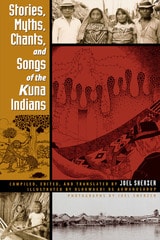
Stories, Myths, Chants, and Songs of the Kuna Indians
Compiled, edited, and translated by Joel Sherzer
University of Texas Press, 2004
The Kuna Indians of Panama, probably best known for molas, their colorful appliqué blouses, also have a rich literary tradition of oral stories and performances. One of the largest indigenous groups in the South American tropics, the majority of them (about 70,000) reside in Kuna Yala, a string of island and mainland villages stretching along the Caribbean coast. It is here that Joel Sherzer lived among them, photographing and recording their verbal performances, which he feels are representative of the beauty, complexity, and diversity of the oral literary traditions of the indigenous peoples of Latin America.
This book is organized into three types of texts: humorous and moralistic stories; myths and magical chants; and women's songs. While quite different from one another, they share features characteristic of Kuna literature as a whole, including appreciation of their environment and a remarkable knowledge of their plants and animals; a belief in spirits as an important component of their world in curing, magic, and aesthetics; and, especially, great humor and a sense of play.
Vividly illustrated by a Kuna artist and accompanied by photographs that lend a sense of being present at the performances, the texts provide readers with a unique aesthetic perspective on this rich culture while preserving an endangered and valuable indigenous oral tradition.
Studies in Malaysian Oral and Musical Traditions
William P. Malm and Amin Sweeney
University of Michigan Press, 1974
Subversive Traditions
Reinventing the West African EpicJonathon Repinecz
Michigan State University Press, 2019