Results by title
64 books match the query 'Pets' and 4 start with s

Secrets of the Snout
The Dog’s Incredible NoseFrank Rosell
University of Chicago Press, 2018
With 300 million receptors to our mere 5 million, a dog’s nose is estimated to be between 100,000 and 100 million times more sensitive than a human’s. No wonder, then, that our nasally inferior species has sought to unleash the prodigious power of canine shnozzes. Rosell here takes us for a walk with a pack of superhero sniffers including Tutta, a dog with a fine nose for fine wine; the pet-finder pooch AJ; search-and-rescue dog Barry; the hunting dog Balder; the police dogs Rasko and Trixxi; the warfare dog Lisa; the cancer detection dog Jack; Tucker, who scents floating killer whale feces; and even Elvis, who can smell when you’re ovulating. With each dog, Rosell turns his nose to the evolution of the unique olfactory systems involved, which odors dogs detect, and how they do it.
A celebration of how the canine sense for scents works—and works for us—Secrets of the Snout will have dog lovers, trainers, and researchers alike all howling with delight. Exploring this most pointed of canine wonders, Rosell reveals the often surprising ways in which dogs are bettering our world, one nose at a time.

Shaggy Muses
The Dogs who Inspired Virginia Woolf, Emily Dickinson, Elizabeth Barrett Browning, Edith Wharton, and Emily BrontëMaureen Adams
University of Chicago Press, 2011
“You’ll call this sentimental—perhaps—but then a dog somehow represents the private side of life, the play side,” Virginia Woolf confessed to a friend. In this charming and engaging book, Maureen Adams celebrates this private, playful side telling readers about the relationships between five remarkable women writers and their dogs.
In Shaggy Muses, Adams explores the work and lives of these authors through the various roles played by their most devoted companions. Elizabeth Barrett Browning was rescued from a life of passivity and illness by Flush, a lively, possessive (and frequently dog-napped!) golden Cocker Spaniel. Emily Brontë’s fierce Mastiff mix, Keeper, provided a safe and loving outlet for the writer’s equally fierce spirit. Emily Dickinson found companionship with Carlo, the gentle, giant Newfoundland who soothed her emotional terrors. A troop of ever-faithful Pekingese warmed Edith Wharton’s lonely heart during her restless travels among Europe and America’s social and intellectual elite. And Virginia Woolf developed a deep attachment to Pinka, a black Cocker Spaniel who was both gift from her lover, Vita Sackville-West, and a link to her husband Leonard.
Based on diaries, letters, and other contemporary accounts—and featuring many illustrations of the writers and their dogs—these five miniature biographies allow unparalleled intimacy with women of genius in their hours of domestic ease and inner vulnerability.
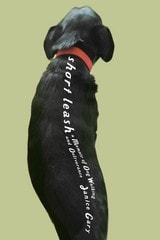
Short Leash
A Memoir of Dog Walking and DeliveranceJanice Gary
Michigan State University Press, 2013
Janice Gary never walked alone without a dog - a big dog. Once, she was an adventurer, a girl who ran off to California with big dreams and hopes of leaving her past behind. But after a brutal rape, her youthful bravado vanished, replaced by a crippling need for safety. When she rescues a gangly Lab-Rottweiler pup,Gary is sure she’s found her biggest protector yet. But after Barney is attacked by a vicious dog, he becomes a clone of his attacker, trying to kill any dog that comes near him. Walking with Barney is impossible. Yet walking without him is unthinkable.
After years of being exiled by her terror and Barney’s defensiveness, Janice risks taking her dog to a park near the Chesapeake Bay. There, she begins the messy, lurching process of walking into her greatest fears. As the leash of the past unravels, Barney sheds the defensive behaviors that once shackled him and Gary steps out of the self-imposed isolation that held her captive for three decades. Beautifully written, Short Leash is much more than a “dog story” or a book about recovering from trauma. It is a moving tale of love and loss, the journey of a broken soul finding itsway toward wholeness.
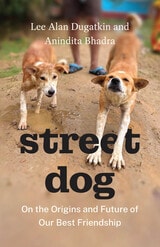
Street Dog
On the Origins and Future of Our Best FriendshipLee Alan Dugatkin and Anindita Bhadra
University of Chicago Press, 0
A fascinating look at the lives of the world’s largest dog population—street dogs—offering essential insights into your dog’s behavior and the mysterious origins of human-dog cooperation.
Today, there are close to a billion dogs on the planet. Some twenty thousand years ago, there were none. How did dogs originate from wolves? And how did we begin our best friendship? Although we can’t go back in time, we can study modern dogs for clues. Of today’s dogs, about eighty percent are street dogs, which don’t live in human homes, but near them, existing in a space between wild and domesticated.
This fascinating and eye-opening book offers us a chance to meet these street dogs and, through them, to imagine the earliest stages of human-canine companionship and collaboration. Award-winning author and animal behaviorist Lee Alan Dugatkin and world canine expert Anindita Bhadra take us from the hallways of Bhadra’s Dog Lab onto the bustling streets of Kolkata, India, where we encounter the intelligent, resourceful, and sometimes mischievous street dogs that have lived alongside humans for hundreds of dog generations. By observing these street dogs’ social structures, survival strategies, and personalities—and comparing them to foxes, wolves, and house dogs, among other species—we learn a lot about canine behavior. Take, for example, Bhadra’s discovery that, no matter how vital food is to a street dog, when given a choice between a meal and a gentle carress, dogs choose love over the food. We also learn that many dogs prefer yellow to other colors; that dog grandmoms may adopt unrelated puppies; and that dog genes harbor a mutation that, in humans, is associated with extreme friendliness. We even begin to understand why dogs pee on, well, everything—particularly on other dog pee.
Watching dogs live independent lives alongside humans, we also start to wonder, as Bhadra does, about the origins of human-dog cooperation. She persuades us that early dogs and humans likely protected each other, as many still do today, and that street dogs may help us to imagine our ancestors’ interactions with the earliest proto-dogs. In their engaging exploration, Dugatkin and Bhadra show that getting to know street dogs may help us understand the past, present, and future of our unique interspecies relationship.