Results by title
168 books match the query 'Poland' and 12 start with s
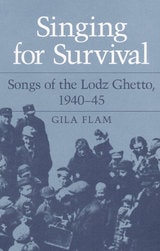
SINGING FOR SURVIVAL
"SONGS OF THE LODZ GHETTO, 1940-45"Gila Flam
University of Illinois Press, 1992
"An extremely accurate and valuable work. There is nothing like it in either the extensive holocaust literature or the ethnomusicology literature."
-- Mark Slobin, author of Chosen Voices: The Story of the American Cantorate
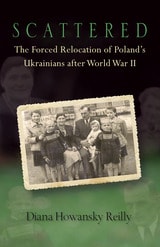
Scattered
The Forced Relocation of Poland’s Ukrainians after World War IIDiana Howansky Reilly
University of Wisconsin Press, 2013
Born in the Lemko region of southeastern Poland, Petro, Melania, and Hania Pyrtej survived World War II only to be separated by political decisions over which they had no control. Petro relocated with his wife to Soviet Ukraine during the population exchange of 1944–46, while his sisters Melania and Hania were resettled to western Poland through Operation Vistula in 1947. As the Ukrainian Insurgent Army fought resettlement, the Polish government meanwhile imprisoned suspected sympathizers within the Jaworzno concentration camp. Melania, Reilly's maternal grandmother, eventually found her way to the United States during Poland's period of liberalization in the 1960s.
Drawing on oral interviews and archival research, Reilly tells a fascinating, true story that provides a bottom-up perspective and illustrates the impact of extraordinary historical events on the lives of ordinary people. Tracing the story to the present, she describes survivors' efforts to receive compensation for the destruction of their homes and communities.
Silver Medal for World History, Independent Publisher Book Awards
Finalist, Housatonic Book Awards
Finalist in History, Foreword Books of the Year

Shadows of Treblinka
Miriam Kuperhand and Saul Kuperhand
University of Illinois Press, 1998
will move and inform generations. As we lose eyewitnesses to this ultimate
horror, the Kuperhands present us with an elegantly restrained, yet hard-hitting,
Kaddish to Polish Jewry.
Miriam was the daughter of a prosperous furrier; Saul was the son of
a poor shoemaker. Miriam was sixteen when she and her brother roamed the
wild countryside of Poland, searching for food and shelter--and for their
parents. Saul was only a few years older when he watched the smoke rising
from the crematoria and knew that his parents, sister, and eight brothers
were gone forever. Miriam lived by hiding; Saul lived by escaping from
the camp.
The authors emphasize the essential role that Polish Christians played
in their survival and stress that wit, courage, faith, luck, and even
a strong will to live were worthless without their help.
The travail of their survival is wrenching yet comforting, tragic yet
upbeat, cinematic yet intimate. Shadows of Treblinka will haunt
and inspire its readers.
Small Privatization
The Transformation of Retail Trade and Consumer Services in the Czech Republic, Hungary and PolandRoman Frydman
Central European University Press, 1994
Socialism, Capitalism, Transformation
Leszek Balcerowicz
Central European University Press, 1995
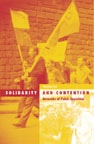
Solidarity And Contention
Networks Of Polish OppositionMaryjane Osa
University of Minnesota Press, 2003
Offers an innovative model for understanding how social movements occur in repressive societies
After a series of failed attempts at mobilizing society, Poland’s opposition sprang to surprising—and newly effective—life with the formation of the Solidarity trade union in 1980. If not for those past failures, this book suggests, Solidarity might never have succeeded. Solidarity and Contention deftly reconstructs the networks of protest in Communist Poland to show how waves of dissent during the 1950s, 1960s, and 1970s left an organizational residue that both instructed and enabled Solidarity and, ultimately, the Polish revolution.
Using newly available documentary sources, Maryjane Osa establishes links between activists during three waves of protest: 1954 to 1959, 1966 to 1970, and 1976 to 1980. She shows how political challengers, applying lessons drawn from past failures, developed an ideological formula to de-emphasize divisive issues and promote symbolic concerns, thus facilitating coalition building. Solidarity was therefore able to take advantage of a large opposition network already well in place before the founding of the union. An important case study in itself, the book also answers one of the most intriguing questions in social movement research: how can movements emerge in authoritarian states—where media are state controlled, the rights of assembly and speech are restricted, and the risks of collective action are high?
Solidarity and the Politics of Anti-Politics
Opposition and Reform in Poland since 1968David Ost
Temple University Press, 1991

Solidarity's Secret
The Women Who Defeated Communism in PolandShana Penn
University of Michigan Press, 2006
---Lech Walesa, former President of Poland and winner of the 1983 Nobel Peace Prize
Solidarity's Secret is the first book to record the crucial yet little-known role women played in the rise of an independent press in Poland and in the fall of that country's communist government.
Shana Penn pieces together a decade of interviews with the women behind the Polish pro-democracy movement-women whose massive contributions were obscured by the more public successes of their male counterparts.
Penn reveals the story of how these brave women ran Solidarity and the main opposition newspaper, Tygodnik Mazowsze, while prominent men like Lech Walesa were underground or in jail during the 1980s martial law years. The same women then went on to play influential roles in post-communist Poland.
Solidarity's Secret gives us a richly detailed story-within-a-story-unheard of not only in the West, but until recently even within Poland itself-from one of the most important eras in modern history.

Start-Up Poland
The People Who Transformed an EconomyJan Cienski
University of Chicago Press, 2018
As the Warsaw bureau chief for the Financial Times, Jan Cienski spent more than a decade talking with the people who did something that had never been done before: recreating a market economy out of a socialist one. Poland had always lagged behind wealthier Western Europe, but in the 1980s the gap had grown to its widest in centuries. But the corrupt Polish version of communism also created the conditions for its eventual revitalization, bringing forth a remarkably resilient and entrepreneurial people prepared to brave red tape and limited access to capital. In the 1990s, more than a million Polish people opened their own businesses, selling everything from bicycles to leather jackets, Japanese VCRs, and romance novels. The most business-savvy turned those primitive operations into complex corporations that now have global reach.
Well researched and accessibly and entertainingly written, Start-Up Poland tells the story of the opening bell in the East, painting lively portraits of the men and women who built successful businesses there, what their lives were like, and what they did to catapult their ideas to incredible success. At a time when Poland’s new right-wing government plays on past grievances and forms part of the populist and nationalist revolution sweeping the Western world, Cienski’s book also serves as a reminder that the past century has been the most successful in Poland’s history.

Stories Of An Imaginary Childhood
Melvin Jules Bukiet
University of Wisconsin Press, 2002
In Stories of an Imaginary Childhood Melvin Jules Bukiet inscribes the world that might have been his own if not for the catastrophe that destroyed most of Jewish life in eastern Europe during the 1940s. Set before the Holocaust in the tiny Polish shtetl of Proszowice, each interconnected story follows the young protagonist through the pleasures and humiliations of childhood and the rites of manhood, as he fights against historical, social, and psychological forces that threaten to pull him down.
"Bukiet proves that he is an expert at the [short story] form. His stories lift and soar, encompassing a world of truth in just a few pages. His characters have flesh and life. . . . Bukiet’s topics are varied and universal: first love, growing up, trying to get along with people who are different. Each of these is approached with great humor and a deep respect for life experience."—Daniel Neman, Richmond News Leader
"Jewish-American fiction of a new order, one able to bring the best that has been thought and said about voice and literary texture to the service of a world with richer meaning and a deeper resonance."—Sanford Pinsker, Midstream
"Bukiet is enchanting, original, and thoroughly irresistible in any disguise. Stories of an Imaginary Childhood is an extraordinary achievement, an immensely enjoyable collection of truly remarkable tales."—Susan Miron, Miami Herald

Streets of Crocodiles
Photography, Media, and Postsocialist Landscapes in PolandPhotographs by Kamil Turowski, Introduction by J. Hoberman, Essays by Katarzyna Marciniak
Intellect Books, 2011
This powerful presentation of photographs of Poland from the late 1980s to the present depicts the hybridized landscape of this pivotal Eastern European nation following its entry into the European Union. A visual record of the country's transition from socialism to capitalism, it focuses on the industrial blue-collar city ofLodz—located in the heart of New Europe and home to nearly one million people. Photographer Kamil Turowski's monotones are captivating—seeming to conceal a looming threat—while Katarzyna Marciniak's accompanying text expands on the photos and the "crocodilian" texture of contemporary Eastern Europe. A walk on the wild side, Streets of Crocodiles captures viscerally the changing landscape of postsocialist Poland.
Survival at Treblinka
Geography, Gender, and Social Networks in Jewish ResistanceChad S.A. Gibbs
University of Wisconsin Press, 2026
On August 2, 1943, prisoners at the Nazi extermination camp Treblinka, located in occupied Poland, launched an uprising against their captors, during which hundreds successfully escaped while guards killed as many in the process. In this groundbreaking work, Chad S.A. Gibbs draws upon recently discovered sources and novel research methods to fundamentally reassess Jewish resistance at Treblinka—both before and during the revolt.
Using the testimonies of revolt survivors, prior escapees, those who passed through the camp, and a handful of bystander witnesses and former SS guards, Gibbs sheds new light on the events of August 2 as well as many prior acts of resistance. Critical to these new interpretations of the revolt are the actions of women prisoners, who here assume a central place in this story for the first time.