Results by title
142 books match the query 'Political Advocacy' and 7 start with s
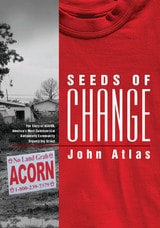
Seeds of Change
The Story of ACORN, America's Most Controversial Antipoverty Community Organizing GroupJohn Atlas
Vanderbilt University Press, 2010
Seeds of Change goes beyond the headlines of the last Presidential campaign to describe what really happened in ACORN's massive voter registration drives, why it triggered an unrelenting attack by Fox News and the Republican Party, and how it confronted its internal divisions and scandals.
Based on Atlas's own eyewitness original reporting, as the only journalist to have access to ACORN's staff and board meetings, this book documents the critical transition from founder Wade Rathke, a white New Orleans radical to Bertha Lewis, a Brooklyn African American activist.
The story begins in the 1970s, when a small group of young men and women, led by a charismatic college dropout, began a quest to help the powerless help themselves. In a tale full of unusual characters and dramatic conflicts, the book follows the ups and downs of ACORN's organizers and members as they confront big corporations and unresponsive government officials in Albuquerque, Brooklyn, Chicago, Detroit, Little Rock, New Orleans, Philadelphia, and the Twin Cities.
The author follows the course of local and national campaigns to organize unions, fight the subprime mortgage crisis, promote living wages for working people, struggle for affordable housing and against gentrification, and help Hurricane Katrina's survivors return to New Orleans.
The book dispels the conservative myth that we can only help the poor through private soup kitchens and charity and the liberal myth that the solution rests simply with more government services. Seeds of Change, not only provides a gripping look at ACORN's four decades of effective organizing, but also offers a hopeful analysis of the potential for a revival of real American democracy.
An offering of The Progressive Book Club.

Smoke in Their Eyes
Lessons in Movement Leadership from the Tobacco WarsMichael Pertschuk
Vanderbilt University Press, 2001
A lifelong public health leader and tobacco control advocate, Pertschuk provides uncommon insight into the movement and its opposition. Questions that reveal themselves here can be applied to public advocacy as a whole: how can movement leaders gauge and best employ popular support? Who has legitimacy to speak on behalf of a particular public cause? And perhaps most crucially, how is it possible for those whose cause is a moral one to strike political compromise? With a narrative as compelling as the issues it raises, Smoke in Their Eyes will be of great interest to everyone from students of public advocacy and political science to general readers.

Socialist Feminism
A New ApproachFrieda Afary
Pluto Press, 2022
What is socialist feminism and why is it needed to fight the global rise of authoritarianism and fascism?
Frieda Afary brings the insights gained through her study of feminist philosophy, her international activism, and her work in community education as a public librarian in Los Angeles, offering a bold new vision of an alternative to capitalism, racism, sexism, heterosexism, and alienation.
Socialist Feminism: A New Approach reclaims theories of women’s oppression through a return to humanism, enriched by social reproduction theories, Black feminist intersectionality, abolitionism, queer theories, Marxist-Humanism, and the author’s own experiences as an Iranian American feminist, scholar, and activist.
She looks at global developments in gender relations since the 1980s, the impact of the Covid-19 pandemic, the distinct features of twenty-first-century authoritarianism, and current struggles against it, drawing out lessons for revolutionary theorizing, organizing, and international solidarity including the #MeToo and Black Lives Matter movements.
This book also contains a study guide that transforms it into a useful pedagogical tool for teachers and activists.

Socialist Feminism
A New ApproachFrieda Afary
Pluto Press, 2022
A new take on a powerful and revolutionary movement.
What is socialist feminism and why is it needed to fight the global rise of authoritarianism and fascism?
Frieda Afary brings the insights gained through her study of feminist philosophy, her international activism, and her work in community education as a public librarian in Los Angeles, offering a bold new vision of an alternative to capitalism, racism, sexism, heterosexism, and alienation.
Socialist Feminism: A New Approach reclaims theories of women’s oppression through a return to humanism, enriched by social reproduction theories, Black feminist intersectionality, abolitionism, queer theories, Marxist-Humanism, and the author’s own experiences as an Iranian American feminist, scholar, and activist.
She looks at global developments in gender relations since the 1980s, the impact of the Covid-19 pandemic, the distinct features of twenty-first-century authoritarianism, and current struggles against it, drawing out lessons for revolutionary theorizing, organizing, and international solidarity including the #MeToo and Black Lives Matter movements.
Contains a study guide that transforms it into a useful pedagogical tool for teachers and activists.
Sound System
The Political Power of MusicDave Randall
Pluto Press, 2017
Sound System is the story of one musician's journey to discover what makes music so powerful. Dave Randall uses his insider's knowledge of the industry to shed light on the secrets of celebrity, commodification and culture.
This is a book of raves, riots and revolution. From the Glastonbury Festival to the Arab Spring, Pop Idol to Trinidadian Carnival, Randall finds political inspiration across the musical spectrum and poses the question: how can we make music serve the interests of the many, rather than the few?
Published in partnership with the Left Book Club.

Story Tech
Power, Storytelling, and Social Change AdvocacyFilippo Trevisan, Michael Vaughan, and Ariadne Vromen
University of Michigan Press, 2025
Story Tech explores the increasingly influential impact of technologies—such as databases, algorithms, and digital story banks—that are usually invisible to the public. It shows that hidden “story tech” enables political organizations to treat stories as data that can be queried for storylines and used to intervene in news and information cycles in real time. In particular, the authors review successful story-centered campaigns that helped change dominant narratives on disability rights, marriage equality, and essential workers’ rights in the United States and Australia. They compare the use of storytelling advocacy across different types of organizations including volunteer grassroots groups, large national advocacy coalitions, and trade unions, and examine how trends differ for storytellers, organizers, and their technology partners. As political stories shift to being “on demand,” they reshape power relationships in key public debates in ways that produce moments of tension as well as positive narrative change. Story Tech examines these trends and illustrates how storytelling success can—and should—be achieved in conjunction with personal dignity, privacy, and empowerment for storytellers and their communities, particularly marginalized ones.
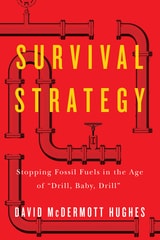
Survival Strategy
Stopping Fossil Fuels in the Age of "Drill, Baby, Drill"David McDermott Hughes
Rutgers University Press, 2027
In the United States, the climate movement has, so far, failed in the all-important task of shutting down fossil fuels. David McDermott Hughes offers a plan for a more daring form of climate politics, recommending that the climate movement adopt a strategy of mass blockades and sabotage against functioning fossil fuel infrastructure. Ideally, the saboteurs would not get caught—but if they did, in their trials they could appeal to the little-known power of jury nullification to avoid prison and to make pipelines unprotectable.
Climate change is no longer a technical problem that can simply be fixed. It is now a political predicament that must be faced. Elected politicians—even those who support renewable energy—remain committed to the extraction of petroleum and methane. No one with political power is even attempting to do the one thing that must be done: shut down fossil fuels. With trepidation, Hughes offers the last resort against the approaching climate catastrophe.