Results by title
87 books match the query 'Political Freedom' and 9 start with s
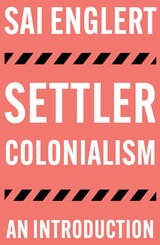
Settler Colonialism
An IntroductionSai Englert
Pluto Press, 2022
Sai Englert offers readers an accessible and global account of settler colonialism, taking in its history, some of its main characteristics, and its continued relevance today.
From the Palestinian struggle against Israel occupation to the First Nations' mass opposition to pipeline construction in North America, indigenous peoples are at the forefront of some of the most important struggles of our age. Rich with their own unique histories, characteristics, and social relations, these different struggles are connected by the enemy they face: settler colonialism.
While settler-colonial regimes differ, Englert explains how they are all defined by a fundamental conflict between themselves and the indigenous people they aim to dispossess, exploit and/or eliminate.
To understand settler colonialism as a distinct, structural, and contemporary process, is also to start engaging with a number of international social movements, political struggles, and solidarity campaigns differently. It is to start asking how decolonization – as a material struggle for freedom – might be possible.

Sound System
The Political Power of MusicDave Randall
Pluto Press, 2017
Sound System is the story of one musician's journey to discover what makes music so powerful. Dave Randall uses his insider's knowledge of the industry to shed light on the secrets of celebrity, commodification and culture.
This is a book of raves, riots and revolution. From the Glastonbury Festival to the Arab Spring, Pop Idol to Trinidadian Carnival, Randall finds political inspiration across the musical spectrum and poses the question: how can we make music serve the interests of the many, rather than the few?
Published in partnership with the Left Book Club.
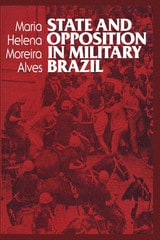
State and Opposition in Military Brazil
By Maria Helena Moreira Alves
University of Texas Press, 1985
Based on extensive research into opposition and government documents, including the previously unavailable Manual Básico da Escola de Guerra, Maria Helena Moreira Alves provides a rich description of the long and tortuous attempt by the Brazilian military government to create a workable “national security state” in the face of determined and resilient opposition.
She interviewed more than one hundred key figures in government, the military, business, professional associations, the Catholic church, grassroots organizations, and trade unions in order to analyze politically and historically the relationship between civil society and government structures in Brazil during the years 1964–1983. Her study charts the rise and subsequent decline of the military government’s power, concluding with a discussion of the abertura policy instituted under General João Batista Figueiredo.

Street Fight
Mean America and the War on Sesame StreetMichael Davis
Rutgers University Press, 2027
Street Fight is muscularly reported journalism trained on the people and events that shaped Sesame Street from the 1990s to the present. Expanding from Street Gang, Michael Davis’s acclaimed origin story of the series, this revelatory new book probes deeply into the decisions made by Sesame Workshop, the New York-based corporate non-profit that has weathered political and financial storms, all while upholding aspirational values instilled in the late-1960s.
Hundreds of eyewitnesses provide on-the-record recollections of the show’s evolution in the narrative and a series of chapter-ending oral histories.
Interwoven are passages of time-tested alliances, courtships and marriages, the back stories of the artists who provided the show’s melodies and lyrics. That, plus plenty of dish about the performers behind Muppets of Sesame Street, and how Jim Henson, decades after his shocking passing in 1990, is a spectral figure quite powerful in spirit.
Laughter and tears – in equal measure – await readers.
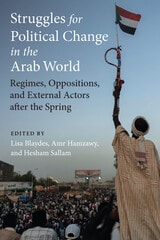
Struggles for Political Change in the Arab World
Regimes, Oppositions, and External Actors after the SpringEdited by Lisa Blaydes, Amr Hamzawy, and Hesham Sallam
University of Michigan Press, 2022
The advent of the Arab Spring in late 2010 was a hopeful moment for partisans of progressive change throughout the Arab world. Authoritarian leaders who had long stood in the way of meaningful political reform in the countries of the region were either ousted or faced the possibility of political if not physical demise. The downfall of long-standing dictators as they faced off with strong-willed protesters was a clear sign that democratic change was within reach. Throughout the last ten years, however, the Arab world has witnessed authoritarian regimes regaining resilience, pro-democracy movements losing momentum, and struggles between the first and the latter involving regional and international powers.
This volume explains how relevant political players in Arab countries among regimes, opposition movements, and external actors have adapted ten years after the onset of the Arab Spring. It includes contributions on Egypt, Morocco, Kuwait, Saudi Arabia, Syria, Algeria, Sudan, Lebanon, Iraq, Jordan, Yemen, and Tunisia. It also features studies on the respective roles of the United States, China, Iran, and Turkey vis-à-vis questions of political change and stability in the Arab region, and includes a study analyzing the role of Saudi Arabia and its allies in subverting revolutionary movements in other countries.

Studies into Darkness
The Perils and Promise of Freedom of SpeechEdited by Carin Kuoni and Laura Raicovich
Amherst College Press, 2022
Contributions by Zach Blas, Mark Bray, Natalie Diaz, Aruna D’Souza, Silvia Federici and Gabriela López Dena, Jeanne van Heeswijk, shawné michaelain holloway, Prathibha Kanakamedala and Obden Mondésir, Amar Kanwar, Carin Kuoni, Lyndon, Debora, and Abou, Svetlana Mintcheva, Mendi + Keith Obadike, Vanessa Place, Laura Raicovich, Michael Rakowitz, Kameelah Janan Rasheed, and Nabiha Syed.
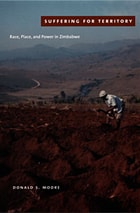
Suffering for Territory
Race, Place, and Power in ZimbabweDonald S. Moore
Duke University Press, 2005
Moore makes a significant contribution to postcolonial theory with his conceptualization of “entangled landscapes” by articulating racialized rule, situated sovereignties, and environmental resources. Fusing Gramscian cultural politics and Foucault’s analytic of governmentality, he enlists ethnography to foreground the spatiality of power. Suffering for Territory demonstrates how emplaced micro-practices matter, how the outcomes of cultural struggles are contingent on the diverse ways land comes to be inhabited, labored upon, and suffered for.
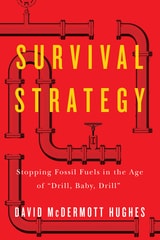
Survival Strategy
Stopping Fossil Fuels in the Age of "Drill, Baby, Drill"David McDermott Hughes
Rutgers University Press, 2027
In the United States, the climate movement has, so far, failed in the all-important task of shutting down fossil fuels. David McDermott Hughes offers a plan for a more daring form of climate politics, recommending that the climate movement adopt a strategy of mass blockades and sabotage against functioning fossil fuel infrastructure. Ideally, the saboteurs would not get caught—but if they did, in their trials they could appeal to the little-known power of jury nullification to avoid prison and to make pipelines unprotectable.
Climate change is no longer a technical problem that can simply be fixed. It is now a political predicament that must be faced. Elected politicians—even those who support renewable energy—remain committed to the extraction of petroleum and methane. No one with political power is even attempting to do the one thing that must be done: shut down fossil fuels. With trepidation, Hughes offers the last resort against the approaching climate catastrophe.
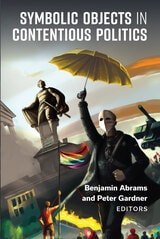
Symbolic Objects in Contentious Politics
Benjamin Abrams and Peter Gardner, Editors
University of Michigan Press, 2023
When we observe protest marches, striking workers on picket lines, and insurgent movements in the world today, a litany of objects routinely fill our field of vision. Some such objects are ubiquitous the world over, like flags, banners, and placards. Others are situationally unique: Who could have anticipated the historical importance of a flower placed in the barrel of a gun, a flaming torch, a sea of umbrellas, a motorist’s yellow vest, a feather headdress, an AK-47, or a knitted pink hat? This book explores the “stuff” at the heart of protests, revolutions, civil wars, and other contentious political events, with particular focus on those objects that have or acquire symbolic importance. In the context of “contentious politics” (disruptive political episodes where people try to change societies without going through institutions), certain objects can divide and unite social groups, tell stories, make declarations, spark controversy, and even trigger violent upheavals.
This book draws together scholars from a variety of fields to discuss symbolic objects in contentious politics: their meanings, uses, functions, and social responses. In bringing these phenomena together, this book offers a serious, distinctive, and cohesive theoretical contribution that draws upon diverse scholarly work in order to form the building blocks for future inquiry in the field. The aim is not merely to “close the gap” in the literature, but to create space in the field for further and more fruitful inquiry.