Results by title
1148 books match the query 'Political Ideologies' and 79 start with s

Sabra and Shatila
September 1982Bayan Nuwayhed Al-Hout
Pluto Press, 2004
The book covers the history of the Sabra and Shatila massacre, which took place over three bloody days in the Lebanese capital Beirut. It was committed against Palestinian refugees by Lebanese militias, aided and supervised by the Israeli Army, which had encircled the district.
Now available for the first time in English, this classic book is the most comprehensive, authoritative account of what happened and who was responsible. The author, Bayan Nuwayhed al-Hout, was a Professor at the Lebanese University at the time. Driven by the horror of what occurred, she interviewed survivors and set up an oral history project immediately after the massacre to preserve testimonies. This book is the result.
Following a general introduction, the first part contains interviews mainly with victims' families. The second part analyses statistical data and attempts to determine the number of victims. The conclusion, 'Who Was Responsible?', sheds light on the various parties responsible.
Over five-hundred pages long, illustrated with photographs and maps, unrivalled in detail and scope, this book is a courageous attempt to make sense of what happened and an important political document in its own right.
Sacralization of History in Times of Crises
Modern Eastern EuropeLiliya Berezhnaya
Central European University Press, 2026
The contributors seek to identify the political, societal and religious actors promoting the sacralization of history. They consider which networks promote sacralized visions of history and who is excluded from the sacralized community of national belonging. They also explore which historical topics seem best suited for the sacralization of history and question what happens to the rituals, objects, or spaces, formerly regarded as sacral: are they profaned, neglected, or re-inscribed by new national histories, and is there a religious language of national history? These are the major questions of this book.

Saints, Sinners, and Sovereign Citizens
The Endless War over the West's Public LandsJohn L. Smith
University of Nevada Press, 2026
The grazing rights battle between Nevada rancher Cliven Bundy and the federal government, resulting in a tense, armed standoff between Bundy’s supporters and federal law enforcement officers, garnered international media attention in 2014. Saints, Sinners, and Sovereign Citizens places the Bundy conflict into the larger context of the Sagebrush Rebellion and the long struggle over the use of federal public lands in the American West.
Author John L. Smith skillfully captures the drama of the Bundy legal tangle amid the current political climate. Although no shots were fired during the standoff itself, just weeks later self-proclaimed Bundy supporters murdered two Las Vegas police officers and a civilian. In Eastern Oregon, other Bundy supporters occupied the federal offices of the Malheur National Wildlife Refuge, and one of them died in a hail of bullets.
While examining the complex history of federal public land policies, Smith exposes both sides of this story. He shows that there are passionate true believers on opposite sides of the insurrection, along with government agents and politicians in Washington complicit in efforts to control public lands for their wealthy allies and campaign contributors. With the promise of billions of dollars in natural resource profits and vast tracts of environmentally sensitive lands hanging in the balance, the West’s latest range war is the most important in the nation’s history. This masterful exposé raises serious questions about the fate of America’s public lands and the vehement arguments that are framing the debate from all sides.

Salud y Shalom
Conversations with Jewish Veterans of the Abraham Lincoln BrigadeJoseph Butwin
University of Illinois Press, 2025
Joseph Butwin’s oral history presents conversations with ten Jewish veterans of the ALB. Recorded from 1992–94 in the wake of European communism’s collapse, the interviews explore the milieus that formed the volunteers. Immigrants established the secular Yiddish-speaking socialism that became a part of many Jewish American communities. Their children, reacting to economic depression and the rise of fascism, enlisted in the ALB. Butwin follows their stories from their youthful motives and choices through their lives as Jews and leftists, and records the reckonings that took place as they reflected on their past.
Insightful and revealing, Salud y Shalom explores the forces of identity and history that led young Jewish leftists to fight fascism.
Salvador Allende
Revolutionary Democrat: Revolutionarvy DemocratVictor Figueroa Clark
Pluto Press, 2013
This is a political biography of one of the 20th century’s most emblematic left-wing figures - Salvador Allende, who was president of Chile until he was ousted by General Pinochet in a US-supported coup in 1973.
Victor Figueroa Clark guides us through Allende's life and political project, answering some of the most frequently asked questions. Was he a revolutionary or a reformist? A bureaucrat or inspirational democrat? Clark argues that Allende and the Popular Unity Party created a unique fusion which was both revolutionary and democratic.
The process led by Allende was a symbol of hope for the left during his short time in power. Forty years on, and with left governments back in power across Latin America, this book looks back at the man and the process in order to draw vital lessons for the left in Latin America and around the world today.
San Francisco Reds
Communists in the Bay Area, 1919-1958Robert W. Cherny
University of Illinois Press, 2024
Founded in 1919, the Communist Party (CP) in San Francisco survived an ineffectual early period to become a force in the trade union heyday of the 1930s. Robert Cherny uses the lives and careers of more than fifty members to tell the story of the city’s CP from its founding through 1958.
Cherny draws on FBI files, the records of the CP at the Russian State Archive for Social and Political History, interviews, and memoirs to follow male and female party and union leaders, rank-and-file members, and others. His history reveals why people joined the CP while charting the frequent changes in policy, constant member turnover, and disruptive factionalism that limited party aims and successes. Cherny also follows his subjects through their resignations, expulsions, or other reasons for departure and looks at the CP’s influence on their lives in subsequent years.
Vivid and exhaustively researched, San Francisco Reds is a long view account of the personal motivations and activism of an Old Left generation in a West Coast city.
Sandino's Communism
Spiritual Politics for the Twenty-First CenturyBy Donald C. Hodges
University of Texas Press, 1992
Drawing on previously unknown or unassimilated sources, Donald C. Hodges here presents an entirely new interpretation of the politics and philosophy of Augusto C. Sandino, the intellectual progenitor of Nicaragua's Sandinista revolution.
The first part of the book investigates the political sources of Sandino's thought in the works of Babeuf, Buonarroti, Blanqui, Proudhon, Bakunin, Most, Malatesta, Kropotkin, Ricardo Flores Magón, and Lenin—a mixed legacy of pre-Marxist and non-Marxist authoritarian and libertarian communists.
The second half of the study scrutinizes the philosophy of nature and history that Sandino made his own. Hodges delves deeply into this philosophy as the supreme and final expression of Sandino's communism and traces its sources in the Gnostic and millenarian occult undergrounds. This results in a rich study of the ways in which Sandino's revolutionary communism and communist spirituality intersect—a spiritual politics that Hodges presents as more realistic than the communism of Karl Marx.
While accepting the current wisdom that Sandino was a Nicaraguan liberal and social reformer, Hodges also makes a persuasive case that Sandino was first and foremost a communist, although neither of the Marxist nor anarchist variety. He argues that Sandino's eclectic communist spirituality was more of an asset than a liability for understanding the human condition, and that his spiritual politics promises to be more relevant than Marxism-Leninism for the twenty-first century. Indeed, Hodges believes that Sandino's holistic communism embraces both deep ecology and feminist spirituality—a finding that is sure to generate lively and productive debate.

Sandino's Daughters Revisited
Feminism in NicaraguaRandall, Margaret
Rutgers University Press, 1994
Sandino's Daughters, Margaret Randall's conversations with Nicaraguan women in their struggle against the dictator Somoza in 1979, brought the lives of a group of extraordinary female revolutionaries to the American and world public. The book remains a landmark. Now, a decade later, Randall returns to interview many of the same women and others. In Sandino's Daughters Revisited, they speak of their lives during and since the Sandinista administration, the ways in which the revolution made them strong — and also held them back. Ironically, the 1990 defeat of the Sandinistas at the ballot box has given Sandinista women greater freedom to express their feelings and ideas.
Randall interviewed these outspoken women from all walks of life: working-class Diana Espinoza, head bookkeeper of a employee-owned factory; Daisy Zamora, a vice minister of culture under the Sandinistas; and Vidaluz Meneses, daughter of a Somozan official, who ties her revolutionary ideals to her Catholicism. The voices of these women, along with nine others, lead us to recognize both the failed promises and continuing attraction of the Sandinista movement for women. This is a moving account of the relationship between feminism and revolution as it is expressed in the daily lives of Nicaraguan women.
Sandino's Daughters
Testimonies of Nicaraguan Women in StruggleRandall, Margaret
Rutgers University Press, 1995
"A collection of varied and amazing lives, all bent on shaping history. Together, these experienced, undeterred Nicaraguan women offer powerful clues about a truly revolutionary and democratizing feminism."––Adrienne Rich
"If it were not for writers like Margaret, how would women around the world find each other when there is such an institutional effort to keep us apart and silent? Here Margaret brings us the voice of Sandino's daughters, honoring his hat and wearing their own, wiser now, having been part of political and personal revolution."––Holly Near
"Powerful, moving, and challenging. Everyone interested in decency and justice will want to read Sandino's Daughters Revisited."––Blanche Wiesen Cook
Sandino's Daughters, Margaret Randall's conversations with Nicaraguan women in their struggle against the dictator Somoza in 1979, brought the lives of a group of extraordinary female revolutionaries to the American and world public. The book remains a landmark. Now, a decade later, Randall returns to interview many of the same women and others. In Sandino's Daughters Revisited, they speak of their lives during and since the Sandinista administration, the ways in which the revolution made them strong––and also held them back. Ironically, the 1990 defeat of the Sandinistas at the ballot box has given Sandinista women greater freedom to express their feelings and ideas.
Randall interviewed these outspoken women from all walks of life: working-class Diana Espinoza, head bookkeeper of a employee-owned factory; Daisy Zamora, a vice minister of culture under the Sandinistas; and Vidaluz Meneses, daughter of a Somozan official, who ties her revolutionary ideals to her Catholicism. The voices of these women, along with nine others, lead us to recognize both the failed promises and continuing attraction of the Sandinista movement for women. This is a moving account of the relationship between feminism and revolution as it is expressed in the daily lives of Nicaraguan women.
School Choice and the Future of American Democracy
Scott Franklin Abernathy
University of Michigan Press, 2005
"Scott Abernathy takes up big questions and provides answers grounded in the complex reality of policy and politics. School Choice and the Future of American Democracy is a book written for those who understand that the world does not fit the simple explanations too often put forward."
--Clarence Stone, Professor Emeritus, University of Maryland, and Research Professor, George Washington University
"Will school choice revive or eviscerate democratic processes and institutions? Will it narrow or exacerbate the range of educational inequities? This book takes several differently angled slices into these questions and draws intriguing answers."
--Jeffrey R. Henig, Teachers College, Columbia University, and author of Rethinking School Choice: Limits of the Market Metaphor
"Through extensive research and refreshingly impartial analysis, Scott Abernathy probes how the use of market principles to reform public schools affects democratic citizenship. Treating citizens first and foremost as customers, he finds, threatens civic engagement and the well-being of schools, especially in the nation's neediest communities. This thoughtful and balanced appraisal is must-reading for those concerned about the future of American education and democracy."
--Suzanne Mettler, Alumni Associate Professor, Syracuse University, and author of Soldiers to Citizens: The G.I. Bill and the Making of the Greatest Generation
Scott Franklin Abernathy is Assistant Professor of Political Science, University of Minnesota

Screen Nazis
Cinema, History, and DemocracySabine Hake
University of Wisconsin Press, 2012
From the late 1930s to the early twenty-first century, European and American filmmakers have displayed an enduring fascination with Nazi leaders, rituals, and symbols, making scores of films from Confessions of a Nazi Spy (1939) and Watch on the Rhine (1943) through Des Teufels General (The Devil’s General, 1955) and Pasqualino settebellezze (Seven Beauties, 1975), up to Der Untergang (Downfall, 2004), Inglourious Basterds (2009), and beyond.
Probing the emotional sources and effects of this fascination, Sabine Hake looks at the historical relationship between film and fascism and its far-reaching implications for mass culture, media society, and political life. In confronting the specter and spectacle of fascist power, these films not only depict historical figures and events but also demand emotional responses from their audiences, infusing the abstract ideals of democracy, liberalism, and pluralism with new meaning and relevance.
Hake underscores her argument with a comprehensive discussion of films, including perspectives on production history, film authorship, reception history, and questions of performance, spectatorship, and intertextuality. Chapters focus on the Hollywood anti-Nazi films of the 1940s, the West German anti-Nazi films of the 1950s, the East German anti-fascist films of the 1960s, the Italian “Naziploitation” films of the 1970s, and issues related to fascist aesthetics, the ethics of resistance, and questions of historicization in films of the 1980s–2000s from the United States and numerous European countries.

Searching for Home Abroad
Japanese Brazilians and TransnationalismJeffrey Lesser, ed.
Duke University Press, 2003
The concepts of home and diaspora are engaged and debated throughout the volume. Drawing on numerous sources—oral histories, interviews, private papers, films, myths, and music—the contributors highlight the role ethnic minorities have played in constructing Brazilian and Japanese national identities. The essayists consider the economic and emotional motivations for migration as well as a range of fascinating cultural outgrowths such as Japanese secret societies in Brazil. They explore intriguing paradoxes, including the feeling among many Japanese-Brazilians who have migrated to Japan that they are more "Brazilian" there than they were in Brazil. Searching for Home Abroad will be of great interest to scholars of immigration and ethnicity in the Americas and Asia.
Contributors. Shuhei Hosokawa, Angelo Ishi, Jeffrey Lesser, Daniel T. Linger, Koichi Mori, Joshua Hotaka Roth, Takeyuki (Gaku) Tsuda, Keiko Yamanaka, Karen Tei Yamashita

Secret Power
WikiLeaks and Its EnemiesStefania Maurizi
Pluto Press, 2022
*Winner of the European Award for Investigative And Judicial Journalism 2021*
*Winner of the Premio Alessandro Leogrande Award for Investigative Journalism 2022*
*Winner of the Premio Angelo Vassallo Award 2022*
'I want to live in a society where secret power is accountable to the law and to public opinion for its atrocities, where it is the war criminals who go to jail, not those who have the conscience and courage to expose them.'
It is 2008, and Stefania Maurizi, an investigative journalist with a growing interest in cryptography, starts looking into the little-known organisation WikiLeaks. Through hushed meetings, encrypted files and explosive documents, what she discovers sets her on a life-long journey that takes her deep into the realm of secret power.
Working closely with WikiLeaks' founder Julian Assange and his organisation for her newspaper, Maurizi has spent over a decade investigating state criminality protected by thick layers of secrecy, while also embarking on a solitary trench warfare to unearth the facts underpinning the cruel persecution of Assange and WikiLeaks.
With complex and disturbing insights, Maurizi’s tireless journalism exposes atrocities, the shameful treatment of Chelsea Manning and Edward Snowden, on up to the present persecution of WikiLeaks: a terrifying web of impunity and cover-ups.
At the heart of the book is the brutality of secret power and the unbearable price paid by Julian Assange, WikiLeaks and truthtellers.

Secrets and Truths
Ethnography in the Archive of Romania's Secret PoliceKatherine Verdery
Central European University Press, 2014
Secular Faith
How Culture Has Trumped Religion in American PoliticsMark A. Smith
University of Chicago Press, 2015
Mark A. Smith provocatively argues that religion is not nearly the unchanging conservative influence in American politics that we have come to think it is. In fact, in the long run, religion is best understood as responding to changing political and cultural values rather than shaping them. Smith makes his case by charting five contentious issues in America’s history: slavery, divorce, homosexuality, abortion, and women’s rights. For each, he shows how the political views of even the most conservative Christians evolved in the same direction as the rest of society—perhaps not as swiftly, but always on the same arc. During periods of cultural transition, Christian leaders do resist prevailing values and behaviors, but those same leaders inevitably acquiesce—often by reinterpreting the Bible—if their positions become no longer tenable. Secular ideas and influences thereby shape the ways Christians read and interpret their scriptures.
So powerful are the cultural and societal norms surrounding us that Christians in America today hold more in common morally and politically with their atheist neighbors than with the Christians of earlier centuries. In fact, the strongest predictors of people’s moral beliefs are not their religious commitments or lack thereof but rather when and where they were born. A thoroughly researched and ultimately hopeful book on the prospects for political harmony, Secular Faith demonstrates how, over the long run, boundaries of secular and religious cultures converge.

Security V. Liberty
Conflicts Between National Security and Civil Liberties in American HistoryDaniel Farber
Russell Sage Foundation, 2008
Seeds of Mobilization
The Authoritarian Roots of South Korea's DemocracyJoan E. Cho
University of Michigan Press, 2024
By using original subnational protest event datasets, government publications, oral interviews, and publications from labor and student movement organizations, Joan E. Cho takes a long view of democratization that incorporates the decades before and after South Korea’s democratic transition. She demonstrates that Korea’s democratization resulted from a combination of factors from below and from above, and that authoritarian development itself was a hidden root cause of democratic development in South Korea. Seeds of Mobilization shows how socioeconomic development did not create a steady pressure toward democracy but acted as a “double-edged sword” that initially stabilized autocratic regimes before destabilizing them over time.
Seeking a New Majority
The Republican Party and American Politics, 1960-1980Robert Mason
Vanderbilt University Press, 2013
Seeking a New Majority assembles an international group of scholars to move beyond the ideas and activities of party leaders who have hitherto received the bulk of historical attention. It illuminates how the Republican Party expanded its regional base, especially in the South, appealed to new constituencies ranging from blue-collar workers to Christian fundamentalists, and enhanced the political appeal of conservatism. It also examines how Republicans engaged in a remarkable organizational and intellectual mobilization to challenge Democratic Party dominance--in search of a new majority.
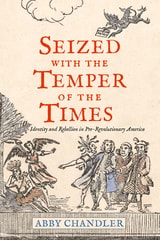
Seized with the Temper of the Times
Identity and Rebellion in Pre-Revolutionary AmericaAbby Chandler
Westholme Publishing, 2023
In Seized with the Temper of the Times Identity and Rebellion in Pre-Revolutionary America, historian Abby Chandler explores, as never before, the complex local and transatlantic tensions which infused the early imperial crisis. She argues that colonial responses to the Stamp Act were rooted in local tensions and that the Regulator Rebellion was fueled by trans-Atlantic tensions. These two paradoxes, a local crisis cast as imperial affair and an imperial affair cast as local crisis, tell a very different story than the one to which we are accustomed. Without pre-existing local tensions, the fury of the Stamp Act crisis might not have spilled over during the summer of 1765, and, without the added strains of the imperial crisis, the Regulator Rebellion might not have lasted for five years. The questions about the intersecting roles of local and imperial/federal interests and identities raised during both the Stamp Act crisis and the Regulator Rebellion would also continue to inform political thought in Rhode Island and North Carolina in the coming decades. Both colonies had long histories of challenges to their autonomy and their residents embraced the coming revolution before many of their counterparts, but they would also be reluctant participants in the rising union envisioned by the framers of the Constitution.
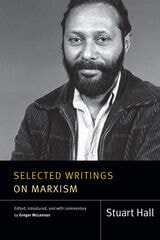
Selected Writings on Marxism
Stuart Hall
Duke University Press, 2021

Serbian Orthodox Fundamentals
The Quest for an Eternal IdentityChristos Mylonas
Central European University Press, 2003

Seriality and Social Change
Peter Hitchcock
Seagull Books, 2025
From Karl Marx’s decision to publish Capital in serial form to contemporary adaptations in manga and graphic novels, Seriality and Social Change examines how serialization both democratizes knowledge and shapes the very process of social transformation. Peter Hitchcock delves into the paradox of the serial: while it can expand access to radical thought, it can also impose structural limits, slowing or containing the revolutionary potential it seeks to unleash.
Through a sweeping analysis that links literature and political economy, Hitchcock explores how serialized narratives frame, sustain, or even hinder movements for change. Does seriality mirror the mechanics of capitalism, or can it be a tool for subverting them? Engaging with this question across genres and forms, Seriality and Social Change invites readers to rethink how revolution is told and imagined over time.
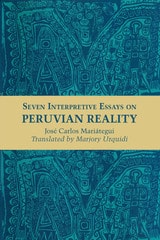
Seven Interpretive Essays on Peruvian Reality
By José Carlos Mariátegui
University of Texas Press, 1971
"Once again I repeat that I am not an impartial; objective critic. My judgments are nourished by my ideals, my sentiments, my passions. I have an avowed and resolute ambition: to assist in the creation of Peruvian socialism. I am far removed from the academic techniques of the university."—From the Author's Note
Jose Carlos Mariátegui was one of the leading South American social philosophers of the early twentieth century. He identified the future of Peru with the welfare of the Indian at a time when similar ideas were beginning to develop in Middle America and the Andean region. Generations of Peruvian and other Latin American social thinkers have been profoundly influenced by his writings.
Seven Interpretive Essays on Peruvian Reality (Siete ensayos de interpretación de la realidad peruana), first published in 1928, is Mariátegui's major statement of his position and has gone into many editions, not only in Peru but also in other Latin American countries. The topics discussed in the essays—economic evolution, the problem of the Indian, the land problem, public education, the religious factor, regionalism and centralism, and the literary process—are in many respects as relevant today as when the book was written.
Mariátegui's thinking was strongly tinged with Marxism. Because contemporary sociology, anthropology, and economics have been influenced by Marxism much more in Latin America than in North America, it is important that North Americans become more aware of Mariátegui's position and accord it its proper historical significance.
Jorge Basadre, the distinguished Peruvian historian, in an introduction written especially for this translation, provides an account of Mariátegui's life and describes the political and intellectual climate in which these essays were written.

Shakespeare and Trump
Jeffrey R. Wilson
Temple University Press, 2020
Should we draw an analogy between Shakespeare’s tyrants—Richard III, Julius Caesar, Macbeth, and King Lear—and Donald Trump? In Shakespeare and Trump, Jeffrey Wilson applies literary criticism to real life, examining plot, character, villainy, soliloquy, tragedy, myth, and metaphor to identify the formal features of the Trump phenomenon, and its hidden causes, structure, and meanings.
Wilsonapproaches his comparison prismatically. He first considers two high-concept (read: far-fetched) Shakespeare adaptations penned by Trump’s former chief political strategist Steve Bannon. He looks at University of Pennsylvania students protesting Trump by taking down a monument to Shakespeare. He reads Trump’s first 100 days in office against Netflix’s House of Cards. Wilson also addresses the summer 2017 Shakespeare in the Park production of Julius Caesar wherein an assassination of a Trump-ian leader caused corporations to withdraw sponsorship.
These stories reveal a surprising—and bizarre—relationship between the provincial English playwright and the billionaire President of the United States, ostensibly a medieval king living in a modern world. The comparison reveals a politics that blends villainy and comedy en route to tragedy.
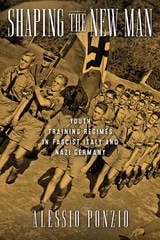
Shaping the New Man
Youth Training Regimes in Fascist Italy and Nazi GermanyAlessio Ponzio
University of Wisconsin Press, 2017
Ponzio shows how the Italian Fascists' pedagogical practices influenced the origin and evolution of the Hitler Youth. He dissects similarities and differences in the training processes of the youth leaders of the Opera Nazionale Balilla, Gioventù Italiana del Littorio, and Hitlerjugend. And, he explores the transnational institutional interactions and mutual cooperation that flourished between Mussolini's and Hitler's youth organizations in the 1930s and 1940s.
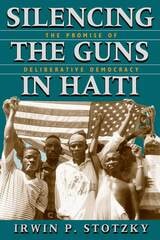
Silencing the Guns in Haiti
The Promise of Deliberative DemocracyIrwin P. Stotzky
University of Chicago Press, 1997
"A provocative study of the prospects for the rule of law in Haiti."—Marilyn Bowden, Miami Today
"[Stotzky] deepens insights into the contradictory obstacles to democratic governance in Haiti."—Library Journal
"Controversial and stimulating."—Choice
"Lucid and informative. . . . Stotzky gives readers a good foundation for understanding the pressures facing the impoverished but determined Caribbean island."—Islands
Situated Marxism
Theoretical Practices in State Socialist EuropeAdela Hincu
Central European University Press, 2026
Slave State
Rereading Orwell's 1984David Lowenthal
St. Augustine's Press, 2021
There is no positive political message in 1984, argues Lowenthal, but there is positive moral message that is nearly always overlooked by commentators. “Through the movement of the novel, Orwell tries to impress on the passions, hearts and minds of his readers the most valuable lessons concerning the right and wrong way to live. With the decline of Christianity’s influence in forming the moral sense of the West and the concomitant increase in power hunger, wielding instruments born of modern enlightenment, what mankind most needed was moral guidance, conveyed not abstractly, through philosophy, but in such a way as to grip the whole soul.”
But can Orwell be trusted as a guide to the goodness in human nature? Lowenthal says he can be, and more. He gives us a sketch of the intellectual process that compels Orwell to ultimately outgrow Marxism, his detection and rejection of totalitarian regimes (above all in Communism), and in what way the principles of liberalism of his day were given warning labels by a writer who was not a formally educated political philosopher. Laced with relativism, any current of thought that does not acknowledge the proper ends of man will be effaced by the next master of the masses. Lowenthal echoes Orwell when he says, “we have abandoned inculcating good citizenship, higher ideals and a sense of personal worth in the schools, encouraging instead an aimless low-level conformist ‘individuality’ just waiting to be harnessed together and directed. Given these conditions, can we be sure we have left the conditions to the horrors of 1984 far behind as mere fiction?”
Orwell and Lowenthal are unlikely co-collaborators, unless one perceives how much alike in their exhortations to fellow man they are. The steady tenor of their hard warning is made possible by a hope-soaked confidence that, in utter sobriety, is repulsed by anything that threatens human freedom and dignity. This book is required reading for anyone who believes in the return of socialism. Indeed, any recent university graduate should be debriefed by Lowenthal before entering the real world.
Slavoj Zizek
A Critical IntroductionIan Parker
Pluto Press, 2004
'This is not simply the best critical introduction to Zizek – in a much more radical sense, this is the only critical introduction to Zizek. Parker's study is much more than an important contribution to the ongoing debate: it redefines its very terms.' Yannis Stavrakakis, author of 'Lacan and the Political'
'A sharp, clear and radical analysis.' Christian Ingo Lenz Dunker, Professor of Psychoanalytic Theory and Lacanian Psychoanalyst, Sao Paulo, Brazil.
Since the publication of his first book in English in 1989, Slavoj Zizek has quickly become one of the most widely read and contentious intellectuals alive today. With dazzling wit and tremendous creativity he has produced innovative and challenging explorations of Lacan, Hegel and Marx, and used his insights to exhilarating effect in analyses of popular culture.
While Zizek is always engaging, he is also elusive and even contradictory. It can be very hard to finally determine where he stands on a particular issue. Is Zizek Marxist or Post-Marxist? How seriously should we take his recent turn to Christianity?
Slavoj Zizek: A Critical Introduction shows the reader a clear path through the twists and turns of Zizek's writings. Ian Parker takes Zizek's treatment of Hegel, Lacan and Marx in turn and outlines and assesses Zizek's interpretation and extension of these thinkers' theories. While Parker is never hastily dismissive of Zizek's innovations, he remains critical throughout, aware that the energy of Zizek's writing can be bewitching and beguiling as well as engaging and profound.
Small Donors in US Politics
Myth and RealityZachary Albert and Raymond J. La Raja
University of Chicago Press, 2026
A myth-busting investigation of small donors: who they are, how they spend their money, and whose campaigns actually benefit from their donations.
Many political reformers argue that more robust small donor participation in US campaigns would reduce the influence of the wealthiest Americans and improve political responsiveness to ordinary citizens. Drawing on extensive data, including surveys and campaign records, Zachary Albert and Raymond J. La Raja largely dispel this myth, offering the first comprehensive portrait to date of small donors in US elections.
Although small donor contributions to high-profile, national races have increased markedly since 2018, the US campaign finance system allows for even larger sums of money from Super PACs and other independent spending groups. Moreover, small donors are mostly similar to their larger contributor counterparts: both are socioeconomically advantaged, strongly partisan, ideologically extreme, and distinct from non-donors. Small donors can also be impulsive: they tend to give mostly to high-profile candidates on the ideological extremes, empowering media celebrities and norm-breakers rather than consensus-builders, and they underinvest in competitive and down-ballot races. Importantly, the candidates who rely most heavily on small donor support are not necessarily better legislators or representatives.
Yet, the story is not entirely bleak. Small donors bring energy and resources, especially for challengers and outsider candidates. The book shows how reforms could channel this energy more productively—by strengthening political parties, emphasizing local representation, and creating systems that broaden participation beyond the most ideological citizens.
Timely, accessible, and grounded in data, Small Donors in US Politics reveals both the promise and the peril of small donor politics—and what it will take to make money in politics serve democracy, not undermine it.
Small Privatization
The Transformation of Retail Trade and Consumer Services in the Czech Republic, Hungary and PolandRoman Frydman
Central European University Press, 1994
So Much to Be Angry About
Appalachian Movement Press and Radical DIY Publishing, 1969–1979Shaun Slifer
West Virginia University Press, 2021
In a remarkable act of recovery, So Much to Be Angry About conjures an influential but largely obscured strand in the nation’s radical tradition—the “movement” printing presses and publishers of the late 1960s and 1970s, and specifically Appalachian Movement Press in Huntington, West Virginia, the only movement press in Appalachia. More than a history, this craft- and activist-centered book positions the frontline politics of the Appalachian Left within larger movements in the 1970s. As Appalachian Movement Press founder Tom Woodruff wrote: “Appalachians weren’t sitting in the back row during this struggle, they were driving the bus.”
Emerging from the Students for a Democratic Society chapter at Marshall University, and working closely with organizer and poet Don West, Appalachian Movement Press made available an eclectic range of printed material, from books and pamphlets to children’s literature and calendars. Many of its publications promoted the Appalachian identity movement and “internal colony” theory, both of which were cornerstones of the nascent discipline of Appalachian studies. One of its many influential publications was MAW, the first feminist magazine written by and for Appalachian women.
So Much to Be Angry About combines complete reproductions of five of Appalachian Movement Press’s most engaging publications, an essay by Shaun Slifer about his detective work resurrecting the press’s history, and a contextual introduction to New Left movement publishing by Josh MacPhee. Amply illustrated in a richly produced package, the volume pays homage to the graphic sensibility of the region’s 1970s social movements, while also celebrating the current renaissance of Appalachia’s DIY culture—in many respects a legacy, Slifer suggests, of the movement publishing documented in his book.
Soccer's Neoliberal Pitch
The Sport's Power, Profit, and Discursive PoliticsJohn M. Sloop
University of Alabama Press, 2023
A powerful cultural critique of soccer’s public rhetoric
American sports agnostics might raise an eyebrow at the idea that soccer represents a staging ground for cultural, social, and political possibility. It is just another game, after all, in a society where mass-audience spectator sports largely avoid any political stance other than a generic, corporate-friendly patriotism. But John M. Sloop picks up on the work of Laurent Dubois and others to see in American soccer—a sport that has achieved immense participation and popularity despite its struggle to establish major league status—a game that permits surprisingly diverse modes of thinking about national identity because of its marginality.
As a rhetorician who draws on both critical theory and culture, Sloop seeks to read soccer as the game intersects with gender, race, sexuality, and class. The result of this engagement is a sense of both enormous possibility and real constraint. If American soccer offers more possibility because of its marginality, looking at how those possibilities are constrained can provide valuable insights into neoliberal logics of power, profit, politics, and selfhood.
In Soccer’s Neoliberal Pitch, Sloop analyzes a host of soccer-adjacent phenomena: the equal pay dispute between the US women’s national team and the US Soccer Federation, the significance of hooligan literature, the introduction of English soccer to American TV audiences, the strange invisibility of the Mexican soccer league despite its consistent high TV ratings, and the reading of US national teams as “underdogs” despite the nation’s quasi-imperial dominance of the Western hemisphere. An invaluable addition to a growing bookshelf on soccer titles, Soccer’s Neoliberal Pitch serves as a model for critical cultural work with sports, with appeal to not only sports studies, but cultural studies, communication, and even gender studies classrooms.
Social Capital Online
Alienation and AccumulationKane X. Faucher
University of Westminster Press, 2018
What is ‘social capital’? The enormous positivity surrounding it conceals the instrumental economic rationality underpinning the notion as corporations silently sell consumer data for profit. Status chasing is just one aspect of a process of transforming qualitative aspects of social interactions into quantifiable metrics for easier processing, prediction, and behavioural shaping.
A work of critical media studies, Social Capital Online examines the idea within the new ‘network spectacle’ of digital capitalism via the ideas of Marx, Veblen, Debord, Baudrillard and Deleuze. Explaining how such phenomena as online narcissism and aggression arise, Faucher offers a new theoretical understanding of how the spectacularisation of online activity perfectly aligns with the value system of neoliberalism and its data worship. Even so, at the centre of all, lie familiar ideas – alienation and accumulation – new conceptions of which he argues are vital for understanding today’s digital society.

Socialism, Capitalism and Alternatives
Area Studies and Global TheoriesEdited by Peter J. S. Duncan and Elisabeth Schimpfössl
University College London, 2019
Through analysis of post-Socialist Russia and Central and Eastern Europe, as well as of the United Kingdom, China, and the United States, Socialism, Capitalism and Alternatives confronts the difficulty we face in articulating alternatives to capitalism, socialism, and threatening populist regimes. Beginning with accounts of the impact of capitalism on countries left behind by the planned economies, the book moves on to consider how China has become a beacon of dynamic economic growth, aggressively expanding its global influence. The final section of the book poses alternatives to the ideological dominance of neoliberalism in the West.
Socialism, Capitalism, Transformation
Leszek Balcerowicz
Central European University Press, 1995
Socialism
An Analysis of its Past and FutureErzsébet Szalai
Central European University Press, 2005
Socialist Feminism
A New ApproachFrieda Afary
Pluto Press, 2022
What is socialist feminism and why is it needed to fight the global rise of authoritarianism and fascism?
Frieda Afary brings the insights gained through her study of feminist philosophy, her international activism, and her work in community education as a public librarian in Los Angeles, offering a bold new vision of an alternative to capitalism, racism, sexism, heterosexism, and alienation.
Socialist Feminism: A New Approach reclaims theories of women’s oppression through a return to humanism, enriched by social reproduction theories, Black feminist intersectionality, abolitionism, queer theories, Marxist-Humanism, and the author’s own experiences as an Iranian American feminist, scholar, and activist.
She looks at global developments in gender relations since the 1980s, the impact of the Covid-19 pandemic, the distinct features of twenty-first-century authoritarianism, and current struggles against it, drawing out lessons for revolutionary theorizing, organizing, and international solidarity including the #MeToo and Black Lives Matter movements.
This book also contains a study guide that transforms it into a useful pedagogical tool for teachers and activists.
Socialist Feminism
A New ApproachFrieda Afary
Pluto Press, 2022
A new take on a powerful and revolutionary movement.
What is socialist feminism and why is it needed to fight the global rise of authoritarianism and fascism?
Frieda Afary brings the insights gained through her study of feminist philosophy, her international activism, and her work in community education as a public librarian in Los Angeles, offering a bold new vision of an alternative to capitalism, racism, sexism, heterosexism, and alienation.
Socialist Feminism: A New Approach reclaims theories of women’s oppression through a return to humanism, enriched by social reproduction theories, Black feminist intersectionality, abolitionism, queer theories, Marxist-Humanism, and the author’s own experiences as an Iranian American feminist, scholar, and activist.
She looks at global developments in gender relations since the 1980s, the impact of the Covid-19 pandemic, the distinct features of twenty-first-century authoritarianism, and current struggles against it, drawing out lessons for revolutionary theorizing, organizing, and international solidarity including the #MeToo and Black Lives Matter movements.
Contains a study guide that transforms it into a useful pedagogical tool for teachers and activists.
Socialist Subjectivities
Queering East Germany under HoneckerScott Harrison, Jeff Hayton, and Katharine White, Editors
University of Michigan Press, 2025
Whether one was an apparatchik, artist, or alcoholic, the everyday interactions, experiences, and rituals of late socialism proved crucial to establishing the conditions around which subjecthood was constructed. Despite stereotypes of apathy and inertia, East Germans lent a considerable dynamism to their society, and by generating a cacophony of opinions and a heterogeneity of ideas, they constantly transformed state socialism. By foregrounding socialist subjects and the iterative nature of socialism during these decades, this volume paints a richer portrait of East Germany—one that illuminates how East Germans imagined their futures in a society whose collapse they could not foresee.
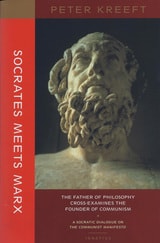
Socrates Meets Marx
The Father of Philosophy Cross-examines the Founder of CommunismPeter Kreeft
St. Augustine's Press, 2003
Humorous, frank, and insightful, this book challenges the reader to step in and take hold of what is right and to cast away what is wrong. Topics covered included such varied subjects as private property, the individual, the Three Philosophies of Man, women, individualism, and more. A wonderful introduction to philosophy for the neophyte, and a joy for the experienced student of thought.
“Imagine two of the most influential thinkers of all time, and two of the most diametrically opposed, thrust together in a no holds barred debate about some of the most important questions: Does man move the world or is he only a puppet of forces beyond his control? Is there a human nature or only market forces? Is Communism the liberator of mankind or a deadly scourge? In Peter Kreeft’s Socrates Meets Marx, the father of philosophy cross examines the founder of communism using the Communist Manifesto, details from the life of Marx himself, and the witnesses of history as evidence to be considered for judgment. If only every edition of the Communist Manifesto would have been bound together with a copy of this book, the world would be a much saner place.” – Christopher Kaczor, author of Proportionalism and the Natural Law Tradition
Sound System
The Political Power of MusicDave Randall
Pluto Press, 2017
Sound System is the story of one musician's journey to discover what makes music so powerful. Dave Randall uses his insider's knowledge of the industry to shed light on the secrets of celebrity, commodification and culture.
This is a book of raves, riots and revolution. From the Glastonbury Festival to the Arab Spring, Pop Idol to Trinidadian Carnival, Randall finds political inspiration across the musical spectrum and poses the question: how can we make music serve the interests of the many, rather than the few?
Published in partnership with the Left Book Club.

Southeast Asian/American Studies, Volume 20
Mimi Thi Nguyen
Duke University Press, 0
The contributors represent a new generation of scholars, some of whom are themselves migrants and refugees, who seek to reinvent the study of displaced populations and their diasporas. One essay considers the historical production of the refugee soldier during the “secret wars” of Laos. An ethnography of Southeast Asian American youth protests post-9/11 reveals how neoliberal rationalization of “personal responsibility” created a context for both deportation and the youth movement against it. Several contributions explore concepts of exile, belonging, and the nation-state via media representations of masculinity and the erotic, including the Hmong actors who appear in Clint Eastwood’s film Gran Torino, campy pan-Asian boy bands, and Vietnam Idol, a reality show that, like its British and American counterparts, illustrates specific cultural imagination and national ambitions.
Fiona I. B. Ngô and Mimi Thi Nguyen are both assistant professors of gender and women’s studies and Asian American studies at the University of Illinois, Urbana-Champaign. Nguyen is the author of The Gift of Freedom: War, Debt, and Other Refugee Passages and a co-editor of Alien Encounters: Popular Culture in Asian America, both also published by Duke University Press.
Contributors: Diem-My T. Bui, Long Bui, Thang Dao, Ly Chong Thong Jalao, Soo Ah Kwon, Mariam B. Lam, Viet Le, Fiona I.B. Ngô, Mimi Thi Nguyen, Viet Thanh Nguyen,
Louisa Schein, Cathy J. Schlund-Vials, Va-Megn Thoj, Khatharya Um, Julie Thi Underhill, Bee Vang, Ma Vang
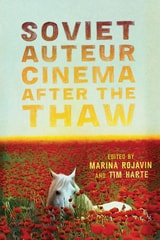
Soviet Auteur Cinema After the Thaw
Edited by Marina Rojavin and Tim Harte
University of Wisconsin Press, 2027
Following Stalin’s death, Soviet film—like Soviet culture—changed in meaningful ways. Emerging from a system that had stymied individual, creative voices, prominent directors now found their own respective styles, as they embraced their personal visions to produce works that diverged significantly from the mainstream. Grounded in auteur theory, this volume explores how these filmmakers expressed themselves through creative cinematic means rather than through a narrow emphasis on narrative or in accordance with popular—and governmental—whims.
Each chapter focuses on a specific filmmaker, from well-known auteurs Aleksei German Sr., Kira Muratova, Andrei Tarkovsky, Sergei Parajanov, and Larisa Shepit’ko, to others less familiar in the West: Sergei Solovyov, Roman Balayan, Otar Iosseliani, Tengiz Aduladze, and Ali Khamraev. Hailing from a range of Soviet republics, they all impacted the Soviet cinematic sphere despite harsh censorship and the repression of artists throughout the nation. By integrating cinematic and theoretical perspectives into a discussion of auteur Soviet films, this volume illuminates the significance of a cinematic trend that took place in both Soviet culture and international film history.
Contributors: Robert Efird, Tim Harte, Lilya Kaganovsky, David Gomiero Molina, Lida Oukaderova, Elizabeth A. Papazian, Marina Rojavin, Rita Safariants, Sydney Stotter, Sergey Toymentsev
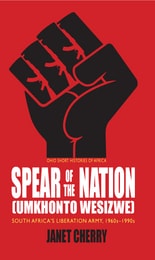
Spear of the Nation
Umkhonto weSizwe: South Africa’s Liberation Army, 1960s–1990sJanet Cherry
Ohio University Press, 2011
Umkhonto weSizwe, Spear of the Nation, was arguably the last of the great liberation armies of the twentieth century—but it never got to “march triumphant into Pretoria.” MK—as it was known—was the armed wing of the African National Congress, South Africa’s liberation movement, that challenged the South African apartheid government. A small group of revolutionaries committed to the seizure of power, MK discovered its principal members engaged in negotiated settlement with the enemy and was disbanded soon after.
The history of MK is one of paradox and contradiction, of successes and failures. In this short study, which draws widely on the personal experiences of—and commentary by—MK soldiers, Janet Cherry offers a new and nuanced account of the Spear of the Nation. She presents in broad outline the various stages of MK’s thirty-year history, considers the difficult strategic and moral problems the revolutionary army faced, and argues that its operations are likely to be remembered as a just war conducted with considerable restraint.
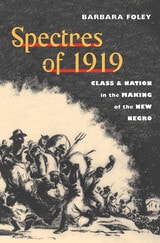
Spectres of 1919
Class and Nation in the Making of the New NegroBarbara Foley
University of Illinois Press, 2002
A look at the violent “Red Summer of 1919” and its intersection with the highly politicized New Negro movement and the Harlem Renaissance
With the New Negro movement and the Harlem Renaissance, the 1920s was a landmark decade in African American political and cultural history, characterized by an upsurge in racial awareness and artistic creativity. In Spectres of 1919 Barbara Foley traces the origins of this revolutionary era to the turbulent year 1919, identifying the events and trends in American society that spurred the black community to action and examining the forms that action took as it evolved.
Unlike prior studies of the Harlem Renaissance, which see 1919 as significant mostly because of the geographic migrations of blacks to the North, Spectres of 1919 looks at that year as the political crucible from which the radicalism of the 1920s emerged. Foley draws from a wealth of primary sources, taking a bold new approach to the origins of African American radicalism and adding nuance and complexity to the understanding of a fascinating and vibrant era.

Spectres of Fascism
Historical, Theoretical and International PerspectivesSamir Gandesha
Pluto Press, 2020
Speculation
Politics, Ideology, EventGlyn Daly
Northwestern University Press, 2019
Speculation: Politics, Ideology, Event develops Hegel’s radical perspective of speculative thought as a way of reclaiming and revitalizing the sense of the future and its possibilities. Engaging with such figures as Alain Badiou, Quentin Meillassoux, Ernesto Laclau, Slavoj Žižek, and Fredric Jameson, Glyn Daly articulates the distinctness of speculative philosophy and draws its implications for new debates in areas of science, politics, capitalism, ideology, ethics, and the event.
In a confrontation with today’s fatalistic milieu, principal emphasis is given to Hegel’s idea of infinity as the intrinsic dimension of negativity within all finitude. Against the modern era’s paradigmatic tendency to externalize social problems in the form of antagonism and Otherness, Daly argues for a renewal of utopian thought based on Hegelian reconciliation and the affirmation of excess as the essence of all being. On these grounds, he advances a new kind of political imagination that in speculative terms centers on uncompromising notions of truth and reason.

Spider Web
The Birth of American AnticommunismNick Fischer
University of Illinois Press, 2016
Sport and Political Ideology
By John M. Hoberman
University of Texas Press, 1984
Across the modern political spectrum, left-wing and right-wing political theorists have invested sport with ideological significance. That significance, however, varies distinctively and characteristically with the ideology—a phenomenon John Hoberman terms "ideological differentiation." Taking this phenomenon as its point of departure, this provocative work interprets the major sport ideologies of the twentieth century as distinct expressions of political doctrine.
Hoberman argues that a political ideology's interpretation of sport is shaped in part by the value it assigns to work and play as modes of experience; the political anthropologies of right and left can be distinguished by examining their resistance to—or affinity for—sportive imagery of their leaders and of the state itself; there exists a fascist temperament that shows an affinity to athleticism and the sphere of the body that is not shared by the left.
Tracing modern sport ideology back to its premodern antecedents, Hoberman examines the interpretations of sport that have been promulgated by European political intellectuals, such as cultural conservatives and contemporary neo-Marxists, and by the official ideologists of Nazi Germany, the Soviet Union, the German Democratic Republic, and China before and after Mao.
As a form of mass theater, sport can advertise any ideology. But the deeper relationship between sport and political ideology has never before been explored wth such vigor. Presenting the first general theory of sport and political ideology to appear in any language, Hoberman's groundbreaking work is a unique and invaluable contribution to the intellectual and political history of sport in the twentieth century.