Results by title
117 books match the query 'Production and direction' and 12 start with s
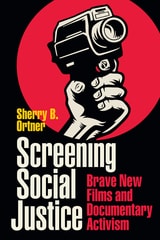
Screening Social Justice
Brave New Films and Documentary ActivismSherry B. Ortner
Duke University Press, 2023
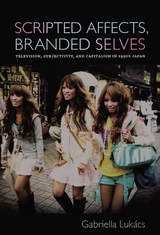
Scripted Affects, Branded Selves
Television, Subjectivity, and Capitalism in 1990s JapanGabriella Lukács
Duke University Press, 2010
Scriptwork
A Director's Approach to New Play DevelopmentDavid Kahn and Donna Breed. Foreword by Lanford Wilson
Southern Illinois University Press, 1995
Despite the popular myth that plays arrive at the theater fully formed and ready for production, the truth is that for centuries, most scripts have been developed through a collaborative process in rehearsal and in concert with other theater artists. David Kahn and Donna Breed provide the first codified approach to this time-honored method of play development, with a flexible methodology that takes into account differing environments and various stages of formation.
Directors can use this unique guidebook for new play development from the beginning to the end of the process. Kahn and Breed explore ways of choosing new projects, talk about where to find new scripts, and explore the legal aspects of script development. They present a detailed system for theatrical analysis of the new script and show how to continue exploration and development of the script within the laboratory of the theater. Most importantly, they delineate the parameters of the relationship between the director and the playwright, offering proven methods to help the playwright and help facilitate the healthy development of the script.
Breed and Kahn offer suggestions on casting, incorporating rewrites, and script handling plus how and when to use audience response and how to decide what step to take next. They also include extended interviews with developmental directors, dramaturgs, and playwrights, who give credence to the new script development process.
In short, Kahn and Breed demystify a common, though often convoluted, theater process, providing a unique codification of ways to work on new plays.
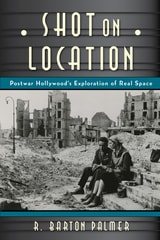
Shot on Location
Postwar American Cinema and the Exploration of Real PlacePalmer, R. Barton
Rutgers University Press, 2016
Renowned film scholar R. Barton Palmer answers this question in Shot on Location by exploring the historical, ideological, economic, and technological developments that led Hollywood to head back outside in order to capture footage of real places. His groundbreaking research reveals that wartime newsreels had a massive influence on postwar Hollywood film, although there are key distinctions to be made between these movies and their closest contemporaries, Italian neorealist films. Considering how these practices were used in everything from war movies like Twelve O’Clock High to westerns like The Searchers, Palmer explores how the blurring of the formal boundaries between cinematic journalism and fiction lent a “reality effect” to otherwise implausible stories.
Shot on Location describes how the period’s greatest directors, from Alfred Hitchcock to Billy Wilder, increasingly moved beyond the confines of the studio. At the same time, the book acknowledges the collaborative nature of moviemaking, identifying key roles that screenwriters, art designers, location scouts, and editors played in incorporating actual geographical locales and social milieus within a fictional framework. Palmer thus offers a fascinating behind-the-scenes look at how Hollywood transformed the way we view real spaces.
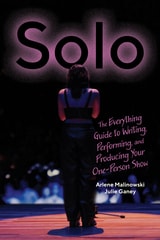
Solo
The Everything Guide to Writing, Performing, and Producing Your One-Person ShowArlene Malinowski and Julie Ganey
Northwestern University Press, 2026
The art of solo performance has exploded in the last twenty years as an immediate and accessible art form. The number of solo festivals grows every year, and artists are hungry for the opportunity to center their own voices and experiences. Solo is designed to feed that hunger.
Seasoned theater educators and performers Arlene Malinowski and Julie Ganey have compiled an invaluable guide for students and practitioners alike. Topics include high-stakes narratives, compelling characters, and the role of narrators, as well as practical exercises, interviews with performers at every stage of their careers, and examples from real one-person shows. Performers will also find advice on collaborating with directors, incorporating technical elements, and producing and marketing strategies.
Whether you’re just starting out or are a seasoned professional looking to refine your show-in-progress, Solo is an essential volume for anyone ready to bring their story to life onstage.
Sound Reporting, Second Edition
The NPR Guide to Broadcast, Podcast and Digital JournalismJerome Socolovsky
University of Chicago Press, 2024
A lot has changed in media in recent years, but one thing that remains steadfast is National Public Radio’s (NPR) position as a trusted source of news in the United States. Now producing dozens of shows and podcasts, plus livestreams and coverage on other media platforms, NPR is the leading authority on reporting, writing, and delivering audio news and storytelling to today's diverse audiences. In this completely revised guide, audio journalism trainer Jerome Socolovsky offers a look into just how NPR does it, following the same journey a story would from idea to the moment it reaches its listeners.
Based on more than eighty interviews with producers, reporters, editors, hosts, and other NPR staffers, Sound Reporting reveals how stories get pitched; how they are reported, produced, written, edited, voiced, and tailored to multiple media formats; and how shows and podcasts are put together. It begins with a presentation of NPR's values and includes a new chapter on journalist safety, a topic of timely importance. Podcasts, now part of the mainstream of the media universe, are treated alongside traditional programs throughout.
In these pages, the voices of NPR staff offer a glimpse into their profession. Discover how correspondent Ruth Sherlock overcame seemingly insurmountable odds as she raced to the scene of a devastating earthquake in Turkey, the four main ways Ramtin Arablouei incorporates music into podcasts, and how “Weekend Edition” host Ayesha Rascoe touches listeners so deeply she received a pair of homemade potholders in the mail from one of them. Reading this book is like sitting in a room full of top-notch producers, seasoned correspondents, trusted hosts, and rigorous editors—all telling you inspiring stories about their craft to help you learn from their experience.
At a time when the legitimacy and authority of journalism are under critique, transparency into how the news is made is more important than ever. This book offers a fascinating look behind the scenes at a premier public media organization and will be a trusted resource for anyone in or exploring a future in audio journalism.
Sound Reporting
The NPR Guide to Audio Journalism and ProductionJonathan Kern
University of Chicago Press, 2008
Jonathan Kern, who has trained NPR’s on-air staff for years, is a gifted guide, able to narrate a day in the life of a host and lay out the nuts and bolts of production with equal wit and warmth. Along the way, he explains the importance of writing the way you speak, reveals how NPR books guests ranging from world leaders to neighborhood newsmakers, and gives sage advice on everything from proposing stories to editors to maintaining balance and objectivity. Best of all—because NPR wouldn’t be NPR without its array of distinctive voices—lively examples from popular shows and colorful anecdotes from favorite personalities animate each chapter.
As public radio’s audience of millions can attest, NPR’s unique guiding principles and technical expertise combine to connect with listeners like no other medium can. With today’s technologies allowing more people to turn their home computers into broadcast studios, Sound Reporting couldn’t have arrived at a better moment to reveal the secrets behind the story of NPR’s success.
Sound
Dialogue, Music, and EffectsKalinak, Kathryn
Rutgers University Press, 2015
Sounding Human
Music and Machines, 1740/2020Deirdre Loughridge
University of Chicago Press, 2023
From the mid-eighteenth century on, there was a logic at work in musical discourse and practice: human or machine. That discourse defined a boundary of absolute difference between human and machine, with a recurrent practice of parsing “human” musicality from its “merely mechanical” simulations. In Sounding Human, Deirdre Loughridge tests and traverses these boundaries, unmaking the “human or machine” logic and seeking out others, better characterized by conjunctions such as and or with.
Sounding Human enters the debate on posthumanism and human-machine relationships in music, exploring how categories of human and machine have been continually renegotiated over the centuries. Loughridge expertly traces this debate from the 1737 invention of what became the first musical android to the creation of a “sound wave instrument” by a British electronic music composer in the 1960s, and the chopped and pitched vocals produced by sampling singers’ voices in modern pop music. From music-generating computer programs to older musical instruments and music notation, Sounding Human shows how machines have always actively shaped the act of music composition. In doing so, Loughridge reveals how musical artifacts have been—or can be—used to help explain and contest what it is to be human.
Staging Consciousness
Theater and the Materialization of MindWilliam W. Demastes
University of Michigan Press, 2002
William W. Demastes makes use of the writings of such varied theater practitioners as Antonin Artaud, Jerzy Grotowski, Samuel Beckett, Tony Kushner, Sam Shepard, Spalding Gray, Peter Shaffer, and others, illuminating theater as proof that mind is an extension of body. The living stage incubates and materializes thought in a way that highlights the processes of daily existence outside the theater. This book offers a new way for theater practitioners to look at the unique value of the theater and an invitation for philosophers and scientists to search for new paradigms in theater, the oldest of art forms.
William W. Demastes is Professor of English, Louisiana State University. His previous books include Theatre of Chaos: Beyond Absurdism, into Disorderly Order.
Succeeding as a Documentary Filmmaker
A Guide to the Professional WorldAlan Rosenthal
Southern Illinois University Press, 2011
From the basics of the current film business environment and how to navigate it, to tips on how to maximize distribution and sales for a finished film, Rosenthal leads novice filmmakers step-by-step through the professional arena of documentary moviemaking. Included here are recommendations for how to make the most of a film school education; the best ways to find financing for a film and the realities of working with a budget; how to develop a successful proposal for a project; the intricacies of working both as an independent filmmaker and for others; and insight into the often complicated arenas of contracts and markets. Throughout the volume, Rosenthal shares the expertise of actual filmmakers on such subjects as film school and starting a career; pitching and funding projects; contract negotiation; effective marketing; and commissioning editors and legal help. Not limiting himself to merely the documentary world, the author also offers valuable information and advice for filmmakers interested in other genres of nonfiction movies - such as industrial, public relations, travel, and educational films - to provide a truly comprehensive and one-of-a-kind guide for readers.
Packed with useful tips for novices, film students, and practitioners alike, Succeeding as a Documentary Filmmaker is an indispensable addition to the library of anyone involved in the world of nonfiction filmmaking.
Systemic Dramaturgy
A Handbook for the Digital AgeMichael Mark Chemers and Mike Sell
Southern Illinois University Press, 2022
Systemic Dramaturgy offers an invigorating, practical look at the daunting cultural problems of the digital age as they relate to performance. Authors Michael Mark Chemers and Mike Sell reject the incompatibility of theatre with robots, digital media, or video games. Instead, they argue that technology is the original problem of theatre: How can we tell this story and move this audience with these tools? And if we have different tools, how can that change the stories we tell?
This volume attunes readers to “systemic dramaturgy”—the recursive elements of signification, innovation, and history that underlie all performance—arguing that theatre must be understood as a system of systems, a concatenation of people, places, things, politics, feelings, and interpretations, ideally working together to entertain and edify an audience. The authors discuss in-depth the application of time-tested dramaturgical skills to extra-theatrical endeavors, including multi-platform performance, installations, and videogames. And they identify the unique interventions that dramaturgs can and must make into these art forms.
More than any other book that has been published in the field, Systemic Dramaturgy places historical dramaturgy in conversation with technologies as old as the deus ex machina and as new as artificial intelligence. Spirited and playful in its approach, this volume collates histories, transcripts, and case studies and applies the concepts of systemic dramaturgy to works both old and avant-garde. Between chapters, Chemers and Sell talk with with some of the most forward-thinking, innovative, and creative people working in live media as they share their diverse approaches to the challenges of making performances, games, and digital media that move both heart and mind. This volume is nothing less than a guide for thinking about the future evolution of performance.