Results by title
89 books match the query 'Religion & Science' and 14 start with s
Science Of Love
Wisdom Of Well BeingThomas Oord
Templeton Press, 2004
We all know the saying, "Love can change the world." When science looks at love, it considers cosmology, sociobiology, evolutionary psychology, neurology, sex and romance, and the role of emotions as each relates to love. It also explores religious, ethical, and philosophical issues, such as virtue, creation ex nihilo, progress, divine action, agape, values, religious practices, pacifism, sexuality, friendship, freedom, and marriage. All affect the ways in which people understand each other and interact with one another. In this book, Oord explores these varied dimensions of love, illuminating the love-science symbiosis for both scholars and general readers.
His definition of love is "to act intentionally, in sympathetic response to others (including God), to promote overall well-being. Love acts are influenced by previous actions and executed in the hope of attaining a high degree of good for all." He begins his study with an exploration of the role love plays in all major world religions: Hinduism, Buddhism, Confucianism, Judaism, Islam, and Christianity. He explains how divine love in action can be viewed as consonant with the big bang theory and the continual creation of the universe.
He looks at pacifism and concludes that nonviolence is not always the most loving thing (sometimes violence must be used to rescue victims or prevent holocausts). He explores the animal kingdom to see how creatures work together with the Creator to make the world a better place. And he analyzes the fundamentals of love, the basic characteristics of existence that must be present for love to be expressed. He concludes with the important argument that progress can best be made when religion and science work together to both understand and promote love.
Science and Creation
The Search for UnderstandingJohn C. Polkinghorne
Templeton Press, 2006
John C. Polkinghorne, internationally renowned priest-scientist, addresses fundamental questions about how scientific and theological worldviews relate to each other in this, the second volume (originally published in 1988) of his trilogy, which also included Science and Providence and One World.
Dr. Polkinghorne illustrates how a scientifically minded person approaches the task of theological inquiry, postulating that there exists a close analogy between theory and experiment in science and belief and understanding in theology. He offers a fresh perspective on such questions as: Are we witnessing today a revival a natural theology—the search for God through the exercise of reason and the study of nature? How do the insights of modern physics into the interlacing of order and disorder relate to the Christian doctrine of Creation? What is the relationship between mind and matter?
Polkinghorne states that the "remarkable insights that science affords us into the intelligible workings of the world cry out for an explanation more profound than that which it itself can provide. Religion, if it is to take seriously its claim that the world is the creation of God, must be humble enough to learn from science what that world is actually like.The dialogue between them can only be mutually enriching."
Science and Providence
God's Interaction with the WorldJohn C. Polkinghorne
Templeton Press, 2005
Internationally renowned priest-scientist Dr. John C. Polkinghorne examines whether a personal, interacting God is a credible concept in today's scientific age. Encouraging the belief that there is a compatibility between the insights of science and the insights of religion, this book, previously published in the United Kingdom, focuses on the viewpoint that the world is one in which both human beings and God have the freedom to act.
A modern understanding of the physical world is applied to questions of prayer and providence, such as: Do miracles happen? Can prayer change anything? Why does evil exist? Why does God allow suffering? Why does God need us to ask him?
God's involvement in time is considered, from both a temporal and an eternal perspective. The roles of incarnation and sacrament are discussed in terms of whether or not they have a credible place in today's worldview. And the Final Anthropic Principle (FAP) is presented, with its attempt at a physical eschatology, showing it to be an inadequate basis for hope. Real hope can reside only with God, Polkinghorne concludes.
Science and Religion
A Critical SurveyHolmes Rolston
Templeton Press, 2006
opportunities been greater for fertile interaction between these fields, with mutual benefits to both,” states Rolston. The re-publication of this book provides current researchers and students in the field an invaluable, timeless methodological resource.The new introduction offers updated insights based on new scientific research.
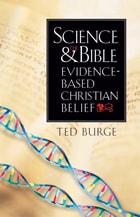
Science and the Bible
Evidence-Based Christian BeliefTed Burge
Templeton Press, 2005
Does scientific evidence give credence to religious belief? Ted Burge, a highly respected physicist in the United Kingdom, draws on his background in the fields of science and theology to address the issue.
The book begins with an analysis of evidence found in the text of the Bible in different translations, proceeds to an examination of interpretations of the Old and New Testaments, and then looks at evidence from the sciences, including archeological findings, geological mappings, and carbon-dating, alongside data from the arts, hymns, literature, and historians' testimonies.
Evidence is presented on:
•Physical, geological, and biological evolution, and their relation to the Genesis story of creation•Original sin, the origin of death, and the immortality of the soul, as described in Babylonian and other stories, including the Flood and the Tower of Babel
•The Resurrection and Ascension of Jesus, Incarnation and Atonement
•Free will and the nature of love
•Miracles as described in the Bible
•The evolution of belief
•Meditation and prayer as a "conscious interchange of thoughts with God"
Knowledge of science is knowledge of God's creation and often helps to identify some of the things we can say about God, the author points out.
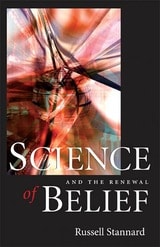
Science and the Renewal Of Belief
Russell Stannard
Templeton Press, 2004
Originally published in Great Britain and now updated and available for the first time in a U.S. edition, this book is a critically acclaimed work by a renowned theologian-scientist.
Russell Stannard is known for cutting through highly technical data and presenting it clearly and simply. In Science and the Renewal of Belief he sheds light on ways in which science and religion influence each other and can help each other. Science and logic cannot establish belief, he says, but belief can be confirmed and renewed with the changed perspective of modern science.
The many reviews of the U.K. edition of his book cite his lucid presentation of relativity and quantum theory, and the way he uses relativity to explore time and eternity, and indeterminacy to comment on free will. He is also praised for offering fresh insight into original sin, the trials experienced by Galileo, the problem of pain, the possibility of miracles, the evidence for the resurrection, the credibility of incarnation, and the power of steadfast prayer. By introducing simple analogies, Stannard clears up misunderstandings that have muddied the connections between science and religion, and suggests contributions that the pursuit of physical science can make to theology.
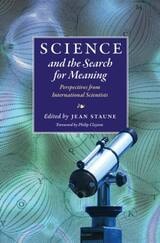
Science and the Search for Meaning
Perspectives from International ScientistsJean Staune
Templeton Press, 2006
As the organizer of some of the most important meetings in science and religion in Europe, Jean Staune is in a core position to report on the dialogue between science and religion, primarily from the views of scientists. In this book, the translation of a recent French edition, he presents "audacious and rigorous" articles by fifteen renowned leaders in the field, of whom four are Nobel Prize winners. They represent nine countries and seven religions.
Each of the authors in this volume responds in a different way, addressing naturalism, materialism, the nature of consciousness, reductionism, and the quest for meaning.Two paradigms emerge, with those who say that God (or direction) can exist in the universe because we can understand certain things, while others say that God exists because we cannot understand the universe altogether. Their reflections on the accessibility and the mystery of the world show the extraordinary abstract revolution that took place in science during the twentieth century and the way this establishes a bridge between science and religion.
Contributors are Nobel Prize winners Christian de Duve, Charles Townes, Ahmed Zewail, and William D. Phillips; as well as Paul Davies, Bernard d'Espagnat, Thomas Odhiambo, Ramanath Cowsik, Jean Kovalevsky, Thierry Magnin, Bruno Guiderdoni, Trinh Xuan Thuan, Khalil Chamcham, Michael Heller, and Philip Clayton.
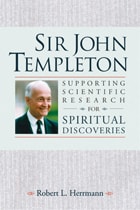
Sir John Templeton
Supporting Scientific Research For Spiritual DiscoveriesRobert Herrmann
Templeton Press, 2004
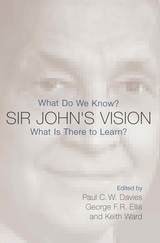
Sir John's Vision
What Do We Know? What Is There to Learn?Davies
Templeton Press, 2018
This volume is a result of that meeting—a collection of thirteen essays written by experts in fields that most fascinated Sir John. The contributors assess the Foundation’s fidelity to its founder’s intent, chart promising avenues for future grantmaking, and champion Sir John’s contrarian mission of unlocking life’s deepest mysteries.
The members of the John Templeton Foundation are the custodians of Sir John’s vision—bold in its aspiration; humble in its approach—charged with using the tools of science to advance the frontiers of the spirit. May the essays collected here serve as inspiration as we carry that vision forward.
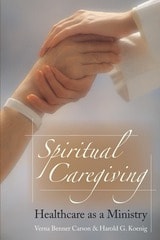
Spiritual Caregiving
Healthcare As A MinistryVerna Benner Carson
Templeton Press, 2004
With today's cumbersome insurance procedures, government regulations, endless paperwork, and concerns about malpractice rates, many health care professionals are asking: "Why am I doing this? Am I making a difference to my patients? Is there a better way—and if so, what is it?" In this book, Carson and Koenig examine the state of the health care system with the goal of providing healthcare professionals and caregivers the inspiration and practical tools to reclaim their sense of purpose.
The book begins with an evaluation of the current system from the perspective of the spiritual vision that initially motivated and nourished many caregivers. The authors then pose a vision of a health care system that supports and nurtures the spirituality of patients and their families, of which some elements already exist.
An overview is provided on the preparation necessary for health care professionals to offer spiritual care when there are major implications—for people with chronic illnesses, psychiatric issues, devastating injuries, and those preparing for surgery, facing death, and those living with chronic pain. Also explored are ways that health professionals and caregivers can maintain their own spiritual health even as they work to bring about healing, comfort, and solace to others.
Woven throughout the book are the personal narratives of physicians, nurses, chaplains, health care educators, community resource workers, administrators, therapists, and psychologists—all from a wide range of religious traditions. Their examples inspire and assist professionals in renewing the spiritual focus of health care.
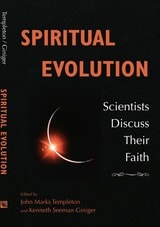
Spiritual Evolution
Scientists Discuss Their BeliefsJohn Marks Templeton
Templeton Press, 1998
Spiritual Evolution: Scientists Discuss Their Beliefs describes the intellectual and emotional journeys traveled by esteemed scientists worldwide. Authors share the personal steps they have taken to blend an understanding of the Divine with their scientific perspectives.
Charles Birch, S. Jocelyn Bell Burnell, Larry Dossey, Owen Gingerich, Peter E. Hodgson, Stanley L. Jaki, Arthur Peacocke, John Polkinghorne, Russell Stannard, and Carl Friedrich von Weizsäcker offer accounts of their spirituality and scientific inquiry. Noting the impact of religious upbringing, academic and spiritual mentors, personal devotional practice, and study, these authors make a compelling case for the blending of both scientific and spiritual worlds. They share insights that keep them attending church, engaging in prayer, and continuing the search to understand the Infinite.
Spiritual Information
100 Perspectives on Science and ReligionCharles L. Harper Jr.
Templeton Press, 2005
Spiritual Information is a collection of one hundred essays that explore a portion of the vast interdisciplinary approaches to the study of science and religion. Individually and together, the essays show how the study of ourselves, our planet, and the universe helps us understand our place as spiritual beings within God’s universe.
The book is a tribute to Sir John Templeton and his pioneering commitment toward new research that results in “one hundredfold more spiritual information than humankind has ever possessed before.” It begins with essays that reflect on Sir John’s principal domains of interest and expertise: free-enterprise based finance and accelerating spiritual progress.
Themes of the sections are:
•Science-Religion Dialogue•Cosmology, Physics, and Astronomy
•Mathematics, Musicology, and Speculation
•Biological Evolution—the Human Being
•Social Evolution—the Human Mind and Heart
•Religion and Health
•The Nature of the Divine
•Theology and Philosophy
•Faith Traditions
“Sir John’s leadership has enabled us to edge ever closer to the frontier where knowledge meets wisdom at the threshold of ‘ultimate reality,’” notes the editor in the preface to this volume. As Spiritual Information presents an overview of how far we have come in the science and religion dialogue, it also opens windows to the vast possibilities for additional research and further advances in spiritual information.
Storm of Words
Science, Religion, and Evolution in the Civil War EraMonte Harrell Hampton
University of Alabama Press, 2014
A study of the ways that southern Presbyterians in the wake of the Civil War contended with a host of cultural and theological questions
Southern Presbyterian theologians enjoyed a prominent position in antebellum southern culture. Respected for both their erudition and elite constituency, these theologians identified the southern society as representing a divine, Biblically ordained order. Beginning in the 1840s, however, this facile identification became more difficult to maintain, colliding first with antislavery polemics, then with Confederate defeat and reconstruction, and later with women’s rights, philosophical empiricism, literary criticisms of the Bible, and that most salient symbol of modernity, natural science.
As Monte Harrell Hampton shows in Storm of Words, modern science seemed most explicitly to express the rationalistic spirit of the age and threaten the Protestant conviction that science was the faithful “handmaid” of theology. Southern Presbyterians disposed of some of these threats with ease. Contemporary geology, however, posed thornier problems. Ambivalence over how to respond to geology led to the establishment in 1859 of the Perkins Professorship of Natural Science in Connexion with Revealed Religion at the seminary in Columbia, South Carolina. Installing scientist-theologian James Woodrow in this position, southern Presbyterians expected him to defend their positions.
Within twenty-five years, however, their anointed expert held that evolution did not contradict scripture. Indeed, he declared that it was in fact God’s method of creating. The resulting debate was the first extended evolution controversy in American history. It drove a wedge between those tolerant of new exegetical and scientific developments and the majority who opposed such openness. Hampton argues that Woodrow believed he was shoring up the alliance between science and scripture—that a circumscribed form of evolution did no violence to scriptural infallibility. The traditionalists’ view, however, remained interwoven with their identity as defenders of the Lost Cause and guardians of southern culture.
The ensuing debate triggered Woodrow’s dismissal. It also capped a modernity crisis experienced by an influential group of southern intellectuals who were grappling with the nature of knowledge, both scientific and religious, and its relationship to culture—a culture attempting to define itself in the shadow of the Civil War and Reconstruction.
Subjectivity, Objectivity, and Intersubjectivity
A New Paradigm for Religion and ScienceJoseph A. Bracken
Templeton Press, 2009
During the Middle Ages, philosophers and theologians argued over the extramental reality of universal forms or essences. In the early modern period, the relation between subjectivity and objectivity, the individual self and knowledge of the outside world, was a rich subject of debate. Today, there is considerable argument about the relation between spontaneity and determinism within the evolutionary process, whether a principle of spontaneous self-organization as well as natural selection is at work in the aggregation of molecules into cells and the development of primitive forms of life into complex organisms. In Subjectivity, Objectivity and Intersubjectivity, Joseph A. Bracken proposes that what is ultimately at stake here is the age-old problem of the relationship between the One and the Many, universality and particularity on different levels of existence and activity within nature.