53 books match the query 'Revolutionaries' and 6 start with s
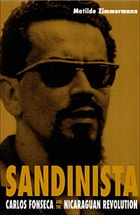
cover of Sandinista: Carlos Fonseca and the Nicaraguan Revolution

Sandinista

Carlos Fonseca and the Nicaraguan Revolution

Matilde Zimmermann

Duke University Press, 2000

“A must-read for anyone interested in Nicaragua—or in the overall issue of social change.”—Margaret Randall, author of SANDINO'S DAUGHTERS and SANDINO'S DAUGHTERS REVISITED 

Sandinista is the first English-language biography of Carlos Fonseca Amador, the legendary leader of the Sandinista National Liberation Front of Nicaragua (the FSLN) and the most important and influential figure of the post–1959 revolutionary generation in Latin America. Fonseca, killed in battle in 1976, was the undisputed intellectual and strategic leader of the FSLN. In a groundbreaking and fast-paced narrative that draws on a rich archive of previously unpublished Fonseca writings, Matilde Zimmermann sheds new light on central themes in his ideology as well as on internal disputes, ideological shifts, and personalities of the FSLN.
The first researcher ever to be allowed access to Fonseca’s unpublished writings (collected by the Institute for the Study of Sandinism in the early 1980s and now in the hands of the Nicaraguan Army), Zimmermann also obtained personal interviews with Fonseca’s friends, family members, fellow combatants, and political enemies. Unlike previous scholars, Zimmermann sees the Cuban revolution as the crucial turning point in Fonseca’s political evolution. Furthermore, while others have argued that he rejected Marxism in favor of a more pragmatic nationalism, Zimmermann shows how Fonseca’s political writings remained committed to both socialist revolution and national liberation from U.S. imperialism and followed the ideas of both Che Guevara and the earlier Nicaraguan leader Augusto César Sandino. She further argues that his philosophy embracing the experiences of the nation’s workers and peasants was central to the FSLN’s initial platform and charismatic appeal.
[more]
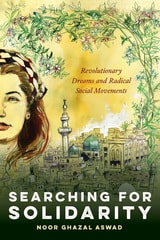
cover of Searching for Solidarity: Revolutionary Dreams and Radical Social Movements

Searching for Solidarity

Revolutionary Dreams and Radical Social Movements

Noor Ghazal Aswad

The Ohio State University Press, 2025
In Searching for Solidarity, Noor Ghazal Aswad explores how the emancipatory qualities of transnational revolutionary struggle are often denied, misunderstood, and erased. Drawing on the stories of those in struggle, Searching for Solidarity reimagines solidarity as an affective, ethical, and political capacity that can thrive amid today’s volatile “political economy of emotion”—an environment marked by mistrust, fake news, and disinformation campaigns targeting those in resistance. At the heart of this book is the “radical subject,” which refers to those revolting against repressive forces to achieve liberatory change at the risk of death, injury, or disappearance. These radical subjects offer a new foundation for critical theory—one that rejects “negative solidarity,” the tendency to acquiesce to power or distance oneself from those fighting against systemic injustice. By immersing readers in the testimony, memory, and hopes of these subjects, each chapter reveals solidarity as an affective force capable of cutting through distortive narratives and binding us in a cross-cultural, decolonizing, and nonhierarchical collectivity. Solidarity, through this lens, emerges as a transformative stance that compels us to, as Yassin al-Haj Saleh writes, become “partners in word and deed to change power.”
[more]
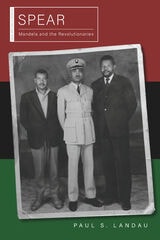
cover of Spear: Mandela and the Revolutionaries

Spear

Mandela and the Revolutionaries

Paul S. Landau

Ohio University Press, 2022
A revelatory and definitive account of how Nelson Mandela and his peers led South Africa to the brink of revolution against the postwar twentieth century’s most infamously racist regime. Spear: Mandela and the Revolutionaries brings to life the brief revolutionary period in which Nelson Mandela and his comrades fought apartheid not just with words but also with violence. After the 1960 Sharpeville police shootings of civilian protesters, Mandela and his comrades in the mass-resistance order of the African National Congress (ANC) and the Communist Party pioneered the use of force and formed Umkhonto we Sizwe (MK), or Spear of the Nation. A civilian-based militia, MK stockpiled weapons and waged a war of sabotage against the state with pipe bombs, Molotov cocktails, and dynamite. In response, the state passed draconian laws, militarized its police, and imprisoned its enemies without trial. Drawing from several hundred first-person accounts, most of which are unpublished, Paul Landau traces Mandela’s allies—and opponents—in communist, pan-Africanist, liberal, and other groups involved in escalating resistance alongside the ANC. After Mandela’s capture, the Pan Africanist Congress planned to initiate street violence, and MK organized Operation Mayibuye, an uprising to be led by trained commandos. The state short-circuited those plans and subsequently jailed, exiled, tortured, and murdered revolutionaries. The era of high apartheid then began. Spear reshapes our understanding of Mandela by focusing on this intense but relatively neglected period of escalation in the movement against apartheid. Landau’s book is not a biography, nor is it a history of a militia or an army; rather, it is a riveting story about ordinary civilians debating and acting together in extremis. Contextualizing Mandela and MK’s activities amid anticolonial change and Black Marxism in the early 1960s, Spear also speaks to today’s transnational antiracism protests and worldwide struggles against oppression.
[more]
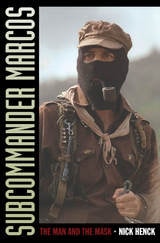
cover of Subcommander Marcos: The Man and the Mask

Subcommander Marcos

The Man and the Mask

Nick Henck

Duke University Press, 2007

Subcommander Marcos made his debut on the world stage on January 1, 1994, the day the North American Free Trade Agreement took effect. At dawn, from a town-hall balcony he announced that the Zapatista Army of National Liberation had seized several towns in the Mexican state of Chiapas in rebellion against the government; by sunset Marcos was on his way to becoming the most famous guerrilla leader since Che Guevara. Subsequently, through a succession of interviews, communiqués, and public spectacles, the Subcommander emerged as a charismatic spokesperson for the indigenous Zapatista uprising and a rallying figure in the international anti-globalization movement.

In this, the first English-language biography of Subcommander Marcos, Nick Henck describes the thought, leadership, and personality of this charismatic rebel spokesperson. He traces Marcos’s development from his provincial middle-class upbringing, through his academic career and immersion in the clandestine world of armed guerrillas, to his emergence as the iconic Subcommander. Henck reflects on what motivated an urbane university professor to reject a life of comfort in Mexico City in favor of one of hardship as a guerrilla in the mountainous jungles of Chiapas, and he examines how Marcos became a conduit through which impoverished indigenous Mexicans could communicate with the world.

Henck fully explores both the rebel leader’s renowned media savvy and his equally important flexibility of mind. He shows how Marcos’s speeches and extensive writings demonstrate not only the Subcommander’s erudition but also his rejection of Marxist dogmatism. Finally, Henck contextualizes Marcos, locating him firmly within the Latin American guerrilla tradition.
[more]
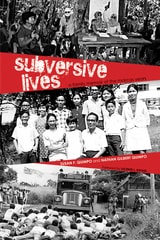
cover of Subversive Lives: A Family Memoir of the Marcos Years

Subversive Lives

A Family Memoir of the Marcos Years

Susan F. Quimpo

Ohio University Press, 2016

From the 1960s to the 1990s, seven members of the Quimpo family dedicated themselves to the anti-Marcos resistance in the Philippines, sometimes at profound personal cost. In this unprecedented memoir, eight siblings (plus one by marriage) tell their remarkable stories in individually authored chapters that comprise a family saga of revolution, persistence, and, ultimately, vindication, even as easy resolution eluded their struggles.

Subversive Lives tells of attempts to smuggle weapons for the New People’s Army (the armed branch of the Communist Party of the Philippines); of heady times organizing uprisings and strikes; of the cruel discovery of one brother’s death and the inexplicable disappearance of another (now believed to be dead); and of imprisonment and torture by the military. These stories show the sacrifices and daily heroism of those in the movement. But they also reveal its messy legacies: sons alienated from their father; daughters abused by the military; friends betrayed; and revolutionary affection soured by intractable ideological differences.

The rich and distinctive contributions span the martial law years of Ferdinand Marcos’s rule. Subversive Lives is a riveting and accessible primer for those unfamiliar with the era, and a resonant history for those with a personal connection to what it meant to be Filipino at that time, or for anyone who has fought political repression.
[more]
cover of Survival Pending Revolution: The History of the Black Panther Party

Survival Pending Revolution

The History of the Black Panther Party

Paul Alkebulan

University of Alabama Press, 2007

The Black Panther Party (BPP) seized the attention of America in the frenetic days of the late 1960s when a series of assassinations, discontent with the Vietnam War, and impatience with lingering racial discrimination roiled the United States, particularly its cities. The BPP inspired dread among the American body politic while receiving support from many urban black youths. The images of angry and armed young black radicals in the streets of U.S. cities seemed a stunning reversal and repudiation of the accommodationist and assimilationist black goals associated with Martin Luther King’s movement, as well as an unprecedented defiance of the civil power.
 
Although many have written about the BPP in memoirs and polemics, Survival Pending Revolution contributes to a new generation of objective, analytical BPP studies that are sorely needed. Alkebulan displays the entire movement’s history: its lofty and even idealistic goals and its in-your-face rhetoric, its strategies, tactics, and the internal divisions and ego clashes, drawing upon public records as well as the memories of both leaders and foot soldiers, to attempt a description that both understands the inner workings of the BPP and its role in the greater society.
[more]