Results by title
111 books match the query 'Science Fiction' and 12 start with s
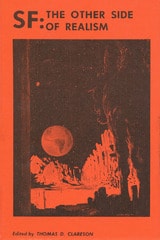
SF
The Other Side of RealismThomas D. Clareson
University of Wisconsin Press, 1971
A collection of twenty-five essays from eight countries, illustrating the many approaches to science fiction.

Science Fiction and Extro-Science Fiction
Quentin Meillassoux
University of Minnesota Press, 2015
In Science Fiction and Extro-Science Fiction, Quentin Meillassoux addresses the problem of chaos and of the constancy of natural laws in the context of literature. With his usual argumentative rigor, he elucidates the distinction between science fiction, a genre in which science remains possible in spite of all the upheavals that may attend the world in which the tale takes place, and fiction outside-science, the literary concept he fashions in this book, a fiction in which science becomes impossible. With its investigations of the philosophies of Hume, Kant, and Popper, Science Fiction and Extro-Science Fiction broadens the inquiry that Meillassoux began in After Finitude, thinking through the concrete possibilities and consequences of a chaotic world in which human beings can no longer resort to science to ground their existence. It is a significant milestone in the work of an emerging philosopher, which will appeal to readers of both philosophy and literature. The text is followed by Isaac Asimov’s essay “The Billiard Ball.”

Science Fiction in Argentina
Technologies of the Text in a Material MultiverseJoanna Page
University of Michigan Press, 2016
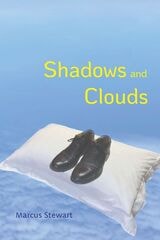
Shadows and Clouds
Marcus Stewart
Omnidawn, 2023
Through the stories in Shadows and Clouds, Marcus Stewart invites us to consider how things are not always as they appear or as we remember them, instead locating reality in the imagination and the dream world. While animals understand the world without words, humans create our experiences as stories, translating past and future into tales told in the present. Stewart's stories take the notion of storytelling and expand to a consideration of how truth, misremembering, logic, lying, and uncertainty play together to affect our experience of reality. In an alternate reading of time, Stewart poses the suggestion that you may already have a future memory of reading this book, and reading the stories backward may bring us back to the present.
Shadows and Clouds is the winner of the 2021 Omnidawn Fabulist Fiction Chapbook / Novelette Contest, chosen by Theodora Ziolkowski.
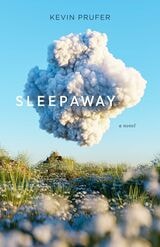
Sleepaway
A NovelKevin Prufer
Acre Books, 2024
It’s 1984, and the invisible mists are falling, mists that cause people to slip into dreamless slumber—sleeps from which most, but not all, awaken. Those who do wake live in fear of the next mist, and the next, each a little longer and more dangerous than the last.
Alternating between the perspectives of a kleptomaniac waitress named Cora and her twelve-year-old friend Glass, Sleepaway depicts a small-town America turned alarming. This is a place where loved ones are lost to a state between life and death; where denial, delusion, and desperation take hold of those remaining; where dealers of the antisleep drug Eight Track disappear into shadows, and a murderous wannabe kingpin hunts for victims.
As civilization is shaved away one sleep storm at a time, people struggle to go on, making and losing allies and discovering new strengths and weaknesses. Cora sets out on an ill-fated road trip hoping to reclaim her sister’s love, only to discover a more powerful bond than blood. Glass, having lost his only parent to one of the first mists, searches for a stability he has never had and may never achieve. All the while, buildings rise outside town to cope with the mounting number of sleepers. Some see them as hospitals, others as repositories, and yet soon the air around them fills with ash.
An allegory for post-pandemic America, Sleepaway grapples with questions concerning friendship, race, and family amid the horror of inexplicable, arbitrary annihilation.
Sleepaway
A NovelKevin Prufer
Acre Books, 2024
It’s 1984, and the invisible mists are falling, mists that cause people to slip into dreamless slumber—sleeps from which most, but not all, awaken. Those who do wake live in fear of the next mist, and the next, each a little longer and more dangerous than the last.
Alternating between the perspectives of a kleptomaniac waitress named Cora and her twelve-year-old friend Glass, Sleepaway depicts a small-town America turned alarming. This is a place where loved ones are lost to a state between life and death; where denial, delusion, and desperation take hold of those remaining; where dealers of the antisleep drug Eight Track disappear into shadows, and a murderous wannabe kingpin hunts for victims.
As civilization is shaved away one sleep storm at a time, people struggle to go on, making and losing allies and discovering new strengths and weaknesses. Cora sets out on an ill-fated road trip hoping to reclaim her sister’s love, only to discover a more powerful bond than blood. Glass, having lost his only parent to one of the first mists, searches for a stability he has never had and may never achieve. All the while, buildings rise outside town to cope with the mounting number of sleepers. Some see them as hospitals, others as repositories, and yet soon the air around them fills with ash.
An allegory for post-pandemic America, Sleepaway grapples with questions concerning friendship, race, and family amid the horror of inexplicable, arbitrary annihilation.
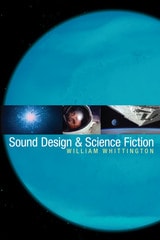
Sound Design and Science Fiction
By William Whittington
University of Texas Press, 2007
Sound is half the picture, and since the 1960s, film sound not only has rivaled the innovative imagery of contemporary Hollywood cinema, but in some ways has surpassed it in status and privilege because of the emergence of sound design.
This in-depth study by William Whittington considers the evolution of sound design not only through cultural and technological developments during the last four decades, but also through the attitudes and expectations of filmgoers. Fans of recent blockbuster films, in particular science fiction films, have come to expect a more advanced and refined degree of film sound use, which has changed the way they experience and understand spectacle and storytelling in contemporary cinema.
The book covers recent science fiction cinema in rich and compelling detail, providing a new sounding of familiar films, while offering insights into the constructed nature of cinematic sound design. This is accomplished by examining the formal elements and historical context of sound production in movies to better appreciate how a film sound track is conceived and presented.Whittington focuses on seminal science fiction films that have made specific advances in film sound, including 2001: A Space Odyssey, THX 1138, Star Wars, Alien, Blade Runner (original version and director's cut), Terminator 2: Judgment Day and The Matrix trilogy and games—milestones of the entertainment industry's technological and aesthetic advancements with sound.
Setting itself apart from other works, the book illustrates through accessible detail and compelling examples how swiftly such advancements in film sound aesthetics and technology have influenced recent science fiction cinema, and examines how these changes correlate to the history, theory, and practice of contemporary Hollywood filmmaking.
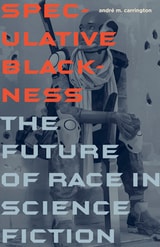
Speculative Blackness
The Future of Race in Science FictionAndré M. Carrington
University of Minnesota Press, 2016
In Speculative Blackness, André M. Carrington analyzes the highly racialized genre of speculative fiction—including science fiction, fantasy, and utopian works, along with their fan cultures—to illustrate the relationship between genre conventions in media and the meanings ascribed to blackness in the popular imagination.
Carrington’s argument about authorship, fandom, and race in a genre that has been both marginalized and celebrated offers a black perspective on iconic works of science fiction. He examines the career of actor Nichelle Nichols, who portrayed the character Uhura in the original Star Trek television series and later became a recruiter for NASA, and the spin-off series Star Trek: Deep Space Nine, set on a space station commanded by a black captain. He recovers a pivotal but overlooked moment in 1950s science fiction fandom in which readers and writers of fanzines confronted issues of race by dealing with a fictitious black fan writer and questioning the relevance of race to his ostensible contributions to the 'zines. Carrington mines the productions of Marvel comics and the black-owned comics publisher Milestone Media, particularly the representations of black sexuality in its flagship title, Icon. He also interrogates online fan fiction about black British women in Buffy the Vampire Slayer and the Harry Potter series.
Throughout this nuanced analysis, Carrington theorizes the relationship between race and genre in cultural production, revealing new understandings of the significance of blackness in twentieth-century American literature and culture.
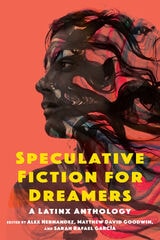
Speculative Fiction for Dreamers
A Latinx AnthologyEdited by Alex Hernandez, Matthew David Goodwin, and Sarah Rafael García with a Preface by Frederick Luis Aldama
The Ohio State University Press, 2021
Finalist, 2022 World Fantasy Awards
Finalist, 2022 Ignyte Awards
Finalist, 2022 Utopia Awards
In a tantalizing array of new works from some of the most exciting Latinx creators working in the speculative vein today, Speculative Fiction for Dreamers extends the project begun with a previous anthology, Latinx Rising (The Ohio State University Press, 2020), to showcase a new generation of writers. Spanning diverse forms, settings, perspectives, and styles, but unified by their drive to imagine new Latinx futures, these stories address the breadth of contemporary Latinx experiences and identities while exuberantly embracing the genre’s ability to entertain and surprise. With new work for new audiences in their teens and up, and especially for Latinx people navigating their identities in the ever-shifting, sometimes perilous, but always promising cultural landscape of the US, this book is for dreamers—and DREAMers—everywhere.
Contributors: Grisel Y. Acosta, Stephanie Adams-Santos, Frederick Luis Aldama, William Alexander, Nicholas Belardes, Louangie Bou-Montes, Lisa M. Bradley, Eliana Buenrostro, Diana Burbano, Pedro Cabiya, Steve Castro, Fernando de Peña, Scott Russell Duncan, Samy Figaredo, Tammy Melody Gomez, J. M. Guzman, Ernest Hogan, Pedro Iniguez, Ezzy G. Languzzi, Patrick Lugo, Roxanne Ocasio, Daniel Parada, Stephanie Nina Pitsirilos, Reyes Ramirez, Julia Rios, Sara Daniele Rivera, Roman Sanchez, Tabitha Sin, Alex Temblador, Rodrigo Vargas, Laura Villareal, Sabrina Vourvoulias, Karlo Yeager Rodriguez

Speculative Whiteness
Science Fiction and the Alt-RightJordan S. Carroll
University of Minnesota Press, 2024
Reveals the alt-right’s project to claim science fiction and—by extension—the future
Fascists such as Richard Spencer interpret science fiction films and literature as saying only white men have the imagination required to invent a high-tech future. Other white nationalists envision racist utopias filled with Aryan supermen and all-white space colonies. Speculative Whiteness traces these ideas through the entangled histories of science fiction culture and white supremacist politics, showing that debates about representation in science fiction films and literature are struggles over who has the right to imagine and inhabit the future. Although fascists insist that tomorrow belongs to them, they have always been and will continue to be contested by antifascist fans willing to fight for the future.

Storm Warnings
Science Fiction Confronts the FutureGeorge E Slusser
Southern Illinois University Press, 1987
These 17 original essays, written for the sixth Eaton Conference on Fantasy and Science Fiction, explore the uses, origins, and forms of future fiction. The contributors are George E. Slusser, Paul Alkon, Marie-Hélène Huet, Howard V. Hendrix, Bradford Lyau, Gregory Benford, José Manuel Mota, Frederik Pohl, George Hay, Colin Greenland, John Huntington, Elizabeth Maslen, W. M. S. and Claire Russell, T. A. Shippey, Kenneth V. Bailey, Gary Kern, and Frank McConnell.
The essays address the question “Do we call up images of future societies in order to prepare for them, or to forestall their ever coming into existence?”
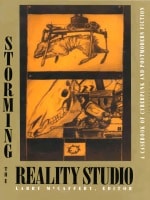
Storming the Reality Studio
A Casebook of Cyberpunk & Postmodern Science FictionLarry McCaffery, ed.
Duke University Press, 1992
By bringing together original fiction by well-known contemporary writers (William Burroughs, Thomas Pynchon, Don DeLillo, Kathy Acker, J. G. Ballard, Samuel R. Delany), critical commentary by some of the major theorists of postmodern art and culture (Jacques Derrida, Fredric Jameson, Timothy Leary, Jean-François Lyotard), and work by major practitioners of cyberpunk (William Gibson, Rudy Rucker, John Shirley, Pat Cadigan, Bruce Sterling), Storming the Reality Studio reveals a fascinating ongoing dialog in contemporary culture.
What emerges most strikingly from the colloquy is a shared preoccupation with the force of technology in shaping modern life. It is precisely this concern, according to McCaffery, that has put science fiction, typically the province of technological art, at the forefront of creative explorations of our unique age.
A rich opporunity for reading across genres, this anthology offers a new perspective on the evolution of postmodern culture and ultimately shows how deeply technological developments have influenced our vision and our art.
Selected Fiction contributors: Kathy Acker, J. G. Ballard, William S. Burroughs, Pat Cadigan, Samuel R. Delany, Don DeLillo, William Gibson, Harold Jaffe, Richard Kadrey, Marc Laidlaw, Mark Leyner, Joseph McElroy, Misha, Ted Mooney, Thomas Pynchon, Rudy Rucker, Lucius Shepard, Lewis Shiner, John Shirley, Bruce Sterling, William Vollman
Selected Non-Fiction contributors: Jean Baudrillard, Jacques Derrida, Joan Gordon, Veronica Hollinger, Fredric Jameson, Arthur Kroker and David Cook, Timothy Leary, Jean-François Lyotard, Larry McCaffery, Brian McHale, Dave Porush, Bruce Sterling, Darko Suvin, Takayuki Tatsumi