Results by title
67 books match the query 'Sea' and 8 start with s

Sea Of Grass
Conrad Richter
Ohio University Press, 1992

Sea of Faith
John Brehm
University of Wisconsin Press, 2004
In a masterful blending of lyric and narrative, Sea of Faith ranges widely across interior states and external worlds. From the Sierra Nevadas to New York City subways, from an imagined friendship with Lao Tzu to a rueful meditation on Coney Island, from a comic and poignant classroom discussion of "Dover Beach" to a sexual fantasy spawned by a tedious poetry reading, John Brehm’s poems explore the human predicament with tenderness, compassion, and unforgettable humor.

Sea of Lentils
Hilda Otano Benitez
University of Massachusetts Press, 1990
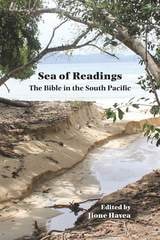
Sea of Readings
The Bible in the South PacificJione Havea
SBL Press, 2018
Readings by South Pacific islanders
This book offers readings of the Bible by native biblical critics from the South Pacific (Pasifika). An essay from editor Jione Havea introduces the volume by locating these essays within islander criticism and by explaining the flow of the book. Essays are presented in three sections. “Island Twists” offers readings that twist, like a whirlpool, biblical texts around insights of Pasifika novelists, composers, poets, and sages. “Island Turns” contains contextual readings that turn biblical texts toward Pasifika. “Across the Sea” contains responses by biblical critics from across the sea.
Features
- Contributions to islander criticism
- A showcase of texts by native writers, poets, and composers
- Crosscultural and postcolonial readings
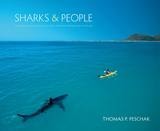
Sharks and People
Exploring Our Relationship with the Most Feared Fish in the SeaThomas P. Peschak
University of Chicago Press, 2008
A contributing photographer to National Geographic, Peschak is best known for his unusual photographs of sharks—his iconic image of a great white shark following a researcher in a small yellow kayak is one of the most recognizable shark photographs in the world. The other images gathered here are no less riveting, bringing us as close as possible to sharks in the wild. Alongside the photographs, Sharks and People tells the compelling story of the natural history of sharks. Sharks have roamed the oceans for more than four hundred million years, and in this time they have never stopped adapting to the ever-changing world—their unique cartilage skeletons and array of super-senses mark them as one of the most evolved groups of animals. Scientists have recently discovered that sharks play an important role in balancing the ocean, including maintaining the health of coral reefs. Yet, tens of millions of sharks are killed every year just to fill the demand for shark fin soup alone. Today more than sixty species of sharks, including hammerhead, mako, and oceanic white-tip sharks, are listed as vulnerable or in danger of extinction.
The need to understand the significant part sharks play in the oceanic ecosystem has never been so urgent, and Peschak’s photographs bear witness to the thrilling strength and unique attraction of sharks. They are certain to enthrall and inspire.

She Walks Into the Sea
Patricia Clark
Michigan State University Press, 2009
Patricia Clark's poems explore not only refuge but also wonder and appreciation, as well as astonishment.
A number of the 56 poems collected here show her grappling with loss, especially the loss of her mother, though she isn't one to indulge in misery. Instead, she goes walking. It is the harp tree in "The Poplar Adrift" that Clark imagines giving voice to sorrow, thus sparing those who stroll by—"all the grief that passes" becoming, in the tree’s very fibers, sound on the air, a wind through branches and leaves.
Clark also finds opportunities for learning, for meditation, and for contemplation. Octavio Paz has written, "Nature speaks as though it were a lover." In many of the poems collected here, Clark listens to nature speaking and revels in this lover, aiming to capture some of the qualities of Michigan's trees, birds, and landscapes in lyric poems.
It is Clark's particular gift to give us "tasted" as she draws her readers into the world, inhabiting the worlds of nature, head, and heart.
Sovereignty and the Sea
How Indonesia Became an Archipelagic StateJohn G. Butcher and R. E. Elson
National University of Singapore Press, 2017

Swallowing the Sea
On Writing & Ambition, Boredom, Purity & SecrecyLee Upton
Tupelo Press, 2012