Results by title
143 books match the query 'Sexuality' and 23 start with s

Sadomasochism in Everyday Life
The Dynamics of Power and PowerlessnessChancer, Lynn S.
Rutgers University Press, 1992
Lynn Chancer advances the provocative thesis that sadomasochism is far more prevalent in contemporary societies like the United States than we realize. According to Chancer, sexual sadomasochism is only the best-known manifestation of what is actually a much more broadly based social phenomenon. Moving from personal relationships to school, the workplace, and other interactions, Chancer uses a variety of examples that are linked by a recurrent pattern of behavior. She goes beyond the predominantly individualistic and psychological explanations generally associated with sadomasochism (including those popularized in the "how to" literature of the recent Women Who Love Too Much genre) toward a more sociological interpretation. Chancer suggests that the structure of societies organized along male-dominated and capitalistic lines reflects and perpetuates a sadomasochistic social psychology, creating a culture steeped in everyday experiences of dominance and subordination.
In the first part of the book, Chancer discusses the prevalence of sadomasochistic cultural imagery in contemporary America and examines sadomasochism through several perspectives. She develops a set of definitional traits both through existential analysis of an instance of S/M sex and by incorporating a number of Hegelian and psychoanalytic concepts. In the second part of the book, she places sadomasochism in a broader context by exploring whether and how it appears in the workplace and how it relates to gender and race.

Sapphic Primitivism
Productions of Race, Class, and Sexuality in Key Works of Modern FictionHackett, Robin
Rutgers University Press, 2003
In this book, Robin Hackett examines portrayals of race, class, and sexuality in modernist texts by white women to argue for the existence of a literary device that she calls “Sapphic primitivism.” The works vary widely in their form and content and include Olive Schreiner’s proto-modernist exploration of New Womanhood, The Story of an African Farm; Virginia Woolf’s high modernist “play-poem,” The Waves; Sylvia Townsend Warner’s historical novel, Summer Will Show; and Willa Cather’s Southern pastoral, Sapphira and the Slave Girl. In each, blackness and working-class culture are figured to represent sexual autonomy, including lesbianism, for white women. Sapphic primitivism exposes the ways several classes of identification were intertwined with the development of homosexual identities at the turn of the century. Sapphic primitivism is not, however, a means of disguising lesbian content. Rather, it is an aesthetic displacement device that simultaneously exposes lesbianism and exploits modern, primitivist modes of self-representation. Hackett’s revelations of the mutual interests of those who study early twentieth-century constructions of race and sexuality and twenty-first-century feminists doing anti-racist and queer work are a major contribution to literary studies and identity theory.

Searching for Feminist Superheroes
Gender, Sexuality, and Race in Marvel ComicsSam Langsdale
University of Texas Press, 2024
How superhero narratives in the margins of the mainstream tell innovative, feminist stories.
It’s no secret that superhero comics and their related media perpetuate a model of a straight, white, male hero at the expense of representing women and other minorities, but other narratives exist. Searching for Feminist Superheroes recognizes that female-led superhero comics, with diverse casts of characters and inclusive storytelling, exist on the margins of the mainstream superhero genre. But rather than focusing on these stories as marginalized, Sam Langsdale’s work on heroes such as Spider-Woman, America Chavez, and Ironheart locates the margins as a site of innovation and productivity, which have enabled the creation of feminist superhero texts.
Employing feminist and intersectional philosophies in an analysis of these comics, Langsdale suggests that feminist superheroes have the potential to contribute to a social imagination that is crucial in working toward a more just world. At a time when US popular culture continues to manifest as a battleground between oppressive and progressive social norms, Searching for Feminist Superheroes demonstrates that a fight for a better world is worthwhile.

Seeking Rights from the Left
Gender, Sexuality, and the Latin American Pink TideElisabeth Jay Friedman
Duke University Press, 2018
Contributors: Sonia E. Alvarez, María Constanza Diaz, Rachel Elfenbein, Elisabeth Jay Friedman, Niki Johnson, Victoria Keller, Edurne Larracoechea Bohigas, Amy Lind, Marlise Matos, Shawnna Mullenax, Ana Laura Rodríguez Gustá, Diego Sempol, Constanza Tabbush, Gwynn Thomas, Catalina Trebisacce, Annie Wilkinson

Sex Exposed
Sexuality and the Pornography DebateMcIntosh, Mary
Rutgers University Press, 1993
This provocative collection, by well-known feminists, surveys these arguments, and in particular asks why recent feminist debates about sexuality keep reducing to questions of pornography.

Sex Exposed
Sexuality and the Pornography DebateMcIntosh, Mary
Rutgers University Press, 1993
Over the past twenty years debates about pornography have raged within feminism and beyond. Throughout the 1970s feminists increasingly addressed the problem of men's sexual violence against women, and many women reduced the politics of men's power over women to questions about sexuality. By the 1980s these questions had become more and more focused on the issue of pornography––now a metaphor for the menace of male power. Collapsing feminist politics into sexuality and sexuality into pornography has not only caused some of the deepest splits between feminists, but made it harder to think clearly about either sexuality or pornography––indeed, about feminist politics more generally.
This provocative collection, by well-known feminists on both sides of the Atlantic, surveys these arguments, and in particular asks why recent feminist debates about sexuality keep reducing to questions of pornography. The authors open up the debate by looking at such topics as the improbable alliance between the right and pro-censorship feminists, the displacement of heterosexual desire and its discontents onto pornography, Andrea Dworkin's novel Mercy, psychoanalytic reflections on fantasy, censorship in relation to AIDS work, the new lesbian and bisexual pornography, the controversy over Robert Mapplethorpe's supposed racism in his photos of black nudes, Mae West as sexual icon and her brushes with the law, and the female nude in "high" art.
In addition to the editors, the contributors are Elizabeth Cowie, Harriett Gilbert, Robin Gorna, Marybeth Hamilton, Loretta Loach, Anne McClintock, Kobena Mercer, Jane Mills, Mandy Merck, Lynda Nead, Gillian Rodgerson, Carol Smart, Carole S. Vance, Linda Williams, and Elizabeth Wilson.
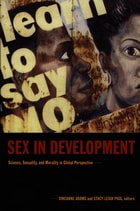
Sex in Development
Science, Sexuality, and Morality in Global PerspectiveVincanne Adams and Stacy Leigh Pigg, eds.
Duke University Press, 2005
Sex in Development combines the cultural analysis of sexuality, critiques of global development, and science and technology studies. Whether considering the resistance encountered by representatives of an American pharmaceutical company attempting to teach Russian doctors a “value free” way to offer patients birth control or the tension between Tibetan Buddhist ideas of fertility and the modernization schemes of the Chinese government, these essays show that attempts to make sex a universal moral object to be managed and controlled leave a host of moral ambiguities in their wake as they are engaged, resisted, and reinvented in different ways throughout the world.
Contributors. Vincanne Adams, Leslie Butt, Lawrence Cohen, Heather Dell, Vinh-Kim Nguyen, Shanti Parikh, Heather Paxson, Stacy Leigh Pigg, Michele Rivkin-Fish

Sex on Stage
Gender and Sexuality in Post-War British TheatreAndrew Wyllie
Intellect Books, 2009

Sex, Sexuality, and the Anthropologist
Edited by Fran Markowitz and Michael Ashkenazi
University of Illinois Press, 1999
Sex, Sexuality, and the Anthropologist recounts the real-life experiences of anthropologists who are forced to acknowledge that their hosts in the field view them as gendered beings in a social context, not as asexual, objective observers. Far from controlling the research environment and defining the terms of interviewer-informant relationships, these researchers find they must engage in a process of negotiating their position—including their sexual position—within the communities they study.
Ranging from public baths in Austria to lesbian bars in Taiwan and from Mexico to Nigeria to Finland to Japan, Sex, Sexuality, and the Anthropologist raises critical questions about ethnographers' reflexivity, subjectivity, and detachment, confronting the challenge of a holistic approach to the anthropological enterprise.

Sex-Life
A Critical Commentary on the History of SexualityDon Milligan
Pluto Press, 1993

Sexuality and Abortion in Interwar Poland
Maternity in Times of CrisisElisa-Maria Hiemer
Central European University Press, 2026

Sexuality and Authority in the Catholic Church
Monica Migliorino Miller
University of Scranton Press, 1995
If authority is derived from Eucharistic worship, then authority is fundamentally the authority of a covenant. This book shows that this covenant is spoken according to a primordial sexual language rooted in creation itself.

Sexuality and Being in the Poststructuralist Universe of Clarice Lispector
The Différance of DesireBy Earl E. Fitz
University of Texas Press, 2001
Driven by an unfulfilled desire for the unattainable, ultimately indefinable Other, the protagonists of the novels and stories of acclaimed Brazilian writer Clarice Lispector exemplify and humanize many of the issues central to poststructuralist thought, from the nature of language, truth, and meaning to the unstable relationships between language, being, and reality. In this book, Earl Fitz demonstrates that, in turn, poststructuralism offers important and revealing insights into all aspects of Lispector's writing, including her style, sense of structure, characters, themes, and socio-political conscience.
Fitz draws on Lispector's entire oeuvre—novels, stories, crônicas, and children's literature—to argue that her writing consistently reflects the basic tenets of poststructuralist theory. He shows how Lispector's characters struggle over and humanize poststructuralist dilemmas and how their essential sense of being is deeply dependent on a shifting, and typically transgressive, sense of desire and sexuality.

Sexuality and Form
Caravaggio, Marlowe, and BaconGraham Hammill
University of Chicago Press, 2000
Sexuality and the Politics of Ethos in the Writing Classroom
Zan Meyer Goncalves
Southern Illinois University Press, 2005
Applying the complexities of literacy development and personal ethos to the teaching of composition, Zan Meyer Goncalves challenges writing teachers to consider ethos as a series of identity performances shaped by the often-inequitable social contexts of their classrooms and communities. Using the rhetorical experiences of students who identify as lesbian, gay, bisexual, and/or transgender, she proposes a new way of thinking about ethos that addresses the challenges of social justice, identity, and transfer issues in the classroom.
Goncalves offers an innovative approach to teaching identity performance theory bound by social contexts. She applies this new approach to theories of specificity and intersectionality, illustrating how teachers can help students redefine the relationship between their social identities and their writing. She also addresses bringing social activism and identity politics into the classroom, helping writers make transfers across rhetorical contexts and linking students' interests to public conversations.
Theoretical and practical, Sexuality and the Politics of Ethos in the Writing Classroom provides teachers of first-year and advanced composition studies with useful, detailed assignments based in specific identity performance. Goncalves offers techniques to subvert oppressive language practices, while encouraging students to recognize themselves as writers, citizens, and active participants in their own educations and communities.
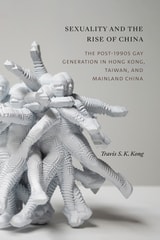
Sexuality and the Rise of China
The Post-1990s Gay Generation in Hong Kong, Taiwan, and Mainland ChinaTravis S. K. Kong
Duke University Press, 2023
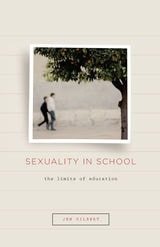
Sexuality in School
The Limits of EducationJen Gilbert
University of Minnesota Press, 2014
From concerns over the bullying of LGBTQ youth and battles over sex education to the regulation of sexual activity and the affirmation of queer youth identity, sexuality saturates the school day. Rather than understand these conflicts as an interruption to the work of education, Jen Gilbert explores how sexuality comes to bear on and to enliven teaching and learning.
Gilbert investigates the breakdowns, clashes, and controversies that flare up when sexuality enters spaces of schooling. Education must contain the volatility of sexuality, Gilbert argues, and yet, when education seeks to limit the reach of sexuality, it risks shutting learning down. Gilbert penetrates this paradox by turning to fiction, film, legal case studies, and personal experiences. What, she asks, can we learn about school from a study of sexuality?
By examining the strange workings of sexuality in schools, Gilbert draws attention to the explosive but also compelling force of erotic life in teaching and learning. Ultimately, this book illustrates how the most intimate of our experiences can come to shape how we see and act in the world.
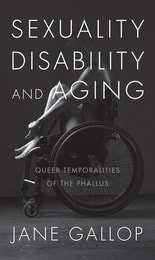
Sexuality, Disability, and Aging
Queer Temporalities of the PhallusJane Gallop
Duke University Press, 2019

Slavery and Sexuality in Classical Antiquity
Edited by Deborah Kamen and C. W. Marshall
University of Wisconsin Press, 2021
Slavery and Sexuality in Classical Antiquity reveals the often hidden and contradictory attitudes concerning the sexual identities and expression of enslaved people. These individuals were typically objectified by both social convention and legal description but were also recognized as human subjects, with subjectivity and sexual desires of their own. The contributors provoke valuable and fascinating questions that not only recognize the trauma and struggles of enslaved people but also point to the apparent inconsistencies in the mindsets of the enslavers. The resulting volume expands our understanding of both sexuality and slavery in ancient Greece and Rome, as separate subjects and as they impacted each other.

Small-Screen Supers
Adaptation, Sexuality, and Politics in Superhero TelevisionEdited by Anna F. Peppard and Dru Jeffries
University of Texas Press, 0
The first collected volume to define superhero television as a distinct cultural phenomenon, broadening horizons of what superhero stories have been and might become.
Superhero films dominate Hollywood and recent studies of popular culture. Superheroes are also abundant on television, and have been for decades, yet critics have largely neglected this intersection of genre and medium. Small-Screen Supers gathers an international group of scholars who, for the first time, examine superhero television as a distinct cultural and artistic phenomenon.
Informed by a range of critical perspectives, contributors examine animated and live-action shows aimed at children, teens, and adults, combining scholarship on popular contemporary programming with analysis of less-successful shows from the recent and distant past. Collectively, the anthology emphasizes how superhero television has reflected, informed, and transformed American culture and media. In particular, Small-Screen Supers argues that superhero TV—more so than film—foregrounds demographic diversity and social critique. Whether interpreting the 1980s cartoon Spider-Man and His Amazing Friends as a queer sitcom, underscoring the progressive politics of Supergirl, or investigating pandemic-inspired subjectivities in Werewolf by Night, the authors reflect on superhero television as a unique mode of expression with important implications for understanding American popular culture.
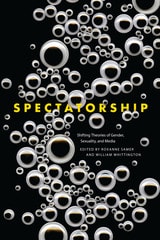
Spectatorship
Shifting Theories of Gender, Sexuality, and MediaEdited by Roxanne Samer and William Whittington
University of Texas Press, 2017
Media platforms continually evolve, but the issues surrounding media representations of gender and sexuality have persisted across decades. Spectator: The University of Southern California Journal of Film and Television Criticism has published groundbreaking articles on gender and sexuality, including some that have become canonical in film studies, since the journal’s founding in 1982. This anthology collects seventeen key articles that will enable readers to revisit foundational concerns about gender in media and discover models of analysis that can be applied to the changing media world today.
Spectatorship begins with articles that consider issues of spectatorship in film and television content and audience reception, noting how media studies has expanded as a field and demonstrating how theories of gender and sexuality have adapted to new media platforms. Subsequent articles show how new theories emerged from that initial scholarship, helping to develop the fields of fandom, transmedia, and queer theory. The most recent work in this volume is particularly timely, as the distinctions between media producers and media spectators grow more fluid and as the transformation of media structures and platforms prompts new understandings of gender, sexuality, and identification. Connecting contemporary approaches to media with critical conversations of the past, Spectatorship thus offers important points of historical and critical departure for discussion in both the classroom and the field.

Studying Human Behavior
How Scientists Investigate Aggression and SexualityHelen E. Longino
University of Chicago Press, 2013
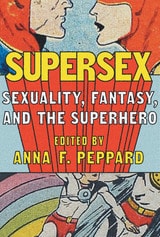
Supersex
Sexuality, Fantasy, and the SuperheroEdited by Anna F. Peppard
University of Texas Press, 2020
2021 Comic Studies Society Prize for Edited Collection
From Superman and Batman to the X-Men and Young Avengers, Supersex interrogates the relationship between heroism and sexuality, shedding new light on our fantasies of both.
From Superman, created in 1938, to the transmedia DC and Marvel universes of today, superheroes have always been sexy. And their sexiness has always been controversial, inspiring censorship and moral panic. Yet though it has inspired jokes and innuendos, accusations of moral depravity, and sporadic academic discourse, the topic of superhero sexuality is like superhero sexuality itself—seemingly obvious yet conspicuously absent. Supersex: Sexuality, Fantasy, and the Superhero is the first scholarly book specifically devoted to unpacking the superhero genre’s complicated relationship with sexuality.
Exploring sexual themes and imagery within mainstream comic books, television shows, and films as well as independent and explicitly pornographic productions catering to various orientations and kinks, Supersex offers a fresh—and lascivious—perspective on the superhero genre’s historical and contemporary popularity. Across fourteen essays touching on Superman, Batman, the X-Men, and many others, Anna F. Peppard and her contributors present superhero sexuality as both dangerously exciting and excitingly dangerous, encapsulating the superhero genre’s worst impulses and its most productively rebellious ones. Supersex argues that sex is at the heart of our fascination with superheroes, even—and sometimes especially—when the capes and tights stay on.