Results by title
96 books match the query 'Shadow' and 14 start with s
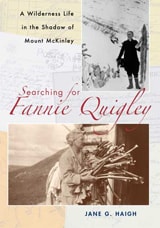
Searching for Fannie Quigley
A Wilderness Life in the Shadow of Mount McKinleyJane G. Haigh
Ohio University Press, 2007
At the age of 27, Fannie Sedlacek left her Bohemian homestead in Nebraska to join the gold rush to the Klondike. From the Klondike to the Tanana, Fannie continued north, finally settling in Katishna near Mount McKinley. This woman, later known as Fannie Quigley, became a prospector who staked her own claims and a cook who ran a roadhouse. She hunted and trapped and thrived for nearly forty years in an environment that others found unbearable.
Her wilderness lifestyle inspired many of those who met her to record their impressions of this self-sufficient woman, who died in 1944. To many of the 700,000 annual visitors to Denali National Park she is a symbol of the enduring spirit of the original pioneers.
Searching for Fannie Quigley: A Wilderness Life in the Shadow of Mount McKinley goes beyond the mere biographical facts of this unique woman’s journey. It also tells historian Jane G. Haigh’s own story of tracking and tracing the many paths that Fannie Quigley’s intriguing life took. Uncovering remote clues, digging through archives, and listening to oral accounts from a wide array of sources, Haigh has fashioned this rich lode into a compelling narrative.
In Searching for Fannie Quigley, Haigh separates fact from fiction to reveal the true story of this highly mythologized pioneer woman.
Season of the Shadow
Léonora Miano
Seagull Books, 2018
This powerful novel presents the early days of the transatlantic slave trade from a new perspective: that of the sub-Saharan population that became its first victims. Cameroonian novelist Léonora Miano presents a world on the brink of disappearing—a pre-colonial civilization with roots that stretch back for centuries. One day, a group of villagers finds twelve of their people missing. Where have they gone? Who is responsible? A collective dream, troubling a group of mothers in a communal dwelling, may have some of the answers, as the women’s missing sons call to them in terror; at the same time, a thick shadow settles over the huts, blocking out the light of day. It is the shadow of slavery, which will soon grow to blight the whole world.
Miano renders this brutal story in deliberately strange, dreamlike prose, befitting a situation that is, on its face, all but impossible for the villagers to believe.

Secure the Shadow
A NovelMichael Henson
Ohio University Press, 2021
An interconnected web of lives in one midwestern city captures the surprising humanity of people searching for their authentic selves amid the 1990s drug crisis.
Amy Taylor finds the inner-city streets around her high school vibrant and animated compared to the bland middle-class neighborhood where she lives with her career-driven mother. In these streets, she meets the people of the city, among them a wayward boy named Jonathan, a struggling drug dealer, and Paul Lewis, a documentary photographer who becomes Amy’s mentor. Under his inspiration, she attempts to capture their world through the lens of her camera.
From the multiple perspectives of Amy and the expansive group of people she meets, award-winning novelist Michael Henson presents a heartbreaking portrait of the effects the Reagan-initiated drug war had on the young.

Shadow and Sound
The Historical Thought of a Sumatran PeopleJames Siegel
University of Chicago Press, 1979
Siegel traces the Atjehnese treatment of history through two epics and a folktale. In his interpretation he goes beyond the idea tht texts such as these are semi-accurate historical documents to show tht tempo, rhythm, rhyme, and melody replace the significance of the content. Furthermore, he uncovers which Atjehnese frameworks - native genres ranging from dream interpretation to conventions of braggadocio
- illuminate their own sense of history.
Siegel first translates one of the important remaining epics on a historical topic, the Hikajat Potjoet Moehamat, and provides an analysis based on the narratve, prosodic structure and his observation of the recitation of epics. He then translates and analyzes two other pieces: a tale entitled Si Meuseukin's Wedding and another epic, the last popular one, Hikajat Prang Sabil. Finally he indicates how a similar treatment of history continues in present-day Atjeh. The analyses demonstrate that in the context of centuries of violence and disruption the Atjehnese have maintained an ability to speak of the past in such ways that it is turned into triumph, not by dwelling on heroic victories but by controlling language.
Siegel's way of looking at the relationship between history and literature will be valuable not only in anthropology but in literary history and comparative studies in literature and politics as well.

Shadow of My Shadow
Jennifer Doyle
Duke University Press, 2024

Shadow of Shiloh
Major General Lew Wallace in the Civil WarGail Stephens
Indiana Historical Society Press, 2010
Shadow of Things to Come
Kossi Efoui
Seagull Books, 2013
In an unnamed African nation, the people are subject to a state of perpetual warfare and to an Orwellian abuse of language that strips from language its meaning and renders life senseless. And in a bare room lit only by moonlight, a young man hides, waiting for the mysterious crocodile-men to come and help him escape from the violent tyranny of the state. While he waits, he tells his story.
This is Kossi Efoui’s catastrophic and carnivalesque dreamscape, the dark setting of The Shadow of Things to Come. Here, men and women are taken in the night, spirited away from their families, and sent to plantation penal colonies to be worked to the edge of madness. When they return, they are empty shells, their lost time referred to as the “Time of Annexation.” But though his parents were taken, our protagonist survived, first in the care of a quirky benefactress named Mama Maize, then under the wing of the state itself, as a student at one of its elite schools. When he meets a bookseller named Axis Kemal, however, he has found a surrogate father, an eccentric and wise man who can bring him out of the meaningless confusion and tell him the truth about the society he lives in.
Through his characters, Efoui speaks out against atrocity and the abuse of power, but more, he writes against political rhetoric and the destruction of meaning by government. This novel is a love letter to language and, in Chris Turner’s dazzling translation, it becomes a stunning introduction for English-language readers to an exciting new talent.

Shadow of a Cloud but No Cloud
Killarney Clary
University of Chicago Press, 2014
Shadow of the Holly-Fern
Josef Capek
Karolinum Press, 2026
The first English translation of Josef Capek’s classic novella explores what happens when a single violent act changes everything.
Two young poachers are caught by a gamekeeper and, in a moment of panic, shoot him. What began as a reckless adventure in pursuit of a deer becomes a desperate and increasingly hopeless flight through the forest.
Shadow of the Holly-Fern stands among the finest literary achievements of Josef Capek, the Czech painter and illustrator who died in a Nazi concentration camp in 1945 for his democratic convictions. The balladic novella is distinguished by its powerful portrayal of the fugitives’ inner lives; initially intoxicated by the beauty of the forest and a sense of freedom, they gradually succumb to mounting despair. Its intense focus on guilt and conscience recalls Crime and Punishment by Fyodor Dostoevsky, while its language remains intensely lyrical and evocative. First published in 1930, the book remains one of the enduring masterpieces of Czech literature and is presented here in English for the first time in a lucid translation by Geoffrey Chew.
Shadow of the Hunter
Richard K. Nelson
University of Chicago Press, 1983

Shadow of the New Deal
The Victory of Public BroadcastingJosh Shepperd
University of Illinois Press, 2023
- Winner of the 2024 BEA Book Award
- Runner-up in the History Division of the Association for Education in Journalism and Mass Communication (AEJMC)
- Runner-up for the AJHA Book of the Year (American Journalism Historians Association).
Despite uncertain beginnings, public broadcasting emerged as a noncommercial media industry that transformed American culture. Josh Shepperd looks at the people, institutions, and influences behind the media reform movement and clearinghouse the National Association of Educational Broadcasters (NAEB) in the drive to create what became the Public Broadcasting Service and National Public Radio.
Founded in 1934, the NAEB began as a disorganized collection of undersupported university broadcasters. Shepperd traces the setbacks, small victories, and trial and error experiments that took place as thousands of advocates built a media coalition premised on the belief that technology could ease social inequality through equal access to education and information. The bottom-up, decentralized network they created implemented a different economy of scale and a vision of a mass media divorced from commercial concerns. At the same time, they transformed advice, criticism, and methods adopted from other sectors into an infrastructure that supported public broadcasting in the 1960s and beyond.
Shadow of the Plantation
Charles Spurgeon Johnson
University of Chicago Press, 1934
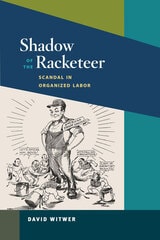
Shadow of the Racketeer
Scandal in Organized LaborDavid Witwer
University of Illinois Press, 2008
From a behind-the-scenes perspective, David Witwer describes how Pegler and his publisher, the politically powerful Roy W. Howard, shaped the news coverage of this scandal in ways that obscured the corrupt ties between employers and the mob while emphasizing the perceived menace of union leaders empowered by New Deal legislation that had legitimized organized labor. Pegler, Howard, and the rest of the mainstream press pointedly ignored evidence of the active role that business leaders took in the corruption, which badly tarnished the newly reborn labor movement.
Because he was more concerned with pursuing political gains for the conservative movement, Pegler's investigative journalism did little to reform union governance or organized crime's influence on labor unions. The union corruption scandal only undercut the labor movement. Pegler's continuing campaign against labor corruption framed the issue in ways that set the stage for postwar political defeats, culminating with the 1947 Taft-Hartley Act, which greatly limited the power of labor unions in the United States.
Demonstrating clearly and convincingly how journalism is wielded as a political weapon, Witwer studies a broad range of forces at play in the labor union scandal and its impact, including the influence of the press, organized crime, political corruption, and businessmen following their own economic imperatives.

Shadow of the White Chrysanthemum
A NovelJan Morrill
University of Arkansas Press, 2027
In 1957 Berkeley, California, Nobu Kimura runs a nursery with his older brother, Taro—until a hidden letter exposes a family secret and reopens old wounds left by his family’s internment. As Nobu wrestles with a renewed sense of betrayal, Taro, still haunted by wartime memories, confronts his own deepest fears when he learns he is about to become a father.
In Arkansas, their sister, Sachiko Kimura Baker, and her best friend, Jubie, watch nine Black students attempt to enter the newly desegregated Little Rock Central High School. The past collides with the present when Terrence Harris—a man who caused one of the Kimura family’s darkest moments—unexpectedly saves Sachiko and her daughter, forcing the family to reckon with old hatreds, buried truths, and the possibility of forgiveness.
In the midst of the family’s turmoil, their mother’s return from Japan brings revelations about the misunderstandings that have kept her away since the war’s end. Yet even as some of the family begins to heal, Nobu retreats further into a dangerous obsession with honor, shame, and revenge—a spiral that threatens to shatter the family.
Set in the aftermath of Japanese American internment and against the rising heat of the civil rights movement, Shadow of the White Chrysanthemum continues the Kimura family saga that began with Jan Morrill’s The Red Kimono and explores the bonds that hold a family together—and the secrets that threaten to break them apart.