65 books match the query 'Ships & Boats' and 11 start with s
cover of S-class destroyer Piet Hein (ex HMS Serapis)

S-class destroyer Piet Hein (ex HMS Serapis)

Jantinus Mulder

Amsterdam University Press, 2024

Ordered by the Royal Navy in 1941, the destroyers of the 5th Emergency Flotilla became known as S-class and served as fleet and convoy escorts in World War II. In the last months of the war, three were transferred to the Royal Netherlands Navy for service in the Far East. HMS Serapis was renamed HNLMS Piet Hein and served in the Indonesian War of Independence and saw action in the Korean War. She was sold for scrap in 1962.
[more]
cover of SS Australis

SS Australis

Bert Lamers

Amsterdam University Press, 2024

The ss 'Australis' was a well known ocean liner which entered service in 1940 as the
ss 'America' for the United States Lines. The ship was sold to the Greek Chandris Lines in 1964 and served until 1977 very succesfully on the route Western-Europe-Australia-New Zealand. Later the route became a full round-the-world-service. After her Australian period the liner sailed under the names of 'America' (for the third time), 'Italis', 'Noga', 'Alferdoss' and finally 'American Star'. In this volume of Liners the history of the great liner from when she was purchased by the Greek interest in 1964 until her sad wracking in January 1994.
[more]
cover of Sail, Steam, and Diesel: Moving Cargo on the Great Lakes

Sail, Steam, and Diesel

Moving Cargo on the Great Lakes

Eric Hirsimaki

Michigan State University Press, 2024
Water transportation has played a key role in the Great Lakes region’s settlement and economic growth, from providing entry into the new lake states to offering cheap transportation for the goods they produced. There are numerous tales surrounding the Great Lakes shipping trade, but few storytellers have addressed the factors that influenced the use, design, and evolution of the ships that sailed the inland seas. Sail, Steam, and Diesel: Moving Cargo on the Great Lakes provides a comprehensive overview of the evolution of Great Lakes ships over the centuries, from small birch-bark canoes originally used in the region to the massive thousand-footers of today. The author also looks at the economics of vessel operation in the context of the expanding scope of the shipping industry, which was crucial in catapulting America into becoming an industrial juggernaut. The captains of industry and the sailors whose labor propelled the trade populate this account, which also offers solemn acknowledgment of the high cost paid in both lost ships and lives. Although they might not realize it, millions of Americans have owed their livelihoods to the Great Lakes boats, and this volume is an excellent way to recognize the importance of this regional industry.
[more]
cover of Sailing into History: Great Lakes Bulk Carriers of the Twentieth Century and the Crews Who Sailed Them

Sailing into History

Great Lakes Bulk Carriers of the Twentieth Century and the Crews Who Sailed Them

Frank Boles

Michigan State University Press, 2017
The Great Lakes create a vast transportation network that supports a massive shipping industry. In this volume, seamanship, cargo, competition, cooperation, technology, engineering, business, unions, government decisions, and international agreements all come together to create a story of unrivaled interest about the Great Lakes ships and the crews that sailed them in the twentieth century. This complex and multifaceted tale begins in iron and coal mines, with the movement of the raw ingredients of industrial America across docks into ever larger ships using increasingly complicated tools and technology. The shipping industry was an expensive challenge, as it required huge investments of capital, caused bitter labor disputes, and needed direct government intervention to literally remake the lakes to accommodate the ships. It also demanded one of the most integrated international systems of regulation and navigation in the world to sail a ship from Duluth to upstate New York. Sailing into History describes the fascinating history of a century of achievements and setbacks, unimagined change mixed with surprising stability.
 
[more]
cover of Sailing to the Far Horizon: The Restless Journey and Tragic Sinking of a Tall Ship

Sailing to the Far Horizon

The Restless Journey and Tragic Sinking of a Tall Ship

Pamela Sisman Bitterman

University of Wisconsin Press, 2004
The tall ship Sofia sank off New Zealand’s North Island in February 1982, stranding its crew on disabled life rafts for five days. They struggled to survive as any realistic hope of rescue dwindled. Just a few years earlier, Pamela Sisman Bitterman was a naïve swabbie looking for adventure, signing on with a sailing co-operative taking this sixty-year-old, 123-foot, three-masted gaff-topsail schooner around the globe. The aged Baltic trader had been rescued from a wooden boat graveyard in Sweden and reincarnated as a floating commune in the 1960s. By the time Sofia went down, Bitterman had become an able seaman, promoted first to bos’un and then acting first mate, immersing herself in this life of a tall ship sailor, world traveler, and survivor.
[more]
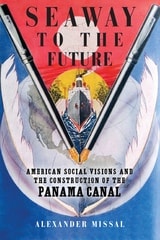
cover of Seaway to the Future: American Social Visions and the Construction of the Panama Canal

Seaway to the Future

American Social Visions and the Construction of the Panama Canal

Alexander Missal

University of Wisconsin Press, 2008

Realizing the century-old dream of a passage to India, the building of the Panama Canal was an engineering feat of colossal dimensions, a construction site filled not only with mud and water but with interpretations, meanings, and social visions. Alexander Missal’s Seaway to the Future unfolds a cultural history of the Panama Canal project, revealed in the texts and images of the era’s policymakers and commentators. Observing its creation, journalists, travel writers, and officials interpreted the Canal and its environs as a perfect society under an efficient, authoritarian management featuring innovations in technology, work, health, and consumption. For their middle-class audience in the United States, the writers depicted a foreign yet familiar place, a showcase for the future—images reinforced in the exhibits of the 1915 Panama-Pacific International Exposition that celebrated the Canal’s completion. Through these depictions, the building of the Panama Canal became a powerful symbol in a broader search for order as Americans looked to the modern age with both anxiety and anticipation.
            Like most utopian visions, this one aspired to perfection at the price of exclusion. Overlooking the West Indian laborers who built the Canal, its admirers praised the white elite that supervised and administered it. Inspired by the masculine ideal personified by President Theodore Roosevelt, writers depicted the Canal Zone as an emphatically male enterprise and Chief Engineer George W. Goethals as the emblem of a new type of social leader, the engineer-soldier, the benevolent despot. Examining these and other images of the Panama Canal project, Seaway to the Future shows how they reflected popular attitudes toward an evolving modern world and, no less important, helped shape those perceptions.

Best Books for Regional Special Interests, selected by the American Association of School Librarians, and Best Books for General Audiences, selected by the Public Library Association

“Provide[s] a useful vantage on the world bequeathed to us by the forces that set out to put America astride the globe nearly a century ago.”—Chris Rasmussen, Bookforum
[more]
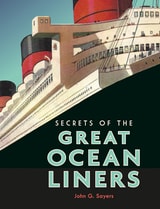
cover of Secrets of the Great Ocean Liners

Secrets of the Great Ocean Liners

John G. Sayers

Bodleian Library Publishing, 2020

In the heyday of ocean travel—between the late nineteenth century and World War II—ocean liners were a home away from home. Passengers prepared for voyages that could last as long as three months, and shipping companies ensured their guests were as comfortable as possible, providing entertainment, dining, sleeping quarters, and smoking lounges to accommodate passengers of all ages and budgets. Secrets of the Great Ocean Liners leads the reader through each stage of ocean liner travel, from booking a ticket and choosing a cabin to shore excursions, on-board games, social events, and even romances. This book dives into a vast, unique collection of ephemera to reveal the scandals, glamour, challenges, and tragedies of ocean liner travel. Shipping companies produced glitzy brochures, sailing schedules, voyage logs, passenger lists, postcards, and menus, all of which help us to enjoy daily life on board. Diaries, letters, and journals written by passengers also reveal a host of fascinating insights into the experience of traveling by sea.
[more]
cover of Ship Captain's Daughter: Growing Up on the Great Lakes

Ship Captain's Daughter

Growing Up on the Great Lakes

Ann Michler Lewis

Wisconsin Historical Society Press, 2015

Ann Lewis's childhood was marked by an unusual rhythm. Each year the thawing and freezing of the Great Lakes signaled the beginning and end of the shipping season, months of waiting that were punctuated by brief trips to various ports to meet her father, the captain.

With lively storytelling and vivid details, Lewis captures the unusual life of shipping families whose days and weeks revolved around the shipping industry on the Great Lakes. She paints an intriguing and affectionate portrait of her father, a talented pianist whose summer job aboard an ore freighter led him to a life on the water. Working his way up from deckhand to ship captain, Willis Michler became the master of thirteen ships over a span of twenty-eight years. From the age of twelve, Ann accompanied the captain to the ports of Milwaukee, Chicago, Toledo, and Cleveland on the lower Great Lakes. She describes sailing through stormy weather and starry nights, visiting the engine room, dining at the captain's table, and wheeling the block-long ship with her father in the pilot house. Through her mother's stories and remarks, Lewis also reveals insights into the trials and rewards of being a ship captain's wife. The book is enhanced by the author's vintage snapshots, depicting this bygone lifestyle.
[more]
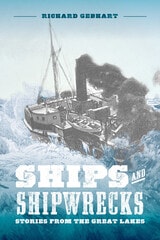
cover of Ships and Shipwrecks: Stories from the Great Lakes

Ships and Shipwrecks

Stories from the Great Lakes

Richard Gebhart

Michigan State University Press, 2022
From the day that French explorer Robert Cavelier de La Salle launched the Griffin in 1679 to the 1975 sinking of the celebrated Edmund Fitzgerald, thousands of commercial ships have sailed on the vast and perilous waters of the Great Lakes. In a harbinger of things to come, on the return leg of its first trip in late summer 1679, the Griffin disappeared and has never been seen again. In the centuries since then, the records show that an alarming number of shipwrecks have occurred on the Great Lakes. If vessels that wrecked but were later repaired and returned to service are included, the number certainly swells into the thousands. Most did not mysteriously vanish like the Griffin. Instead, they suffered the occupational hazards of every lake boat: collisions, groundings, strands, fires, boiler explosions, and capsizes. Many of these disasters took the lives of crews and passengers. The fearsome wrath of the storms that brew over the Great Lakes has challenged and defeated some of the staunchest vessels constructed in the shipyards of port cities along the U.S. and Canadian lakeshores. Here Richard Gebhart tells the tales of some of these ships and their captains and crews, from their launches to their sad demises—or sometimes, their celebrated retirements. This volume is a must-read for anyone intrigued by the maritime history of the Great Lakes.
[more]
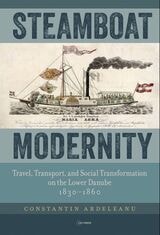
cover of Steamboat Modernity: Travel, Transport, and Social Transformation on the Lower Danube, 1830–1860

Steamboat Modernity

Travel, Transport, and Social Transformation on the Lower Danube, 1830–1860

Constantin Ardeleanu

Central European University Press, 2024

Through a skillful combination of economic and cultural history, this book describes the impact on Moldavia and Wallachia of steam navigation on the Danube. The Danube route integrated the two principalities into a dense network of European roads and waterways. From the 1830s to the 1860s, steamboat transport transformed time and space for the areas that benefited from regular services. River traffic accelerated urban development along the Lower Danube and contributed directly to institutional modernization in one of Europe’s peripheries.

Beyond technological advances and the transportation of goods on a trans-imperial waterway, steamboat travel revolutionized human interactions, too. The book offers a fascinating insight into the social and cultural milieu of the nineteenth century, drawing on first-hand accounts of Danube cruising. Describing the story of travelers who interacted, met, and visited the places they stopped, Constantin Ardeleanu creates a transnational history of travel up and down the Danube from Vienna to Constantinople. The pleasures and sometimes the travails of the travelers unfold against a backdrop of technical and economic transformation in the crucial period of modernization.
[more]
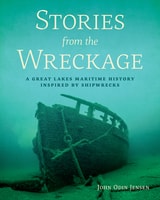
cover of Stories from the Wreckage: A Great Lakes Maritime History Inspired by Shipwrecks

Stories from the Wreckage

A Great Lakes Maritime History Inspired by Shipwrecks

John Odin Jensen

Wisconsin Historical Society Press, 2019

Every shipwreck has a story that extends far beyond its tragic end. The dramatic tales of disaster, heroism, and folly become even more compelling when viewed as junction points in history—connecting to stories about the frontier, the environment, immigration, politics, technology, and industry. In Stories from the Wreckage, John Odin Jensen examines a selection of Great Lakes shipwrecks of the wooden age for a deeper dive into this transformative chapter of maritime history. He mines the archeological evidence and historic record to show how their tragic ends fit in with the larger narrative of Midwestern history. Featuring the underwater photography of maritime archeologist Tamara Thomsen, this vibrant volume is a must-have for shipping enthusiasts as well as anyone interested in the power of water to shape history.
[more]