Results by title
216 books match the query 'Social' and 15 start with s

Sans Papiers
The Social and Economic Lives of Young Undocumented MigrantsAlice Bloch, Nando Sigona, and Roger Zetter
Pluto Press, 2014
Undocumented migration is a huge global phenomenon, yet little is known about the reality of life for those involved. Sans Papiers combines a contemporary account of the theoretical and policy debates with an in-depth exploration of the lived experiences of undocumented migrants in the UK from Zimbabwe, China, Brazil, Ukraine and Turkish Kurdistan.
Built around their voices, the book provides a unique understanding of migratory processes, gendered experiences and migrant aspirations. Moving between the uniqueness of individual experience and the search for commonalities, the book explores the ambiguities and contradictions of being an undocumented migrant.
With its insights into personal experiences alongside analysis of wider policy issues, Sans Papiers will have wide appeal for students, academics, policy-makers and practitioners.
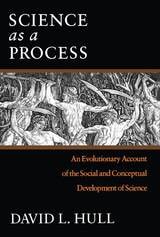
Science as a Process
An Evolutionary Account of the Social and Conceptual Development of ScienceDavid L. Hull
University of Chicago Press, 1990
"In Science as a Process, [David Hull] argues that the tension between cooperation and competition is exactly what makes science so successful. . . . Hull takes an unusual approach to his subject. He applies the rules of evolution in nature to the evolution of science, arguing that the same kinds of forces responsible for shaping the rise and demise of species also act on the development of scientific ideas."—Natalie Angier, New York Times Book Review
"By far the most professional and thorough case in favour of an evolutionary philosophy of science ever to have been made. It contains excellent short histories of evolutionary biology and of systematics (the science of classifying living things); an important and original account of modern systematic controversy; a counter-attack against the philosophical critics of evolutionary philosophy; social-psychological evidence, collected by Hull himself, to show that science does have the character demanded by his philosophy; and a philosophical analysis of evolution which is general enough to apply to both biological and historical change."—Mark Ridley, Times Literary Supplement
"Hull is primarily interested in how social interactions within the scientific community can help or hinder the process by which new theories and techniques get accepted. . . . The claim that science is a process for selecting out the best new ideas is not a new one, but Hull tells us exactly how scientists go about it, and he is prepared to accept that at least to some extent, the social activities of the scientists promoting a new idea can affect its chances of being accepted."—Peter J. Bowler, Archives of Natural History
"I have been doing philosophy of science now for twenty-five years, and whilst I would never have claimed that I knew everything, I felt that I had a really good handle on the nature of science, Again and again, Hull was able to show me just how incomplete my understanding was. . . . Moreover, [Science as a Process] is one of the most compulsively readable books that I have ever encountered."—Michael Ruse, Biology and Philosophy

Secrets of Responsibility
Jacques Derrida
University of Chicago Press, 2027
Jacques Derrida on the problem of secrecy, the first in a ten-seminar series on questions of responsibility.
Delivered at the École des hautes études en sciences sociales in Paris during the 1991–92 academic year, Secrets of Responsibility is the first of ten seminars given by Jacques Derrida under the umbrella “Questions of Responsibility,” a cycle that includes Hospitality, Perjury and Pardon, Death Penalty, and The Beast and the Sovereign—each also published by the University of Chicago Press.
In this seminar, Derrida asks a basic question—what is a secret?—which he then explores across scientific, technical, social, political, and religious domains. Over twelve sessions, we are treated to analyses of industrial, state, military, professional, and religious secrets as well as secret societies and secret police. Derrida also tackles secrecy in literary fiction (especially in Melville, James, Poe, and Baudelaire) and philosophical texts (including Freud, Kant, Heidegger, Kierkegaard, Patočka, Nietzsche, Levinas, and others). The result is a set of profound and surprising insights delivered as only Derrida can.
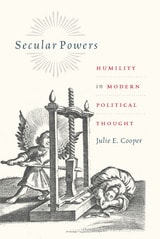
Secular Powers
Humility in Modern Political ThoughtJulie E. Cooper
University of Chicago Press, 2013
Contemporary understandings of secularism, Cooper contends, have been shaped by a limited understanding of it as a shift from vulnerability to power. But the works of the foundational thinkers of secularism tell a different story. Analyzing the writings of Hobbes, Spinoza, and Rousseau at the moment of secularity’s inception, she shows that all three understood that acknowledging one’s limitations was a condition of successful self-rule. And while all three invited humans to collectively build and sustain a political world, their invitations did not amount to self-deification. Cooper establishes that secular politics as originally conceived does not require a choice between power and vulnerability. Rather, it challenges us—today as then—to reconcile them both as essential components of our humanity.
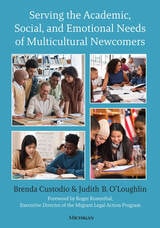
Serving the Academic, Social, and Emotional Needs of Multicultural Newcomers
Brenda Custodio and Judith B. O’Loughlin
University of Michigan Press, 2025
- Collaborate with school professionals to create a program specifically to meet the unique needs of new arrivals.
- Provide intensive literacy, numeracy, and content area support, especially for students with interrupted schooling.
- Develop the classroom supports necessary for students to achieve academic success.
- Provide supports that address the physical, social, and emotional challenges of newcomers.
- Work with families and communities to support students outside of a school environment.

Settlement Ecology
The Social and Spatial Organization of Kofyar AgricultureGlenn Davis Stone
University of Arizona Press, 1996
Seven Letters to Melin
Essays on the Soul, Science, Art and MortalityJosef Šafarík
Karolinum Press, 2020
Through these exchanges, Šafařík argues for the primacy of artistic creativity over scientific explanation, of truth over accuracy, of internal moral agency over an externally imposed social morality, and of personal religious belief over organized church-going. Šafařík is neither anti-scientific nor anti-rational; however, he argues that science has limited power, and he rejects the idea of science that denies meaning and value to what cannot be measured or calculated.
Šafařík’s critiques of technology, the wage economy, and increased professionalization make him an important precursor to the philosophy of deep ecology. This book was also a major influence on the Czech president Václav Havel; in this new translation it will find a fresh cohort of readers interested in what makes us human.

Sing the Rage
Listening to Anger after Mass ViolenceSonali Chakravarti
University of Chicago Press, 2014
Chakravarti takes up the issue from Adam Smith and Hannah Arendt, who famously understood both the dangers of anger in politics and the costs of its exclusion. Building on their perspectives, she argues that the expression and reception of anger reveal truths otherwise unavailable to us about the emerging political order, the obstacles to full civic participation, and indeed the limits—the frontiers—of political life altogether. Most important, anger and the development of skills needed to truly listen to it foster trust among citizens and recognition of shared dignity and worth. An urgent work of political philosophy in an era of continued revolution, Sing the Rage offers a clear understanding of one of our most volatile—and important—political responses.

Small Places, Large Issues
An Introduction to Social and Cultural AnthropologyThomas Hylland Eriksen
Pluto Press, 2015

Social and Political Philosophy
Peter A. French, Theodore E. Uehling Jr., and Howard K. Wettstein, Editors
University of Minnesota Press, 1982
Social and Political Philosophy was first published in 1982. Minnesota Archive Editions uses digital technology to make long-unavailable books once again accessible, and are published unaltered from the original University of Minnesota Press editions.

Social, Economic, and Environmental Justice for All Families
Groves Monographs on Marriage and Family (Volume 1)Lee Ann De Reus
Michigan Publishing Services, 0

Source Material for the Social and Ceremonial Life of the Choctaw Indians
John Swanton, with a foreword by Kenneth H. Carleton
University of Alabama Press, 2001
Long considered the undisputed authority on the Indians of the southern United States, anthropologist John Swanton published this history as the Smithsonian Institution's Bureau of American Ethnology (BAE) Bulletin 103 in 1931. Swanton's descriptions are drawn from earlier records—including those of DuPratz and Romans—and from Choctaw informants. His long association with the Choctaws is evident in the thorough detailing of their customs and way of life and in his sensitivity to the presentation of their native culture.
Included are descriptions of such subjects as clans, division of labor between sexes, games, religion, war customs, and burial rites. The Choctaws were, in general, peaceful farmers living in Mississippi and southwestern Alabama until they were moved to Oklahoma in successive waves beginning in 1830, after the treaty of Dancing Rabbit Creek.
This edition includes a new foreword by Kenneth Carleton placing Swanton's work in the context of his times. The continued value of Swanton's original research makes Source Material the most comprehensive book ever published on the Choctaw people.
Speculum Iuris
Roman Law as a Reflection of Social and Economic Life in AntiquityJean-Jacques Aubert and Boudewijn Sirks, Editors
University of Michigan Press, 2002
Speculum Iuris examines the complex relationship between law and social practice from the particular angle of Roman legislation and jurisprudence as conditioned by or reacting to a specific social, economic, and political context. Using various strategies, the editors and contributors mine a huge body of texts to study attitudes and behaviors of the Roman upper class, whose social concerns are reflected in the development of legal rules.
A close reading of juristic opinions and Republican or imperial legislation allows the contributors to find rationales behind rules and decisions in order to explain practices and mentalities of the elite within a larger social context. This book demonstrates clearly that Roman law was not divorced from the realities of daily life, even if some jurists may have been working with purely hypothetical cases.
Speculum Iuris provides a multidisciplinary approach to the question of the interplay of legal and social forces in the Roman world. As such, it will be a helpful study for general classicists and ancient historians, as well as for legal historians, social historians, economic historians, sociologists, and cultural anthropologists.
Jean-Jacques Aubert is Professor of Latin Language and Literature, University of Neuchâtel, Switzerland. Boudewijn Sirks is Professor of the History of Ancient Law, the History of European Private Law, and German Civil Law, Institute for the History of Law, Germany.
Superhero Ethics
10 Comic Book Heroes; 10 Ways to Save the World; Which One Do We Need Most Now?Travis Smith
Templeton Press, 2018
Although these outlandish figures—in their capes, masks, and tights, with their unbelievable origins and preternatural powers—are often dismissed as juvenile amusements, they really are profound metaphors for different approaches to shaping one’s character and facing the challenges of life.
But, given the choice, which superhero should we follow today? Who is most worthy of our admiration? Whose goals are most noble? Whose ethics should we strive to emulate?
To decide, Travis Smith takes ten top superheroes and pits them one against another, chapter by chapter. The hero who better exemplifies how we ought to live advances to the final round. By the end of the book, a single superhero emerges victorious and is crowned most exemplary for our times.
How, then, shall we live?
- How can we overcome our beastly nature and preserve our humanity? (The Hulk vs. Wolverine)
- How far can we rely on our willpower and imagination to improve the human condition? (Iron Man vs. Green Lantern)
- What limits must we observe when protecting our neighborhood from crime and corruption? (Batman vs. Spider-Man)
- Will the pursuit of an active life or a contemplative life bring us true fulfillment? (Captain America vs. Mr. Fantastic)
- Should we put our faith in proven tradition or in modern progress to achieve a harmonious society? (Thor vs. Superman)

Sustainability
A Philosophy of Adaptive Ecosystem ManagementBryan G. Norton
University of Chicago Press, 2005
Emphasizing cooperation and adaptation through social learning, Norton provides a practical framework that encourages an experimental approach to language clarification and problem formulation, as well as an interdisciplinary approach to creating solutions. By moving beyond the scientific arena to acknowledge the importance of public discourse, Sustainability offers an entirely novel approach to environmentalism.