Results by title
139 books match the query 'Social archaeology' and 7 start with s
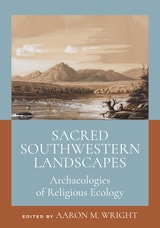
Sacred Southwestern Landscapes
Archaeologies of Religious EcologyEdited by Aaron M. Wright
University of Utah Press, 2024
Hailing from various academic and cultural backgrounds, contributors invoke a range of theoretical currents and methodological practices to examine how these relationships developed and evolved. Nearly all the places, people, and paradigms at play in contemporary southwestern scholarship find room among these pages, from the Sonoran and Chihuahuan Deserts to the Colorado Plateau; from diverse cultures, including Ancestral Pueblo, Mogollon, Hohokam, Pataya, Trincheras, Navajo (Diné), and Nuevomexicano; and from theoretical frameworks drawing upon phenomenology, materiality, bundling, and semiotics. This collective engagement showcases how religious ecologies can be studied from multiple perspectives and through sundry lines of evidence, leaving readers with appreciation and reverence for the rich and robust sacredness in southwestern landscapes.
Social Theory In Archaeology
Michael Brian Schiffer
University of Utah Press, 2000
Since the debut of the New Archaeology in the 1960s, approaches to the science of interpreting the material past have proliferated.
Seeking to find common ground in an increasingly fractious and polarized discipline, a group of archaeological theorists representing various schools of thought gathered in a roundtable, during the fall of 1997. As organizer, Michael Schiffer sought to build bridges that might begin to span the conceptual chasms that have formed in archaeology during the past few decades. Many participants in the roundtable accepted the challenge of building bridges, but some rejected the premise that bridge building is desirable or feasible. Even so, every chapter in the resulting volume contributes something provocative or significant to the enterprise of constructing social theory in archaeology and setting the agenda for future social-theoretic research.
With contributions from every major school of thought, whether informed by evolutionary theory, feminism, chaos theory, behavioralism, or post-processualism, this volume serves as both handbook to an array of theoretical approaches and as a useful look at each school’s response to criticism.
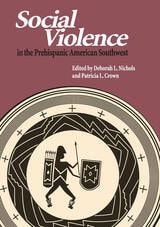
Social Violence in the Prehispanic American Southwest
Edited by Deborah L. Nichols and Patricia L. Crown
University of Arizona Press, 2008
CONTENTS
1. Introduction
Patricia Crown and Deborah Nichols
2. Dismembering the Trope: Imagining Cannibalism in the Ancient Pueblo World
Randall H. McGuire and Ruth Van Dyke
3. An Outbreak of Violence and Raiding in the Central Mesa Verde Region in the 12th Century AD
Brian R. Billman
4. Chaco Horrificus?
Wendy Bustard
5. Inscribed in the Body, Written in Bones: The Consequences of Social Violence at La Plata
Debra L. Martin, Nancy Akins, Bradley Crenshaw, and Pamela K. Stone
6. Veneration or Violence: A Study of Variations in Patterns of Human Bone Modification at La Quemada
Ventura R. Pérez, Ben A. Nelson, and Debra L. Martin
7. Witches, Practice, and the Context of Pueblo Cannibalism
William H. Walker
8. Explanation vs. Sensation: The Discourse of Cannibalism at Awat’ovi
Peter Whiteley
9. Devouring Ourselves
George J. Armelagos
References Cited
About the Contributors
Index
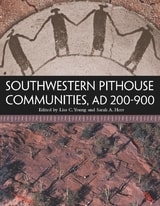
Southwestern Pithouse Communities, AD 200-900
Edited by Lisa C. Young and Sarah A. Herr
University of Arizona Press, 2012
Pithouses are the earliest identifiable domestic architecture in many areas of the world, and can provide insights into the origins of communities--a fundamental component of past and present societies. In this book, Lisa Young and Sarah Herr invite archaeologists to explore the development of communities using information from pithouse sites in the American Southwest.
Using regional and topical syntheses to investigate the formation of pithouse communities, contributors to this volume examine the complex relationship between the economic transition to agricultural dependence and the social changes associated with sedentism. They discover that during this transformation, peoples' relationship with the landscape changed in ways that affected their use of space, community organization, and cultural identity.
Employing various theoretical perspectives, these contributions analyze changes in pithouses, site layout, communal architecture, and settlement patterns to investigate the development of place-based communities. Chapters look at community formation strategies in populous regions like the northern San Juan Basin, the southern Colorado Plateau, Mimbres/southern Mogollon, and Hohokam Basin and Range and compare them with social structures in more sparsely populated regions like the northeast Hohokam peripheries, the Arizona Transition Zone, the Cibola region, southeast New Mexico, and the northern Rio Grande. The book also includes thematic discussions of panregional economic change, the complex relationship between house and household, and the demographic shifts accompanying the Neolithic Demographic Transition.
An essential book for students and archaeologists interested in the origins of communities, Southwestern Pithouse Communities is also an important comparative resource for scholars interested in social change during the transition to settled village life.
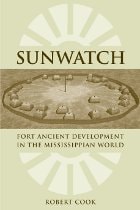
SunWatch
Fort Ancient Development in the Mississippian WorldRobert Cook
University of Alabama Press, 2007
The last prehistoric cultures to inhabit the Middle Ohio Valley (ca. A.D. 1000–1650) are referred to as Fort Ancient societies, which exhibited a wide variety of Mississippian period characteristics. What is less well-known and little understood are the social processes by which Mississippian characteristics spread to Fort Ancient communities. Through a comprehensive study of SunWatch, one of the few thoroughly excavated Fort Ancient settlements, the author focuses on the development of village social structure within a broad geographic and temporal framework, recognizing border areas as particularly dynamic contexts of social change. As a fundamental study of social patterning of Fort Ancient villages, this work reveals the interrelationships of small social units in culture change and social structure development and provides a full reconsideration of the Mississippian dimensions of Fort Ancient societies and a model for future investigations of larger patterning in the lateprehistory of the region.
Surplus
The Politics of Production and the Strategies of Everyday LifeChristopher T. Morehart
University Press of Colorado, 2015
The concept of surplus captures the politics of production and also conveys the active material means by which people develop the strategies to navigate everyday life. Surplus: The Politics of Production and the Strategies of Everyday Life examines how surpluses affected ancient economies, governments, and households in civilizations across Mesoamerica, the Southwest United States, the Andes, Northern Europe, West Africa, Mesopotamia, and eastern Asia.
A hallmark of archaeological research on sociopolitical complexity, surplus is central to theories of political inequality and institutional finance. This book investigates surplus as a macro-scalar process on which states or other complex political formations depend and considers how past people—differentially positioned based on age, class, gender, ethnicity, role, and goal—produced, modified, and mobilized their social and physical worlds.
Placing the concept of surplus at the forefront of archaeological discussions on production, consumption, power, strategy, and change, this volume reaches beyond conventional ways of thinking about top-down or bottom-up models and offers a comparative framework to examine surplus, generating new questions and methodologies to elucidate the social and political economies of the past.
Contributors include Douglas J. Bolender, James A. Brown, Cathy L. Costin, Kristin De Lucia, Timothy Earle, John E. Kelly, Heather M. L. Miller, Christopher R. Moore, Christopher T. Morehart, Neil L. Norman, Ann B. Stahl, Victor D. Thompson, T. L. Thurston, and E. Christian Wells.
Surviving Sudden Environmental Change
Answers From ArchaeologyJago Cooper
University Press of Colorado, 2012