Results by title
52 books match the query 'Social medicine' and 5 start with s
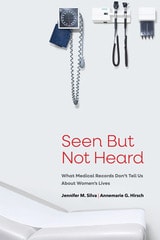
Seen But Not Heard
What Medical Records Don’t Tell Us About Women’s LivesJennifer M. Silva
Russell Sage Foundation, 2026
Medical clinicians, who are already overworked and burned out, are increasingly expected to understand and treat systemic social issues like poverty and racism. One aspect of this is documenting patient’s social risk factors in electronic health records (EHRs). But EHRs do not aways give the full story. Critically, they omit patients’ voices and perspectives about their lives, care, and whether their needs are being met. In Seen But Not Heard, sociologist Jennifer M. Silva and epidemiologist Annemarie G. Hirsch explore the gaps between what clinicians document in EHRs and women’s lived experiences.
Drawing on interviews with 87 non-college-educated, economically disadvantaged women living in rural America and their health records from a large, non-profit health system, Silva and Hirsch find that the stories that medical records provide and the stories that women tell about themselves differ dramatically. Medical charts often translate women’s suffering into sterile diagnostic codes, prescriptions, and treatment plans. Some women felt heard by their clinicians, believed they received adequate care. Many of these women thought their clinicians went above and beyond to help meet their needs by offering them information on how to apply for benefits like food stamps or childcare subsidies and helping them obtain necessary items like mattress covers and winter coats. More often, however, women felt that clinicians were detached from their everyday struggles to survive, whether that meant keeping their families intact even in the face of violence or finding money to pay the never-ending string of bills.
Silva and Hirsch argue that because the system of healthcare delivery interprets social problems as individual failings it often reproduces long-standing injurious stereotypes of women as hysterical, recalcitrant, impure, and gluttonous. For some healthcare providers, knowledge about patients’ social risk factors can become a source of control and punishment, such as denying patients care or reporting patients to child welfare services. Patients described clinicians mobilizing harmful stereotypes about marriage and motherhood, race, and poverty during their appointments. Some of the women’s most traumatic experiences in the healthcare system were completely missing from their EHRs. These troubling experiences ultimately deter women from accessing healthcare, discourages them from sharing their experiences with clinicians, and in some cases, makes their health and social problems worse. Silva and Hirsch offer several policies and practices that would improve women’s experiences in clinical encounters, such as training clinicians in trauma-informed and culturally responsive care, as well as national investments in housing, food security, transportation, and environmental justice.
Seen But Not Heard is a disturbing but necessary examination of the ways vulnerable women are often failed by the healthcare system and offers solutions that will allow healthcare workers to better address the structural barriers faced by their patients.

Social Structure and Testosterone
Explorations in the Socio-Bio-Social ChainKemper, Theodore D
Rutgers University Press, 1990

Standardizing Sex
A History of Trans MedicineKetil Slagstad
University of Chicago Press, 2025
Standardizing Sex traces the emergence of trans medicine in Scandinavia in the twentieth century, exploring the construction and negotiation of medical expertise among medical professionals, patients, and activists in the media and government bureaucracy. The book combines the author’s analysis of medical records and other archival sources with oral history interviews with former patients, activists, doctors, psychologists, and civil servants. Physician-historian Ketil Slagstad uses the Scandinavian story of sex reassignment to anchor not only the role of the state but also bureaucracy and social rights. Scandinavian countries, he shows, played a foundational role in the emergence of trans medicine internationally. As a result, Standardizing Sex tells a transnational history of medicine that sheds light on a set of relations and problems that continue to impact discussions of trans medicine and trans rights around the world.
Slagstad’s sources offer a rare opportunity to explore the emergence of trans medicine in action in the clinic, laboratory, waiting room, and operating room, as well as in the bureaucrat’s office, on the psychologist’s couch, and in the publications and meetings of activist groups. Together, these sources allow for the analysis of the increasingly complex negotiations of nosological criteria, medical knowledge, and medical practices in a formative period for transgender medicine. More generally, the book offers a story about the reshaping of the normal and the pathological in modern societies.
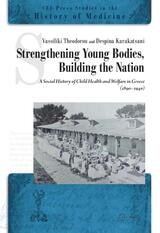
Strengthening Young Bodies, Building the Nation
A Social History of the Child Health and Welfare in Greece (1890–1940)Vassiliki Theodorou
Central European University Press, 2019
Sudden Death and the Myth of CPR
Stefan Timmermans, foreword by Bern Shen
Temple University Press, 1999
Anyone who has ever taken a CPR course has wondered, "What would happen if I actually had to use CPR?" In Western societies, the lifesaving power of resuscitation has the status of a revered cultural myth. It promises life in the face of sudden death, but the reality is that lives are rarely saved. Medical researchers estimate the survival rate for out-of-hospital CPR to be between 1 and 3 percent. Sudden Death and the Myth of CPR explores the history of this medical innovation and the promotion of its effectiveness.
The overuse of resuscitation, Timmermans explains, defines people's experience with sudden death, something he learned firsthand by following the practice of lifesaving from street corner to emergency room. He argues that very few people are successfully resuscitated without brain damage despite the promotion of CPR's effectiveness through powerful media images. In vivid accounts of the day-to-day practices of cardiopulmonary resuscitation in one of the only studies o f sudden death, Timmermans records the astonishingly frank comments of emergency personnel. Doctors, nurses, social workers, and paramedics express emotions from cynicism about going through the futile motions to genuine concern for victims' family members.
If a person who was supposed to keep on living dies at the end of a resuscitative attempt, how socially meaningful is the dying? Timmermans asks tough questions and addresses the controversial ethical issues about the appropriateness of interfering with life and death. He suggests policy reform and the restoration of dignity to sudden death.