Results by title
87 books match the query 'Sound' and 21 start with s
Sensing Sound
Singing and Listening as Vibrational PracticeNina Sun Eidsheim
Duke University Press, 2016
Seventeenth-Century Opera and the Sound of the Commedia dell’Arte
Emily Wilbourne
University of Chicago Press, 2016
Wilbourne considers a series of case studies structured around the most important and widely explored operas of the period: Monteverdi’s lost L’Arianna, as well as his Il Ritorno d’Ulisse and L’incoronazione di Poppea; Mazzochi and Marazzoli’s L’Egisto, ovvero Chi soffre speri; and Cavalli’s L’Ormindo and L’Artemisia. As she demonstrates, the sound-in-performance aspect of commedia dell’arte theater—specifically, the use of dialect and verbal play—produced an audience that was accustomed to listening to sonic content rather than simply the literal meaning of spoken words. This, Wilbourne suggests, shaped the musical vocabularies of early opera and facilitated a musicalization of Italian theater.
Highlighting productive ties between the two worlds, from the audiences and venues to the actors and singers, this work brilliantly shows how the sound of commedia performance ultimately underwrote the success of opera as a genre.

Shadow and Sound
The Historical Thought of a Sumatran PeopleJames Siegel
University of Chicago Press, 1979
Siegel traces the Atjehnese treatment of history through two epics and a folktale. In his interpretation he goes beyond the idea tht texts such as these are semi-accurate historical documents to show tht tempo, rhythm, rhyme, and melody replace the significance of the content. Furthermore, he uncovers which Atjehnese frameworks - native genres ranging from dream interpretation to conventions of braggadocio
- illuminate their own sense of history.
Siegel first translates one of the important remaining epics on a historical topic, the Hikajat Potjoet Moehamat, and provides an analysis based on the narratve, prosodic structure and his observation of the recitation of epics. He then translates and analyzes two other pieces: a tale entitled Si Meuseukin's Wedding and another epic, the last popular one, Hikajat Prang Sabil. Finally he indicates how a similar treatment of history continues in present-day Atjeh. The analyses demonstrate that in the context of centuries of violence and disruption the Atjehnese have maintained an ability to speak of the past in such ways that it is turned into triumph, not by dwelling on heroic victories but by controlling language.
Siegel's way of looking at the relationship between history and literature will be valuable not only in anthropology but in literary history and comparative studies in literature and politics as well.
Siren City
Sound and Source Music in Classic American NoirMiklitsch, Robert
Rutgers University Press, 2011
Focusing on a wide range of celebrated and less well known films and offering an introductory discussion of film sound, Robert Miklitsch mobilizes the notion of audiovisuality to investigate period sound technologies such as the radio and jukebox, phonograph and Dictaphone, popular American music such as "hot" black jazz, and "big numbers" featuring iconic performers such as Lauren Bacall, Veronica Lake, and Rita Hayworth. Siren City resonates with the sounds and source music of classic American noir-gunshots and sirens, swing riffs and canaries. Along with the proverbial private eye and femme fatale, these audiovisuals are central to the noir aesthetic and one important reason the genre reverberates with audiences around the world.
Sonic Flux
Sound, Art, and MetaphysicsChristoph Cox
University of Chicago Press, 2018
Through the philosophical analysis of works by John Cage, Maryanne Amacher, Max Neuhaus, Christian Marclay, and many others, Sonic Flux contributes to the development of a materialist metaphysics and poses a challenge to the prevailing positions in cultural theory, proposing a realist and materialist aesthetics able to account not only for sonic art but for artistic production in general.
Sonic Persuasion
Reading Sound in the Recorded AgeGreg Goodale
University of Illinois Press, 2011

Sonic Strategies
Performing Mexico's War on Drugs, Mourning, and FeminicideChristina Baker
Vanderbilt University Press, 2023
In Sonic Strategies, author Christina Baker highlights the tactics employed by contemporary performance artists in Mexico in response to the violence surrounding the nation’s War on Drugs. The introduction opens with a description of the 2007 reenactment of the Grito, or “cry,” of independence, a moment fraught with sonic sparring, setting the stage for how each subsequent chapter focuses on themes related to war and violence. Each chapter focuses on the works of one or more performance artist, and taken together, the case studies illuminate how critiques of the nation’s rising death tolls, governmental corruption, and gendered violence very literally sound, whether in Música de balas, a post-dramatic piece by Hugo Salcedo; the lamentations of the nation’s Antigones in works by Violeta Luna and Lukas Avendaño; satirical revisions of Mexican Golden Age film in the cabaret piece Nosotras las proles; or the story of transfeminicide in César Enríquez’s La Prietty Guoman by way of US pop music.
Written in an accessible style grounded in theater studies but interdisciplinary by design, Sonic Strategies will appeal to literary critics, students, musicologists, and theater and performance scholars alike. By paying close attention to planned and spontaneous sounds within live and textual experiences, Sonic Strategies contends that conscientious listening reveals dynamic practices that reside beyond the linguistic and embodied gesture.
Sound Authorities
Scientific and Musical Knowledge in Nineteenth-Century BritainEdward J. Gillin
University of Chicago Press, 2021
Sound Authorities shows how experiences of music and sound played a crucial role in nineteenth-century scientific inquiry in Britain.
In Sound Authorities, Edward J. Gillin focuses on hearing and aurality in Victorian Britain, claiming that the development of the natural sciences in this era cannot be understood without attending to the study of sound and music.
During this time, scientific practitioners attempted to fashion themselves as authorities on sonorous phenomena, coming into conflict with traditional musical elites as well as religious bodies. Gillin pays attention to sound in both musical and nonmusical contexts, specifically the cacophony of British industrialization. Sound Authorities begins with the place of acoustics in early nineteenth-century London, examining scientific exhibitions, lectures, spectacles, workshops, laboratories, and showrooms. He goes on to explore how mathematicians mobilized sound in their understanding of natural laws and their vision of a harmonious ordered universe. In closing, Gillin delves into the era’s religious and metaphysical debates over the place of music (and humanity) in nature, the relationship between music and the divine, and the tensions between spiritualist understandings of sound and scientific ones.
Sound Design and Science Fiction
By William Whittington
University of Texas Press, 2007
Sound is half the picture, and since the 1960s, film sound not only has rivaled the innovative imagery of contemporary Hollywood cinema, but in some ways has surpassed it in status and privilege because of the emergence of sound design.
This in-depth study by William Whittington considers the evolution of sound design not only through cultural and technological developments during the last four decades, but also through the attitudes and expectations of filmgoers. Fans of recent blockbuster films, in particular science fiction films, have come to expect a more advanced and refined degree of film sound use, which has changed the way they experience and understand spectacle and storytelling in contemporary cinema.
The book covers recent science fiction cinema in rich and compelling detail, providing a new sounding of familiar films, while offering insights into the constructed nature of cinematic sound design. This is accomplished by examining the formal elements and historical context of sound production in movies to better appreciate how a film sound track is conceived and presented.Whittington focuses on seminal science fiction films that have made specific advances in film sound, including 2001: A Space Odyssey, THX 1138, Star Wars, Alien, Blade Runner (original version and director's cut), Terminator 2: Judgment Day and The Matrix trilogy and games—milestones of the entertainment industry's technological and aesthetic advancements with sound.
Setting itself apart from other works, the book illustrates through accessible detail and compelling examples how swiftly such advancements in film sound aesthetics and technology have influenced recent science fiction cinema, and examines how these changes correlate to the history, theory, and practice of contemporary Hollywood filmmaking.
Sound Objects
James A. Steintrager and Rey Chow, editors
Duke University Press, 2019
Contributors. Georgina Born, Michael Bull, Michel Chion, Rey Chow, John Dack, Veit Erlmann, Brian Kane, Jairo Moreno, John Mowitt, Pooja Rangan, Gavin Steingo, James A. Steintrager, Jonathan Sterne, David Toop
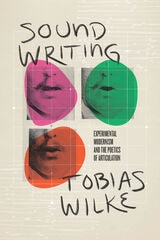
Sound Writing
Experimental Modernism and the Poetics of ArticulationTobias Wilke
University of Chicago Press, 2022
Avant-garde writers and artists of the twentieth century radically reconceived poetic language, appropriating scientific theories and techniques as they turned their attention to the physical process of spoken language. This modernist “sound writing” focused on the bodily production of speech, which it rendered in poetic, legible, graphic form.
Modernist sound writing aims to capture the acoustic phenomenon of vocal articulation by graphic means. Tobias Wilke considers sound writing from its inception in nineteenth-century disciplines like physiology and experimental phonetics, following its role in the aesthetic practices of the interwar avant-garde and through to its reemergence in the postwar period. These projects work with the possibility of crossing over from the audible to the visible, from speech to notation, from body to trace. Employing various techniques and concepts, this search for new possibilities played a central role in the transformation of poetry into a site of radical linguistic experimentation. Considering the works of writers and artists—including Raoul Hausmann, Kurt Schwitters, Viktor Shklovsky, Hugo Ball, Charles Olson, and Marshall McLuhan—Wilke offers a fresh look at the history of the twentieth-century avant-garde.
Sound and Affect
Voice, Music, WorldEdited by Judith Lochhead, Eduardo Mendieta, and Stephen Decatur Smith
University of Chicago Press, 2021
Sound and Affect maps a new territory for inquiry at the intersection of music, philosophy, affect theory, and sound studies. The essays in this volume consider objects and experiences marked by the correlation of sound and affect, in music and beyond: the voice, as it speaks, stutters, cries, or sings; music, whether vocal, instrumental, or machine-made; and our sonic environments, whether natural or artificial, and how they provoke responses in us. Far from being stable, correlations of sound and affect are influenced and even determined by factors as diverse as race, class, gender, and social and political experience. Examining these factors is key to the project, which gathers contributions from a cross-disciplinary roster of scholars, including both established and new voices. This agenda-setting collection will prove indispensable to anyone interested in innovative approaches to the study of sound and its many intersections with affect and the emotions.
Sound and Form in Modern Poetry
A Study of Prosody from Thomas Hardy to Robert LowellHarvey Gross
University of Michigan Press, 1964
Sound and Form in Modern Poetry
Second EditionHarvey Gross and Robert McDowell
University of Michigan Press, 1996
Poet, critic, and editor Robert McDowell has updated this classic text in the light of the poetic and critical developments of the last three decades. Segments on Dickinson, Robinson, Frost, Jeffers, and Lowell, among other poets, have been greatly expanded, and Ashbery, Creeley, Ginsberg, Hall, Kees, Kumin, Levertov, Levine, O'Hara, Plath, Rich, Simpson, and Wilbur added, among others. The epilogue discusses a new generation of poets whose works will likely be read well into the next century-- among others, Thomas M. Disch, Rita Dove, Dana Gioia, Emily Grosholz, Mark Jarman, Molly Peacock, Gjertrud Schnackenberg, Timothy Steele, Mary Swander, and Marilyn Nelson Waniek.
Over the last ten years, the most inspiring topic of conversation and argument among poets and their readers has been the resurgence of narrative and traditional forms. The new Sound and Form in Modern Poetry is a seminal text in this discussion, examining not only this movement but all of the important developments (Dadaism, Surrealism, Imagism, Language Poetry, and the Confessional School) that have defined our poetry in the twentieth century and have set the stage for poetry's continued life in the twenty-first. The original Sound and Form in Modern Poetry enjoyed extensive classroom use as a text; the revised version promises to be even more accessible, and more essential, for years to come.
The late Harvey Gross was Professor of Comparative Literature, State University of New York at Stony Brook.
Robert McDowell is publisher and editor of Story Line Press, and is also poet, critic, translator, fiction writer, and essayist.
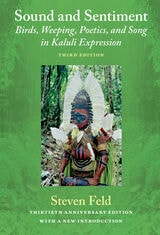
Sound and Sentiment
Birds, Weeping, Poetics, and Song in Kaluli Expression, 3rd edition with a new introduction by the authorSteven Feld
Duke University Press, 2012
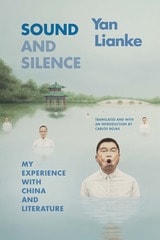
Sound and Silence
My Experience with China and LiteratureYan Lianke
Duke University Press, 2024
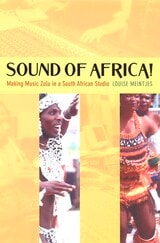
Sound of Africa!
Making Music Zulu in a South African StudioLouise Meintjes
Duke University Press, 2003
Focusing on the ways artists, producers, and sound engineers collaborate in the studio control room, Meintjes reveals not only how particular mbaqanga sounds are shaped technically, but also how egos and artistic sensibilities and race and ethnicity influence the mix. She analyzes how the turbulent identity politics surrounding Zulu ethnic nationalism impacted mbaqanga artists' decisions in and out of the studio. Conversely, she explores how the global consumption of Afropop and African images fed back into mbaqanga during the recording process. Meintjes is especially attentive to the ways the emotive qualities of timbre (sound quality or tone color) forge complex connections between aesthetic practices and political ideology. Vivid photos by the internationally renowned photographer TJ Lemon further dramatize Meintjes’ ethnography.
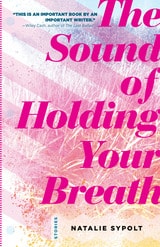
Sound of Holding Your Breath
StoriesNatalie Sypolt
West Virginia University Press, 2018
The residents of The Sound of Holding Your Breath could be neighbors, sharing the same familiar landscapes of twenty-first-century Appalachia—lake and forest, bridge and church, cemetery and garden, diner and hair salon. They could be your neighbors—average, workaday, each struggling with secrets and losses, entrenched in navigating the complex requirements of family in all its forms.
Yet tragedy and violence challenge these unassuming lives: A teenage boy is drawn to his sister’s husband, an EMT searching the lake for a body. A brother, a family, and a community fail to confront the implications of a missing girl. A pregnant widow spends Thanksgiving with her deceased husband’s family. Siblings grapple with the death of their sister-in-law at the hands of their brother. And in the title story, the shame of rape ruptures more than a decade later.
Accidents and deaths, cons and cover-ups, abuse and returning veterans—Natalie Sypolt’s characters wrestle with who they are during the most trying situations of their lives.
Sound
An Acoulogical TreatiseMichel Chion
Duke University Press, 2016
Sound
Dialogue, Music, and EffectsKalinak, Kathryn
Rutgers University Press, 2015
Soundworks
Race, Sound, and Poetry in ProductionAnthony Reed
Duke University Press, 2021