Results by title
100 books match the query 'Sovereignty' and 20 start with s
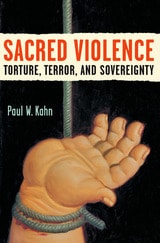
Sacred Violence
Torture, Terror, and SovereigntyPaul W. Kahn
University of Michigan Press, 2008
In Sacred Violence, the distinguished political and legal theorist Paul W. Kahn investigates the reasons for the resort to violence characteristic of premodern states. In a startling argument, he contends that law will never offer an adequate account of political violence. Instead, we must turn to political theology, which reveals that torture and terror are, essentially, forms of sacrifice. Kahn forces us to acknowledge what we don't want to see: that we remain deeply committed to a violent politics beyond law.
Paul W. Kahn is Robert W. Winner Professor of Law and the Humanities at Yale Law School and Director of the Orville H. Schell, Jr. Center for International Human Rights.
Cover Illustration: "Abu Ghraib 67, 2005" by Fernando Botero. Courtesy of the artist and the American University Museum.

Seeds and Sovereignty
Debate Over the Use and Control of Plant Genetic ResourcesJack R. Jr. Kloppenburg, ed.
Duke University Press, 1988
Twenty experts from several nations, representing both the natural and social sciences, consider the historical background, the issue of patent rights as applied to plant germplasm, the nature of global genetic interdependence, the internationalization of the seed industry, the implications of biotechnology on genetic resources, the Third World attitude toward the debate, and the viewpoints of the International Agricultural Research Centers.

Self-Determination without Nationalism
A Theory of Postnational SovereigntyOmar Dahbour
Temple University Press, 2014
How do groups—be they religious or ethnic—achieve sovereignty in a postnationalist world? In Self-Determination without Nationalism, noted philosopher Omar Dahbour insists that the existing ethics of international relations, dominated by the rival notions of liberal nationalism and political cosmopolitanism, no longer suffice.
Dahbour notes that political communities are an ethically desirable and historically inevitable feature of collective life. The ethical principles that govern them, however—especially self-determination and sovereignty—require reformulation in light of globalization and the economic and environmental challenges of the twenty-first century.
Arguing that nation-states violate the principle of self-determination, Dahbour then develops a detailed new theory of self-determination that he calls "ecosovereignty.” Ecosovereignty defines political community in a way that can protect and further the rights of indigenous peoples as well as the needs of ecological regions for a sustainable form of development and security from environmental destruction.
In the series Global Ethics and Politics, edited by Carol Gould.

Shakespeare's Once and Future Child
Speculations on SovereigntyJoseph Campana
University of Chicago Press, 2024
Politicians are fond of saying that “children are the future.” How did the child become a figure for our political hopes? Joseph Campana’s book locates the source of this idea in transformations of childhood and political sovereignty during the age of Shakespeare, changes spectacularly dramatized by the playwright himself. Shakespeare’s works feature far more child figures—and more politically entangled children—than other literary or theatrical works of the era. Campana delves into this rich corpus to show how children and childhood expose assumptions about the shape of an ideal polity, the nature of citizenship, the growing importance of population and demographics, and the question of what is or is not human. As our ability to imagine viable futures on our planet feels ever more limited, and as children take up legal proceedings to sue on behalf of the future, it behooves us to understand the way past child figures haunt our conversations about intergenerational justice. Shakespeare offers critical precedents for questions we still struggle to answer.
Singularity
Politics and PoeticsSamuel Weber
University of Minnesota Press, 2021
An influential thinker on the concept of singularity and its implications on politics, theology, economics, psychoanalysis, and literature
For readers versed in critical theory, German and comparative literature, or media studies, a new book by Samuel Weber is essential reading. Singularity is no exception. Bringing together two decades of his essays, it hones in on the surprising implications of the singular and its historical relation to the individual in politics, theology, economics, psychoanalysis, and literature. Although singularity has long been a keyword in literary studies and philosophy, never has it been explored as in this book, which distinguishes singularity as an “aporetic” notion from individuality, with which it remains historically closely tied.
To speak or write of the singular is problematic, Weber argues, since once it is spoken of it is no longer strictly singular. Walter Benjamin observed that singularity and repetition imply each other. This approach informs the essays in Singularity. Weber notes that what distinguishes the singular from the individual is that it cannot be perceived directly, but rather experienced through feelings that depend on but also exceed cognition. This interdependence of cognition and affect plays itself out in politics, economics, and theology as well as in poetics. Political practice as well as its theory have been dominated by the attempt to domesticate singularity by subordinating it to the notion of individuality. Weber suggests that this political tendency draws support from what he calls “the monotheological identity paradigm” deriving from the idea of a unique and exclusive Creator-God.
Despite the “secular” tendencies usually associated with Western modernity, this paradigm continues today to inform and influence political and economic practices, often displaying self-destructive tendencies. By contrast, Weber reads the literary writings of Hölderlin, Nietzsche, and Kafka as exemplary practices that put singularity into play, not as fiction but as friction, exposing the self-evidence of established conventions to be responses to challenges and problems that they often prefer to obscure or ignore.
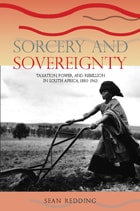
Sorcery and Sovereignty
Taxation, Power, and Rebellion in South Africa, 1880–1963Sean Redding
Ohio University Press, 2006
Rebellions broke out in many areas of South Africa shortly after the institution of white rule in the late nineteenth century and continued into the next century. However, distrust of the colonial regime reached a new peak in the mid-twentieth century, when revolts erupted across a wide area of rural South Africa. All these uprisings were rooted in grievances over taxes. Rebels frequently invoked supernatural powers for assistance and accused government officials of using witchcraft to enrich themselves and to harm ordinary people.
As Sean Redding observes in Sorcery and Sovereignty, beliefs in witchcraft and supernatural powers were part of the political rhetoric; the system of taxation—with all its prescribed interactions between ruler and ruled—was intimately connected to these supernatural beliefs.
In this fascinating study, Redding examines how black South Africans’ beliefs in supernatural powers, along with both economic and social change in the rural areas, resulted in specific rebellions and how gender relations in black South African rural families changed. Sorcery and Sovereignty explores the intersection of taxation, political attitudes, and supernatural beliefs among black South Africans, shedding light on some of the most significant issues in the history of colonized Africa.
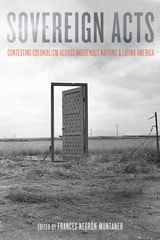
Sovereign Acts
Contesting Colonialism Across Indigenous Nations and Latinx AmericaEdited by Frances Negrón-Muntaner
University of Arizona Press, 2017
Editor Frances Negrón-Muntaner and the contributors to Sovereign Acts engage in a debate around these questions with surprising results. Moving the idea of sovereignty beyond the narrow confines of the nation-state, beyond the concept of a power that one either has or lacks, this paradigm-shifting work examines the multiple ways that Indigenous nations and U.S. territorial peoples act as sovereign and the possible limits of such sovereign acts within the current globalized context. A valuable contribution to the debate around indigenous and other conceptions of sovereignty, Sovereign Acts goes further than legal frameworks to investigate the relationships among sovereignty, gender, sexuality, representation, and the body.
From activist style and choreography to the politics of recognition, the scholars and artists featured in this unique volume map out how people disrupt modern notions of sovereignty, attempt to redefine what being sovereign means, or seek alternative political vocabularies. Sovereignty is not only, after all, a kingdom and a crown.
CONTRIBUTORS
Michael Lujan Bevacqua
Glen Coulthard
Jennifer Nez Denetdale
Adriana María Garriga-López
Jessica A. F. Harkins
Brian Klopotek
Davianna Pomaika‘i McGregor
Frances Negrón-Muntaner
Yasmin Ramírez
Mark Rifkin
Madeline Román
Stephanie Nohelani Teves
Fa‘anofo Lisaclaire Uperesa
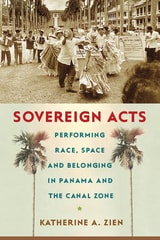
Sovereign Acts
Performing Race, Space, and Belonging in Panama and the Canal ZoneZien, Katherine A.
Rutgers University Press, 2017
Winner of the 2017 Annual Book Prize from the Canadian Association of Latin American and Caribbean Studies (CALACS)
Sovereign Acts explores how artists, activists, and audiences performed and interpreted sovereignty struggles in the Panama Canal Zone, from the Canal Zone’s inception in 1903 to its dissolution in 1999. In popular entertainments and patriotic pageants, opera concerts and national theatre, white U.S. citizens, West Indian laborers, and Panamanian artists and activists used performance as a way to assert their right to the Canal Zone and challenge the Zone’s sovereignty, laying claim to the Zone’s physical space and imagined terrain.
By demonstrating the place of performance in the U.S. Empire’s legal landscape, Katherine A. Zien transforms our understanding of U.S. imperialism and its aftermath in the Panama Canal Zone and the larger U.S.-Caribbean world.

Sovereigns, Quasi Sovereigns, and Africans
Race and Self-Determination in International LawSiba N’Zatioula Grovogui
University of Minnesota Press, 1996
Sovereigns, Quasi Sovereigns, and Africans was first published in 1996. Minnesota Archive Editions uses digital technology to make long-unavailable books once again accessible, and are published unaltered from the original University of Minnesota Press editions.
In this trenchant critique, Siba N'Zatioula Grovogui demonstrates the failure of international law to address adequately the issues surrounding African self-determination during decolonization. Challenging the view that the only requirement for decolonization is the elimination of the legal instruments that provided for direct foreign rule, Sovereigns, Quasi Sovereigns, and Africans probes the universal claims of international law.
Grovogui begins by documenting the creation of the "image of Africa" in European popular culture, examining its construction by conquerors and explorers, scientists and social scientists, and the Catholic Church. Using the case of Namibia to illuminate the general context of Africa, he demonstrates that the principles and rules recognized in international law today are not universal, but instead reflect relations of power and the historical dominance of specific European states.
Grovogui argues that two important factors have undermined the universal applicability of international law: its dependence on Western culture and the way that international law has been structured to preserve Western hegemony in the international order. This dependence on Europeandominated models and legal apparatus has resulted in the paradox that only rights sanctioned by the former colonial powers have been accorded to the colonized, regardless of the latter's needs. In the case of Namibia, Grovogui focuses on the discursive strategies used by the West and their southern African allies to control the legal debate, as well as the tactics used by the colonized to recast the terms of the discussion.
Grovogui blends critical legal theory, historical research, political economy, and cultural studies with profound knowledge of contemporary Africa in general and Namibia in particular. Sovereigns, Quasi Sovereigns, and Africans represents the very best of the new scholarship, moving beyond narrow disciplinary boundaries to illuminate issues of decolonization in Africa.
Siba N'Zatioula Grovogui is assistant professor of political science at Johns Hopkins University. He previously practiced law in his native Guinea.
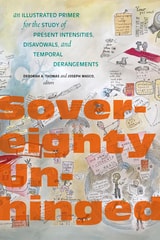
Sovereignty Unhinged
An Illustrated Primer for the Study of Present Intensities, Disavowals, and Temporal DerangementsDeborah A. Thomas and Joseph Masco, editors
Duke University Press, 2023
Contributors. Alex Blanchette, Yarimar Bonilla, Jessica Cattelino, María Elena García, Akhil Gupta, Lochlann Jain, Purnima Mankekar, Joseph Masco, Michael Ralph, Danilyn Rutherford, Arjun Shankar, Kristen L. Simmons, Deborah A. Thomas, Leniqueca A. Welcome, Kaya Naomi Williams, Jessica Winegar
Sovereignty and Extortion
A New State Form in MexicoClaudio Lomnitz
Duke University Press, 2024

Sovereignty and Survival
Power, Conflict and Climate Change in BurmaAshley South
National University of Singapore Press, 2027
Evaluates Burma at a pivotal tipping point after the 2021 military coup.
The 2021 military coup in Burma/Myanmar triggered popular resistance and a spreading civil war, reigniting long-standing struggles for ethnic self-determination. The chaos has enabled a huge rise in transnational criminal activities, including drug trafficking and the emergence of scam centers. The country's geopolitical importance, not least as a source of rare earths, is also heightening the struggle for power. At the same time, accelerating climate change is destabilizing local ecologies and livelihoods, driving food production, socio-economic systems, and civil society towards collapse or massive change. Together, these forces have undermined the coherence of Burma as a centralized state. However, new forms of resistance and political organization have emerged in liberated areas across the country. At this critical juncture, rather than “state failure,” Burma demonstrates novel forms of complex, asymmetrical, and sometimes messy state-building, a “bottom-up” federalism based on the agency and resilience of Indigenous communities and anti-junta forces.

Sovereignty and the Responsibility to Protect
A New HistoryLuke Glanville
University of Chicago Press, 2013
In Sovereignty and the Responsibility to Protect, Luke Glanville argues that this responsibility extends back to the sixteenth and seventeenth centuries, and that states have since been accountable for this responsibility to God, the people, and the international community. Over time, the right to national self-governance came to take priority over the protection of individual liberties, but the noninterventionist understanding of sovereignty was only firmly established in the twentieth century, and it remained for only a few decades before it was challenged by renewed claims that sovereigns are responsible for protection.
Glanville traces the relationship between sovereignty and responsibility from the early modern period to the present day, and offers a new history with profound implications for the present.
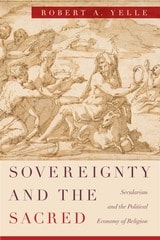
Sovereignty and the Sacred
Secularism and the Political Economy of ReligionRobert A. Yelle
University of Chicago Press, 2018
Developing this close analogy between two elemental domains of society, Sovereignty and the Sacred offers a new theory of religion while suggesting alternative ways of organizing our political and economic life. By rethinking the transcendent foundations and liberating potential of both religion and politics, Yelle points to more hopeful and ethical modes of collective life based on egalitarianism and popular sovereignty. Deliberately countering the narrowness of currently dominant economic, political, and legal theories, he demonstrates the potential of a revived history of religions to contribute to a rethinking of the foundations of our political and social order.
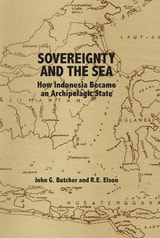
Sovereignty and the Sea
How Indonesia Became an Archipelagic StateJohn G. Butcher and R. E. Elson
National University of Singapore Press, 2017
Sovereignty in Ruins
A Politics of CrisisGeorge Edmondson and Kalus Mladek, editors
Duke University Press, 2017
Contributors. Judith Butler, George Edmondson, Roberto Esposito, Carlo Galli, Klaus Mladek, Alberto Moreiras, Andrew Norris, Eric L. Santner, Adam Sitze, Carsten Strathausen, Rei Terada, Cary Wolfe

Sovereignty, Inc.
Three Inquiries in Politics and EnjoymentWilliam Mazzarella, Eric L. Santner, and Aaron Schuster
University of Chicago Press, 2020
Drawing on anthropology, political theory, philosophy, psychoanalysis, and theater, William Mazzarella, Eric L. Santner, and Aaron Schuster show how politics in the age of Trump functions by mobilizing a contradictory and convoluted enjoyment, an explosive mixture of drives and fantasies that eludes existing portraits of our era. The current political moment turns out to be not so much exceptional as exceptionally revealing of the constitutive tension between enjoyment and economy that has always been a key component of the social order. Santner analyzes the collective dream-work that sustains a new sort of authoritarian charisma or mana, a mana-facturing process that keeps us riveted to an excessively carnal incorporation of sovereignty. Mazzarella examines the contemporary merger of consumer brand and political brand and the cross-contamination of politics and economics, warning against all too easy laments about the corruption of politics by marketing. Schuster, focusing on the extreme theatricality and self-satirical comedy of the present, shows how authority reasserts itself at the very moment of distrust and disillusionment in the system, profiting off its supposed decline. A dazzling diagnostic of our present, Sovereignty, Inc., forces us to come to terms with our complicity in Trump’s political presence and will immediately take its place in discussions of contemporary politics.

Sovereignty, Indigeneity, and the Law, Volume 110
Eric Cheyfitz
Duke University Press, 0
This wide-ranging collection addresses the political possibilities of Western law and the international meanings of sovereignty and Indigeneity. One essay analyzes the autonomous government through which local citizens in Indigenous Zapatista communities in Mexico hope to dissolve systems of top-down sovereignty altogether. Another explores narratives of Native American law and the treatment of sovereignty in contemporary Mohawk visual culture. Several essays discuss the legal and political implications of the field’s pivotal public documents, including the 2007 U.N. Declaration on the Rights of Indigenous Peoples.
Eric Cheyfitz is the Ernest I. White Professor of American Studies and Humane Letters in the Department of English at Cornell University. N. Bruce Duthu is the Samson Occom Professor of Native American Studies and Chair of the Native American Studies Program at Dartmouth College. Shari M. Huhndorf is Associate Professor of English at the University of Oregon.
Contributors: Christine Black, Eric Cheyfitz, Gordon Christie, Chris Cunneen, Jonathan Goldberg-Hiller, Lorie M. Graham, Roy M. Huhndorf, Shari M. Huhndorf, Forrest Hylton, Mara Kaufman, Alvaro Reyes, Jolene Rickard, Carlos Salinas, Noenoe K. Silva, Cheryl Suzack, Siegfried Wiessner

Sovereignty
A PlayMary Kathryn Nagle
Northwestern University Press, 2020
A powerful meditation of the echoes of history and the never-ending struggle for sovereignty
Sovereignty unfolds over two parallel timelines. In present-day Oklahoma, a young Cherokee lawyer, Sarah Ridge Polson, and her colleague Jim Ross defend the inherent jurisdiction of Cherokee Nation in the U.S. Supreme Court when a non-Indian defendant challenges the Nation’s authority to prosecute non-Indian perpetrators of domestic violence. Their collaboration is juxtaposed with scenes from 1835, when Cherokee Nation was eight hundred miles to the east in the southern Appalachians. That year, Sarah’s and Jim’s ancestors, historic Cherokee rivals, were bitterly divided over a proposed treaty with the administration of Andrew Jackson, the Treaty of New Echota, which led to the nation’s removal to Oklahoma on the infamous Trail of Tears.
A direct descendant of nineteenth-century Cherokee leaders John Ridge and Major Ridge, Mary Kathryn Nagle has penned a play that twists and turns from violent outbursts to healing monologues, illuminating a provocative double meaning for the sovereignty of both tribal territory and women’s bodies. Taking as its point of departure the story of one lawyer’s passionate defense of the rights of her people to prosecute non-natives who commit crimes on reservations, Sovereignty opens up into an expansive exploration of the circular continuity of history, human memory, and the power of human relationships.
Survivance, Sovereignty, and Story
Teaching American Indian RhetoricsLisa King
Utah State University Press, 2015
Focusing on the importance of discussions about sovereignty and of the diversity of Native American communities, Survivance, Sovereignty, and Story offers a variety of ways to teach and write about indigenous North American rhetorics.
These essays introduce indigenous rhetorics, framing both how and why they should be taught in US university writing classrooms. Contributors promote understanding of American Indian rhetorical and literary texts and the cultures and contexts within which those texts are produced. Chapters also supply resources for instructors, promote cultural awareness, offer suggestions for further research, and provide examples of methods to incorporate American Indian texts into the classroom curriculum.
Survivance, Sovereignty, and Story provides a decolonized vision of what teaching rhetoric and writing can be and offers a foundation to talk about what rhetoric and pedagogical practice can mean when examined through American Indian and indigenous epistemologies and contemporary rhetorics.
Contributors include Joyce Rain Anderson, Resa Crane Bizzaro, Qwo-Li Driskill, Janice Gould, Rose Gubele, Angela Haas, Jessica Safran Hoover, Lisa King, Kimberli Lee, Malea D. Powell, Andrea Riley-Mukavetz, Gabriela Raquel Ríos, and Sundy Watanabe.