Results by title
73 books match the query 'Strategy' and 10 start with s
Second Front Now--1943
An Opportunity DelayedWalter Scott Dunn
University of Alabama Press, 2009
Addresses head-on the central issue of invasion timing in the Allied European strategy of World War II
In Second Front Now – 1943: An Opportunity Delayed, military historian Walter S. Dunn offers a sharply argued and meticulously researched reassessment of one of the most consequential strategic debates of World War II: the decision not to launch a full-scale Allied invasion of Western Europe in 1943. At a time when Nazi Germany was stretched across multiple fronts and the Soviet Union bore the brunt of the fighting in the East, the question of when—and where—to open a Second Front in Europe became a defining issue among Allied leaders.
Dunn explores the complex interplay of military planning, political caution, logistical constraints, and inter-Allied tensions that led Britain and the United States to postpone a cross-Channel invasion. Drawing from official records, wartime correspondence, and operational analyses, he reconstructs the strategic environment of 1943 and challenges the conventional wisdom that the delay was inevitable—or even prudent. Instead, Dunn presents a compelling case that an earlier invasion may have been both feasible and decisive, potentially shortening the war and altering the balance of postwar power.
With clarity and analytical rigor, the book examines the competing priorities of Churchill, Roosevelt, and Stalin, the influence of Mediterranean operations, and the evolving capabilities of Allied forces. It also considers the broader implications of the delay, including its impact on Soviet–Western relations and the shaping of the Cold War order that followed.
Blending narrative accessibility with scholarly depth, Second Front Now – 1943 is essential reading for students, historians, and anyone interested in the strategic decisions that defined the Allied path to victory. Dunn invites readers to reconsider a pivotal “missed moment” in history—and to reflect on how differently the war, and the world, might have unfolded.
Shades of Blue and Gray
An Introductory Military History of the Civil WarHerman Hattaway
University of Missouri Press, 1997
An introductory military history of the American Civil War, Shades of Blue and Gray places the 1861-1865 conflict within the broad context of evolving warfare. Emphasizing technology and its significant impact, Hattaway includes valuable material on land and sea mines, minesweepers, hand grenades, automatic weapons, the Confederate submarine, and balloons. The evolution of professionalism in the American military serves as an important connective theme throughout. Hattaway extrapolates from recent works by revisionists William Skelton and Roy Roberts to illustrate convincingly that the development of military professionalism is not entirely a post-Civil War phenomenon.
The author also incorporates into his work important new findings of recent scholars such as Albert Castel (on the Atlanta Campaign), Reid Mitchell (on soldiers' motivation), Mark Grimsley (on "hard war"), Brooks D. Simpson (on Ulysses S. Grant), and Lauren Cook Burgess (on women who served as soldiers, disguised as men). In addition, Hattaway comments on some of the best fiction and nonfiction available in his recommended reading lists, which will both enlighten and motivate readers.
Informative and clearly written, enhanced by graceful prose and colorful anecdotes, Shades of Blue and Gray will appeal to all general readers.
Sherman's Mississippi Campaign
Buck T. Foster
University of Alabama Press, 2006
The campaign that shaped Sherman's path to victory and changed the future of Civil War warfare.
With the fall of Vicksburg to Union forces in mid-1863, the Federals began work to extend and consolidate their hold on the lower Mississippi Valley. As a part of this plan, Major General William Tecumseh Sherman set out from Vicksburg on February 3, 1864, with an army of some 25,000 infantry and a battalion of cavalry. They expected to be joined by another Union force moving south from Memphis and supported themselves off the land as they traveled due east across Mississippi.
Sherman entered Meridian on February 14 and thoroughly destroyed its railroad facilities, munitions plants, and cotton stores, before returning to Vicksburg. Though not a particularly effective campaign in terms of enemy soldiers captured or killed, it offers a rich opportunity to observe how this large-scale raid presaged Sherman’s Atlanta and Carolina campaigns, revealing the transformation of Sherman’s strategic thinking.

Singapore's Grand Strategy
Cheng Guan Ang
National University of Singapore Press, 2023
Even small states can have grand strategies. Singapore, despite its poor natural resource endowment, small population, and size, has often been described as punching above its weight in international affairs. Part of this stems from the way Singapore strategically integrates the different diplomatic, political, and defense-oriented tools at its disposal. To explore this, Singapore’s Grand Strategy offers a fresh and useful diplomatic, defense, and security history of Singapore, from its independence in 1965 through today’s period of strategic realignment.
Most previous studies of grand strategy have focused on super- or at least middle powers, but this book presents an important contribution to international relations and strategic studies by showing how the concept can help explain the strategic posture and achievements of small states as well. Moreover, he brings a historian's perspective to a subject usually tackled by political scientists. The result will be useful and important for scholars in these fields.
Small Arms at Gettysburg
Infantry and Cavalry Weapons in America's Greatest BattleJoseph G. Bilby
Westholme Publishing, 2023
The Effect of Soldiers’ Weapons on the Turning Point of the Civil War
The three-day battle of Gettysburg has probably been the subject of more books and articles than any other comparable event. Surprisingly, until this work, no one has analyzed the firearms and other individual soldier’s weapons used at Gettysburg in any great detail. The battle was a watershed, with military weapons technologies representing the past, present, and future—sabers, smoothbores, rifles, and breechloaders—in action alongside each other, providing a unique opportunity to compare performance and use, as well as determining how particular weapons and their deployment affected the outcome and course of the battle.
Small Arms at Gettysburg: Infantry and Cavalry Weapons in America’s Greatest Battle covers all of the individual soldier’s weapons—muskets, rifle-muskets, carbines, repeaters, sharpshooter arms, revolvers, and swords—providing a detailed examination of their history and development, technology, capabilities, and use on the field at Gettysburg. Here we learn that the smoothbore musket, although beloved by some who carried it, sang its swan song, the rifle-musket began to come into its own, and the repeating rifle, although tactically mishandled, gave a glimpse of future promise. This is the story of the weapons and men who carried them into battle during three days in July 1863.
Solidarity in Strategy
Making Business Meaningful in American Trade AssociationsLyn Spillman
University of Chicago Press, 2012
Popular conceptions hold that capitalism is driven almost entirely by the pursuit of profit and self-interest. Challenging that assumption, this major new study of American business associations shows how market and non-market relations are actually profoundly entwined at the heart of capitalism.
In Solidarity in Strategy, Lyn Spillman draws on rich documentary archives and a comprehensive data set of more than four thousand trade associations from diverse and obscure corners of commercial life to reveal a busy and often surprising arena of American economic activity. From the Intelligent Transportation Society to the American Gem Trade Association, Spillman explains how business associations are more collegial than cutthroat, and how they make capitalist action meaningful not only by developing shared ideas about collective interests but also by articulating a disinterested solidarity that transcends those interests.
Deeply grounded in both economic and cultural sociology, Solidarity in Strategy provides rich, lively, and often surprising insights into the world of business, and leads us to question some of our most fundamental assumptions about economic life and how cultural context influences economic.
Spies in the Continental Capital
Espionage Across Pennsylvania During the American RevolutionJohn A. Nagy
Westholme Publishing, 2011
The Critical Role of British, French, and American Intelligence Operations in Colonial Pennsylvania
It did not take long after the Seven Years’ War—the French and Indian War in North America—for France to return spies to America in order to determine the likelihood of regaining the territory they lost to Britain. One of the key places of French espionage was the colony of Pennsylvania since its frontier had been an important crossroads of French influence in North America. The French recognized then that there was a real possibility that the colonies would seek their independence from Britain. Against this backdrop, award-winning historian John A. Nagy begins his investigation of espionage in colonial Pennsylvania.
Philadelphia played a key role in the history of spying during the American Revolution because it was the main location for the Continental Congress, was occupied by the British Command, and then returned to Continental control. Philadelphia became a center of spies for the British and Americans—as well as double agents. George Washington was a firm believer in reliable military intelligence; after evacuating New York City, he neglected to have a spy network in place: when the British took over Philadelphia, he did not make the same mistake, and Washington was able to keep abreast of British troop strengths and intentions. Likewise, the British used the large Loyalist community around Philadelphia to assess the abilities of their Continental foes, as well as the resolve of Congress. In addition to describing techniques used by spies and specific events, such as the Major André episode, Nagy has scoured rare primary source documents to provide new and compelling information about some of the most notable agents of the war, such as Lydia Darragh, a celebrated American spy.
An important contribution to Revolutionary War history, Spies in the Continental Capital: Espionage Across Pennsylvania During the American Revolution demonstrates that intelligence operations on both sides emanating from Pennsylvania were vast, well-designed, and critical to understanding the course and outcome of the war.
Stealing the General
The Great Locomotive Chase and the First Medal of HonorRussell S. Bonds
Westholme Publishing, 2007
Selected by Civil War Interactive as One of the Top Civil War Books of All Time
On April 12, 1862—one year to the day after Confederate guns opened on Fort Sumter and started the Civil War—a tall, mysterious smuggler and self-appointed Union spy named James J. Andrews and nineteen infantry volunteers infiltrated north Georgia and stole a steam engine called the General. Racing northward at speeds approaching sixty miles an hour, cutting telegraph lines and destroying track along the way, Andrews planned to open East Tennessee to the Union army, cutting off men and matériel from the Confederate forces in Virginia. If they succeeded, Andrews and his raiders could change the course of the war. But the General's young conductor, William A. Fuller, chased the stolen train first on foot, then by handcar, and finally aboard another engine, the Texas. He pursued the General until, running out of wood and water, Andrews and his men abandoned the doomed locomotive, ending the adventure that would soon be famous as The Great Locomotive Chase. But the ordeal of the soldiers involved was just beginning. In the days that followed, the "engine thieves" were hunted down and captured. Eight were tried and executed as spies, including Andrews. Eight others made a daring escape to freedom, including two assisted by a network of slaves and Union sympathizers. For their actions, before a personal audience with President Abraham Lincoln, six of the raiders became the first men in American history to be awarded the Medal of Honor—the nation's highest decoration for gallantry.
Americans north and south, both at the time and ever since, have been astounded and fascinated by this daring raid. But until now, there has not been a complete history of the entire episode and the fates of all those involved. Based on eyewitness accounts, as well as correspondence, diaries, military records, newspaper reports, deposition testimony and other primary sources, Stealing the General: The Great Locomotive Chase and the First Medal of Honor by Russell S. Bonds is a blend of meticulous research and compelling narrative that is now considered to be the definitive history of "the boldest adventure of the war."
Strategy or Principle?
The Choice Between Regulation and TaxationMark Kelman
University of Michigan Press, 1999
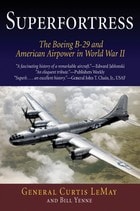
Superfortress
The Boeing B-29 and American Airpower in World War IICurtis LeMay
Westholme Publishing, 2007
"A fascinating history of a remarkable aircraft."—Edward Jablonski
"An eloquent tribute." —Publishers Weekly
"Superb. . . . an excellent history." —General John T. Chain, Jr. USAF
Among the most sophisticated aircraft flown during World War II, the Boeing B-29 Superfortress was designed to replace the B-17 as the primary long-range bomber of the U.S. Army Air Forces. With its distinctive glazed nose and long, thin wings that provided both speed at high altitude and stability at takeoff and landing, the Superfortress was the first operational bomber with a pressurized crew cabin and featured advanced radar and avionics. Armed with remote-controlled machine gun turrets and a 20,000 pound bomb load, it was the first USAAF bomber capable of mastering the vast distances of the Pacific Theater of World War II. The prototype flew in September 1942 but a series of post-production modifications delayed the bomber's first mission until April 1944. Superfortresses began attacking Japan in daylight with conventional ordnance from high altitude, but their mission was redirected in March 1945, with massive low-level formations dropping incendiary bombs! at night on Japanese cities. The ensuing firestorms, followed by the complete destruction of Hiroshima and Nagasaki by atomic bombs dropped from two specially modified "silverplate" B-29s, forced Japan to cease fighting.
Written by the man who led the B-29 into combat, Superfortress: The Boeing B-29 and American Airpower in World War II is an important document of one of the most turbulent times in world history. General Curtis LeMay recalls the early debate about whether or not the United States needed a long-range bomber, how the B-29 was created and produced despite the enormous logistical difficulties of the design, and the decision to conduct fire-bombings against Japan and ultimately drop the atomic bomb. Highly praised when it was first published, this new edition is complete with photographs, a new introduction, and statistical tables.