Results by title
91 books match the query 'Theater and society' and 10 start with s
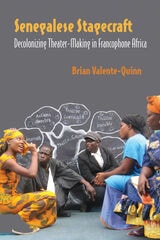
Senegalese Stagecraft
Decolonizing Theater-Making in Francophone AfricaBrian Valente-Quinn
Northwestern University Press, 2021
Through a study of the innovative work of Senegalese theater-makers from the 1930s onward, Senegalese Stagecraft explores a wide range of historical contexts and themes, including French colonial education, cultural Pan‑Africanism, West African Sufism, uses of television and mass media, and popular theater and activism. Using a multidisciplinary approach that includes field, archival, and literary methods, Valente‑Quinn offers a fresh look at performance cultures of West Africa and the Global South in a book that will interest students and scholars in African, Francophone, and performance studies.

Shipping Out
Race, Performance, and Labor at SeaAnita Gonzalez
University of Michigan Press, 2025
Southern Stages
Space and Memory in US PerformanceHopkins, Chandra
University of Iowa Press, 2025
Through the eyes of actors and everyday people, Southern Stages offers an engaging new model for interrogating the performance of southernness, as well as how memory and imagination intersect in spaces that have shaped hundreds of years of American history. Chandra Owenby Hopkins employs cultural memory and lived realities of Black and white communities to examine the earliest and most enduring southern stages: the playhouse and the public square.

Spectacles of Reform
Theater and Activism in Nineteenth-Century AmericaAmy E. Hughes
University of Michigan Press, 2014
In the nineteenth century, long before film and television arrived to electrify audiences with explosions, car chases, and narrow escapes, it was America's theaters that offered audiences such thrills, with "sensation scenes" of speeding trains, burning buildings, and endangered bodies, often in melodramas extolling the virtues of temperance, abolition, and women's suffrage. In Spectacles of Reform , Amy E. Hughes scrutinizes these peculiar intersections of spectacle and reform, revealing that spectacle plays a crucial role in American activism. By examining how theater producers and political groups harnessed its power and appeal, Hughes suggests that spectacle was—and remains—central to the dramaturgy of reform.
Engaging evidence from lithographs to children's books to typography catalogs, Hughes traces the cultural history of three famous sensation scenes—the drunkard suffering from the delirium tremens, the fugitive slave escaping over a river, and the victim tied to the railroad tracks—assessing how they conveyed, allayed, and denied concerns about the rights and responsibilities of citizenship. These images also appeared in printed propaganda, suggesting that the coup de théâtre was an essential part of American reform culture. Additionally, Hughes argues that today's producers and advertisers continue to exploit the affective dynamism of spectacle, reaching an even broader audience through film, television, and the Internet.
To be attuned to the dynamics of spectacle, Hughes argues, is to understand how we see. Consequently, Spectacles of Reform will interest not only theater historians, but also scholars and students of political, literary, and visual culture who are curious about how U.S. citizens saw themselves and their world during a pivotal period in American history.
Stage for Action
U.S. Social Activist Theatre in the 1940sChrystyna Dail
Southern Illinois University Press, 2016
Exploring the intersection between performance and politics and the direct impact of the arts on social activism, Dail argues Stage for Action is a theatrical reflection of progressivism and the pro-working-class theatrical aesthetic of the 1940s. The theatre group, which used performance to encourage direct action and personal responsibility for change, eventually would function as the theatrical voice of the United States Progressive Party in the failed presidential campaign of former vice president Henry A. Wallace.
Calling into question the widely held belief that U.S. theatre in the early years of the Cold War was indifferent to activism, Stage for Action offers historians a new interpretation of social activist performance at midcentury.

Staged Readings
Contesting Class in Popular American Theater and Literature, 1835-75Michael D’Alessandro
University of Michigan Press, 2022
Based in the historical archive, Staged Readings presents a panoramic display of mid-century leisure and entertainment. It examines best-selling novels, such as Harriet Beecher Stowe’s Uncle Tom’s Cabin and George Lippard’s The Quaker City. But it also analyzes a series of sensational melodramas, parlor theatricals, doomsday speeches, tableaux vivant displays, curiosity museum exhibits, and fake volcano explosions. These oft-overlooked spectacles capitalized on consumers’ previous cultural encounters and directed their social identifications. The book will be particularly appealing to those interested in histories of popular theater, literature and reading, social class, and mass culture.
Staging Lives in Latin American Theater
Bodies, Objects, ArchivesPaola S. Hernández
Northwestern University Press, 2021
Richly detailed, nuanced, and theoretically wide-ranging, Staging Lives in Latin American Theater reveals a range of interpretations about how documentary theater can conceptualize the idea of self while also proclaiming a new mode of testimony through theatrical practices.
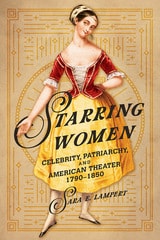
Starring Women
Celebrity, Patriarchy, and American Theater, 1790-1850Sara E. Lampert
University of Illinois Press, 2020
A revealing foray into a lost time, Starring Women returns a generation of performers to their central place in the early history of American theater.
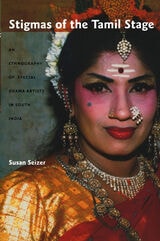
Stigmas of the Tamil Stage
An Ethnography of Special Drama Artists in South IndiaSusan Seizer
Duke University Press, 2005
Special Drama is looked down upon by the middle- and upper-classes as too popular, too vulgar, and too “mixed.” The artists are stigmatized: people insult them in public and landlords refuse to rent to them. Stigma falls most heavily, however, on actresses, who are marked as “public women” by their participation in Special Drama. As Susan Seizer’s sensitive study shows, one of the primary ways the performers deal with such stigma is through humor and linguistic play. Their comedic performances in particular directly address questions of class, culture, and gender deviations—the very issues that so stigmatize them. Seizer draws on extensive interviews with performers, sponsors, audience members, and drama agents as well as on careful readings of live Special Drama performances in considering the complexities of performers’ lives both on stage and off.
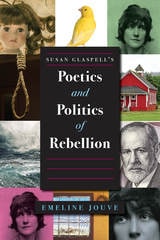
Susan Glaspell's Poetics and Politics of Rebellion
Emeline Jouve
University of Iowa Press, 2017
Analyzing plays from the early Trifles (1916) through Springs Eternal (1943) and the undated, incomplete Wings, author Emeline Jouve illustrates the way that Glaspell’s dramas addressed issues of sexism, the impact of World War I on American values, and the relationship between individuals and their communities, among other concerns. Jouve argues that Glaspell turns the playhouse into a courthouse, putting the hypocrisy of American democracy on trial. In staging rebels fighting for their rights in fictional worlds that reflect her audience’s extradiegetic reality, she explores the strategies available to individuals to free themselves from oppression. Her works envisage a better future for both her fictive insurgents and her spectators, whom she encourages to consider which modes of revolt are appropriate and effective for improving the society they live in. The playwright defines social reform in terms of collaboration, which she views as an alternative to the dominant, alienating social and political structures. Not simply accusing but proposing solutions in her plays, she wrote dramas that enacted a positive revolt.
A must for students of Glaspell and her contemporaries, as well as scholars of American theatre and literature of the first half of the twentieth century.