Results by title
177 books match the query 'Themes, motives' and 19 start with s
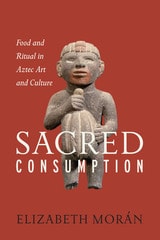
Sacred Consumption
Food and Ritual in Aztec Art and CultureBy Elizabeth Morán
University of Texas Press, 2016
Making a foundational contribution to Mesoamerican studies, this book explores Aztec painted manuscripts and sculptures, as well as indigenous and colonial Spanish texts, to offer the first integrated study of food and ritual in Aztec art.
Aztec painted manuscripts and sculptural works, as well as indigenous and Spanish sixteenth-century texts, were filled with images of foodstuffs and food processing and consumption. Both gods and humans were depicted feasting, and food and eating clearly played a pervasive, integral role in Aztec rituals. Basic foods were transformed into sacred elements within particular rituals, while food in turn gave meaning to the ritual performance.
This pioneering book offers the first integrated study of food and ritual in Aztec art. Elizabeth Morán asserts that while feasting and consumption are often seen as a secondary aspect of ritual performance, a close examination of images of food rites in Aztec ceremonies demonstrates that the presence—or, in some cases, the absence—of food in the rituals gave them significance. She traces the ritual use of food from the beginning of Aztec mythic history through contact with Europeans, demonstrating how food and ritual activity, the everyday and the sacred, blended in ceremonies that ranged from observances of births, marriages, and deaths to sacrificial offerings of human hearts and blood to feed the gods and maintain the cosmic order. Morán also briefly considers continuities in the use of pre-Hispanic foods in the daily life and ritual practices of contemporary Mexico. Bringing together two domains that have previously been studied in isolation, Sacred Consumption promises to be a foundational work in Mesoamerican studies.
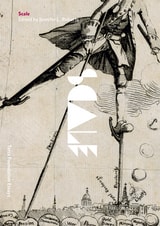
Scale
Edited by Jennifer L. Roberts
Terra Foundation for American Art, 2016
Scale is the second volume in the Terra Foundation Essays series. With eighty color illustrations and a wealth of new research from Glenn Adamson, Wendy Bellion, Wouter Davidts, Darcy Grimaldo Grigsby, Christopher P. Heuer, Joshua G. Stein, and Jason Weems, it explores viewers’ physical relationship to Barnett Newman’s abstract canvases, the arduous engineering behind the creation of Mount Rushmore, and the charged significance of liberty poles in the landscape of eighteenth-century New York, among other topics that range from studies of specific works of art to significant conceptual and theoretical concerns.

Scouting with the Buffalo Soldiers
John P. Langellier
University of North Texas Press, 2020
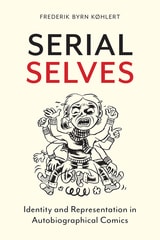
Serial Selves
Identity and Representation in Autobiographical ComicsFrederik Byrn Køhlert
Rutgers University Press, 2019
As the first comparative study of how comics artists from a wide range of backgrounds use the form to write and draw themselves into cultural visibility, Serial Selves will be of interest to anyone interested in the current boom in autobiographical comics, as well as issues of representation in comics and visual culture more broadly.
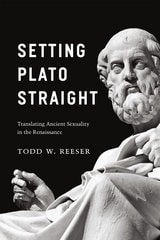
Setting Plato Straight
Translating Ancient Sexuality in the RenaissanceTodd W. Reeser
University of Chicago Press, 2015
In Setting Plato Straight, Todd W. Reeser undertakes the first sustained and comprehensive study of Renaissance textual responses to Platonic same-sex sexuality. Reeser mines an expansive collection of translations, commentaries, and literary sources to study how Renaissance translators transformed ancient eros into non-erotic, non-homosexual relations. He analyzes the interpretive lenses translators employed and the ways in which they read and reread Plato’s texts. In spite of this cleansing, Reeser finds surviving traces of Platonic same-sex sexuality that imply a complicated, recurring process of course-correction—of setting Plato straight.
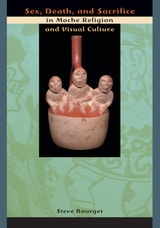
Sex, Death, and Sacrifice in Moche Religion and Visual Culture
By Steve Bourget
University of Texas Press, 2006
The Moche people who inhabited the north coast of Peru between approximately 100 and 800 AD were perhaps the first ancient Andean society to attain state-level social complexity. Although they had no written language, the Moche created the most elaborate system of iconographic representation of any ancient Peruvian culture. Amazingly realistic figures of humans, animals, and beings with supernatural attributes adorn Moche pottery, metal and wooden objects, textiles, and murals. These actors, which may have represented both living individuals and mythological beings, appear in scenes depicting ritual warfare, human sacrifice, the partaking of human blood, funerary rites, and explicit sexual activities.
In this pathfinding book, Steve Bourget raises the analysis of Moche iconography to a new level through an in-depth study of visual representations of rituals involving sex, death, and sacrifice. He begins by drawing connections between the scenes and individuals depicted on Moche pottery and other objects and the archaeological remains of human sacrifice and burial rituals. He then builds a convincing case for Moche iconography recording both actual ritual activities and Moche religious beliefs regarding the worlds of the living, the dead, and the afterlife. Offering a pioneering interpretation of the Moche worldview, Bourget argues that the use of symbolic dualities linking life and death, humans and beings with supernatural attributes, and fertility and social reproduction allowed the Moche to create a complex system of reciprocity between the world of the living and the afterworld. He concludes with an innovative model of how Moche cosmological beliefs played out in the realms of rulership and political authority.

Shaker Fever
America's Twentieth-Century Fascination with a Communitarian SectWilliam D. Moore
University of Massachusetts Press, 2020
This interdisciplinary study places the activities of individuals—including Doris Humphrey, Charles Sheeler, Laura Bragg, Juliana Force, and Edward Deming Andrews—within the larger cultural and historical contexts of nationalism, modernism, and cultural resource management. Taking up previously unexamined primary sources and cultural productions that include the first scholarly studies of the faith, material culture and visual arts, stage performances, and museum exhibitions, Shaker Fever compels a reconsideration of this religious group and its place within American memory. It is sure to delight enthusiasts, public historians, museum professionals, furniture collectors, and anyone interested in the dynamics of cultural appropriation and stewardship.

Shakespearean Territories
Stuart Elden
University of Chicago Press, 2018
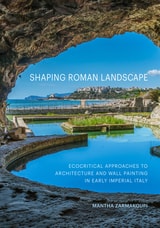
Shaping Roman Landscape
Ecocritical Approaches to Architecture and Wall Painting in Early Imperial ItalyMantha Zarmakoupi
J. Paul Getty Trust, The, 0
Landscape emerged as a significant theme in the Roman Late Republican and Early Imperial periods. Writers described landscape in texts and treatises, its qualities were praised and sought out in everyday life, and contemporary perceptions of the natural and built environment, as well as ideas about nature and art, were intertwined with architectural and decorative trends.
This illustrated volume examines how representations of real and depicted landscapes, and the merging of both in visual space, contributed to the creation of novel languages of art and architecture. Drawing on a diverse body of archaeological, art historical, and literary evidence, this study applies an ecocritical lens that moves beyond the limits of traditional iconography. Chapters consider, for example, how garden designs and paintings appropriated the cultures and ecosystems brought under Roman control and the ways miniature landscape paintings chronicled the transformation of the Italian shoreline with colonnaded villas, pointing to the changing relationship of humans with nature. Making a timely and original contribution to current discourses on ecology and art and architectural history, Shaping Roman Landscape reveals how Roman ideas of landscape, and the decorative strategies at imperial domus and villa complexes that gave these ideas shape, were richly embedded with meanings of nature, culture, and labor.
Situation Critical
Critique, Theory, and Early American StudiesMax Cavitch and Brian Connolly, editors
Duke University Press, 2024
Contributors. Max Cavitch, Brian Connolly, Matthew Crow, John J. Garcia, Christopher Looby, Michael Meranze, Mark J. Miller, Justine S. Murison, Britt Rusert, Ana Schwartz, Joan W. Scott, Jordan Alexander Stein
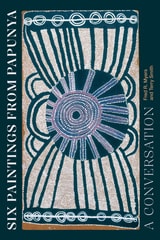
Six Paintings from Papunya
A ConversationFred R. Myers and Terry Smith
Duke University Press, 2024
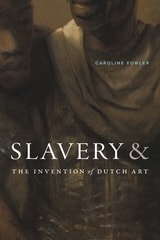
Slavery and the Invention of Dutch Art
Caroline Fowler
Duke University Press, 2025
Sleeping Beauty
A One-Artist DictionaryJohn Sparagana and Mieke Bal
University of Chicago Press, 2008
Bal contributes twenty-six essays, one for each letter of the alphabet, which borrow their organizing principle from the dictionary but reach far beyond the utilitarian purpose of a reference volume. Each one enters deeply into Sparagana’s work, illuminating concepts from Abstract to Zestful that inform, underlie, and lend meaning to the exquisitely ruined images he creates by crinkling glossy images from fashion magazines until their sheen disappears and they become soft and elastic. Unmooring the magazine page from its familiar context, these beautiful rags are rendered poetic by Sparagana’s unique art of subtraction, which physically rubs away not only ink and material, but also transience and commercial usefulness.
Just as Sparagana’s work intervenes in existing images, so, too, do Bal’s explorations qualify existing concepts. But together, in this inaugural volume in the new series Project Tango: Artists and Writers Together, they have given rise to something wholly new: a prophetic one-artist dictionary that simultaneously reenvisions the untapped interactions of images with words and the potential forms of the book itself.
Snapshots and Short Notes
Images and Messages of Early Twentieth-Century Photo PostcardsKenneth Wilson
University of North Texas Press, 2020
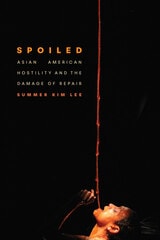
Spoiled
Asian American Hostility and the Damage of RepairSummer Kim Lee
Duke University Press, 2025
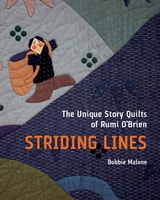
Striding Lines
The Unique Story Quilts of Rumi O'BrienBobbie Malone
University of Wisconsin Press, 2019
Bobbie Malone reaches beyond the quilts to tell O'Brien's own story, from her initial foray into the quilting world to her developed dedication to the craft. Contributions from leaders in the art, textile and quilting community, including Melanie Herzog and Marin Hanson, contextualize O'Brien's work in the greater community of quiltmakers and artists. This book celebrates the life and ingenuity of a Japanese-born American immigrant whose oeuvre is equally Japanese and Wisconsinite—and entirely distinctive.
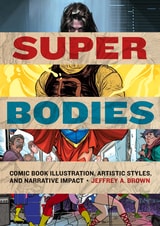
Super Bodies
Comic Book Illustration, Artistic Styles, and Narrative ImpactJeffrey A. Brown
University of Texas Press, 2023
Finalist — San Diego Comic-Con International 2024 Eisner Award in Best Academic/Scholarly Work
2024 MPCA/ACA Best Book for Use in the Classroom, Midwest Popular Culture Association / Midwest American Culture Association (MPCA/ACA)
An examination of the art in superhero comics and how style influences comic narratives.
For many, the idea of comic book art implies simplistic four-color renderings of stiff characters slugging it out. In fact, modern superhero comic books showcase a range of complex artistic styles, with diverse connotations. Leading comics scholar Jeffrey A. Brown assesses six distinct approaches to superhero illustration—idealism, realism, cute, retro, grotesque, and noir—examining how each visually represents the superhero as a symbolic construct freighted with meaning.
Whereas comic book studies tend to focus on text and narrative, Super Bodies gives overdue credit to the artwork, which is not only a principal source of the appeal of comic books but also central to the values these works embody. Brown argues that superheroes are to be taken not as representations of people but as iconic types, and the art conveys this. Even the most realistic comic illustrations are designed to suggest not persons but ideas—ideas about bodies and societies. Thus the appearance of superheroes both directly and indirectly influences the story being told as well as the opinions readers form concerning justice, authority, gender, puberty, sexuality, ethnicity, violence, and other concepts central to political and cultural life.
Superhero Ethics
10 Comic Book Heroes; 10 Ways to Save the World; Which One Do We Need Most Now?Travis Smith
Templeton Press, 2018
Although these outlandish figures—in their capes, masks, and tights, with their unbelievable origins and preternatural powers—are often dismissed as juvenile amusements, they really are profound metaphors for different approaches to shaping one’s character and facing the challenges of life.
But, given the choice, which superhero should we follow today? Who is most worthy of our admiration? Whose goals are most noble? Whose ethics should we strive to emulate?
To decide, Travis Smith takes ten top superheroes and pits them one against another, chapter by chapter. The hero who better exemplifies how we ought to live advances to the final round. By the end of the book, a single superhero emerges victorious and is crowned most exemplary for our times.
How, then, shall we live?
- How can we overcome our beastly nature and preserve our humanity? (The Hulk vs. Wolverine)
- How far can we rely on our willpower and imagination to improve the human condition? (Iron Man vs. Green Lantern)
- What limits must we observe when protecting our neighborhood from crime and corruption? (Batman vs. Spider-Man)
- Will the pursuit of an active life or a contemplative life bring us true fulfillment? (Captain America vs. Mr. Fantastic)
- Should we put our faith in proven tradition or in modern progress to achieve a harmonious society? (Thor vs. Superman)
Surface Relations
Queer Forms of Asian American InscrutabilityVivian L. Huang
Duke University Press, 2022