Results by title
104 books match the query 'Times' and 10 start with s
Samuel Bronfman
The Life and Times of Seagram’s Mr. SamMichael R. Marrus
Brandeis University Press, 1991
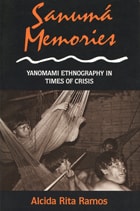
Sanuma Memories
Yanomami Ethnography in Times of CrisisAlcida Rita Ramos
University of Wisconsin Press, 1995
The Yanomami people of Brazil first attracted anthropological and popular attention in the 1960s, when they were portrayed as essentially primitive and violent in the widely read book Yanomamo: The Fierce People. To this image of the Yanomami another has recently been added: that of victims of the economic rapacity devouring the Amazon.
Sanumá Memories moves beyond these images to provide the first anthropologically sophisticated account of the Yanomami and their social organization, kinship, and marriage, capturing both individual experiences and the broader sociological trends that engulf them. A poignant personal story as well, it draws on Alcida Ramos's extensive fieldwork among the Sanumá (the northernmost Yanomami subgroup) from 1968 to 1992, as she reports on the brutal impact of many invasions—from road construction to the gold rush that brought the Yanomami social chaos, thousands of deaths, devastation of gardens and forest, and a disquietingly uncertain future.
At the cutting edge of anthropological description and analysis, Sanumá Memories ponders the importance of "otherness" to the Sanumá; describes Sanumá spaces, from the grandiosity of the rain forest to cozy family compartments; analyzes their notions of time, from the minute reckoning of routine village life to historical and metaphysical macro-time; shows how power and authority are generated and allocated in space and time; and examines the secrecy of personal names and the all-pervading consequences of disclosing them.

Scottish Mandarin
The Life and Times of Sir Reginald JohnstonShiona Airlie
Hong Kong University Press, 2012

Scottish Shepherd
The Life and Times of John Murray Murdoch, Utah PioneerMerrell, Kenneth W
University of Utah Press, 2007
Murdoch embraced Mormonism and set out for the Utah Territory in 1852 with his wife, Ann, and their family. En route they suffered the deaths of their two young children. Two years later, John’s mother, Wee Granny, and Ann’s brother, James Steele, both perished, along with many others of the ill-fated Martin handcart company, as they attempted to immigrate to Salt Lake City.
Murdoch was a respected member of the community and participated in the military preparations and maneuvers against the U.S. Army in the 1857 Utah War. Eventually the family moved to the Heber valley as early settlers there. Murdoch later became one of Wasatch county’s first elected officials and helped establish the sheep-ranching industry in Utah. The 'everyman' aspect of John Murdoch’s life makes his a compelling story. It will fascinate anyone interested in the individuals who helped create Utah's history.
Winner of the Evans Handcart Award.
Seized with the Temper of the Times
Identity and Rebellion in Pre-Revolutionary AmericaAbby Chandler
Westholme Publishing, 2023
In Seized with the Temper of the Times Identity and Rebellion in Pre-Revolutionary America, historian Abby Chandler explores, as never before, the complex local and transatlantic tensions which infused the early imperial crisis. She argues that colonial responses to the Stamp Act were rooted in local tensions and that the Regulator Rebellion was fueled by trans-Atlantic tensions. These two paradoxes, a local crisis cast as imperial affair and an imperial affair cast as local crisis, tell a very different story than the one to which we are accustomed. Without pre-existing local tensions, the fury of the Stamp Act crisis might not have spilled over during the summer of 1765, and, without the added strains of the imperial crisis, the Regulator Rebellion might not have lasted for five years. The questions about the intersecting roles of local and imperial/federal interests and identities raised during both the Stamp Act crisis and the Regulator Rebellion would also continue to inform political thought in Rhode Island and North Carolina in the coming decades. Both colonies had long histories of challenges to their autonomy and their residents embraced the coming revolution before many of their counterparts, but they would also be reluctant participants in the rising union envisioned by the framers of the Constitution.
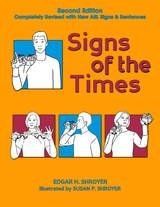
Signs of the Times
Edgar H. Shroyer
Gallaudet University Press, 2011
•Completely Revised with New Signs and Lessons
•Each Sign Illustration Features Sentences in English and ASL Order
•New Class Activities and New Student Activities for Homework or Quizzes
•New Facts about American Sign Language Grammar and Deaf Culture
Now, the bestselling American Sign Language textbook Signs of the Times has been completely revised and updated. The new, second edition is an excellent beginner’s American Sign Language textbook designed for use in the classroom or at home. Organized into 44 lessons, it presents more than 1,300 signs representing 3,500 English glosses. Each lesson contains clear illustrations of all signs, English equivalent words and synonyms, sample sentences to define vocabulary context, and practice sentences to display and reinforce ASL usage.
Signs of the Times is a complete text that includes new class activities for teachers, plus new student activities that can be done in class, as homework, or as quizzes. The new edition features the Contextual Sign/Word Appendix, which displays groups of sentences using the same English word to show different meanings along with the corresponding ASL signs. It also provides an expanded index, vocabulary lists, and a reading reference list. The new edition offers facts on ASL grammar and Deaf culture and includes mind ticklers that enliven the lessons with hints, tips, and mnemonic devices.
The new Signs of the Times expands the features that made it a standard, easy-to-use ASL textbook. Signs are repeated in sentences throughout the book to provide excellent practice for the students. The clear, easy-to-understand sign illustrations facilitates the learning process, enhancing students’ success while also making ASL fun.

Slingin' Sam
The Life and Times of the Greatest Quarterback Ever to Play the GameBy Joe Holley
University of Texas Press, 2012
Dan Jenkins calls him “the greatest quarterback who ever lived, college or pro.” Slingin’ Sammy Baugh, who played for TCU and the Washington Redskins, single-handedly revolutionized the game of football. While the pros still wore leather helmets and played the game more like rugby, Baugh’s ability to throw the ball with rifle-like accuracy made the forward pass a strategic weapon, not a desperation heave. Like Babe Ruth, who changed the very perception of how baseball is played, Slingin’ Sam transformed the notion of offense in football and how much yardage can be gained through the air. As the first modern quarterback, Baugh led the Redskins to five title games and two NFL championships, while leading the league in passing six times—a record that endures to this day—and in punting four times. In 1943, the triple-threat Baugh also scored a triple crown when he led the league in passing, punting, and interceptions.
Slingin’ Sam is the first major biography of this legendary quarterback, one of the first inductees into the Pro Football Hall of Fame. Joe Holley traces the whole arc of Baugh’s life (1914–2008), from his small-town Texas roots to his college ball success as an All-American at TCU, his brief flirtation with professional baseball, and his stellar career with the Washington Redskins (1937–1952), as well as his later career coaching the New York Titans and Houston Oilers and ranching in West Texas. Through Holley’s vivid descriptions of close-fought games, Baugh comes alive both as the consummate all-around athlete who could play every minute of every game, on both offense and defense, and as an all-around good guy.

Slow Death
Contemporary Japanese Performance in Times of Suspended CrisesKyoko Iwaki, Jessica Nakamura, Corey Wakeling
Northwestern University Press, 2027
Bringing together performance studies, critical theory, and contemporary Japanese cultural studies to offer an unsettling glimpse into a global future of crisis already arriving
Slow Death examines contemporary artistic practice as a form of active engagement with the condition of “slow death”: the diffused feeling of decline with no end in sight. The theater and performance artists discussed here confront the realities of a state that is no longer tenable, rehearsing slow death’s modalities, probing its implications, and imagining possible endpoints through dramaturgy. As these artists show, the very notion of progress—whether framed as a march toward a hopeful future or a retreat into the comforts of a nostalgic past—carries an inescapable irony. Both trajectories seem equally unsustainable, rendering any prospect of radical transformation elusive. This sense of endless suspendedness emerges as a pervasive motif across the artworks discussed, such as the anticapitalist performance spaces created by Tanino Kurō and the queer feminist dramaturgy of Ichihara Satoko. Yet, as coauthors Kyoko Iwaki, Jessica Nakamura, and Corey Wakeling identify throughout, to enact slow death in performance is not to capitulate to despair but to expose its structure and, in doing so, uncover latent forms of everyday resistance.

Space Is the Place
The Lives and Times of Sun RaJohn Szwed
Duke University Press, 2020

Sport and Christianity
A Sign of the Times in the Light of FaithKevin Lixey
Catholic University of America Press, 2012