Results by title
155 books match the query 'Toward' and 6 start with s

Safed, Zionist Culture, and Jewish History
Toward a New Historical PerspectiveAmnon Raz-Krakotzkin
Brandeis University Press, 2026
Brings the legacy of sixteenth-century Safed into modern scholarship on Zionism to propose a new model of Jewish existence.
Sixteenth-century Safed was one of the most important centers of thought and learning in Jewish history, yet Zionist historical narratives, which emphasize the continuity of Jewish presence in Palestine, have consistently downplayed or ignored it. Amnon Raz-Krakotzkin investigates this strange contradiction. His new book argues that Safed articulates a model of early modern Jewish national revival, one closely connected to the land and its material geography, yet radically different from the Zionist model that emerged in the late nineteenth century. While Zionism set out to restore Biblical Jewish sovereignty, rabbinic Safed’s emphasis on the Mishnah proposed a non-sovereign Jewish connection to the land.
As much a polemic as a historical and theological analysis, Safed, Zionist Culture, and Jewish History offers a provocative new perspective on questions related to nationalism, Judaism, and Israel.
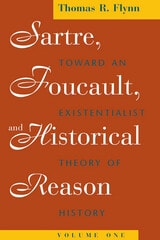
Sartre, Foucault, and Historical Reason, Volume One
Toward an Existentialist Theory of HistoryThomas R. Flynn
University of Chicago Press, 1997
A history, thought Foucault, should be a kind of map, a comparative charting of structural transformations and displacements. But for Sartre, authentic historical understanding demanded a much more personal and committed narrative, a kind of interpretive diary of moral choices and risks compelled by critical necessity and an exacting reality. Sartre's history, a rational history of individual lives and their intrinsic social worlds, was in essence immersed in biography.
In Volume One of this authoritative two-volume work, Thomas R. Flynn conducts a pivotal and comprehensive reconstruction of Sartrean historical theory, and provocatively anticipates the Foucauldian counterpoint to come in Volume Two.

Selected Writings, Volume 1
Toward a New African Art DiscourseOkwui Enwezor. Edited by Terry Smith.
Duke University Press, 2025
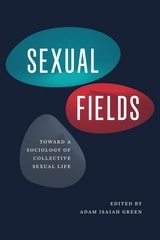
Sexual Fields
Toward a Sociology of Collective Sexual LifeEdited by Adam Isaiah Green
University of Chicago Press, 2013
To build on the sexual fields framework, Green has gathered a distinguished group of scholars who together make a strong case for sexual field theory as the first systematic theoretical innovation since queer theory in the sociology of sexuality. Expanding on the work of Bourdieu, Green and contributors develop this distinctively sociological approach for analyzing collective sexual life, where much of the sexual life of our society resides today. Coupling field theory with the ethnographic and theoretical expertise of some of the most important scholars of sexual life at work today, Sexual Fields offers a game-changing approach that will revolutionize how sociologists analyze and make sense of contemporary sexual life for years to come.
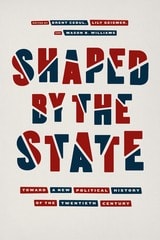
Shaped by the State
Toward a New Political History of the Twentieth CenturyEdited by Brent Cebul, Lily Geismer, and Mason B. Williams
University of Chicago Press, 2019
Brent Cebul, Lily Geismer, and Mason B. Williams have brought together first-rate scholars from a wide range of subfields who are making structures of state power—not moments of crisis or partisan realignment—integral to their analyses. All of the contributors see political history as defined less by elite subjects than by tensions between state and economy, state and society, and state and subject—tensions that reveal continuities as much as disjunctures. This broader definition incorporates investigations of the crosscurrents of power, race, and identity; the recent turns toward the history of capitalism and transnational history; and an evolving understanding of American political development that cuts across eras of seeming liberal, conservative, or neoliberal ascendance. The result is a rich revelation of what political history is today.
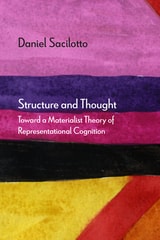
Structure and Thought
Toward a Materialist Theory of Representational CognitionDaniel Sacilotto; Foreword by Ray Brassier
Northwestern University Press, 2024
This study develops a novel account of representational cognition, explaining how cognitive systems progressively come to map the structure of their worlds. Daniel Sacilotto offers a constructive response to the critique of representation formulated throughout the post‑Kantian philosophical tradition. Rather than a skepticism or idealism whereby thinking can grasp appearances but never the real, representation, Sacilotto shows, is a constitutive dimension of cognitive systems’ creative capacity to know and intervene in the world of which they are part.
Structure and Thought: Toward a Materialist Theory of Representational Cognition integrates various lines in contemporary philosophy, including those often seen as incommensurable or in irresolvable tension with one another. Sacilotto thus advances a productive synthesis of a materialist ambition to provide a creative and historical understanding of cognition with a structural realist account of representation. He shows how the different forms of sensory, discursive, and theoretical mediation that characterize human cognition are conducive to a realist epistemological framework that explains how the possibility of knowledge about a mind‑independent reality is conceivable.