Results by title
134 books match the query 'Transformation' and 12 start with s

SINGING IN A STRANGE LAND
C. L. Franklin, the Black Church, and the Transformation of AmericaNick Salvatore
University of Illinois Press, 2000

Science, Community, and the Transformation of American Philosophy, 1860-1930
Daniel J. Wilson
University of Chicago Press, 1990
The author situates the emergence of professional philosophy in the context of the professionalization of American higher education and articulates, in the case of philosophy, the structures and values of a professional discipline. One of the most important consequences of this transformation was a new emphasis on communal theories of truth. Peirce, Dewey, and Royce all developed sophisticated and important theories of community as they were engaged in reshaping and redefining the limits of philosophy. This book will be of great importance for those interested in the history of philosophy, the rise of professions, and American intellectual and educational history, and to all those seeking to understand the contemporary revival of pragmatic thought and theories of community.

Sex Trafficking, Scandal, and the Transformation of Journalism, 1885-1917
Gretchen Soderlund
University of Chicago Press, 2013

Shipwrecked
Disaster and Transformation in Homer, Shakespeare, Defoe, and the Modern WorldJames V. Morrison
University of Michigan Press, 2014
The recurrent treatment of shipwrecks in the creative arts demonstrates an enduring fascination with this archetypal scene: a shipwreck survivor confronting the elements. It is remarkable, for example, that the characters in the 2004 television show Lost share so many features with those from Homer’s Odyssey and Shakespeare’s The Tempest.
For survivors who are stranded on an island for some period of time, shipwrecks often present the possibility of a change in political and social status—as well as romance and even paradise. In each of the major shipwreck narratives examined, the poet or novelist links the castaways’ arrival on a new shore with the possibility of a new sort of life. Readers will come to appreciate the shift in attitude toward the opportunities offered by shipwreck: older texts such as the Odyssey reveals a trajectory of returning to the previous order. In spite of enticing new temptations, Odysseus—and some of the survivors in The Tempest—revert to their previous lives, rejecting what many might consider paradise. Odysseus is reestablished as king; Prospero travels back to Milan. In such situations, we may more properly speak of potential transformations. In contrast, many recent shipwreck narratives instead embrace the possibility of a new sort of existence. That even now the shipwreck theme continues to be treated, in multiple media, testifies to its long-lasting appeal to a very wide audience.
Silent Revolution
The Transformation of Divorce Law in the United StatesHerbert Jacob
University of Chicago Press, 1988
Since 1966, divorce laws in the United States have undergone a radical transformation. No-fault divorce is now universally available. Alimony functions simply as a brief transitional payment to help a dependent spouse become independent. Most states divide assets at divorce according to a community property scheme, and, whenever possible, many courts prefer to award custody of children to the mother and the father jointly.
These changes in policy represent a profound departure from traditional American values, and yet the legislation by which they were enacted was treated as a technical correction of minor problems. No-fault divorce, for example, was a response to the increasing number of fraudulent divorce petitions. Since couples were often forced to manufacture the evidence of guilt that many states required, and since judges frequently looked the other way, legal reformers sought no more than to bring divorce statutes into line with current practice.
On the basis of such observations, Jacob formulates a new theory of routine—as opposed to conflictual—policy-making processes. Many potentially controversial policies—divorce law reforms among them—pass unnoticed in America because legislators treat them as matters of routine. Jacob's is indeed the most plausible account of the enormous number and steady flow of policy decisions made by state legislatures. It also explains why no attention was paid to the effect divorce reform would have on divorced women and their children, a subject that has become increasingly controversial and that, consequently, is not likely to be handled by the routine policy-making process in the future.

Sisters for Justice
Small Acts in the Transformation of Apartheid South AfricaCatherine Higgs
University of Wisconsin Press, 2025
Based on extensive oral history interviews with white and Black sisters as well as deep archival research, this groundbreaking book reveals a largely untold story, nested within the broader literature of women’s activism in South Africa. The result is a new perspective that expands and intensifies our understanding of a dramatic period during which individual actions, in the aggregate, contributed to social change.
Small Privatization
The Transformation of Retail Trade and Consumer Services in the Czech Republic, Hungary and PolandRoman Frydman
Central European University Press, 1994

Smart Casual
The Transformation of Gourmet Restaurant Style in AmericaAlison Pearlman
University of Chicago Press, 2013
Social Movements in the World-System
The Politics of Crisis and TransformationJackie Smith
Russell Sage Foundation, 2012
Specular City
The Transformation Of Culture, ConsumptionLaura Podalsky
Temple University Press, 2004

Steppin' Out
New York Nightlife and the Transformation of American CultureLewis A. Erenberg
University of Chicago Press, 1984
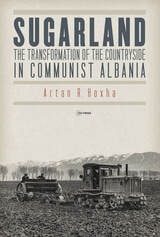
Sugarland
The Transformation of the Countryside in Communist AlbaniaArtan R. Hoxha
Central European University Press, 2023
In this historical monograph on non-urban communist Albania, Artan Hoxha discusses the ambitious development project that turned a swampland into a site of sugar production after 1945. The author seeks to free the history of Albanian communism from the stereotypes that still circulate about it with stigmas of an aberration, paranoia, extreme nationalism, and xenophobia.
This micro-history of the agricultural and industrial transformation of a zone in southeastern Albania, explores a wide range of issues including modernization, development, and social, cultural, and economic policies. In addition to analyzing the collectivization of agriculture, Hoxha shows how communism affected the lives of ordinary rural people. As elsewhere in the Communist Bloc, the Albanian regime borrowed developmental projects from the past and implemented them using social mobilization and a command economy. The abundant archival resources along with interviews in the field attest to the authorities’ efforts to increase consumption and to radically transform people’s tastes. But the book argues that despite the repressive environment, people involved in the sugar project were not simply passive receivers of models from the nation's capital. The author also describes that—in defiance of Cold War bipolarity—technological requirements and social policy considerations required a degree of engagement with the broader world.