Results by title
1185 books match the query 'Travel' and 59 start with s
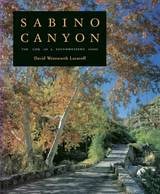
Sabino Canyon
The Life of a Southwestern OasisDavid Wentworth Lazaroff
University of Arizona Press, 1993
David Lazaroff has called on years of studying, photographing, and educating people about Sabino Canyon to produce this clearly written and beautifully illustrated book. Focusing on the importance of Sabino Creek both to plants and animals and to human recreation, he tracks the ebb and flow of canyon life through the year and tells how people have sought to utilize the canyon through history. First-time visitors to Sabino Canyon will find their experience enriched through Lazaroff's insights into plants, animals, and geology, while those who regularly frequent Sabino's trails or pools can become better informed about its fragile desert and riparian habitats.
For anyone curious about life in a genuine Southwestern oasis, this book captures the beauty and uniqueness of a natural treasure-house located in a bustling city's back yard.
Sailing by Starlight
In Search of Treasure IslandAlex Capus
Haus Publishing, 2011
Sailing to the Far Horizon
The Restless Journey and Tragic Sinking of a Tall ShipPamela Sisman Bitterman
University of Wisconsin Press, 2004
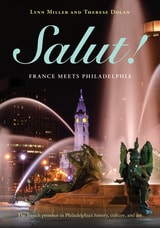
Salut!
France Meets PhiladelphiaLynn Miller and Therese Dolan
Temple University Press, 2021
One highly visible example of French influence on the city of Philadelphia is the Benjamin Franklin Parkway, modeled on the Champs-Élysées. In Salut!, Lynn Miller and Therese Dolan trace the fruitful, three-centuries-long relationship between the City of Brotherly Love and France. This detailed volume illustrates the effect of Huguenots settling in Philadelphia and 18-year-old William Penn visiting Paris, all the way up through more recent cultural offerings that have helped make the city the distinctive urban center it is today.
Salut! provides a magnifique history of Philadelphia seen through a particular cultural lens. The authors chronicle the French influence during colonial and revolutionary times. They highlight the contributions of nineteenth-century French philanthropists, such as Stephen Girard and the Dupont family. And they showcase the city’s vibrant visual arts community featuring works from the Philadelphia Museum of Art, the Rodin Museum, the Barnes Foundation, and the Joan of Arc sculpture, as well as studies of artists Thomas Eakins, Mary Cassatt, and Henry Ossawa Tanner. There is also a profile of renowned Le Bec-Fin chef Georges Perrier, who made Philadelphia a renowned culinary destination in the twentieth century.
With lavish illustrations and enthusiastic text, Salut!celebrates a potpourri of all things French in the Philadelphia region.
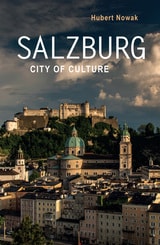
Salzburg
City of CultureHubert Nowak
Haus Publishing, 2020
Situated in the shadow of the Eastern Alps, Salzburg is known for its majestic baroque architecture, music, cathedrals, and gardens. The city grew in power and wealth as the seat of prince-bishops, found international fame as the birthplace of the beloved composer Mozart, and expanded to become a global destination for travel as a festival city. With all its stunning sights and rich history, Salzburg has become Austria’s second most visited city, drawing visitors from around the world.
Hubert Nowak sets out to reveal the lesser-known side of Salzburg, a small town with international renown. Leaving the famed festival district, he plunges into the narrow façade-lined streets of the old quarter, creating one of the most extensive accounts of the city published in English. Through the stories of those who visited and lived in the city over the centuries, he gives the reader a fresh perspective and gives the old city new life.
San Juan
Memoir of a CityEdgardo Rodriguez Julia; Translated by Peter Grandbois
University of Wisconsin Press, 2007
In the allusive cityscape he recreates, Rodríguez Juliá invokes the ghosts of his childhood, of San Juan's elder literati, and of characters from his own novels. On the most tangible level, the city is a place of cabarets and cockfighting clubs, flâneurs and beach bums, smoke-filled bars and honking automobiles. Poised between a colonial past and a commercial future, the San Juan he portrays feels at times perilously close to the pitfalls of modernization. Tenement houses and fading mansions yield to strip malls and Tastee Freezes; asphalt hems in jacarandas and palm trees. "In Puerto Rico," he muses, "life is not simply cruel, it is also busy erasing our tracks." Through this book—available here in English for the first time—Rodríguez Juliá resists that erasure, thoughtfully etching a palimpsest that preserves images of the city where he grew up and rejoicing in the one where he still lives.
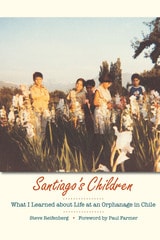
Santiago's Children
What I Learned about Life at an Orphanage in ChileBy Steve Reifenberg
University of Texas Press, 2008
Runner-up, Bronze Medal, Independent Publishers Book Awards: Memoir/Autobiography Category, 2009
Unclear about his future career path, Steve Reifenberg found himself in the early 1980s working at a small orphanage in a poor neighborhood in Santiago, Chile, where a determined single woman was trying to create a stable home for a dozen or so children who had been abandoned or abused. With little more than good intentions and very limited Spanish, the 23-year-old Reifenberg plunged into the life of the Hogar Domingo Savio, becoming a foster father to kids who stretched his capacities for compassion and understanding in ways he never could have imagined back in the United States.
In this beautifully written memoir, Reifenberg recalls his two years at the Hogar Domingo Savio. His vivid descriptions create indelible portraits of a dozen remarkable kids—mature-beyond-her-years Verónica; sullen, unresponsive Marcelo; and irrepressible toddler Andrés, among them. As Reifenberg learns more about the children's circumstances, he begins to see the bigger picture of life in Chile at a crucial moment in its history.
The early 1980s were a time of economic crisis and political uprising against the brutal military dictatorship of Augusto Pinochet. Reifenberg skillfully interweaves the story of the orphanage with the broader national and international forces that dramatically impact the lives of the kids. By the end of Santiago's Children, Reifenberg has told an engrossing story not only of his own coming-of-age, but also of the courage and resilience of the poorest and most vulnerable residents of Latin America.
Satyr Square
A Year, a Life in RomeLeonard Barkan
Northwestern University Press, 2008
Part memoir, part literary criticism, part culinary and aesthetic travelogue, this loving reflection is a poignant, funny narrative about an American professor spending a year in Rome. A scarred veteran of academic culture wars retreating to a cradle of culture, Barkan is at first hungry, lonely, and uncertain of his intellectual mission. But soon he is appointed unofficial mascot of an eccentric community of gastronomes, becomes virtually bilingual, and falls in love. As the year progresses, he finds his voice as a writer, loses his lover, and definitively returns to America with heart, mind, and body. His memoir is the celebration of a life lived in the uncanny spaces where art and real people intersect.
Barkan’s reminiscence is not just about the Renaissance and ancient statuary, or Shakespeare and Mozart, Charles Bukowski and Paul de Man, eggplant antipasto and Brunello di Montalcino, foot fetishism and sulfur baths. At the heart of the narrative—beneath that beguiling surface of irony, humor, and misdirection—is a man of genuine ardor, struggling with what it means to be a homosexual and a Jew, trying to rediscover or reinvent his own intellectual passions. Hilarious, erudite, and lusciously rendered, Satyr Square gives us the whole of a life made up from fragments of Italy, art, food, and longing.
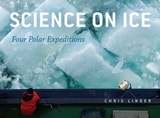
Science on Ice
Four Polar ExpeditionsChris Linder
University of Chicago Press, 2011
An oceanographer and award-winning photographer, Linder chronicles four polar expeditions in this richly illustrated volume: to a teeming colony of Adélie penguins, through the icy waters of the Bering Sea in spring, beneath the pack ice of the eastern Arctic Ocean, and over the lake-studded surface of the Greenland Ice Sheet. Each trip finds Linder teamed up with a prominent science journalist, and together their words and pictures reveal the day-to-day details of how science actually gets done at the poles. Breathtaking images of the stark polar landscape alternate with gritty, close-up shots of scientists working in the field, braving physical danger and brutal conditions, and working with remarkable technology designed to survive the poles—like robotic vehicles that chart undersea mountain ranges—as they gather crucial information about our planet's distant past, and the risks that climate change poses for its future.
The result is a combination travel book and paean to the hard work and dedication that underlies our knowledge of life on earth. Science on Ice takes readers to the farthest reaches of our planet; science has rarely been more exciting—or inspiring.
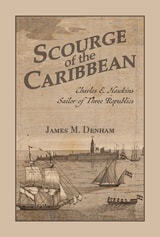
Scourge of the Caribbean
Charles E. Hawkins, Sailor of Three RepublicsJames M. Denham
University of Alabama Press, 2026
Illuminates the early American period in the upper Caribbean
Scourge of the Caribbean explores the mysterious and dramatic life and career of Charles E. Hawkins, a relatively unknown naval figure in early national America. Hawkins’s action-packed life at sea in his brief but accomplished career reveals much about an era when the rules of the maritime world, especially in the Caribbean, were in flux. For the US Navy and its commanders, the Caribbean presented an untold number of ambiguities: revolutionary juntas, privateering, piracy, and deadly disease, all within some of the most beautiful landscapes and waterscapes on earth.
Hawkins, from a well-connected family, took to the sea as a midshipman in the US Navy. Stalled promotion, economic setbacks, and blunted opportunities stymied the young officer, but ambition, combined with varied experiences and maritime pursuits, presented other prospects. At a time when individual agency mattered most, Hawkins stepped outside traditional boundaries of conduct on numerous occasions. Hawkins followed a mentor into the Mexican navy and became the most successful and feared raider of Spanish ships, earning the sobriquet “scourge” because of his raids along Cuba’s northern coast. In 1835, Hawkins joined the Texas independence movement against Mexico. Within the historical narrative are lurid accounts of adultery, affairs of honor, a bloody assassination, and complicated maritime legal battles. Based on prodigious research, this lively tale will appeal to those interested in maritime and early American history and the upper Caribbean in the Age of Sail.

Second Life
A West Bank MemoirJanet Gunn
University of Minnesota Press, 1995
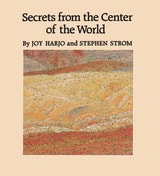
Secrets from the Center of the World
Joy Harjo and Stephen E. Strom
University of Arizona Press, 1989
This is Navajo country, a land of mysterious and delicate beauty. "Stephen Strom's photographs lead you to that place," writes Joy Harjo. "The camera eye becomes a space you can move through into the powerful landscapes that he photographs. The horizon may shift and change all around you, but underneath it is the heart with which we move." Harjo's prose poems accompany these images, interpreting each photograph as a story that evokes the spirit of the Earth. Images and words harmonize to evoke the mysteries of what the Navajo call the center of the world.
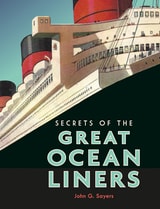
Secrets of the Great Ocean Liners
John G. Sayers
Bodleian Library Publishing, 2020
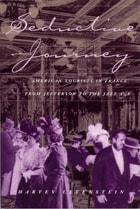
Seductive Journey
American Tourists in France from Jefferson to the Jazz AgeHarvey Levenstein
University of Chicago Press, 2000
Levenstein begins in 1786, when Thomas Jefferson instructed young upper-class American men to travel overseas for self-improvement rather than debauchery. Inspired by these sentiments, many men crossed the Atlantic to develop "taste" and refinement. However, the introduction of the transatlantic steamship in the mid-nineteenth century opened France to people further down the class ladder. As the upper class distanced themselves from the lower-class travelers, tourism in search of culture gave way to the tourism of "conspicuous leisure," sex, and sensuality. Cultural tourism became identified with social-climbing upper-middle-class women. In the 1920s, prohibition in America and a new middle class intent on "having fun" helped make drunken sprees in Paris more enticing than trudging through the Louvre. Bitter outbursts of French anti-Americanism failed to jolt the American ideal of a sensual, happy-go-lucky France, full of joie de vivre. It remained Americans' favorite overseas destination.
From Fragonard to foie gras, the delicious details of this story of how American visitors to France responded to changing notions of leisure and blazed the trail for modern mass tourism makes for delightful, thought-provoking reading.
"...a thoroughly readable and highly likable book."—Deirdre Blair, New York Times Book Review
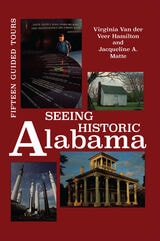
Seeing Historic Alabama
Fifteen Guided ToursVirginia Van der Veer Hamilton
University of Alabama Press, 1996
Revised and updated.
A trusted guide to Alabama's historic treasures and cultural landmarks.
Don’t drive anywhere in this state without taking along this useful, handy guide. Originally published in 1982, Professor Hamilton’s much acclaimed Seeing Historic Alabama: Fifteen Guided Tours was enthusiastically received around the state. Reviewers throughout Alabama praised her work, her artist’s eye for landscape and architecture, as well as her “historian’s devotion to fact and motorist’s appreciation for specific directions.” This praise extended beyond the state lines to publications in the greater Southeast, which recommend the volume to readers planning travel to or through Alabama.
Hamilton and Matte's thoroughly revised and updated edition of Seeing Historic Alabama introduces readers to the history of Alabama by way of visits to the buildings and sites where historic events took place, from prehistoric time to the present. Its aim is to appeal to a wide range of readers and travelers—natives and residents of Alabama, students of all ages, newcomers to the state, and tourists. This guide offers tours arranged in geographical segments that can be taken in a few hours, in a day trip, or over the course of several days. A handy guide to keep at ready in the glove compartment for easy reference wherever you travel.

Seeing Nature
Exploring 34 Parks and Preserves in Philadelphia and the Surrounding Delaware ValleyAnne Sarah Bekker and Edward Sibley Barnard
Temple University Press, 2026
Seeing Nature is a guide to natural wonders found in 34 parks and preserves within Philadelphia and the Delaware Valley. Readers are introduced to a variety of habitats, which host an incredible diversity of animals, plants, and fungi. Beautifully illustrated with more than 1,500 captioned color photographs, this informative guide describes over 1,000 species, from grassland birds to carnivorous plants. Suggested routes and maps for each walk guide the way at each site. More in-depth looks at many special features within these places are offered through photographic spreads that illustrate:
- the ancient trees of Carpenter’s Woods
- the charismatic wading and marsh birds of John Heinz National Wildlife Refuge
- the life of the vernal pools and wetlands of Five Mile Woods
- the dragonflies and damselflies of Piney Hollow Preservation Area
- the new life after a fire at Tom’s Pond in Wharton State Forest
- the riot of colorful mushrooms of Franklin Parker Preserve
- the forest wildflowers of Manderfield Preserve
- and much, much more.
New and seasoned naturalists alike will be inspired to explore and get involved in conserving the special places this region has to offer. Information about the ecology and conservation history of each park and preserve is also included.
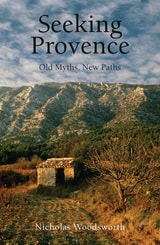
Seeking Provence
Old Myths, New PathsNicholas Woodsworth
Haus Publishing, 2016
The true Provençaux have always lived a hard life close to the land and the rhythms of the seasons. And it is in the revelation and understanding of these lives, of the Provençal people, that the truths of the region are to be found. As much a study of Provençal culture and history as a memoir and travel book, this is a deep and soulful investigation into a way of life that remains very distinct from that of the rest of France.
Seeking Sakyamuni
South Asia in the Formation of Modern Japanese BuddhismRichard M. Jaffe
University of Chicago Press, 2019
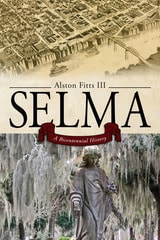
Selma
A Bicentennial HistoryAlston Fitts III
University of Alabama Press, 2017
Exploring the people, politics, and events that shaped Selma from 1815 through the twentieth century.
In 1989, Alston Fitts published a brief history of the city of Selma, Alabama, from its founding through the aftermath of the civil rights movement. Selma: A Bicentennial History is a greatly revised and expanded version of Fitts’s history of the city, replete with a wealth of new, never-before-published illustrations, which further develops a number of significant events, corrects critical errors, and, most importantly, incorporates many new stories and materials that document Selma’s establishment, growth, and development.
Comprehensive, thoroughly researched, and nonpartisan, Fitts’s pleasantly accessible history addresses every major issue, movement, and trend from the city’s settlement in 1815 to the end of the twentieth century. Its commerce, institutions, governance, as well as its evolving racial, religious, and class composition are all treated with candor and depth. Selma’s transformative role within the state and the nation is fully explored, and most notable is a nuanced and complex discussion of race relations from the rise of the civil rights era to modern times.
Historians, scholars, and Alabamians will find great use for this updated and fully developed exploration of Selma’s rich, complex, and significant history.

Seven Words for Wind
Essays and Field Notes from Alaska's Pribilof IslandsSumner MacLeish
University of Alaska Press, 2008
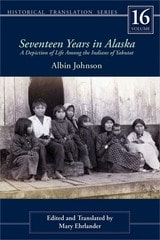
Seventeen Years in Alaska
A Depiction of Life Among the Indians of YakutatAlbin Johnson
University of Alaska Press, 2014
Seventeen Years in Alaska is Johnson’s eyewitness account of this tumultuous time. It is a captivating narrative of an ancient people facing rapid change and of the missionaries working to stem a corrupting tide. His journals offer a candid look at the beliefs and lives of missionaries, and they ultimately reveal the profound effect that he and other missionaries had on the Tlingit. Tracing nearly two decades of spiritual hopes and earthbound failures, Johnson’s memoir is a fascinating portrait of a rapidly changing world in one of the most far-flung areas of the globe.
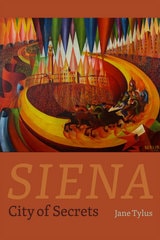
Siena
City of SecretsJane Tylus
University of Chicago Press, 2015
As Tylus leads us through the city, she shares her passion for Siena in novelistic prose, while never losing sight of the historical complexities that have made Siena one of the most fascinating and beautiful towns in Europe. Today, Siena can appear on the surface standoffish and old-fashioned, especially when compared to its larger, flashier cousins Rome and Florence. But first impressions wear away as we learn from Tylus that Siena was an innovator among the cities of Italy: the first to legislate the building and maintenance of its streets, the first to publicly fund its university, the first to institute a municipal bank, and even the first to ban automobile traffic from its city center.
We learn about Siena’s great artistic and architectural past, hidden behind centuries of painting and rebuilding, and about the distinctive characters of its different neighborhoods, exemplified in the Palio, the highly competitive horserace that takes place twice a year in the city’s main piazza and that serves as both a dividing and a uniting force for the Sienese. Throughout we are guided by the assured voice of a seasoned scholar with a gift for spinning a good story and an eye for the telling detail, whether we are traveling Siena’s modern highways, exploring its underground tunnels, tracking the city’s financial history, or celebrating giants of painting like Simone Martini or giants of the arena, Siena’s former Serie A soccer team.
A practical and engaging guide for tourists and armchair travelers alike, Siena is a testament to the powers of community and resilience in a place that is not quite as timeless and serene as it may at first appear.
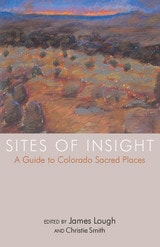
Sites of Insight
A Guide to Colorado Sacred PlacesJames Lough
University Press of Colorado, 2003
Sitting with Elephants
Lessons in Humility from the African Bush, Enhanced and Expanded Second EditionRonald Dulek, Illustrations by Abbey Ndlovu
University of Alabama Press, 2026
A professor of communication and strategy reveals deep lessons from life in the African bush.
Sitting with Elephants is a heartfelt memoir that follows a middle-aged American professor and his wife as they trade suburban life for a remote bush house in South Africa. What begins as a spontaneous decision becomes a life-changing experience—one shaped by lions at the backdoor, baboons in the rafters, and above all, a herd of elephants who frequent their yard like neighbors.
Told through a series of emails to their adult children and brought to life by vivid illustrations from Abbey Ndlovu, Ronald Dulek’s narrative explores the profound lessons nature teaches: patience, humility, and deep respect for the wild. As the couple learns to communicate with elephants and navigate the rhythms of bush life, they also reflect on the unexpected beauty of slowing down and embracing the unknown.
Blending lighthearted anecdotes with moments of quiet insight, Sitting with Elephants invites readers into a story of transformation—both personal and environmental. This second edition includes expanded content with new stories and reflections, offering a deeper look into the couple’s unforgettable time in the African bush.
Sketches of Alabama
Mary Duffee, edited by Jane Porter Nabers and Virginia Pounds Brown
University of Alabama Press, 1970
Rediscover the spirit, stories, and landscapes of Alabama through a timeless collection of observations and historical reflections.
In Sketches of Alabama, Mary Duffee offers a richly detailed portrait of a state shaped by diverse communities, enduring traditions, and a deeply rooted cultural identity. Through a series of engaging sketches, Duffee captures the essence of Alabama’s towns, people, and everyday life, preserving moments that might otherwise be lost to time.
Blending historical insight with narrative charm, this collection explores the character of Alabama from multiple perspectives—rural and urban, past and present. Readers encounter vivid depictions of local customs, notable figures, and the evolving social fabric of the region. Duffee’s work not only chronicles the state’s development but also reflects the broader story of the American South, illuminating its complexities, resilience, and sense of place.
This collection contains typescripts of some of Mary Gordon Duffee's Iron Age columns "Sketches of Alabama," manuscripts of seven of Duffee's poems, a typed biographical sketch of Duffee, undated, and Duffee's obituary from the Birmingham Age-Herald. Ideal for students, historians, and general readers alike, Sketches of Alabama serves as both a literary work and a cultural record. Its accessible style makes it an excellent introduction to Alabama’s heritage, while its thoughtful observations reward those seeking deeper understanding of Southern history and identity.
Whether you are drawn to regional storytelling, historical narrative, or the rich traditions of the Deep South, this work offers a compelling journey into Alabama’s past—one sketch at a time.
Skidoo
A Journey through the Ghost Towns of the American WestAlex Capus
Haus Publishing, 2013
Walking in the footsteps of bank robbers and grave diggers, desperadoes and Native Americans, beer brewers and child brides, Capus uncovers story after story of adventure, violence, and exploration. Near Salt Wells, Nevada, he learns the story of a luckless inventor whose corpse was discovered frozen in the desert, an icicle hanging from its nose. In Skidoo, California, he tells us of a brawling bartender, Hootch Simpson, who was hanged twice—once by a mob, once by the law—before being beheaded during his autopsy. And in Flagstaff, Arizona, Capus traces the long-lost origins of Route 66, as a narrow, isolated trail for Edward Fitzgerald Beale’s Camel Corps.
Packed with period detail, and told with a verve and enthusiasm to rival Pecos Bill, the stories in Skidoo are sure to enchant any lover of Western tales or America’s wild history.
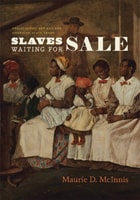
Slaves Waiting for Sale
Abolitionist Art and the American Slave TradeMaurie D. McInnis
University of Chicago Press, 2011
In 1853, Eyre Crowe, a young British artist, visited a slave auction in Richmond, Virginia. Harrowed by what he witnessed, he captured the scene in sketches that he would later develop into a series of illustrations and paintings, including the culminating painting, Slaves Waiting for Sale, Richmond, Virginia.
Smile of the Midsummer Night
A Picture of SwedenLars Gustafsson and Agneta Blomqvist
Haus Publishing, 2015
The first work of contemporary travel writing about Sweden by Swedish writers to have been translated into English, Smile of the Midsummer Night is a loving and poetic ode to this beautiful nation and a must-have for anyone interested in Scandinavia.
Snowshoeing Through Sewers
Adventures in New York City, New Jersey, and PhiladelphiaMichael Aaron Rockland
Rutgers University Press, 2008
In these ten alternately poetic and comic tales of adventure in the New York/Philadelphia corridor, the most densely populated chunk of America, Rockland walks and bikes areas meant only for cars and paddles through waters capable of dissolving canoes. He hikes the length of New York's Broadway, camps in New York City, treks across Philadelphia, pedals among the tractor trailers of Route 1 in New Jersey, and paddles around Manhattan and through the dark tunnels under Trenton.
Whereas Henry David Thoreau built his cabin on Walden Pond to get out of town, for Rockland, the challenge is to head into town. As he writes, "in the late twentieth century, a weed and trash-filled city lot . . . may be a better place than the wilderness to contemplate one's relationship to nature."
So Ole Says to Lena
Folk Humor of the Upper MidwestCompiled and edited by James P. Leary
University of Wisconsin Press, 2002
In the land of beer, cheese, and muskies—where the polka is danced and winter is unending and where Lutherans and Catholics predominate—everybody is ethnic, the politics are clean, and the humor is plentiful. This collection includes jokes, humorous anecdotes, and tall tales from ethnic groups (Woodland Indians, French, Cornish, Germans, Irish, Scandinavians, Finns, and Poles) and working folk (loggers, miners, farmers, townsfolk, hunters, and fishers). Dig into the rich cultural context supplied by the notes and photographs, or just laugh at the hundreds of jokes gathered at small-town cafes, farm tables, job sites, and church suppers. This second edition includes an afterword and indexes of motifs and tale types.
Some Strange Corners of Our Country
Charles F. Lummis; Foreword by Lawrence Clark Powell
University of Arizona Press, 1989
Some of the Dead Are Still Breathing
Living in the FutureBy Charles Bowden
University of Texas Press, 2018
The third book in Charles Bowden’s “accidental trilogy” that began with Blood Orchid and Blues for Cannibals, Some of the Dead Are Still Breathing attempts to resolve the overarching question: “How can a person live a moral life in a culture of death?” As humanity moves further into the twenty-first century, Bowden continues to interrogate our roles in creating the ravaged landscapes and accumulated death that still surround us, as well as his own childhood isolation, his lust for alcohol and women, and his waning hope for a future. We witness post-Katrina New Orleans and terrorist-bombed Bali; we encounter our shared actions with the animal world and the desirous need for consumption; we see the clash and erosion of our physical and figurative borders, the savagery of our own civilization. A man of his time and out of time, Bowden seeks acceptance and a will to endure what may lie ahead.

Somebody Else
Arthur Rimbaud in Africa 1880-91Charles Nicholl
University of Chicago Press, 1999
In this compelling biography, Charles Nicholl pieces together the shadowy story of Rimbaud's life as a trader, explorer, and gunrunner in Africa. Following his fascinating journey, Nicholl shows how Rimbaud lived out that mysterious pronouncement of his teenage years: "Je est un autre"—I is somebody else.
"Rimbaud's fear of stasis never left him. 'I should like to wander over the face of the whole world,' he told his sister, Isobelle, 'then perhaps I'd find a place that would please me a little.' The tragedy of Rimbaud's later life, superbly chronicled by Nicholl, is that he never really did."—London Guardian
"Nicholl has excavated a mosaic of semi-legendary anecdotes to show that they were an essential part of the poet's journey to become 'somebody else.' Not quite biography, not quite travel book, in the end Somebody Else transcends both genres."—Sara Wheeler, Daily Telegraph
"At the end of Somebody Else Rimbaud is more interesting and more various than before: he is not less mysterious, but he is more real."—Susannah Clapp, Observer Review
Sonoran Desert Bestiary
A More-than-Natural HistoryText by Gary Paul Nabhan; Illustrations by Robert J. Long
University of Arizona Press, 2026
The Sonoran Desert has many marvelous and well-known creatures such as the javelina and the coyote, often found on postcards and lawn ornaments. But what about the lesser-known creatures—the ones that are underfoot yet unseen, that lurk only in the shadows and in our imaginations? In this collection of essays, prose poems, and illustrations, naturalist Gary Paul Nabhan and artist Robert J. Long team up to celebrate these unsung beings of the Sonoran Desert.
This desert bestiary includes creatures whose existence lies largely in traditional story and belief, as well as creatures whose life cycles are so cryptic they seem mythic, such as the walking catfish and the carbunco. Positioned at the dynamic intersection of folklore and natural history, the book reflects on the reasons why human imaginations over the ages have reached into this realm of seldom seen but often intuited animals. Focusing on small animals and charismatic mini-fauna, Nabhan expands our understanding of the natural world by delightfully describing the interactions between animals and plants.
This more-than-natural history is for anyone who finds joy in the marvels of the natural world.
Sonoran Desert Journeys
Ecology and Evolution of Its Iconic SpeciesTheodore H. Fleming
University of Arizona Press, 2022
In Sonoran Desert Journeys ecologist Theodore H. Fleming discusses two remarkable journeys. First, Fleming offers a brief history of our intellectual and technical journey over the past three centuries to understand the evolution of life on Earth. Next, he applies those techniques on a journey of discovery about the evolution and natural history of some of the Sonoran Desert’s most iconic animals and plants. Fleming details the daily lives of a variety of reptiles, birds, mammals, and plants, describing their basic natural and evolutionary histories and addressing intriguing issues associated with their lifestyles and how they cope with a changing climate. Finally, Fleming discusses the complexity of Sonoran Desert conservation.
This book explores the evolution and natural history of iconic animals and plants of the northern Sonoran Desert through the eyes of a curious naturalist and provides a model of how we can coexist with the unique species that call this area home.
Sounds of Vacation
Political Economies of Caribbean TourismJocelyne Guilbault and Timothy Rommen, editors
Duke University Press, 2019
Contributors. Jerome Camal, Steven Feld, Francio Guadeloupe, Jocelyne Guilbault, Jordi Halfman, Susan Harewood, Percy C. Hintzen, Timothy Rommen
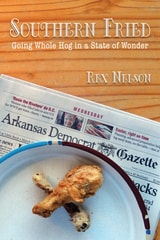
Southern Fried
Going Whole Hog in a State of WonderRex Nelson
Butler Center for Arkansas Studies, 2016
For decades, Rex Nelson has been traveling Arkansas. He learned to love the back roads, small towns, and people of the state while going on trips with his father, who sold athletic supplies to high schools. They sat in old Depression-era gyms built by the Works Progress Administration, ate in small-town cafes, and waded in streams on warm spring days.
Throughout his career as a sportswriter, political writer, senior staff member in the governor’s office, presidential appointee to the Delta Regional Authority, and now corporate communications director for Simmons Bank, Nelson has written millions of words about Arkansas and its people.
In this collection of columns from the Arkansas Democrat-Gazette, Nelson brings to life the personalities, communities, festivals, and tourist attractions that make Arkansas unique. As he says, “Arkansas is a hard place to explain to outsiders. We’re mostly Southern but also a bit Midwestern and a tad Southwestern. The Ozarks are different from the pine woods of the Gulf Coastal Plain, and the Delta is different from the Ouachitas. Invariably, though, those who take the time to get off the main roads and get to know the real Arkansas are entranced by the place.”
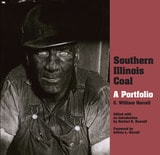
Southern Illinois Coal
A PortfolioC. William Horrell. Edited with an Introduction by Herbert K. Russell. Foreword by Jeffrey L. Horrell
Southern Illinois University Press, 1995
The coal mining photographs of C. William Horrell, taken across the southern Illinois Coal Belt over a twenty-year period from 1966 to 1986, are extraordinary examples of documentary photography—so stark and striking that captions often seem superfluous.
Horrell’s photographs capture the varied phenomena of twentieth-century coal mining technology: the awesome scale of surface mining machines and their impact on the land; massive machines forced into narrow passageways with inches to spare as they carry coal from the face to conveyer belts; and, more significant, the advent of continuous miners, machines that can handle four previously separate processes and which have been a fixture in underground or “deep” mines since the mid-1960s.
Horrell was also intrigued by the related activities of mining, including coal’s processing, cleaning, and transportation, as well as the daily, behind-the-scenes operations that keep mines and miners working. His photographs reflect the beauty of the commonplace—the clothes of the miners, their dinner pails, and their tools—and reveal the picturesque remnants of closed mines: the weathered boards of company houses, the imposing iron beauty of an ancient tipple, and an abandoned building against the lowering sky of an approaching storm. Finally, his portraits of coal minersshow the strength, dignity, and enduring spirit of the men and women who work the southern Illinois coal mines.
Spain in the African American Imagination
Rebecca C. Pawel
University of Massachusetts Press, 2027
Revealing how African American intellectuals reframed race, history, and cultural belonging in the modern era
In 1954, Richard Wright rented a car in France and drove south to the Spanish border on the first of two month-long trips that gave rise to the travelogue Pagan Spain, where Wright declared that the Pyrenees, on the France-Spain border, “mark the termination of Europe and the beginning of Africa.” While Spain was not actually seen as an African country, such language suggests instead that Spain would be incomplete without African influences. In the wake of the Spanish-American war of 1898, Americans and Northern Europeans attributed Spain’s weakened economy and loss of international clout to an inability to modernize, which they described in highly racialized terms. As African American modernists explored the country, they compared modernist notions coming out of the United States pertaining to race, gender, and other categories against Spain’s history and contemporary culture.
Spain in the African American Imagination traces how African American intellectuals in the mid-20th century, including Wright, Arthur Schomburg, Langston Hughes, Dorothy Peterson, and Frank Yerby, interpreted Spanish national myths. Rebecca Pawel argues that a literary idea of Spain as eternally “medieval” or “primitive” gave African American writers a conceptual space for thinking about the ways race is constructed through historical narrative. Spain provided a location that was considered ipso facto archaic and thus used racial referents typical of an era removed from the present in a space that was not quite African and not quite European. Ultimately, Pawel argues, Spain became a powerful lens through which African American intellectuals rewrote racial narratives and reimagined modernity across the Atlantic.
Spanish Peaks
Land and LegendsConger Beasley, Jr.
University Press of Colorado, 2006
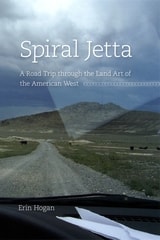
Spiral Jetta
A Road Trip through the Land Art of the American WestErin Hogan
University of Chicago Press, 2008
Erin Hogan hit the road in her Volkswagen Jetta and headed west from Chicago in search of the monuments of American land art: a salty coil of rocks, four hundred stainless steel poles, a gash in a mesa, four concrete tubes, and military sheds filled with cubes. Her journey took her through the states of Utah, Nevada, New Mexico, Arizona, and Texas. It also took her through the states of anxiety, drunkenness, disorientation, and heat exhaustion. Spiral Jetta is a chronicle of this journey.
A lapsed art historian and devoted urbanite, Hogan initially sought firsthand experience of the monumental earthworks of the 1970s and the 1980s—Robert Smithson’s Spiral Jetty, Nancy Holt’s Sun Tunnels, Walter De Maria’s Lightning Field, James Turrell’s Roden Crater, Michael Heizer’s Double Negative, and the contemporary art mecca of Marfa, Texas. Armed with spotty directions, no compass, and less-than-desert-appropriate clothing, she found most of what she was looking for and then some.
“I was never quite sure what Hogan was looking for when she set out . . . or indeed whether she found it. But I loved the ride. In Spiral Jetta, an unashamedly honest, slyly uproarious, ever-probing book, art doesn’t magically have the power to change lives, but it can, perhaps no less powerfully, change ways of seeing.”—Tom Vanderbilt, New York Times Book Review
“The reader emerges enlightened and even delighted. . . . Casually scrutinizing the artistic works . . . while gamely playing up her fish-out-of-water status, Hogan delivers an ingeniously engaging travelogue-cum-art history.”—Atlantic
“Smart and unexpectedly hilarious.”—Kevin Nance, Chicago Sun-Times
“One of the funniest and most entertaining road trips to be published in quite some time.”—June Sawyers, Chicago Tribune
“Hogan ruminates on how the work affects our sense of time, space, size, and scale. She is at her best when she reexamines the precepts of modernism in the changing light of New Mexico, and shows how the human body is meant to be a participant in these grand constructions.”—New Yorker

Spiral Jetta
A Road Trip through the Land Art of the American WestErin Hogan
University of Chicago Press, 2008
Erin Hogan hit the road in her Volkswagen Jetta and headed west from Chicago in search of the monuments of American land art: a salty coil of rocks, four hundred stainless steel poles, a gash in a mesa, four concrete tubes, and military sheds filled with cubes. Her journey took her through the states of Utah, Nevada, New Mexico, Arizona, and Texas. It also took her through the states of anxiety, drunkenness, disorientation, and heat exhaustion. Spiral Jetta is a chronicle of this journey.
A lapsed art historian and devoted urbanite, Hogan initially sought firsthand experience of the monumental earthworks of the 1970s and the 1980s—Robert Smithson’s Spiral Jetty, Nancy Holt’s Sun Tunnels, Walter De Maria’s Lightning Field, James Turrell’s Roden Crater, Michael Heizer’s Double Negative, and the contemporary art mecca of Marfa, Texas. Armed with spotty directions, no compass, and less-than-desert-appropriate clothing, she found most of what she was looking for and then some.
“I was never quite sure what Hogan was looking for when she set out . . . or indeed whether she found it. But I loved the ride. In Spiral Jetta, an unashamedly honest, slyly uproarious, ever-probing book, art doesn’t magically have the power to change lives, but it can, perhaps no less powerfully, change ways of seeing.”—Tom Vanderbilt, New York Times Book Review
“The reader emerges enlightened and even delighted. . . . Casually scrutinizing the artistic works . . . while gamely playing up her fish-out-of-water status, Hogan delivers an ingeniously engaging travelogue-cum-art history.”—Atlantic
“Smart and unexpectedly hilarious.”—Kevin Nance, Chicago Sun-Times
“One of the funniest and most entertaining road trips to be published in quite some time.”—June Sawyers, Chicago Tribune
“Hogan ruminates on how the work affects our sense of time, space, size, and scale. She is at her best when she reexamines the precepts of modernism in the changing light of New Mexico, and shows how the human body is meant to be a participant in these grand constructions.”—New Yorker
Spring, Heat, Rains
A South Indian DiaryDavid Shulman
University of Chicago Press, 2008
Staging Visitation
Tourist Performances and Theatricalized PlacesBryan Schmidt and Weston Twardowski
University of Michigan Press, 2026
Staging Visitation frames tourism and travel as complex social performances that shape identities, communities, and global imaginaries. This volume proposes “visitation” as a framework that emphasizes the participatory and relational dimensions of travel. While tourism is often pejoratively framed as a commodified or exploitative leisure activity for those with means, its reality is far more nuanced. Tourism stages heritage, provokes encounters across cultural divides, and prompts both visitors and hosts to negotiate values and identities—all while sustaining economies (and the power relations they produce) at global and local scales.
From museums and theme parks to festivals and influencer culture, the essays in this volume trace how transitory encounters—embodied, affective, and historically layered—build travel destinations into theatricalized places. These essays bring theater and performance studies into conversation with cultural geography, sociology, anthropology, and media studies to demonstrate how tourism functions as both a stage and a repertoire for modern life.
Staging Visitation argues that travel is not only about movement across space, but also about the performance of culture itself—its preservation, reinvention, and transformation.
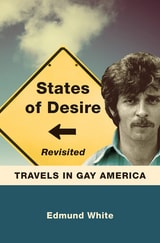
States of Desire Revisited
Travels in Gay AmericaEdmund White
University of Wisconsin Press, 2014
White frames those past travels with a brief, bracing review of gay America since the 1970s ("now we were all supposed to settle down with a partner in the suburbs and adopt a Korean daughter"), and a reflection on how Internet culture has diminished unique gay places and scenes but brought isolated individuals into a global GLBTQ community.
Stealing with the Eyes
Imaginings and Incantations in IndonesiaWill Buckingham
Haus Publishing, 2018
Through his encounters with these remarkable craftsmen—which in relating her also interweaves with Tanimbarese history, myth, and philosophy dating back to ancient times— we are shown the forces at play in all of our lives: the struggle between the powerful and the powerless, the tension between the past and the future, and how to make sense of a world that is in constant flux.
Steamboat Modernity
Travel, Transport, and Social Transformation on the Lower Danube, 1830–1860Constantin Ardeleanu
Central European University Press, 2024
Through a skillful combination of economic and cultural history, this book describes the impact on Moldavia and Wallachia of steam navigation on the Danube. The Danube route integrated the two principalities into a dense network of European roads and waterways. From the 1830s to the 1860s, steamboat transport transformed time and space for the areas that benefited from regular services. River traffic accelerated urban development along the Lower Danube and contributed directly to institutional modernization in one of Europe’s peripheries.
Beyond technological advances and the transportation of goods on a trans-imperial waterway, steamboat travel revolutionized human interactions, too. The book offers a fascinating insight into the social and cultural milieu of the nineteenth century, drawing on first-hand accounts of Danube cruising. Describing the story of travelers who interacted, met, and visited the places they stopped, Constantin Ardeleanu creates a transnational history of travel up and down the Danube from Vienna to Constantinople. The pleasures and sometimes the travails of the travelers unfold against a backdrop of technical and economic transformation in the crucial period of modernization.
Steinbeck’s Uneasy America
Rereading “Travels with Charley”Edited by Barbara A. Heavilin and Susan Shillinglaw
University of Alabama Press, 2025
A road trip through Steinbeck’s America—revisited, reimagined, and reinterpreted.
Steinbeck’s Uneasy America is the first collection of critical scholarship devoted to Travels with Charley in Search of America, John Steinbeck’s best-selling, late-career travel memoir. In 1960, Steinbeck was a renowned man of American letters. Many considered him America’s troubadour of ordinary people, the conscience of the country. But weakened by two small strokes and anxious that he had lost touch with America, he embarked on a cross-country road trip accompanied by his wife’s standard poodle, Charley. Two years later, he published Travels with Charley to popular acclaim and robust sales.
Throughout this narrative, Steinbeck insists that all of our perceptions are “warped” by personality, history, and society. And while this hybrid and experimental book has long been accepted as an accurate account of his journey, journalists and scholars agree that the narrative is part factual, part fiction—America as seen through Steinbeck’s particular “warp.” The work is long overdue for scholarly assessment.
Steinbeck’s Uneasy America explores three main topics. Part 1 explores genre and form to consider the degree to which the work is fiction or nonfiction. Part 2 assesses Steinbeck’s increasingly bleak assessment of America—almost a jeremiad that warns citizens of ecological excess and political apathy. Part 3 focuses on Travels with Charley as a road text, travel adventure, and literary influence.
This volume’s authors offer rich scholarly insights and a wealth of stories, facts, and anecdotes about Steinbeck and the adventures and misadventures he and Charley met on the road. Lively and groundbreaking, the collection both enlightens and enlivens discussions of Steinbeck and of the twentieth-century American book world.
Stepping Forward
Black Women in Africa and the AmericasCatherine Higgs
Ohio University Press, 2002
A unique and important study, Stepping Forward examines the experiences of nineteenth- and twentieth-century black women in Africa and African diaspora communities from a variety of perspectives in a number of different settings.
This wide-ranging collection designed for classroom use explores the broad themes that have shaped black women’s goals, options, and responses: religion, education, political activism, migration, and cultural transformation. Essays by leading scholars in the field examine the lives of black women in the United States and the Caribbean Basin; in the white settler societies of Kenya, Zimbabwe, and South Africa; and in the black settler societies of Liberia and Sierra Leone.
Among the contributors to this volume are historians, political scientists, and scholars of literature, music, and law. What emerges from their work is an image of black women’s agency, self-reliance, and resiliency. Despite cultural differences and geographical variations, black women have provided foundations on which black communities have not only survived, but also thrived. Stepping Forward is a valuable addition to our understanding of women’s roles in these diverse communities.
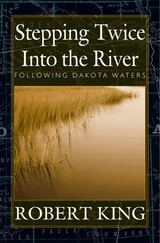
Stepping Twice Into the River
Following Dakota WatersRobert King
University Press of Colorado, 2005
Blending travel narrative and poetic reflection, Stepping Twice Into the River takes readers on a journey through time, revealing both stability and change and offering prairie wisdom. An affectionate and shrewd observer, King illuminates the ordinary from the perspectives of history, science, and literature. In the hands of this gifted thinker and writer, local facts yield universal metaphor.