Results by title
83 books match the query 'Treatment' and 6 start with s

Sexual Identity and Faith
Helping Clients Find CongruenceMark A. Yarhouse
Templeton Press, 2019
Christians who struggle with a conflict between their sexual and religious identities have few therapeutic options available to them. ‘Sexual orientation change efforts’ (SOCE) have rightly fallen out of favor and are no longer practiced by most clinicians. At the same time, the common approach of gay affirmative therapy (GAT) can at times present challenges and may not be a good fit when clients hold to conventional religious beliefs and values.
An alternative to these methods is Sexual Identity Therapy (SIT)—an approach that aims to provide individuals with a safe therapeutic space to explore the tension between their sexuality and their faith. Working within the SIT framework, clients are able to resolve their inner conflict to their personal satisfaction and to freely choose a coherent identity that enables them to move forward in life.
SIT has several stages, each designed to enable the client to make meaning out of his or her same-sex sexuality. At no point in the process is the client encouraged to choose one sexual identity over another. The ultimate goal of SIT is congruence. Congruence is achieved when a person freely adopts an identity and lives it out in ways that are in keeping with his or her beliefs and values. The SIT model is brought to life throughout the book with the help of case studies drawn from the author’s 20 years of experience.
Written for both Christian and non-religious clinicians, Sexual Identity and Faith is an informed, respectful, and nuanced guide to help people navigate the difficult conflict between who they are sexually and what they believe religiously.

Shamans, Mystics and Doctors
A Psychological Inquiry into India and its Healing TraditionsSudhir Kakar
University of Chicago Press, 1990
"With extraordinary sympathy, open-mindedness, and insight Sudhir Kakar has drawn from both his Eastern and Western backgrounds to show how the gulf that divides native healer from Western psychiatrist can be spanned."—Rosemary Dinnage, New York Review of Books
"Each chapter describes the geographical and cultural context within which the healers work, their unique approach to healing mental illness, and . . . the philosophical and religious underpinnings of their theories compared with psychoanalytical theory."—Choice
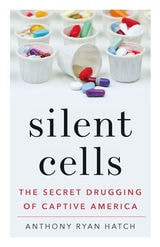
Silent Cells
The Secret Drugging of Captive AmericaAnthony Ryan Hatch
University of Minnesota Press, 2019
A critical investigation into the use of psychotropic drugs to pacify and control inmates and other captives in the vast U.S. prison, military, and welfare systems
For at least four decades, U.S. prisons and jails have aggressively turned to psychotropic drugs—antidepressants, antipsychotics, sedatives, and tranquilizers—to silence inmates, whether or not they have been diagnosed with mental illnesses. In Silent Cells, Anthony Ryan Hatch demonstrates that the pervasive use of psychotropic drugs has not only defined and enabled mass incarceration but has also become central to other forms of captivity, including foster homes, military and immigrant detention centers, and nursing homes.
Silent Cells shows how, in shockingly large numbers, federal, state, and local governments and government-authorized private agencies pacify people with drugs, uncovering patterns of institutional violence that threaten basic human and civil rights. Drawing on publicly available records, Hatch unearths the coercive ways that psychotropics serve to manufacture compliance and docility, practices hidden behind layers of state secrecy, medical complicity, and corporate profiteering.
Psychotropics, Hatch shows, are integral to “technocorrectional” policies devised to minimize public costs and increase the private profitability of mass captivity while guaranteeing public safety and national security. This broad indictment of psychotropics is therefore animated by a radical counterfactual question: would incarceration on the scale practiced in the United States even be possible without psychotropics?
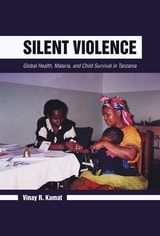
Silent Violence
Global Health, Malaria, and Child Survival in TanzaniaVinay R. Kamat
University of Arizona Press, 2013
Malaria control, according to Kamat, has become increasingly medicalized, a trend that overemphasizes biomedical and pharmaceutical interventions while neglecting the social, political, and economic conditions he maintains are central to Africa’s malaria problem. Kamat offers recent findings on global health governance, neoliberal economic and health policies, and their impact on local communities.
Seeking to link wider social, economic, and political forces to local experiences of sickness and suffering, Kamat analyzes the lived experiences and practices of people most seriously affected by malaria—infants and children. The persistence of childhood malaria is a form of structural violence, he contends, and the resultant social suffering in poor communities is closely tied to social inequalities.
Silent Violence illustrates the evolving nature of local responses to the global discourse on malaria control. It advocates for the close study of disease treatment in poor communities as an integral component of global health funding. This ethnography combines a decade of fieldwork with critical review and a rare anthropological perspective on the limitations of the bureaucratic, technological, institutional, medical, and political practices that currently determine malaria interventions in Africa.

Stepchildren of Nature
Krafft-Ebing, Psychiatry, and the Making of Sexual IdentityHarry Oosterhuis
University of Chicago Press, 2000
But in this powerful new cultural history Harry Oosterhuis invites us to reconsider the quality and extent of Krafft-Ebing's influence. Revisiting the case studies on which Krafft-Ebing based his findings, and thus drawing on the voices of his patients and informants, Oosterhuis finds that Krafft-Ebing was not the harsh judge of perversions that we think he was. He argues that Krafft-Ebing had a deep appreciation of the psyche, and that his work reveals an attempt to separate sexual deviancies from ideas of immorality. In the tradition of Freud, then, Krafft-Ebing should stand not as a villain, but as a contributor to more modern notions of sexual identity.
Sudden Death and the Myth of CPR
Stefan Timmermans, foreword by Bern Shen
Temple University Press, 1999
Anyone who has ever taken a CPR course has wondered, "What would happen if I actually had to use CPR?" In Western societies, the lifesaving power of resuscitation has the status of a revered cultural myth. It promises life in the face of sudden death, but the reality is that lives are rarely saved. Medical researchers estimate the survival rate for out-of-hospital CPR to be between 1 and 3 percent. Sudden Death and the Myth of CPR explores the history of this medical innovation and the promotion of its effectiveness.
The overuse of resuscitation, Timmermans explains, defines people's experience with sudden death, something he learned firsthand by following the practice of lifesaving from street corner to emergency room. He argues that very few people are successfully resuscitated without brain damage despite the promotion of CPR's effectiveness through powerful media images. In vivid accounts of the day-to-day practices of cardiopulmonary resuscitation in one of the only studies o f sudden death, Timmermans records the astonishingly frank comments of emergency personnel. Doctors, nurses, social workers, and paramedics express emotions from cynicism about going through the futile motions to genuine concern for victims' family members.
If a person who was supposed to keep on living dies at the end of a resuscitative attempt, how socially meaningful is the dying? Timmermans asks tough questions and addresses the controversial ethical issues about the appropriateness of interfering with life and death. He suggests policy reform and the restoration of dignity to sudden death.