161 books match the query 'Universities and colleges' and 13 start with s
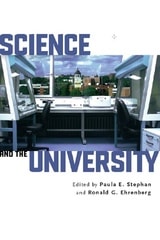
cover of Science and the University

Science and the University

Edited by Paula E. Stephan and Ronald G. Ehrenberg

University of Wisconsin Press, 2007
Science and the University investigates the tremendous changes that have taken place in university research over the past several decades, gauging the current state of research in higher education and examining issues and challenges crucial to its future. Scientific research increasingly dominates the aims and agendas of many American universities, and this proliferation—and changes in the way research is conducted—has given rise to important questions about the interrelations of higher education, funding for scientific research, and government policy. The cost of doing science, the commercialization of university research, the changing composition and number of Ph.D. students, the effect of scientific research on other university programs—these are just a few of the many issues explored in this volume from the vantage points of scholars in such diverse fields as economics, biochemistry, genetics, and labor studies.
[more]
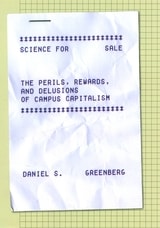
cover of Science for Sale: The Perils, Rewards, and Delusions of Campus Capitalism

Science for Sale

The Perils, Rewards, and Delusions of Campus Capitalism

Daniel S. Greenberg

University of Chicago Press, 2007

In recent years the news media have been awash in stories about increasingly close ties between college campuses and multimillion-dollar corporations. Our nation’s universities, the story goes, reap enormous windfalls patenting products of scientific research that have been primarily funded by taxpayers. Meanwhile, hoping for new streams of revenue from their innovations, the same universities are allowing their research—and their very principles—to become compromised by quests for profit. But is that really the case? Is money really hopelessly corrupting science?

With Science for Sale, acclaimed journalist Daniel S. Greenberg reveals that campus capitalism is more complicated—and less profitable—than media reports would suggest. While universities seek out corporate funding, news stories rarely note that those industry dollars are dwarfed by government support and other funds. Also, while many universities have set up technology transfer offices to pursue profits through patents, many of those offices have been financial busts. Meanwhile, science is showing signs of providing its own solutions, as highly publicized misdeeds in pursuit of profits have provoked promising countermeasures within the field.

But just because the threat is overhyped, Greenberg argues, doesn’t mean that there’s no danger. From research that has shifted overseas so corporations can avoid regulations to conflicts of interest in scientific publishing, the temptations of money will always be a threat, and they can only be countered through the vigilance of scientists, the press, and the public. 

Based on extensive, candid interviews with scientists and administrators, Science for Sale will be indispensable to anyone who cares about the future of scientific research.

[more]
cover of Sermons from Duke Chapel: Voices from "A Great Towering Church"

Sermons from Duke Chapel

Voices from "A Great Towering Church"

William H. Willimon, ed.

Duke University Press, 2005

Many of America’s greatest Protestant preachers—Paul Tillich, William Sloane Coffin, Barbara Brown Taylor, Fleming Rutledge, Peter J. Gomes, Billy Graham, and others—have spoken powerfully from the pulpit of the “great towering church” that is the spiritual and architectural center of Duke University. This collection of fifty-eight of the most notable sermons proclaimed from that pulpit commemorates the seventy-fifth anniversary of the groundbreaking for Duke Chapel. It is a sweeping panorama of sermons selected and edited by Bishop William H. Willimon, Dean of the Chapel for twenty years and one of the most widely read writers on preaching in America.

Opening with the sermon preached in June 1935 at the dedication of the Chapel and closing with one by Willimon delivered at the beginning of the 2003–04 school year, this volume presents Protestant Christianity at its most eloquent and prophetic. Some sermons are pure meditations on biblical texts; others are period pieces in the best sense of the term, reflecting on such contemporary concerns as civil rights, the assassinations of Martin Luther King Jr. and Robert F. Kennedy, and the wars in Europe, Vietnam, and Iraq. Willimon provides a brief introduction to each sermon, commenting on the work and thought of the preacher. Diverse in subject and style, the sermons collected in this volume are a treasure for those who love fine preaching, a resource for those studying the history of homiletics, and a light to rekindle the memories of those who have worshiped in the Chapel over the years.
 

[more]
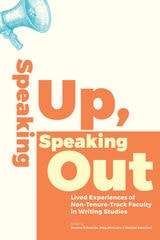
cover of Speaking Up, Speaking Out: Lived Experiences of Non-Tenure-Track Faculty in Writing Studies

Speaking Up, Speaking Out

Lived Experiences of Non-Tenure-Track Faculty in Writing Studies

Jessica Edwards

Utah State University Press, 2020

Speaking Up, Speaking Out addresses the lived experiences of those working in the non-tenure-track faculty (NTTF) trenches through storytelling and reflection. By connecting NTTF voices from various aspects of writing studies, the collection offers fresh perspectives and meaningful contributions, imagining the possibilities for contingent faculty to be valued and honored in educational systems that often do the opposite. Challenging traditional ways of seeing NTTF, the work contains multiple entry points to NTT life: those with and without “terminal degrees,” those with PhDs, and those who have held or currently hold tenured positions.
 
Each chapter suggests tangible ways that writing departments and supporters can be more thoughtful about their policies and practices as they work to create more equitable spaces for NTTF. Speaking Up, Speaking Out considers the rhetorical power of labeling and asserts why contingent faculty, for far too long, have been compared to and against TT faculty and often encouraged to reach the same or similar productivity with scholarship, teaching, and service that TT faculty produce. The myopic ideas about what is valued and whose position is deemed more important impacts contingent faculty in ways that, as contributors in this collection share, effect and affect faculty productivity, emotional health, and overall community involvement.
 
Contributors: Norah Ashe-McNalley, Sarah Austin, Rachel Azima, Megan Boeshart Burelle, Peter Brooks, Denise Comer, Jessica Cory, Liz Gumm, Brendan Hawkins, Heather Jordan, Nathalie Joseph, Julie Karaus, Christopher Lee, John McHone, Angie McKinnon Carter, Dauvan Mulally, Seth Myers, Liliana M. Naydan, Linda Shelton, Erica Stone, Elizabeth Vincelette, Lacey Wootton
 
[more]
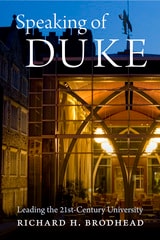
cover of Speaking of Duke: Leading the Twenty-First-Century University

Speaking of Duke

Leading the Twenty-First-Century University

Richard H. Brodhead

Duke University Press, 2017

Over the course of his thirteen years as president of Duke University, Richard H. Brodhead spoke at numerous university ceremonies, community forums, and faculty meetings, and even appeared on The Colbert Report. Speaking of Duke collects dozens of these speeches, in which Brodhead speaks both to the special character and history of Duke University and to the general state of higher education.

In these essays, Brodhead shows a university thinking its way forward through challenges all institutes of higher education have faced in the twenty-first century, including an expanding global horizon, an economic downturn that has left a diminished sense of opportunity and a shaken faith in the value of liberal arts education, and pressure to think more deeply about issues of equity and inclusion. His audiences range from newly arrived freshmen and new graduates—both facing uncertainty about how to build their future lives—to seasoned faculty members. On other occasions, he makes the case to the general public for the enduring importance of the humanities.

What results is a portrait of Duke University in its modern chapter and the social and political climate that it shapes and is shaped by. While these speeches were given on official occasions, they are not impersonal official pronouncements; they are often quite personal and written with grace, humor, and an unwavering belief in the power of education to shape a changing world for the better.

Brodhead notes that it is an underappreciated fact that a great deal of the exercise of power by a university leader is done through speaking: by articulating the aspirations of the school and the reasons for its choices, and by voicing the shared sense of mission that gives a learning community its reality. Speaking of Duke accomplishes each of those and demonstrates Brodhead's conviction that higher education is more valuable now than ever.

[more]
cover of Speaking of Race and Class: The Student Experience at an Elite College

Speaking of Race and Class

The Student Experience at an Elite College

Elizabeth Aries

Temple University Press, 2012

In Speaking of Race and Class, the follow-up volume to her groundbreaking Race and Class Matters at an Elite College, Elizabeth Aries completes her four-year study of diversity at a prestigious liberal arts college. Here, the 58 students—affluent, lower-income, black, and white—that Aries has interviewed since they were Amherst freshmen provide a complete picture of what and how each group learned about issues of race and class.

Aries presents the students’ personal perceptions of their experiences. She reveals the extent to which learning from diversity takes place on campus, and examines the distinct challenges that arise for students living in this heterogeneous community. Aries also looks more broadly at how colleges and universities across the country are addressing the challenges surrounding diversity. Speaking of Race and Class testifies to the programming and practices that have proven successful.

[more]
cover of Special Admission: How College Sports Recruitment Favors White Suburban Athletes

Special Admission

How College Sports Recruitment Favors White Suburban Athletes

Kirsten Hextrum

Rutgers University Press, 2021

Honorable Mention - 2022 Society of Professors of Education Outstanding Book Award​

Special Admission contradicts the national belief that college sports provide upward mobility opportunities. Kirsten Hextrum documents how white middle-class youth become overrepresented on college teams. Her institutional ethnography of one elite athletic and academic institution includes over 100 hours of interviews with college rowers and track & field athletes. She charts the historic and contemporary relationships between colleges, athletics, and white middle-class communities that ensure white suburban youth are advantaged in special athletic admissions. Suburban youth start ahead in college admissions because athletic merit—the competencies desired by university recruiters—requires access to vast familial, communal, and economic resources, all of which are concentrated in their neighborhoods. Their advantages increase as youth, parents, and coaches strategically invest in and engineer novel opportunities to maintain their race and class status. Thus, college sports allow white, middle-class athletes to accelerate their racial and economic advantages through admission to elite universities.
[more]
cover of Sport and the Neoliberal University: Profit, Politics, and Pedagogy

Sport and the Neoliberal University

Profit, Politics, and Pedagogy

King-White, Ryan

Rutgers University Press, 2018

College students are now regarded as consumers, not students, and nowhere is the growth and exploitation of the university more obvious than in the realm of college sports, where the evidence is in the stadiums built with corporate money, and the crowded sporting events sponsored by large conglomerates. 

The contributors to Sport and the Neoliberal University examine how intercollegiate athletics became a contested terrain of public/private interests. They look at college sports from economic, social, legal, and cultural perspectives to cut through popular mythologies regarding intercollegiate athletics and to advocate for increased clarity about what is going on at a variety of campuses with regard to athletics. Focusing on current issues, including the NCAA, Title IX, recruitment of high school athletes, and the Penn State scandal, among others, Sport and the Neoliberal University shows the different ways institutions, individuals, and corporations are interacting with university athletics in ways that are profoundly shaped by neoliberal ideologies.  
[more]
cover of Stepping Away: Returning to the Faculty After Senior Academic Leadership

Stepping Away

Returning to the Faculty After Senior Academic Leadership

Lisa Jasinski

Rutgers University Press, 2023
In no other professional field do senior leaders habitually return to the rank-and-file workforce in the twilight of their careers. Corporate CEOs rarely conclude their working lives by resuming the duties of a mid-level account executive; on the verge of retirement, four-star generals do not return to the infantry. But in academia former senior leaders often conclude their careers by reprising the roles and responsibilities of a professor. Until now, leaders and institutions have been left to navigate these transitions on their own—often learning hard lessons that might have been avoided. Stepping Away moves beyond the well-worn clichés of “stepping down” to examine how senior leadership role changes impact individuals and the institutions they serve. Drawn from empirical research involving more than fifty college presidents, provosts, and deans, this book delivers fresh understanding of the challenges and opportunities leaders face as they assume a new place in the social architecture of their campus. Bridging the gap between theory and practice, Stepping Away translates research into practical strategies that leaders can use to make this change successfully, providing guidance about when to speak up and when to remain quiet, how to develop new relationships, where to office, whether to apply for new jobs, and how to use their knowledge and skills to add value to their campus communities, on-campus and off.
[more]
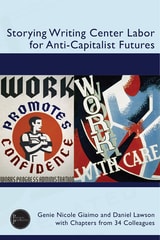
cover of Storying Writing Center Labor for Anti-Capitalist Futures

Storying Writing Center Labor for Anti-Capitalist Futures

Genie Nicole Giaimo

University Press of Colorado, 2025

Rooted in storying and testimony, Storying Writing Center Labor offers an inclusive, theoretically grounded, labor-oriented approach to writing center scholarship and praxis. While emotional labor and other wellness-related topics have long received attention in the field, issues of precarity, austerity, workism, and related concerns remain under-examined. Marrying ethnography and storying to uncover trends and circumstances related to writing center labor, this book offers insights into the lived working experiences of writing center professionals along with actionable items for creating just, sustainable, and intentional workspaces. Importantly, Storying Writing Center Labor tackles long-established labor issues in the field that have been and continue to be exacerbated by higher education’s austerity politics and reliance on disaster capitalism to inform decision making.
[more]
cover of Street of Dreams: The Nature and Legacy of the 1960s

Street of Dreams

The Nature and Legacy of the 1960s

Douglas M. Knight

Duke University Press, 1989
The 1960s are well documented but not well understood; the rhetoric of and reaction to the decade continues to trouble American public discourse. This work by Douglas Knight, who served as president of Duke University from 1963 to 1969 during clashes on that campus, is not only an honest account of one institution’s experience, but draws parallels to the situations on other campuses and seeks to comprehend the time and its enduring influence.
[more]
cover of Struggle For Academic Democr

Struggle For Academic Democr

Abraham Edel

Temple University Press, 1990

On June 20,1938, the trustees of the City Colleges of New York changed the by-laws on the governance of the colleges. The transformation of New York City's colleges from autocratic to democratic rule virtually overnight was a revolutionary event in American higher education within the context of the 1930s. Abraham Edel writes of this revolution as an active participant and as an eminent philosopher who has experienced more than a half century of educational reform. The book focuses on the meaning and import of democratic organization in the governance of universities, but, at the same time, the author's personal reflections make it an intellectual memoir that charts the evolution of an idea. Labor unionism, the Great Depression, and the rise of fascism shaped the political, social, economic, and intellectual climate of the 1930s. Edel relates this milieu to the authoritarian system of governance in the City Colleges. He describes the growth of a college teachers union, a sit-down strike by students, and the controversy, agitation, and organizing that hurled the teaching staff into political action. He identifies the pioneering significance of this revolution--this experiment in democracy at a time when dictatorship was viewed as more efficient--and examines the lessons learned by sudden rather than piecemeal reform, by human responses to institutional change, and by the relation of ideas to social movements. After tracing the history of this transformation, Edel works toward a philosophy of democratic governance by evaluating the variety of claims for participation in terms of the ultimate mission of the university. Admitting a preference for democratic forms, Edel examines current issues in academic governance and the often acrimonious debate over participation by various groups.
[more]
cover of Successfully Serving the College Bound

Successfully Serving the College Bound

Africa S. Hands

American Library Association, 2014

[more]