Results by title
97 books match the query 'Urbanization' and 4 start with s
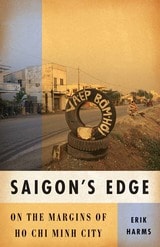
Saigon’s Edge
On the Margins of Ho Chi Minh CityErik Harms
University of Minnesota Press, 2010
Unlike the idealized Vietnamese model of urban space, Hóc Môn is between worlds, neither outside nor inside but always uncomfortably both. With particular attention to everyday social realities, Harms demonstrates how living on the margin can be both alienating and empowering, as forces that exclude its denizens from power and privilege in the inner city are used to thwart the status quo on the rural edges.
More than a local case study of urban change, Harms’s work also opens a window on Vietnam’s larger turn toward market socialism and the celebration of urbanization—transformations instructively linked to trends around the globe.
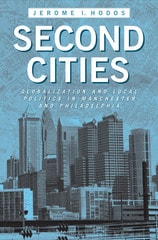
Second Cities
Globalization and Local Politics in Manchester and PhiladelphiaAuthored by Jerome I. Hodos
Temple University Press, 2013
Manchester, England, and Philadelphia, Pennsylvania, are what sociologist Jerome Hodos calls second cities—viable alternatives to well-known global cities such as London and New York. In Second Cities, Hodos considers how Manchester and Philadelphia have confronted problems of globalization over the past two centuries.
This thought-provoking, comparative look at these cities examines their histories, economies, migration patterns, cultural innovations, transportation planning, and self-identities. Hodos demonstrates not just how the two cities are positioned in global flows of capital, goods, people, and ideas but also how each has used what he calls “municipal foreign policy” to preserve and rejuvenate its position over time. The second city offers an illustrative lens through which to view other urban centers, from Atlanta to Bangalore, Seattle, and Turin.
Hodos’s description and analysis of urban development over a broad time frame offer lessons for policy makers, scholars, and community leaders concerned with the impact of globalization on their own cities.
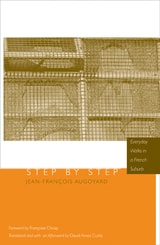
Step by Step
Everyday Walks in a French Urban Housing ProjectJean-Francois Augoyard
University of Minnesota Press, 2007
The street riots that swept through France in the fall of 2005 focused worldwide attention on the plight of the country’s immigrants and their living conditions in the suburbs many of them call home. These high-density neighborhoods were constructed according to the principles of functionalist urbanism that were ascendant in the 1960s. Then, as now, the disparities between the planners’ utopian visions and the experiences of the inhabitants raised concerns, generating a number of sociological studies of the “new towns.” One of the most sophisticated and significant of these critiques is Jean-François Augoyard’s Step by Step, which was originally published in France in 1979 and famously influenced Michel de Certeau’s analysis of everyday life. Its examination of social life in the rationally planned suburb remains as cogent and timely as ever.
Step by Step is based on in-depth interviews Augoyard conducted with the inhabitants of l’Arlequin, a new town on the outskirts of Grenoble. A resident of l’Arlequin himself, Augoyard sought to understand how his neighbors used its passages, streets, and parks. He begins with a detailed investigation of the inhabitants’ daily walks before going on to consider how the built environment is personalized through place-names and shared memories, the ways in which sensory impressions define the atmosphere of a place and how, through individual and collective imagination, residents transformed l’Arlequin from a concept into a lived space.
In closely scrutinizing everyday life in l’Arlequin, Step by Step draws a fascinating portrait of the richness of social life in the new towns and sheds light on the current living conditions of France’s immigrants.
Jean-François Augoyard is professor of philosophy and musicology and doctor of urban studies at the Center for Research on Sonorous Space and the Urban Environment at the School of Architecture of Grenoble.
David Ames Curtis is a translator, editor, writer, and citizen activist.
Françoise Choay is professor emeritus in the history and theory of architecture at the University of Paris VIII and Cornell University and the author of numerous books and essays.
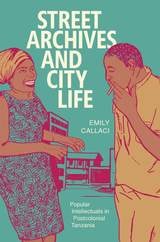
Street Archives and City Life
Popular Intellectuals in Postcolonial TanzaniaEmily Callaci
Duke University Press, 2017