Results by title
51 books match the query 'Volume' and 3 start with s
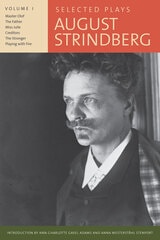
Selected Plays, Volume I
August Strindberg
University of Minnesota Press, 2012
August Strindberg is often considered the father of modern Swedish literature. His vast output of plays was innovative in style and form. Volume 1 of Selected Plays presents selections from the beginning of his career, before Strindberg’s period of psychotic attacks in the 1890s. Master Olof (1872) is a historical drama set in early Reformation Sweden, influenced by Ibsen and Shakespeare. Two of his most produced plays today, The Father (1887) and Miss Julie (1888), are examples of his naturalistic plays. Strindberg described Creditors (1888), a tragicomedy, as his “most mature work.” The Stronger (1889), a playlet, is a favorite in acting classes. Playing with Fire (1893) is one of his few comedies. These plays deal with Strindberg’s preoccupation with power struggles and sexual warfare.
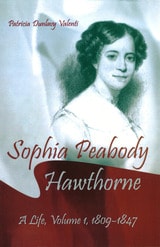
Sophia Peabody Hawthorne
A Life, Volume I, 1809-1847Patricia Dunlavy Valenti
University of Missouri Press, 2004
Sophia was born into an expansive, somewhat chaotic home in which women provided financial as well as emotional sustenance. She was a precocious, eager student whose rigorous education, in her mother’s and her sisters’ schools, began her association with the children of New England’s elite. Sophia aspired to become a professional, self-supporting painter, exhibiting her art and seeking criticism from established mentors. She relished an eighteen-month sojourn in Cuba. Nathaniel’s reclusive family, his reluctant early education, his anonymous pursuit of a career, and his relatively circumscribed life contrast markedly with the experience of the woman who became his wife and the mother of his children. Those differences resulted in a creative abrasion that ignited his fiction during the first years of their marriage.
Strategic Factors in Nineteenth Century American Economic History
A Volume to Honor Robert W. FogelEdited by Claudia Goldin and Hugh Rockoff
University of Chicago Press, 1992
These sixteen essays reveal, by example, the continuing vitality of Fogel's approach. The authors use an astonishing variety of data, including genealogies, the U.S. federal population census manuscripts, manumission and probate records, firm accounts, farmers' account books, and slave narratives, to address collectively market integration and its impact on the lives of Americans. The evolution of markets in agricultural and manufacturing labor is considered first; that concerning capital and credit follows. The demography of free and slave populations is the subject of the third section, and the final group of papers examines the extra-market institutions of governments and unions.