Results by title
54 books match the query 'Washington (D.C.)' and 3 start with s

Secret Signs
T. J. Waters
Gallaudet University Press, 2010
Former golf pro Amy Kellen, recently widowed and the mother of a three-year-old daughter, hoped that her new job as a video relay service interpreter for deaf clients would bring stability into her life. She also wished to stay close to the Deaf community that meant so much to her late husband, who was deaf. Little did she know, however, that her new profession would cause her to witness the vicious killing of a deaf client during a video call. In this way author T. J. Waters thrusts Amy into a murder mystery that catches her up in intersecting worlds of intrigue—Internet scams, burglaries, and presidential politics—all connected through the rich Deaf community in Washington, DC.
During the investigation, Amy meets local detective Mike Seer and Secret Service agent Heath Rasco. Despite Seer’s insistence, she refuses to violate her professional ethics and discuss the content of the fatal call. Agent Rasco, who is hard of hearing, admires her commitment to her deaf clients. Amy admits her own attraction to the agent, but her first concern is to learn more about how her client, a respected deaf political strategist, was killed. Her pursuit causes her to witness two more murders and discover a third. She also finds herself and her daughter the targets of assassins. Secret Signs brings these extraordinary elements together in an electrifying combination that promises to surprise and satisfy.
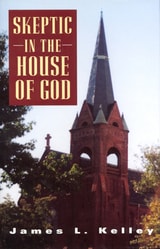
Skeptic in the House of God
Kelley, James L
Rutgers University Press, 1997
After fifteen years of full participation in a church that is open not only to skeptics but also to gay men and lesbians, blacks and Jews, where members are invited to critique Sunday sermons, and where hymns are rewritten to reflect feminist concerns, Kelley found that his agnosticism remained but his skepticism about church participation had disappeared. Modern urban life can be a sterile, isolating experience. Yet in St. Mark's Kelley discovered a place of vibrant community, honest inquiry, and support over the hard places in life.
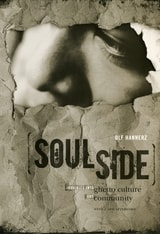
Soulside
Inquiries into Ghetto Culture and CommunityUlf Hannerz
University of Chicago Press, 2004
Originally published 35 years ago, Soulside became an urban anthropological classic. The book helped to dispel many false impressions about ghetto life and questioned the idea, precipitated in the influential Moynihan Report and in notions of a "culture of poverty," that the poor had chosen to lead the lives they do. Raising central moral and political questions about American society in a turbulent period, Soulside became an example of public engagement in anthropology. In a new afterword, Ulf Hannerz discusses the book's place in the debates of the time and its relevance to current arguments in anthropology.