Results by title
62 books match the query 'Women artists' and 7 start with s

Secret Understandings
A NovelMorris Philipson
University of Chicago Press, 2000

Seeing Baya
Portrait of an Algerian Artist in ParisAlice Kaplan
University of Chicago Press, 2024
On a flower farm in colonial Algeria, a servant and field worker known as Baya escaped the drudgery of her labor by coloring the skirts in fashion magazines. Three years later, in November 1947, her paintings and fanciful clay beasts were featured in a solo show in Paris. She wasn’t yet sixteen years old. In this first biography of Baya, Alice Kaplan tells the story of a young woman seemingly trapped in subsistence who becomes a sensation in the French capital, then mysteriously fades from the history of modern art—only to reemerge after independence as an icon of Algerian artistic heritage.
The toast of Paris for the 1947 season, Baya inspired colonialist fantasies about her “primitive” genius as well as genuine appreciation. She was featured in newspapers, on the radio, and in a newsreel; her art was praised by Breton and Camus, Marchand and Braque. At the dawn of Algerian liberation, her appearance in Paris was used to stage the illusion of French-Algerian friendship, while horrific French massacres in Algeria were still fresh in memory.
Kaplan uncovers the central figures in Baya’s life and the role they played in her artistic career. Among the most poignant was Marguerite Caminat-McEwen-Benhoura, who took Baya from her sister’s farm to Algiers, where Baya worked as Marguerite’s maid and was given paint and brushes. A complex and endearing character, Marguerite—and her Pygmalion ambitions—was decisive in shaping Baya’s destiny. Kaplan also looks closely at Baya’s earliest paintings with an eye to their themes, their palette and design, and their enduring influence.
In vivid prose that brings Baya’s story into the present, Kaplan’s book, the fruit of scrupulous research in Algiers, Blida, Paris, and Provence, allows us to see in a whole new light the beloved artist who signed her paintings simply “Baya.”

Sophie Taeuber-Arp and the Avant-Garde
A BiographyRoswitha Mair
University of Chicago Press, 2018
Now Roswitha Mair has brought us the first biography of this unique polymath, illuminating not just Tauber-Arp’s own life and work, but also the various milieux and movements in which she traveled. No fan of the Dadaists and their legacy will want to miss this first English-language translation.

Still Dangerous!
The Harmony Hammond ReaderHarmony Hammond. Edited by Tirza True Latimer.
Duke University Press, 2026

Strange Tastes
Aesthetics and the Public in Latin American and Latinx FeminismsMonique Roelofs
Duke University Press, 2026

Surrealist Women
An International AnthologyEdited by Penelope Rosemont
University of Texas Press, 1998
Beginning in Paris in the 1920s, women poets, essayists, painters, and artists in other media have actively collaborated in defining and refining surrealism's basic project—achieving a higher, open, and dynamic consciousness, from which no aspect of the real or the imaginary is rejected. Indeed, few artistic or social movements can boast as many women forebears, founders, and participants—perhaps only feminism itself. Yet outside the movement, women's contributions to surrealism have been largely ignored or simply unknown.
This anthology, the first of its kind in any language, displays the range and significance of women's contributions to surrealism. Letting surrealist women speak for themselves, Penelope Rosemont has assembled nearly three hundred texts by ninety-six women from twenty-eight countries. She opens the book with a succinct summary of surrealism's basic aims and principles, followed by a discussion of the place of gender in the movement's origins. She then organizes the book into historical periods ranging from the 1920s to the present, with introductions that describe trends in the movement during each period. Rosemont also prefaces each surrealist's work with a brief biographical statement.
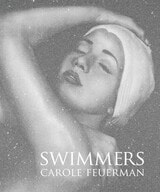
Swimmers
Carole FeuermanCarole Feuerman
The Artist Book Foundation, 2014
Realist sculptor Carole A. Feuerman's human-figure sculptures express a refreshing perspective on the mundane but intensely personal activities of modern life. her powers of observation and versatility find unique expression through various materials that include marble, bronze, vinyl, and painted resins, while she incorporates both ancient and contemporary methods in the creation of her works. Swimmers: Carole Feuerman is a gorgeous and shimmering glimpse at transitory, contemplative moments in time, often captured in a veil of clear resin that replicates tumbling water droplets.
In his astute and insightful essay, John Yau describes Feuerman's exquisitely rendered figures as subjects "caught in a moment of transition that radiates an intense eroticism." She evokes an inward life for her figures that invites our speculation, while revealing a mysterious chasm between them and the viewer that can never be plumbed. We cannot know their thoughts and perhaps that is exactly the point. Feuerman fuses the tactile nature of her sculpture with a visual verisimilitude that provides us a fleeting glimpse into private and isolated environments—women stepping out of the shower, in the rain, or swimming—that suggest a meditative bliss.