Results by title
51 books match the query 'Women immigrants' and 2 start with s
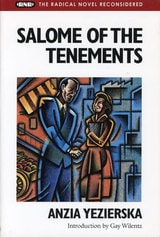
Salome of the Tenements
Anzia Yezierska
University of Illinois Press, 1951
The story of a young, aspiring Jewish woman from the ghetto who will do anything to get her man in this case an upper-class WASP. When she discovers he is not really what she wanted, she will do anything to get away. Based on the real-life story of the Jewish immigrant activist Rose Pastor's fairytale romance with the millionaire socialist Graham Stokes, the novel also reflects Yezierska's own doomed romance with the famous educator John Dewey. Passionate and engagingly sardonic, it criticizes the concept of the American "Melting Pot" in the language of the Lower East Side and exposes the hypocrisy of the "good works" of the privileged class and their so-called dedication to the poor. Gay Wilentz's introduction discusses Anzia Yezierska's life and work.
Originally published in 1923.
Originally published in 1923.
[more]

Soviet Signoras
Personal and Collective Transformations in Eastern European MigrationMartina Cvajner
University of Chicago Press, 2019
Across the Western world, the air is filled with talk of immigration. The changes brought by immigration have triggered a renewed fervor for isolationism able to shutter political traditions and party systems. So often absent from these conversations on migration are however the actual stories and experiences of the migrants themselves. In fact, migration does not simply transport people. It also changes them deeply. Enter Martina Cvajner’s Soviet Signoras, a far-reaching ethnographic study of two decades in the lives of women who migrated to northern Italy from several former Soviet republics.
Cvajner details the personal and collective changes brought about by the experience of migration for these women: from the first hours arriving in a new country with no friends, relatives, or existing support networks, to later remaking themselves for their new environment. In response to their traumatic displacement, the women of Soviet Signoras—nearly all of whom found work in their new Western homes as elder care givers—refashioned themselves in highly sexualized, materialistic, and intentionally conspicuous ways. Cvajner’s focus on overt sexuality and materialism is far from sensationalist, though. By zeroing in on these elements of personal identity, she reveals previously unexplored sides of the social psychology of migration, coloring our contemporary discussion with complex shades of humanity.
Cvajner details the personal and collective changes brought about by the experience of migration for these women: from the first hours arriving in a new country with no friends, relatives, or existing support networks, to later remaking themselves for their new environment. In response to their traumatic displacement, the women of Soviet Signoras—nearly all of whom found work in their new Western homes as elder care givers—refashioned themselves in highly sexualized, materialistic, and intentionally conspicuous ways. Cvajner’s focus on overt sexuality and materialism is far from sensationalist, though. By zeroing in on these elements of personal identity, she reveals previously unexplored sides of the social psychology of migration, coloring our contemporary discussion with complex shades of humanity.
[more]