Results by title
272 books match the query 'Work' and 13 start with s

S. L. Frank
The Life And Work Of A Russian Philosopher, 1877-1950Philip Boobbyer
Ohio University Press, 1995
“There are many reasons for writing a biography of Semyon Frank. Quite apart from his philosophy, he lived a remarkable life. Born in Moscow in 1877, he was exiled from Soviet Russia in 1922 and died in London in 1950. The son of a Jewish doctor, he became a revolutionary Social Democrat in his teens and finished his life as a Neoplatonist Christian. One of the Russian revisionist Marxists, he was then involved in the Kadet Party during the 1905 revolution before breaking with active political activity and turning to philosophy. He lived in Petrograd through the First World War until September 1917, after which he went to Saratov, where he experienced the chaos of the Russian Civil War. Living in Germany after his exile, he witnessed the rise of Hitler in Berlin, left for France in a hurry in 1937, and spent part of the war hiding from the Gestapo in the Grenoble mountains. It was a life that encompassed a lot of history.
”Yet along with this, Frank was arguably Russia’s greatest twentieth-century philosopher. Indeed, V.V. Zen‘kovskii, the historian of Russian philosophy, considered Frank ’in strength of philosophic vision … the most outstanding among Russian philosophers generally — not merely among those who share his ideas.‘ For its lucidity, conciseness, systematic character, and unity, Zen’kovskii considered Frank’s system ‘ the highest achievement … of Russian philosophy.’ Doubtless, Zen‘kovskii’s assessment is disputable, but his remarks emphasize Frank’s stature in the Russian tradition. In the style of German idealism, Frank constructed a comprehensive philosophical system, which he believed offered a coherent alternative to materialism. He was deeply worried by the implications of epistemological relativism and constructed a system of metaphysics designed to link epistemology and ontology, to bridge the gulf between thought and being. In addition, he attempted to express the idea of a personal God in philosophical language. His system also embraced social philosophy, anthropology, and ethics.“
— from the Introduction by the author

Seeing Language in Sign
The Work of William C. StokoeJane Maher
Gallaudet University Press, 1996
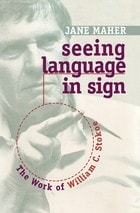
Seeing Language in Sign
The Work of William C. StokoeJane Maher
Gallaudet University Press, 2010
In 1955 William C. Stokoe arrived at Gallaudet College (later Gallaudet University) to teach English where he was first exposed to deaf people signing. While most of his colleagues dismissed signing as mere mimicry of speech, Stokoe saw in it elements of a distinctive language all its own. Seeing Language in Sign traces the process that Stokoe followed to prove scientifically and unequivocally that American Sign Language (ASL) met the full criteria of linguistics—phonology, morphology, syntax, semantics and use of language—to be classified a fully developed language.
This perceptive account dramatically captures the struggle Stokoe faced in persuading the establishment of the truth of his discovery. Other faculty members ridiculed or reviled him, and many deaf members of the Gallaudet community laughed at his efforts. Seeing Language in Sign rewards the reader with a rich portrayal of an undaunted advocate who, like a latter-day Galileo, pursued his vision doggedly regardless of relentless antagonism. He established the Linguistics Research Laboratory, then founded the journal Sign Language Studies to sustain an unpopular dialogue until the tide changed. His ultimate vindication corresponded with the recognition of the glorious culture and community that revolves around Deaf people and their language, ASL.
Sex, Identity, Aesthetics
The Work of Tobin Siebers and Disability StudiesJina B. Kim, Joshua Kupetz, Crystal Yin Lie, and Cynthia Wu, Editors
University of Michigan Press, 2021
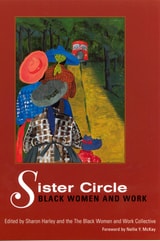
Sister Circle
Black Women and WorkHarley, Sharon
Rutgers University Press, 2002
Although black women’s labor was essential to the development of the United States, studies of these workers have lagged far behind those of working black men and white women. Adding insult to injury, a stream of images in film, television, magazines, and music continues to portray the work of black women in a negative light.
Sister Circle offers an innovative approach to representing work in the lives of black women. Contributors from many fields explore an array of lives and activities, allowing us to see for the first time the importance of black women’s labor in the aftermath of slavery. A brand new light is shed on black women’s roles in the tourism industry, as nineteenth-century social activists, as labor leaders, as working single mothers, as visual artists, as authors and media figures, as church workers, and in many other fields. A unique feature of the book is that each contributor provides an autobiographical statement, connecting her own life history to the subject she surveys.
The first group of essays, “Work It Sista!” identifies the sites of black women’s paid and unpaid work. In “Foremothers: The Shoulders on Which We Stand,” contributors look to the past for the different kinds of work that black women have performed over the last two centuries. Essays in “Women’s Work through the Artist’s Eyes” highlight black women’s work in literature, drama, and the visual arts. The collection concludes with “Detours on the Road to Work: Blessings in Disguise,” writings surveying connections between black women’s personal and professional lives.
Social History of Economic Decline
Business, Politics, and Work in TrentonCumbler, John T.
Rutgers University Press, 1989
Social Reproduction Theory and the Socialist Horizon
Work, Power and Political StrategyAaron Jaffe
Pluto Press, 2020
Speak Peace
Words of Wisdom, Work, and WonderLynette Ford
Parkhurst Brothers, Inc., 2019
Speculating Daguerre
Art and Enterprise in the Work of L. J. M. DaguerreStephen C. Pinson
University of Chicago Press, 2012
Louis Jacques Mandé Daguerre (1787–1851) was a true nineteenth-century visionary—a painter, printmaker, set designer, entrepreneur, inventor, and pioneer of photography. Though he was widely celebrated beyond his own lifetime for his invention of the daguerreotype, it was his origins as a theatrical designer and purveyor of visual entertainment that paved the way for Daguerre’s emergence as one of the world’s most iconic imagemakers.
In Speculating Daguerre, Stephen C. Pinson reinterprets the story of the man and his time, painting a vivid picture of Daguerre as an innovative artist and savvy impresario whose eventual fame as a photographer eclipsed everything that had come before. Drawing upon previously unpublished correspondence and unplumbed archival sources, Pinson mixes biography with an incisive study of Daguerre’s wide-ranging involvement in visual culture. From his work as a commercial lithographer to his coinvention of the Paris Diorama—a theater in the round in which Daguerre employed natural light and special effects to simulate time and movement in large-scale paintings—here we are given access to Daguerre the artist, whose tireless experimentation, entrepreneurial spirit, and exceptional talent for popular spectacle helped to usher in a new visual age.
Filled with more than one hundred illustrations and including the first complete catalogue of Daguerre’s paintings, works on paper, and daguerreotypes to appear in print, the publication of Speculating Daguerre will be a much-heralded event for anyone with even a passing interest in one of the most fascinating characters in the history of photography.
Spirited Things
The Work of "Possession" in Afro-Atlantic ReligionsEdited by Paul Christopher Johnson
University of Chicago Press, 2014
Story Of Reo Joe
Work, Kin, And CommunityLisa M. Fine
Temple University Press, 2004
Street Corner Secrets
Sex, Work, and Migration in the City of MumbaiSvati P. Shah
Duke University Press, 2014
Surabaya, City of Work
A Socioeconomic History, 1900–2000Howard Dick
Ohio University Press, 2002
Surabaya is Indonesia’s second largest city but is not well known to the outside world. Yet in 1900, Surabaya was a bigger city than Jakarta and one of the main commercial centers of Asia. Collapse of sugar exports during the 1930s depression, followed by the Japanese occupation, revolution, and independence, brought on a long period of stagnation and retreat from the international economy. Not until the export boom of the 1990s did Surabaya regain prominence as Southeast Asia’s leading non–capital–city industrial area.
Previous thinking on Indonesia is being reassessed in light of recent political and economic upheaval. Surabaya, City of Work offers an alternative to the Jakarta-centric focus of most writing on the country. It is a multifaceted view of a fascinating and complex city in the dimensions of time and space, economy and society, and the current transition toward decentralization makes it highly topical.
Exploration of this eventful economic history gives new insight into Indonesia’s modern economic development. Industrialization is recognized as being associated with rapid urbanization, but this is the first study of Indonesia from an explicitly urban perspective. Surabaya, City of Work takes a broad approach that links industrialization to socioeconomic trends, the increasing role of government, changing land use, and trade patterns.
This well–illustrated local history encompassing national events and trends will be a central work on Indonesia for years to come.