Results by title
127 books match the query 'World politics' and 6 start with s
Scriptures, Shrines, Scapegoats, and World Politics
Religious Sources of Conflict and Cooperation in the Modern EraZeev Maoz and Errol A. Henderson
University of Michigan Press, 2021
The effect of religious factors on politics has been a key issue since the end of the Cold War and the subsequent rise of religious terrorism. However, the systematic investigations of these topics have focused primarily on the effects of religion on domestic and international conflict. Scriptures, Shrines, Scapegoats, and World Politics offers a comprehensive evaluation of the role of religion in international relations, broadening the scope of investigation to such topics as the relationship between religion and cooperation, religion and conflict, and the relationship between religion and the quality of life. Religion is often manipulated by political elites to advance their principal goal of political survival. Zeev Maoz and Errol A. Henderson find that no specific religion is either consistently more bellicose or consistently more cooperative than other religions. However, religious similarity between states tends to reduce the propensity of conflict and increase the opportunity for security cooperation. The authors find a significant relationship between secularism and human security.

Shaky Foundations
The Politics-Patronage-Social Science Nexus in Cold War AmericaSolovey, Mark
Rutgers University Press, 2015
Numerous popular and scholarly accounts have exposed the deep impact of patrons on the production of scientific knowledge and its applications. Shaky Foundations provides the first extensive examination of a new patronage system for the social sciences that emerged in the early Cold War years and took more definite shape during the 1950s and early 1960s, a period of enormous expansion in American social science.
By focusing on the military, the Ford Foundation, and the National Science Foundation, Mark Solovey shows how this patronage system presented social scientists and other interested parties, including natural scientists and politicians, with new opportunities to work out the scientific identity, social implications, and public policy uses of academic social research. Solovey also examines significant criticisms of the new patronage system, which contributed to widespread efforts to rethink and reshape the politics-patronage-social science nexus starting in the mid-1960s.
Based on extensive archival research, Shaky Foundations addresses fundamental questions about the intellectual foundations of the social sciences, their relationships with the natural sciences and the humanities, and the political and ideological import of academic social inquiry.
Silent War
Furedi, Frank
Rutgers University Press, 1999
"The Silent War transcends the disciplinary line that divides race relations from international relations. It is an enterprise in sociological investigation which seeks to mobilize the insights of history to clarify how the consciousness of race has evolved." - Kofi Buenor Hadjor
Racial identity has been one of the defining characteristics of the twentieth century. Yet, argues Frank Furedi in this provocative study, advocates of racial identity have long felt uncomfortable with the racialized global order which they created.
Furedi traces the history of Western colonial racist ideology and its role in subjugating non-Western peoples. He analyzes the changing perception of racism in the West and how the use of "race" has altered during the course of the twentieth century.
Focusing on the Second World War as the critical turning point in racist ideology, Furedi argues that the defeat of Nazism left the West uneasy with its own racist past. He assesses how this was redefined in the postwar period-especially during the Cold War- and demonstrates that, although white supremacist views gradually became obsolete in international affairs, Western nations were initially unwilling to accept criticism of their past and sought to portray racism as a natural part of human condition. As a result the West continued to adopt the moral high ground well into the postwar period, to the ultimate detriment of non-Western nations.
Sovereignty in Ruins
A Politics of CrisisGeorge Edmondson and Kalus Mladek, editors
Duke University Press, 2017
Contributors. Judith Butler, George Edmondson, Roberto Esposito, Carlo Galli, Klaus Mladek, Alberto Moreiras, Andrew Norris, Eric L. Santner, Adam Sitze, Carsten Strathausen, Rei Terada, Cary Wolfe
Staging Growth
Modernization, Development, and the Global Cold WarDavid C. Engerman
University of Massachusetts Press, 2003
Beginning in the 1950s, the theory of modernization emerged as the dominant paradigm of economic, social, and political development within the American foreign policy establishment. Purporting to explain the stages through which all nations pass on the road to industrial modernity, it provided a rationale for a broad range of cultural and political projects aimed at fostering Third World growth while simultaneously combating communism.
But modernization theory was more than simply an expression of Cold War ideology. As the essays in this volume show, the ideal of modernization proliferated throughout the postcolonial world and across ideological lines in places as diverse as East Asia, Southern Africa, and South Asia. Indeed, it was embraced by all who shared the American enthusiasm for the increased production and higher standards of living promised by industrialization—enemies and allies alike.
Situating modernization theory historically, Staging Growth avoids conventional chronologies and categories of analysis, particularly the traditional focus on conflicts between major powers. The contributors employ a variety of approaches—from economic and intellectual history to cultural criticism and biography—to shed fresh light on the global forces that shaped the Cold War and its legacies. Most of the pieces are comparative, exploring how different countries and cultures have grappled with the implications of modern development. At the same time, all of the essays address similar fundamental questions. Is modernization the same thing as Westernization? Is the idea of modernization universally valid? Do countries follow similar trajectories as they undertake development? Does modernization bring about globalization?
In addition to the editors and Akira Iriye, contributors include Michael Adas, Laura Belmonte, Gregg Andrew Brazinsky, Christina Klein, J. Victor Koschmann, and Michael R. Mahoney.
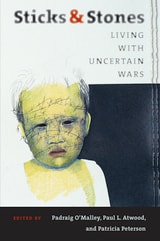
Sticks and Stones
Living with Uncertain WarsPadraig O'Malley
University of Massachusetts Press, 2006
Following an introduction by Padraig O'Malley, the book is divided into four sections: "Understanding the World as We Have Known It"; "Global Uncertainties"; "Whose Values? Whose Justice?"; and "Shaping a New World." The first section reviews what we have learned about war and establishes benchmarks for judging whether that knowledge is being translated into changes in the behavior of our political cultures. It suggests that the world's premier superpower, in its effort to promote Western-style democracy, has taken steps that have inhibited rather than facilitated democratization.
The second section examines the war on terror and the concept of global war. From the essays in this section emerges a consensus that democracy as practiced in the West cannot be exported to countries with radically different cultures, traditions, and values. The third section visits the question of means and ends in the context of varying value systems and of theocracy, democracy, and culture. In the final section, the focus shifts to our need for global institutions to maintain order and assist change in the twenty-first century.
Although each contributor comes from a different starting point, speaks with a different voice, and has a different ideological perspective, the essays reach startlingly similar conclusions. In sum, they find that the West has not absorbed the lessons from the wars of the last century and is inadequately prepared to meet the new challenges that now confront us.
Contributors to the volume include J. Brian Atwood, Susan J. Atwood, John Cooley, Romeo Dallaire, Ramu Damodaran, Valerie Epps, Michael J. Glennon, Stanley Heginbotham, Robert Jackson, Winston Langley, Alfred W. McCoy, Greg Mills, Jonathan Moore, Chris Patten, Gwyn Prins, Jonathan Schell, John Shattuck, Cornelio Sommargua, Brian Urquhart, Stephen Van Evera, and Robert Weiner.