Results by title
8642 books match the query '20th century' and 572 start with s
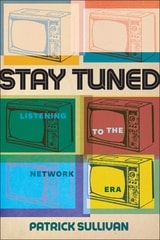
Stay Tuned
Listening to the Network EraPatrick Sullivan
Rutgers University Press, 2026
Since the 1950s, television flooded the American soundscape with not just pictures but sounds, a constant aural stream infiltrating domestic life. In Stay Tuned, Patrick Sullivan treats network-era television sound not as background noise or auxiliary signal but as a formative texture of aesthetic life in postwar America. He theorizes how television’s sonic forms—asynchronous audiovisuals, noises, affective rhythms, what he collectively terms “network aurality”—trouble traditional aesthetic theory. Stay Tuned takes up critiques of television sound and repurposes them as evidence of a deeper philosophical discomfort: Namely, that television sound does something to aesthetic categories that they weren’t built to handle. From the laugh track to the cartoon “boinks,” from noises to the jingle, Sullivan reads television sounds not as cultural detritus but as formal interventions—forcing a redefinition of what aesthetics means when form is mass-produced, commercial, and built for syndication. What emerges is not just a new theory and history of television sound but a reimagined account of aesthetic experience itself—expanded, recalibrated, and a little wacky.
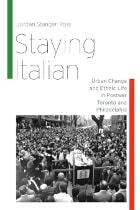
Staying Italian
Urban Change and Ethnic Life in Postwar Toronto and PhiladelphiaJordan Stanger-Ross
University of Chicago Press, 2009
Despite their twin positions as two of North America’s most iconic Italian neighborhoods, South Philly and Toronto’s Little Italy have functioned in dramatically different ways since World War II. Inviting readers into the churches, homes, and businesses at the heart of these communities, Staying Italian reveals that daily experience in each enclave created two distinct, yet still Italian, ethnicities.
As Philadelphia struggled with deindustrialization, Jordan Stanger-Ross shows, Italian ethnicity in South Philly remained closely linked with preserving turf and marking boundaries. Toronto’s thriving Little Italy, on the other hand, drew Italians together from across the wider region. These distinctive ethnic enclaves, Stanger-Ross argues, were shaped by each city’s response to suburbanization, segregation, and economic restructuring. By situating malleable ethnic bonds in the context of political economy and racial dynamics, he offers a fresh perspective on the potential of local environments to shape individual identities and social experience.
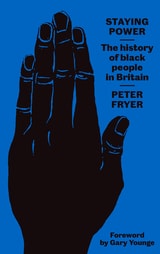
Staying Power
The History of Black People in BritainPeter Fryer
Pluto Press, 2018
Stretching back to the Roman conquest, encompassing the court of Henry VIII, and following a host of characters from the pioneering nurse and war hero Mary Seacole to the abolitionist Olaudah Equiano, Peter Fryer paints a picture of two thousand years of black presence in Britain. By rewriting black Britons into British history, showing where they influenced political traditions, social institutions, and cultural life, Staying Power presented a radical challenge to racist and nationalist agendas. This edition includes a new foreword by Gary Younge examining the book’s continued significance in shaping black British identity today, alongside the now-classic introduction by Paul Gilroy.
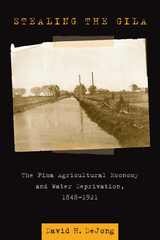
Stealing the Gila
The Pima Agricultural Economy and Water Deprivation, 1848-1921David H. DeJong
University of Arizona Press, 2009
This economic vitality did not last, however. As immigrants settled upstream from the Pima villages, they deprived the Indians of the water they needed to sustain their economy. DeJong traces federal, territorial, and state policies that ignored Pima water rights even though some policies appeared to encourage Indian agriculture. This is a particularly egregious example of a common story in the West: the flagrant local rejection of Supreme Court rulings that protected Indian water rights. With plentiful maps, tables, and illustrations, DeJong demonstrates that maintaining the spreading farms and growing towns of the increasingly white population led Congress and other government agencies to willfully deny Pimas their water rights.
Had their rights been protected, DeJong argues, Pimas would have had an economy rivaling the local and national economies of the time. Instead of succeeding, the Pima were reduced to cycles of poverty, their lives destroyed by greed and disrespect for the law, as well as legal decisions made for personal gain.
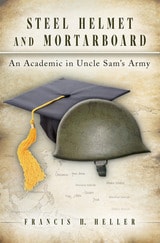
Steel Helmet and Mortarboard
An Academic in Uncle Sam's ArmyFrancis H. Heller
University of Missouri Press, 2009
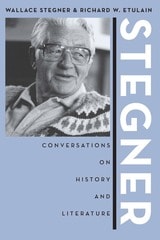
Stegner
Conversations On History And LiteratureWallace Stegner
University of Nevada Press, 1996
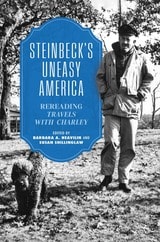
Steinbeck’s Uneasy America
Rereading “Travels with Charley”Edited by Barbara A. Heavilin and Susan Shillinglaw
University of Alabama Press, 2025
A road trip through Steinbeck’s America—revisited, reimagined, and reinterpreted.
Steinbeck’s Uneasy America is the first collection of critical scholarship devoted to Travels with Charley in Search of America, John Steinbeck’s best-selling, late-career travel memoir. In 1960, Steinbeck was a renowned man of American letters. Many considered him America’s troubadour of ordinary people, the conscience of the country. But weakened by two small strokes and anxious that he had lost touch with America, he embarked on a cross-country road trip accompanied by his wife’s standard poodle, Charley. Two years later, he published Travels with Charley to popular acclaim and robust sales.
Throughout this narrative, Steinbeck insists that all of our perceptions are “warped” by personality, history, and society. And while this hybrid and experimental book has long been accepted as an accurate account of his journey, journalists and scholars agree that the narrative is part factual, part fiction—America as seen through Steinbeck’s particular “warp.” The work is long overdue for scholarly assessment.
Steinbeck’s Uneasy America explores three main topics. Part 1 explores genre and form to consider the degree to which the work is fiction or nonfiction. Part 2 assesses Steinbeck’s increasingly bleak assessment of America—almost a jeremiad that warns citizens of ecological excess and political apathy. Part 3 focuses on Travels with Charley as a road text, travel adventure, and literary influence.
This volume’s authors offer rich scholarly insights and a wealth of stories, facts, and anecdotes about Steinbeck and the adventures and misadventures he and Charley met on the road. Lively and groundbreaking, the collection both enlightens and enlivens discussions of Steinbeck and of the twentieth-century American book world.
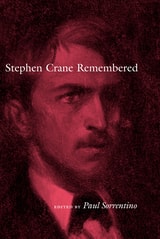
Stephen Crane Remembered
Edited by Paul Sorrentino
University of Alabama Press, 2006
Revealing episodes in the life of the elusive writer, as told by acquaintances
This book collects reminiscences by contemporaries, friends, and associates of Stephen Crane that illuminate the life of this often misunderstood and misrepresented writer. Although Crane is widely regarded as a major American author, conclusions about his life, work, and thought remain obscure due to the difficulties in separating fact from fiction. His first biographer recorded mostly vague impressions and, to mythologize his subject, invented a multitude of the episodes and letters used in his account of Crane’s life. Subsequent biographies were either cursory summations or compendiums of verifiable facts. Crane himself was both reclusive and mercurial, protective of his inner life while projecting a variety of personae to suit others.
A flamboyant personality and close friend of writers such as William Dean Howells, Henry James, and Joseph Conrad, Crane made telling impressions on his contemporaries. They often constitute the best assessments of Crane’s own personality and work. The 90 reminiscences gathered here offer a much-needed account of Crane’s life from a variety of viewpoints, as well as important information about the contributors themselves.
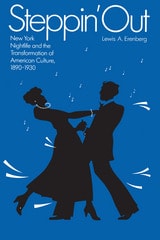
Steppin' Out
New York Nightlife and the Transformation of American CultureLewis A. Erenberg
University of Chicago Press, 1984
Stepping Into Zion
Hatzaad Harishon, Black Jews, and the Remaking of Jewish IdentityJanice W. Fernheimer
University of Alabama Press, 2014
Considers the question “Who is a Jew?”— a critical rhetorical issue with far-reaching consequences for Jews and non-Jews alike
Hatzaad Harishon ("The First Step") was a New York-based, multiracial Jewish organization that worked to increase recognition and legitimacy for Black Jews in the sixties and seventies. In Stepping into Zion, Janice W. Fernheimer examines the history and archives of Hatzaad Harishon to illuminate the shifting definitions and borders of Jewish identity, which have critical relevance to Jews of all traditions as well as to non-Jews.
Fernheimer focuses on a period when Jewish identity was in flux and deeply influenced by the Civil Rights and Black Power movements. In 1964, white and Black Jews formed Hatzaad Harishon to foster interaction and unity between Black and white Jewish communities. They raised the question of who or what constitutes Jewishness or Jewish identity, and in searching for an answer succeeded—both historically and rhetorically—in gaining increased recognition for Black Jews. Fernheimer traces how, despite deep disagreement over definitions, members of Hatzaad Harishon were able to create common ground in a process she terms "interruptive invention": an incremental model for rhetorical success that allows different groups to begin and continue important but difficult discussions when they share little common ground or make unequal claims to institutional and discursive power, or when the nature of common ground is precisely what is at stake. Consequently, they provide a practical way out of the seemingly incommensurable stalemate incompatible worldviews present.
Through insightful interpretations of Hatzaad Harishon's archival materials, Fernheimer chronicles the group's successes and failures within the larger rhetorical history of conflicts that emerge when cultural identities shift or expand.
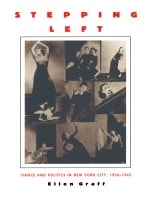
Stepping Left
Dance and Politics in New York City, 1928–1942Ellen Graff
Duke University Press, 1997
From Communist Party pageants to union hall performances to benefits for the Spanish Civil War, Graff documents the passionate involvement of American dancers in the political and social controversies that raged throughout the Depression era. Dancers formed collectives and experimented with collaborative methods of composition at the same time that they were marching in May Day parades, demonstrating for workers’ rights, and protesting the rise of fascism in Europe. Graff records the explosion of choreographic activity that accompanied this lively period—when modern dance was trying to establish legitimacy and its own audience. Stepping Left restores a missing legacy to the history of American dance, a vibrant moment that was supressed in the McCarthy era and almost lost to memory. Revisiting debates among writers and dancers about the place of political content and ethnicity in new dance forms, Stepping Left is a landmark work of dance history.
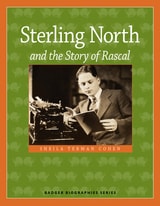
Sterling North and the Story of Rascal
Sheila Terman Cohen
Wisconsin Historical Society Press, 2015
This Badger Bio shares the story of author Sterling North – his adventures and misadventures as a young boy growing up in Edgerton, Wisconsin. Young readers will learn how North’s early experience in Wisconsin influenced him in writing some of his best loved children’s books – such as Rascal and So Dear To My Heart.
The story gives readers a glimpse of early 20th century customs and lifestyles in the rural Midwest. It also includes global issues of the time, including World War I and the Spanish flu pandemic, which greatly affected Sterling’s boyhood. As examples, his admired older brother Hershel served overseas in WWI as Sterling was growing up, bringing world events to the North family’s doorstep. His mother Gladys died when Sterling was only 7 years old because of the lack of medical advances in the early 1900s. And, as a young man, Sterling was hit by polio, a common epidemic scourge that left many children with paralysis.
Readers will learn of Sterling North’s successes, not only as a beloved author of children’s books, but as a columnist for the Chicago Daily News, an editor of North Star children’s history books, and a well-respected critic of other children’s literature.
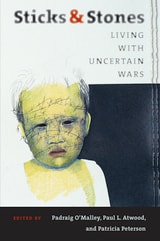
Sticks and Stones
Living with Uncertain WarsPadraig O'Malley
University of Massachusetts Press, 2006
Following an introduction by Padraig O'Malley, the book is divided into four sections: "Understanding the World as We Have Known It"; "Global Uncertainties"; "Whose Values? Whose Justice?"; and "Shaping a New World." The first section reviews what we have learned about war and establishes benchmarks for judging whether that knowledge is being translated into changes in the behavior of our political cultures. It suggests that the world's premier superpower, in its effort to promote Western-style democracy, has taken steps that have inhibited rather than facilitated democratization.
The second section examines the war on terror and the concept of global war. From the essays in this section emerges a consensus that democracy as practiced in the West cannot be exported to countries with radically different cultures, traditions, and values. The third section visits the question of means and ends in the context of varying value systems and of theocracy, democracy, and culture. In the final section, the focus shifts to our need for global institutions to maintain order and assist change in the twenty-first century.
Although each contributor comes from a different starting point, speaks with a different voice, and has a different ideological perspective, the essays reach startlingly similar conclusions. In sum, they find that the West has not absorbed the lessons from the wars of the last century and is inadequately prepared to meet the new challenges that now confront us.
Contributors to the volume include J. Brian Atwood, Susan J. Atwood, John Cooley, Romeo Dallaire, Ramu Damodaran, Valerie Epps, Michael J. Glennon, Stanley Heginbotham, Robert Jackson, Winston Langley, Alfred W. McCoy, Greg Mills, Jonathan Moore, Chris Patten, Gwyn Prins, Jonathan Schell, John Shattuck, Cornelio Sommargua, Brian Urquhart, Stephen Van Evera, and Robert Weiner.
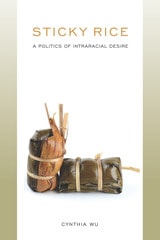
Sticky Rice
A Politics of Intraracial DesireCynthia Wu
Temple University Press, 2018
Cynthia Wu’s provocative Sticky Rice examines representations of same-sex desires and intraracial intimacies in some of the most widely read pieces of Asian American literature. Analyzing canonical works such as John Okada’s No-No Boy, Monique Truong’s The Book of Salt, H. T. Tsiang’s And China Has Hands, and Lois-Ann Yamanaka’s Blu’s Hanging, as well as Philip Kan Gotanda’s play, Yankee Dawg You Die, Wu considers how male relationships in these texts blur the boundaries among the homosocial, the homoerotic, and the homosexual in ways that lie beyond our concepts of modern gay identity.
The “sticky rice” of Wu’s title is a term used in gay Asian American culture to describe Asian American men who desire other Asian American men. The bonds between men addressed in Sticky Rice show how the thoughts and actions founded by real-life intraracially desiring Asian-raced men can inform how we read the refusal of multiple normativities in Asian Americanist discourse. Wu lays bare the trope of male same-sex desires that grapple with how Asian America’s internal divides can be resolved in order to resist assimilation.
Stigmata of Bliss
Three NovellasKlaus Merz
Seagull Books, 2017
Jacob Asleep introduces a family marked by illness, eccentricity, and a child’s death. In A Man’s Fate, a moment of inattention on a mountainous hike upends a teacher’s life and his understanding of mortality. And finally, The Argentine traces the fluctuations of memory and desire in a man’s journey around the world. In each novella, Merz takes readers on a profound and intimate journey. Read as a whole, the works complement, enrich, and echo each other.
Stirrings In The Jug
Black Politics In The Post-Segregation EraAdolph Reed, Jr.
University of Minnesota Press, 1999
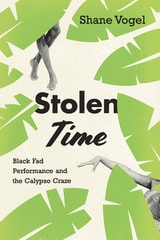
Stolen Time
Black Fad Performance and the Calypso CrazeShane Vogel
University of Chicago Press, 2018
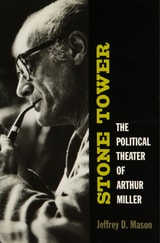
Stone Tower
The Political Theater of Arthur MillerJeffrey D. Mason
University of Michigan Press, 2008
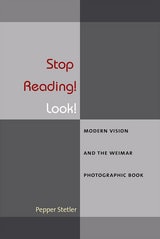
Stop Reading! Look!
Modern Vision and the Weimar Photographic BookPepper Stetler
University of Michigan Press, 2015
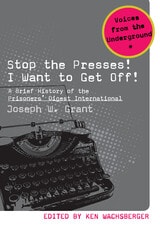
Stop the Presses! I Want to Get Off!
A Brief History of the Prisoners’ Digest InternationalJoseph W. Grant
Michigan State University Press, 2012
The final book in the groundbreaking Voices from the Underground series, Stop the Presses! I Want to Get Off!, is the inspiring, frenetic, funny, sad, always-cash-starved story of Joe Grant, founder and publisher of Prisoners’ Digest International, the most important prisoners’ rights underground newspaper of the Vietnam era. From Grant’s military days in pre-Revolutionary Cuba during the Korean War, to his time as publisher of a pro-union newspaper in Cedar Rapids and his eventual imprisonment in Leavenworth, Kansas, Grant’s personal history is a testament to the power of courage under duress. One of the more notorious federal penitentiaries in the nation, Leavenworth inspired Grant to found PDI in an effort to bring hope to prisoners and their families nationwide.
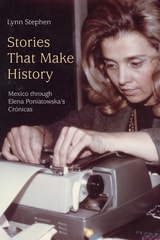
Stories That Make History
Mexico through Elena Poniatowska’s CrónicasLynn Stephen
Duke University Press, 2021
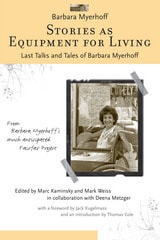
Stories as Equipment for Living
Last Talks and Tales of Barbara MyerhoffBarbara Myerhoff
University of Michigan Press, 2007
Barbara Myerhoff's groundbreaking work in reflexivity and narrative ethnography broke with tradition by focusing not on the raw ethnographic data, but on her interaction with those she studied. Myerhoff's unfinished projects, including her final talks on storytelling, ritual, and the "culture of aging and Yiddishkeit," offer a magisterial summary of her life's work.
"The beauty of Stories as Equipment for Living is the quality of being a compilation of rescued fragments, bits and pieces of a great master's writing and thinking that were coming towards synthesis but had never reached a finished form prior to her death. This collection is an examination of the place of narrative in human life, the synthetic nature of culture and the constant search for visibility particularly by those relegated for one reason or another to the margins. A thought-provoking book worthy of extended reflection."
---Jack Kugelmass, Professor of Anthropology and Director of Jewish Studies, University of Florida
"Stories as Equipment for Living achieves a nice balance between preserving Myerhoff's work in its original form and reconstructed contexts, but presenting it in a manner relevant to readers a generation after her death. The book documents Myerhoff's growing involvement with Jewish culture, the actual process of anthropological work through field notes, and the picture of how she always was bouncing the fine details of this combined professional and personal venture off the 'big questions' of anthropology in its broadest sense."
---Harvey E. Goldberg, Professor of Sociology and Anthropology, Hebrew University, Israel
"These essays capture the rhythm of Barbara Myerhoff's words and her vivid and distinctive train of thought, bringing the reader into the classroom of one of anthropology's finest lecturers. As an anthropologist with a poet's gift for language, she utilizes the tools of ethnography and extraordinary powers of observation---a remarkable 'ethnographic eye'---to explore the outward expressions and inner lives of the Fairfax neighborhood of L.A. These stories are not only glorious introductions to the study of culture, but provide in their revelations a reason for studying it. They are required reading for anyone passionate to know what an anthropologist can teach us about communities and ultimately about ourselves."
---Steve Zeitlin, Director, City Lore: The New York Center for Urban Folk Culture
"Master of the third voice, the voice of collaboration, Myerhoff is at once a consummate listener and inspired storyteller. This book offers a rare and luminous opening into the working process and wisdom of one of the great anthropologists of the twentieth century."
---Barbara Kirshenblatt-Gimblett, Professor of Performance Studies at New York University and coauthor of They Called Me Mayer July: Painted Memories of a Jewish Childhood in Poland Before the Holocaust
"Myerhoff and her collaborators have given her 'Hasidim,' her disciples old and new, a final and precious gift."
---Jonathan Boyarin, The Robert M. Beren Distinguished Professor of Modern Jewish Studies at the University of Kansas and author of Thinking in Jewish
Barbara Myerhoff was a renowned anthropologist who did pioneering work in gerontology, Jewish studies, folklore, and narrative anthropology. She is best known for her ethnography of and personal involvement with a community of elderly immigrant Jews in California. Her writings and lectures have had an enormous impact on all of these areas of study, and her books are widely celebrated, especially Number Our Days, whose companion documentary film won an Academy Award.
Marc Kaminsky is a psychotherapist, a poet, a writer, and the former codirector of the Institute on Humanities, Arts and Aging of the Brookdale Center on Aging.
Mark Weiss is a writer, an editor, a translator, and a poet; his books include the widely praised Across the Line/Al Otro Lado.
Deena Metzger is a novelist, a poet, and the founding codirector (with Marc Kaminsky) of the Myerhoff Center.
Thomas R. Cole is the Beth and Toby Grossman Professor and Director of the McGovern Center for Health, Humanities, and the Human Spirit at the University of Texas Health Science Center in Houston, and a Professor of Humanities in the Department of Religious Studies at Rice University; his expertise lies in the history of aging and humanistic gerontology.
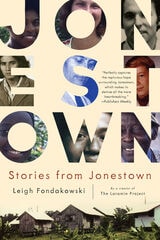
Stories from Jonestown
Leigh Fondakowski
University of Minnesota Press, 2010
The saga of Jonestown didn’t end on the day in November 1978 when more than nine hundred Americans died in a mass murder-suicide in the Guyanese jungle. While only a handful of people present at the agricultural project survived that day in Jonestown, more than eighty members of Peoples Temple, led by Jim Jones, were elsewhere in Guyana on that day, and thousands more members of the movement still lived in California. Emmy-nominated writer Leigh Fondakowski, who is best known for her work on the play and HBO film The Laramie Project, spent three years traveling the United States to interview these survivors, many of whom have never talked publicly about the tragedy. Using more than two hundred hours of interview material, Fondakowski creates intimate portraits of these survivors as they tell their unforgettable stories.
Collectively this is a record of ordinary people, stigmatized as cultists, who after the Jonestown massacre were left to deal with their grief, reassemble their lives, and try to make sense of how a movement born in a gospel of racial and social justice could have gone so horrifically wrong—taking with it the lives of their sons and daughters, husbands and wives, fathers and mothers, and brothers and sisters. As these survivors look back, we learn what led them to join the Peoples Temple movement, what life in the church was like, and how the trauma of Jonestown’s end still affects their lives decades later.
What emerges are portrayals both haunting and hopeful—of unimaginable sadness, guilt, and shame but also resilience and redemption. Weaving her own artistic journey of discovery throughout the book in a compelling historical context, Fondakowski delivers, with both empathy and clarity, one of the most gripping, moving, and humanizing accounts of Jonestown ever written.
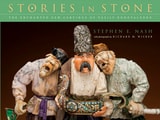
Stories in Stone
The Enchanted Gem Carvings of Vasily KonovalenkoStephen E. Nash
University Press of Colorado, 2016
Part art catalogue and part life history, Stories in Stone tells the tale of Konovalenko’s impressive works, explaining their conception, creation, and symbolism. Each handcrafted figure depicts a scene from life in the Soviet Union—a bowman hunting snow geese, a woman reposing in a hot spring surrounded by ice, peasants spinning wool, a pair of gulag prisoners sawing lumber—painstakingly rendered in precious stones and metals. The materials used to make the figurines are worth millions of dollars, but as cultural artifacts, the sculptures are priceless. Author Stephen Nash draws upon oral history and archival research to detail the life of their creator, revealing a rags-to-riches and life-imitates-art narrative full of Cold War intrigue, Communist persecution, and capitalist exploitation.
Augmented by Richard M. Wicker’s exquisite and revelatory photographs of sixty-five Konovalenko sculptures from museums, state agencies, and private collections around the world, Stories in Stone is a visually stunning glimpse into a unique corner of Russian art and cultural history, the craft and science of gem carving, and the life of a Russian artist and immigrant who loved people everywhere.
Co-published with the Denver Museum of Nature & Science, home to the most significant collection of Russian gem-carving sculptures by Vasily Konovalenko in the world.
Stories of Oka
Land, Film, and LiteratureIsabelle St-Amand
University of Manitoba Press, 2018

Stories of Survival
Arkansas Farmers during the Great DepressionWilliam Downs Jr.
University of Arkansas Press, 2015
Stories
Contemporary Southern Short FictionDonald Hays
University of Arkansas Press, 1989

Storm from Paradise
The Politics of Jewish MemoryJonathan Boyarin
University of Minnesota Press, 1992
Storm from Paradise was first published in 1992. Minnesota Archive Editions uses digital technology to make long-unavailable books once again accessible, and are published unaltered from the original University of Minnesota Press editions.
"Usefully complicating common sense understandings of history, catastrophe, loss, otherness, and possibility through reflections on contemporary Jewishness, Boyarin draws on Benjamins's famous image of the Angel of History blown into the future by a "storm from paradise" to constantly interrogate and recuperate the past, "without pretending for long that we can recoup its plentitude". The book's seven thoughtful essays are at times deliberately intangible but always worth reading. An important book for the rethinking of the relevance of Jewishness to anthropology and cultural studies." –Religious Studies Review
"An essay in the richest sense of that term, inspired by and modeled on Walter Benjamin's essays. Based on varied, diverse, and abundantly cross-disciplinary readings, it moves and builds, questions and interrogates, and ultimately convinces us that the Jewish experience with being the 'other' and, conversely and recently, with 'othering' is indeed relevant to theorists of contemporary culture." –Marianne Hirsch
Jonathan Boyarin is the author of Palestine and Jewish History, and co-editor, with Daniel Boyarin, of Jews and Other Differences and Powers of Diaspora.
Storytelling and Science
Rewriting Oppenheimer in the Nuclear AgeDavid K. Hecht
University of Massachusetts Press, 2015
No single figure embodies Cold War science more than the renowned physicist J. Robert Oppenheimer. Although other scientists may have been more influential in establishing the institutions and policies of the nuclear age, none has loomed larger in the popular imagination than the “father of the atomic bomb.” Americans have been drawn to the story of the Manhattan Project Oppenheimer helped lead and riveted by the McCarthy-era politics that caught him in its crosshairs. Journalists and politicians, writers and artists have told Oppenheimer's story in many different ways since he first gained notoriety in 1945. In Storytelling and Science, David K. Hecht examines why they did so, and what they hoped to achieve through their stories.
From the outset, accounts of Oppenheimer's life and work were deployed for multiple ends: to trumpet or denigrate the value of science, to settle old scores or advocate new policies, to register dissent or express anxieties. In these different renditions, Oppenheimer was alternately portrayed as hero and villain, establishment figure and principled outsider, “destroyer of worlds” and humanist critic. Yet beneath the varying details of these stories, Hecht discerns important patterns in the way that audiences interpret, and often misinterpret, news about science. In the end, he argues, we find that science itself has surprisingly little to do with how its truths are assimilated by the public. Instead its meaning is shaped by narrative traditions and myths that frame how we think and write about it.
Strained Relations
US Foreign-Exchange Operations and Monetary Policy in the Twentieth CenturyMichael D. Bordo, Owen F. Humpage, and Anna J. Schwartz
University of Chicago Press, 2015
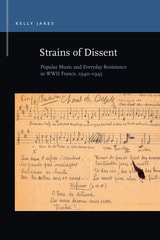
Strains of Dissent
Popular Music and Everyday Resistance in WWII France, 1940 - 1945Kelly Jakes
Michigan State University Press, 2019
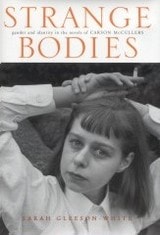
Strange Bodies
Gender and Identity in the Novels of Carson McCullersSarah Gleeson-White
University of Alabama Press, 2003
Adapts Mikhail Bakhtin's theory of the grotesque, as well as the latest in gender and psychoanalytic theory, to the major works of acclaimed southern writer Carson McCullers.
This innovative reconsideration of the themes of Carson McCullers's fiction argues that her work has heretofore suffered under the pall of narrow gothic interpretations, obscuring a more subversive agenda. By examining McCullers’s major novels—The Heart is a Lonely Hunter, Reflections in a Golden Eye, The Member of the Wedding, and The Ballad of the Sad Café—Gleeson-White locates a radical and specific form of the grotesque in the author's fiction: the liberating and redemptive possibilities of errant gender roles and shifting sexuality. She does this by employing Bakhtin's theory of the grotesque, which is both affirming and revolutionary, and thereby moves McCullers's texts beyond the 'gloom and doom' with which they have been charged for over fifty years.
The first chapter explores female adolescence by focusing on McCullers's tomboys in the context of oppressive southern womanhood. The second chapter analyzes McCullers's fascinating struggle to depict homosexual desire outside of traditional stereotypes. Gleeson-White then examines McCullers's portrayals of feminine and masculine gender through the tropes of cross-dressing, transvestism, and masquerade. The final chapter takes issue with earlier readings of androgyny in the texts to suggest a more useful concept McCullers herself called "the hybrid." Underpinning the whole study is the idea of a provocative, dynamic form of the grotesque that challenges traditional categories of normal and abnormal.
Because the characters and themes of McCullers's fiction were created in the 1940s and 1950s, a time of tension between the changing status of women and the southern ideal of womanhood, they are particularly fertile ground for a modern reexamination of this nature. Gleeson-White's study will be valued by scholars of American literature and gender and queer studies, by students of psychology, by academic libraries, and by readers of Carson McCullers. Strange Bodies is a thoughtful, highly credible analysis that adds dimension to the study of southern literature.
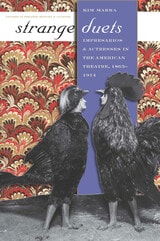
Strange Duets
Impresarios and Actresses in the American Theatre, 1865-1914Kim Marra
University of Iowa Press, 2006
Strange Future
Pessimism and the 1992 Los Angeles RiotsMin Hyoung Song
Duke University Press, 2005
Song considers works that address the riots and often the traumatic place of the Korean American community within them: the independent documentary Sa-I-Gu (Korean for April 29, the date the riots began), Chang-rae Lee’s novel Native Speaker, the commercial film Strange Days, and the experimental drama of Anna Deavere Smith, among many others. He describes how cultural producers have used the riots to examine the narrative of national decline, manipulating language and visual elements, borrowing and refashioning familiar tropes, and, perhaps most significantly, repeatedly turning to metaphors of bodily suffering to convey a sense of an unraveling social fabric. Song argues that these aesthetic experiments offer ways of revisiting the traumas of the past in order to imagine more survivable futures.
Strange Good Fortune
Essays on Contemporary PoetryDavid Wojahn
University of Arkansas Press, 2000
Strange Meetings
Anglo-German Literary Encounters from 1910 to 1960Peter Edgerly Firchow
Catholic University of America Press, 2008
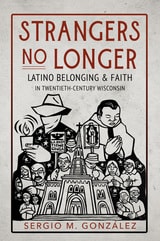
Strangers No Longer
Latino Belonging and Faith in Twentieth-Century WisconsinSergio M. González
University of Illinois Press, 2024
Hospitality practices grounded in religious belief have long exercised a profound influence on Wisconsin’s Latino communities. Sergio M. González examines the power relations at work behind the types of hospitality--welcoming and otherwise--practiced on newcomers in both Milwaukee and rural areas of the Badger State. González’s analysis addresses central issues like the foundational role played by religion and sacred spaces in shaping experiences and facilitating collaboration among disparate Latino groups and across ethnic lines; the connections between sacred spaces and the moral justification for social justice movements; and the ways sacred spaces evolved into places for mitigating prejudice and social alienation, providing sanctuary from nativism and repression, and fostering local and transnational community building.
Perceptive and original, Strangers No Longer reframes the history of Latinos in Wisconsin by revealing religion’s central role in the settlement experience of immigrants, migrants, and refugees.
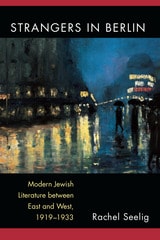
Strangers in Berlin
Modern Jewish Literature between East and West, 1919–1933Rachel Seelig
University of Michigan Press, 2016
Author Rachel Seelig portrays Berlin during the Weimar Republic as a “threshold” between exile and homeland in which national and artistic commitments were reexamined, reclaimed, and rebuilt. In the pulsating yet precarious capital of Germany’s first fledgling democracy, the collision of East and West engendered a broad spectrum of poetic styles and Jewish national identities.
Strategic Factors in Nineteenth Century American Economic History
A Volume to Honor Robert W. FogelEdited by Claudia Goldin and Hugh Rockoff
University of Chicago Press, 1992
These sixteen essays reveal, by example, the continuing vitality of Fogel's approach. The authors use an astonishing variety of data, including genealogies, the U.S. federal population census manuscripts, manumission and probate records, firm accounts, farmers' account books, and slave narratives, to address collectively market integration and its impact on the lives of Americans. The evolution of markets in agricultural and manufacturing labor is considered first; that concerning capital and credit follows. The demography of free and slave populations is the subject of the third section, and the final group of papers examines the extra-market institutions of governments and unions.
Strategic Occidentalism
On Mexican Fiction, the Neoliberal Book Market, and the Question of World LiteratureIgnacio M. Sánchez Prado
Northwestern University Press, 2018
In the course of this analysis, Ignacio M. Sánchez Prado engages with theories of world literature, proposing that “world literature” is a construction produced at various levels, including the national, that must be studied from its material conditions of production in specific sites. In particular, he argues that Mexican writers have engaged in a “strategic Occidentalism” in which their idiosyncratic connections with world literature have responded to dynamics different from those identified by world-systems or diffusionist theorists.
Strategic Occidentalism identifies three scenes in which a cosmopolitan aesthetics in Mexican world literature has been produced: Sergio Pitol’s translation of Eastern European and marginal British modernist literature; the emergence of the Crack group as a polemic against the legacies of magical realism; and the challenges of writers like Carmen Boullosa, Cristina Rivera Garza, and Ana García Bergua to the roles traditionally assigned to Latin American writers in world literature.
Straw in the Sun
A MemoirCharlie May Simon
University of Arkansas Press, 2025
These opening lines of Charlie May Simon’s Straw in the Sun invite readers on a personal journey of remembrance as Simon recounts her homesteading experiment in Depression-era Arkansas. Years before she established herself as a regional author of national renown, she chose a spot near Cove Creek, now part of Ouachita National Forest, to forge a home from rugged land, meeting both a backbreaking series of challenges and a vivid cast of characters in the process.
Nationally popular upon its release in 1945, Simon’s lyrical memoir was praised from the outset for its warmth and charm. At once an ethnographic narrative of a hill community and an accessible portrait of Ozarks memories at their most idyllic, Straw in the Sun, offered here with a robust introduction from Simon scholar Aleshia O’Neal, is a classic ready for rediscovery by a new generation of readers.
Street Archives and City Life
Popular Intellectuals in Postcolonial TanzaniaEmily Callaci
Duke University Press, 2017
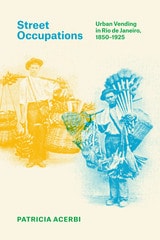
Street Occupations
Urban Vending in Rio de Janeiro, 1850–1925By Patricia Acerbi
University of Texas Press, 2017
Winner, Warren Dean Memorial Prize, Conference on Latin American History (CLAH), 2018
Street vending has supplied the inhabitants of Rio de Janeiro with basic goods for several centuries. Once the province of African slaves and free blacks, street commerce became a site of expanded (mostly European) immigrant participation and shifting state regulations during the transition from enslaved to free labor and into the early post-abolition period. Street Occupations investigates how street vendors and state authorities negotiated this transition, during which vendors sought greater freedom to engage in commerce and authorities imposed new regulations in the name of modernity and progress.
Examining ganhador (street worker) licenses, newspaper reports, and detention and court records, and considering the emergence of a protective association for vendors, Patricia Acerbi reveals that street sellers were not marginal urban dwellers in Rio but active participants in a debate over citizenship. In their struggles to sell freely throughout the Brazilian capital, vendors asserted their citizenship as urban participants with rights to the city and to the freedom of commerce. In tracing how vendors resisted efforts to police and repress their activities, Acerbi demonstrates the persistence of street commerce and vendors’ tireless activity in the city, which the law eventually accommodated through municipal street commerce regulation passed in 1924.
A focused history of a crucial era of transition in Brazil, Street Occupations offers important new perspectives on patron-client relations, slavery and abolition, policing, the use of public space, the practice of free labor, the meaning of citizenship, and the formality and informality of work.
Street Players
Black Pulp Fiction and the Making of a Literary UndergroundKinohi Nishikawa
University of Chicago Press, 2018
Kinohi Nishikawa contends that black pulp fiction was built on white readers’ fears of the feminization of society—and the appeal of black masculinity as a way to counter it. In essence, it was the original form of blaxploitation: a strategy of mass-marketing race to suit the reactionary fantasies of a white audience. But while chauvinism and misogyny remained troubling yet constitutive aspects of this literature, from 1973 onward, Holloway House moved away from publishing sleaze for a white audience to publishing solely for black readers. The standard account of this literary phenomenon is based almost entirely on where this literature ended up: in the hands of black, male, working-class readers. When it closed, Holloway House was synonymous with genre fiction written by black authors for black readers—a field of cultural production that Nishikawa terms the black literary underground. But as Street Players demonstrates, this cultural authenticity had to be created, promoted, and in some cases made up, and there is a story of exploitation at the heart of black pulp fiction’s origins that cannot be ignored.
Street Smarts and Critical Theory
Listening to the VernacularThomas McLaughlin
University of Wisconsin Press, 1996
Everybody’s got a theory . . . or do they?
Thomas McLaughlin argues that critical theory—raising serious, sustained questions about cultural practice and ideology—is practiced not only by an academic elite but also by savvy viewers of sitcoms and TV news, by Elvis fans and Trekkies, by labor organizers and school teachers, by the average person in the street.
Like academic theorists, who are trained in a tradition of philosophical and political skepticism that challenges all orthodoxies, the vernacular theorists McLaughlin identifies display a lively and healthy alertness to contradiction and propaganda. They are not passive victims of ideology but active questioners of the belief systems that have power over their lives. Their theoretical work arises from the circumstances they confront on the job, in the family, in popular culture. And their questioning of established institutions, McLaughlin contends, is essential and healthy, for it energizes other theorists who clarify the purpose and strategies of institutions and justify the existence of cultural practices.
Street Smarts and Critical Theory leads us through eye-opening explorations of social activism in the Southern Christian anti-pornography movement, fan critiques in the ‘zine scene, New Age narratives of healing and transformation, the methodical manipulations of the advertising profession, and vernacular theory in the whole-language movement. Emphasizing that theory is itself a pervasive cultural practice, McLaughlin calls on academic institutions to recognize and develop the theoretical strategies that students bring into the classroom.
“This book demystifies the idea of theory, taking it out of the hands of a priestly caste and showing it as the democratic endowment of the people.”—Daniel T. O’Hara, Temple University, author of Radical Parody: American Culture and Critical Agency after Foucault and Lionel Trilling: The Work of Liberation.
“McLaughlin takes seriously the critical and theoretical activity of everyday people and does so in a way that will empower these very populations to take seriously their own activities as theorists. . . . A manifesto that is sure to be heard by the younger generation of thinkers in American cultural studies.”—Henry Jenkins, MIT, author of Textual Poachers: Television Fans and Participatory Culture

Street by Street
Dispossessing Jewish Apartments in Wartime ParisIsabelle Backouche
Rutgers University Press, 2027
During the Holocaust, nearly 40,000 apartments in Paris inhabited by Jewish families were completely emptied by the German authorities, and many of their tenants lost their rights to continue renting the apartments. In Street by Street, Isabelle Backouche, Sarah Gensburger, and Eric Le Bourhis tell this little-known history of how Parisians took advantage of the persecution of the Jews to improve their own housing in a time of crisis. In the aftermath of the war, the French Republic ensured that the dispossession became permanent, silencing Jewish claims to their prewar homes.
Based on a ten-year investigation and written in a narrative style, this recounting of an unknown chapter of the history of the Holocaust in Western Europe goes beyond the study of individual behavior to highlight how material benefits and privileges can foster systemic antisemitism. The book includes a map of the sites and neighborhoods discussed, as well as photographs of views from windows and doors, courtyards, and building entryways, in both affluent and working-class neighborhoods. The authors tell the story of the organized disappearance of tenants identified as Jewish and the lack of justice that persists to this day.

Street of Dreams
The Nature and Legacy of the 1960sDouglas M. Knight
Duke University Press, 1989
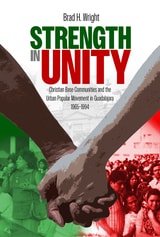
Strength in Unity
Christian Base Communities and the Urban Popular Movement in Guadalajara, 1965–1994Brad H. Wright
University of Alabama Press, 2026
Examines how poor and working-class communities in Guadalajara organized through faith, education, and culture to claim dignity, justice, and the right to the city.
Strength in Unity: Christian Base Communities and the Urban Popular Movement in Guadalajara, 1965–1994 presents the grassroots history of Guadalajara’s urban popular movement, centering the voices and struggles of poor and working-class communities, especially women, who organized for dignity, justice, and the right to the city. Brad H. Wright brings to light the transformative role of Christian base communities and Freirean popular education as incubators of political consciousness and collective action in the face of authoritarian repression and neoliberal coaptation.
Drawing from oral histories, personal archives, and the records of the Sagrado Corazón nuns, Wright reconstructs a powerful counternarrative to dominant portrayals of marginalized populations as “apathetic” and “uneducated.” Strength in Unity reveals a vibrant culture of resistance where women led campaigns for basic services, built schools, and demanded access to transportation, using tools such as community newspapers, street theater, and music to mobilize and sustain solidarity.
This deeply researched and compellingly told history challenges conventional accounts of urban development and social movements in Latin America. Strength in Unity is essential reading for scholars, students, and activists interested in grassroots organizing, liberation theology, and the enduring power of community-led change.
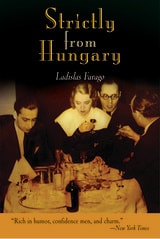
Strictly from Hungary
Ladislas Farago
Westholme Publishing, 2004
Known for his best-selling military histories, Ladislas Farago also wrote a witty tribute to his homeland, Strictly from Hungary. Noting that Hungary has produced some of the world's most renowned artists, scientists, and financiers as well as its share of world-class con-artists, charlatans, and rakes, Farago sets out to explain just how one tiny country can be responsible for so much talent, both good and bad. Using stories from his days as a struggling writer in the bustling café scenes of Budapest and New York City, Farago demonstrates the Hungarian knack for remaining irrepressible and optimistic even in the face of catastrophe. Here we meet Zoltan, a fellow Bohemian who presents his astonished benefactor with a play "about nothing," a theme later made famous by another writer of Hungarian descent, Jerry Seinfeld. Farago also introduces us to "Baby Kiss," a vivacious Hungarian beauty queen, and the story of how she ended up in Fort Worth, Texas; Orkeny, a double agent for America at the height of the Cold War who "spiced up" his reports to keep everyone happy, and the author's own experience getting mustered into the supposedly non-existent Royal Hungarian Army. Farago's reminiscence validates what most Hungarians believe: that Hungary is the center of the world and that everyone has some connection to the land of the Magyars. In that spirit, Farago learns that George Washington himself was "strictly from Hungary." This edition is introduced by the author's son, who shows that the same vibrant spirit described by his father remains the hallmark of the Hungarian temperament.

Strike From the Sky
The History of Battlefield Air Attack, 1910-1945Richard P. Hallion, foreword by R. A. Mason
University of Alabama Press, 2010
The definitive history of how air power transformed the battlefield between two world wars.
Strike from the Sky: The History of Battlefield Air Attack, 1910–1945 is a comprehensive examination of the emergence and evolution of battlefield aviation during the first half of the twentieth century. Written by renowned aviation historian Richard P. Hallion, the book traces the development of air-ground warfare from the earliest military use of aircraft in combat through the decisive campaigns of World War II. Combining operational history with analysis of doctrine, technology, and leadership, Hallion reveals how battlefield air attack became a critical element of modern military strategy.
The study explores major conflicts including the First World War, the Spanish Civil War, colonial campaigns, and the global battles of World War II. Hallion examines the evolution of close air support, air interdiction, reconnaissance, command and control systems, and the aircraft that carried out these missions. He also analyzes how military organizations adapted to the challenges of integrating air and ground forces, creating doctrines that continue to influence military operations today.
Strike from the Sky demonstrates how advances in aviation transformed the battlefield and altered the conduct of war. It remains an essential resource for understanding the origins of modern air power and the technological and strategic innovations that reshaped twentieth-century combat.