Results by title
8642 books match the query '20th century' and 572 start with s

Survival at Treblinka
Geography, Gender, and Social Networks in Jewish ResistanceChad S.A. Gibbs
University of Wisconsin Press, 2026
On August 2, 1943, prisoners at the Nazi extermination camp Treblinka, located in occupied Poland, launched an uprising against their captors, during which hundreds successfully escaped while guards killed as many in the process. In this groundbreaking work, Chad S.A. Gibbs draws upon recently discovered sources and novel research methods to fundamentally reassess Jewish resistance at Treblinka—both before and during the revolt.
Using the testimonies of revolt survivors, prior escapees, those who passed through the camp, and a handful of bystander witnesses and former SS guards, Gibbs sheds new light on the events of August 2 as well as many prior acts of resistance. Critical to these new interpretations of the revolt are the actions of women prisoners, who here assume a central place in this story for the first time.
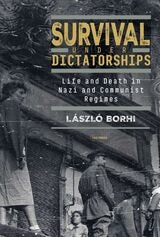
Survival under Dictatorships
Life and Death in Nazi and Communist RegimesLászló Borhi
Central European University Press, 2024
A complex array of individual responses to the abuse of power by the state is represented in this book in three horrific episodes in the history of East-Central Europe. The three events followed each other within a span of about ten years: the deportation and murder of Hungarian Jews in Nazi death and labor camps; the Arrow Cross terrorist rule in Budapest; and finally the Stalinist terror in Hungary and East-Central Europe. Through the prism of survival, László Borhi explores the relationship between the individual and power, attempting to understand the mechanism of oppression and terror produced by arbitrary, unbridled power through the experience of normal people.
Despite the obvious peculiarities of time and place, the Hungarian cases convey universal lessons about the Holocaust, Nazism, and Stalinism. In the author's conception, the National Socialist and Stalinist experiences are linked on several levels. Both regimes defended their visions of the future against social groups whom they saw as implacable enemies of those visions, and who therefore had to be destroyed for sake of social perfection. Furthermore, the social practices of National Socialism were passed on. And although Stalinism was imposed by a foreign power, some of the survival skills for coping with it were rehearsed under the previous hellish experience.

Surviving the Age of Virtual Reality
Thomas Langan
University of Missouri Press, 2000
As the technological phenomenon known as the worldwide web permeates civilization, it creates some cultures and destroys others. In this pioneering book, philosopher Thomas Langan explores "virtual reality"Can inherently contradictory phrase"and the effects of technology on our very being. In our present-day high- technology environment, making simple, everyday decisions is difficult because the virtual world we've created doesn't necessarily operate according to the old "common sense." To retain our intellectual fitness, we must, Langan argues, consider these essential questions: If virtual reality is, in fact, reality, what is this life that we are caught up in? What is being within the context of virtual reality? How can we establish a system for distinguishing truth from fiction?
Although technology minimizes distances between people and makes the information they seek more accessible, it simultaneously blurs the line dividing fact from falsehood and real from virtual. An individual's intellectual survival is threatened as technological advancement challenges our collective understanding of what reality is. Because much of the information that is presented as fact simply works to fulfill a specific agenda, we cannot accept as truth everything that appears on the internet or in the media. To survive, we must learn to manage our lives and resources despite the flood of information we are bombarded with daily.
Addressing the general educated reader, Surviving the Age of Virtual Reality expertly interweaves the worlds of technology and philosophy, pushing the analysis of this technological and human phenomenon to new depths.
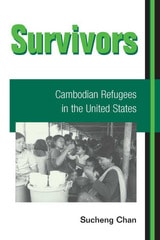
Survivors
CAMBODIAN REFUGEES IN THE UNITED STATESSucheng Chan
University of Illinois Press, 2004
Unparalleled in scope, Survivors begins with the Cambodians' experiences under the brutal Khmer Rouge regime, following them through escape to refugee camps in Thailand and finally to the United States, where they try to build new lives in the wake of massive trauma. Their struggle becomes primarily economic as they continue to negotiate new cultures and deal with rapidly changing gender and intergenerational relations within their own families. Poverty, crime, and racial discrimination all have an impact on their experiences in America, and each is examined in depth.
Although written as a history, this is a thoroughly multidisciplinary study, and Chan makes use of research from anthropology, sociology, psychology, medicine, social work, linguistics and education. She also captures the perspective of individual Cambodians. Drawing on interviews with more than fifty community leaders, a hundred government officials, and staff members in volunteer agencies, Survivors synthesizes the literature on Cambodian refugees, many of whom come from varying socioeconomic backgrounds.
A major scholarly achievement, Survivors is unique in the Asian American canon for its memorable presentation of cutting-edge research and its interpretation of both sides of the immigration process.
Susan Glaspell in Context
American Theater, Culture, and Politics, 1915-48J. Ellen Gainor
University of Michigan Press, 2003
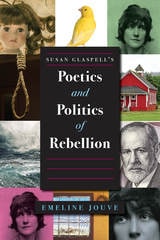
Susan Glaspell's Poetics and Politics of Rebellion
Emeline Jouve
University of Iowa Press, 2017
Analyzing plays from the early Trifles (1916) through Springs Eternal (1943) and the undated, incomplete Wings, author Emeline Jouve illustrates the way that Glaspell’s dramas addressed issues of sexism, the impact of World War I on American values, and the relationship between individuals and their communities, among other concerns. Jouve argues that Glaspell turns the playhouse into a courthouse, putting the hypocrisy of American democracy on trial. In staging rebels fighting for their rights in fictional worlds that reflect her audience’s extradiegetic reality, she explores the strategies available to individuals to free themselves from oppression. Her works envisage a better future for both her fictive insurgents and her spectators, whom she encourages to consider which modes of revolt are appropriate and effective for improving the society they live in. The playwright defines social reform in terms of collaboration, which she views as an alternative to the dominant, alienating social and political structures. Not simply accusing but proposing solutions in her plays, she wrote dramas that enacted a positive revolt.
A must for students of Glaspell and her contemporaries, as well as scholars of American theatre and literature of the first half of the twentieth century.
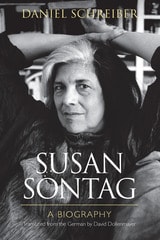
Susan Sontag
A BiographyDaniel Schreiber; Translated from the German by David Dollenmayer
Northwestern University Press, 2014
While known primarily as a cultural critic and novelist, Sontag was also a filmmaker, stage director, and dramatist. It was her status as a pop icon that was unusual for an American intellectual: she was filmed by Andy Warhol and Woody Allen, photographed by Annie Leibovitz and Diane Arbus, and her likeness adorned advertisements for Absolut vodka. Drawing on newly available sources, including interviews with Nadine Gordimer, Robert Wilson, and Sontag’s son, David Rieff, as well as on myriad interviews given by Sontag and her extensive correspondence with her friend and publisher Roger Straus, Schreiber explores the roles that Sontag played in influencing American public cultural and political conversations.

Sustaining Air
The Life of Larry EignerJennifer Bartlett
University of Alabama Press, 2023
The biography of a poet seminal to postwar American poetry
The poet Larry Eigner (1927–1996) was a key figure in New American poetry, which grew out of the Black Mountain School and San Francisco Renaissance, and a major influence on the Language poets. Eigner also had cerebral palsy as the result of an accident at birth. It is fortuitous that the poet lived his life in two locations vibrant in both poetics and disability activism. Except for brief periods attending camp and school, he lived with his parents in Swampscott, Massachusetts, until the age of 51. Later, he moved to Berkeley, California, at the height of the disability rights movement. In the 1950s, Eigner attended Camp Jened, which later became famous in the film Crip Camp.
Bartlett’s biography covers every significant phase of Eigner’s life: his childhood and young adulthood when he began typing poems with one finger on the manual typewriter that was a bar mitzvah gift; his first publications and the maturation of his poetic interests through correspondence with poets of the era; and after his move to Berkeley, the ever-expanding circle of friends, poets, caretakers, and collaborators he established there. The result is a deeply insightful account of an utterly distinctive voice whose influence widens and deepens with each new generation that encounters him.
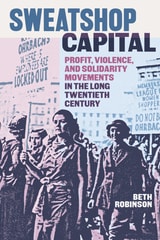
Sweatshop Capital
Profit, Violence, and Solidarity Movements in the Long Twentieth CenturyBeth Robinson
Duke University Press, 2025
Sweeping Beauty
Contemporary Women Poets Do HouseworkPamela Gemin
University of Iowa Press, 2005

Sweet Air
Modernism, Regionalism, and American Popular SongEdward Comentale
University of Illinois Press, 2013
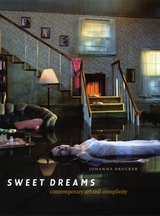
Sweet Dreams
Contemporary Art and ComplicityJohanna Drucker
University of Chicago Press, 2005
Drucker shows that artists today are aware of working within the ideologies of mainstream culture and have replaced avant-garde defiance with eager complicity. Finding their materials at flea markets or exploring celebrity culture, contemporary artists have created a vibrantly participatory movement that exudes enthusiasm and affirmation—all while critics continue to cling to an outmoded vocabulary of opposition and radical negativity that defined modernism's avant-garde. At the cutting edge of new media research, Drucker surveys a wide range of exciting contemporary artists, demonstrating their clear departure from the past and petitioning viewers and critics to shift their terms and sensibilities as well. Sweet Dreams is a testament to the creative processes and self-conscious heterogeneity of art today as well as a revolutionary effort to solicit collaboration that will encourage the production of imaginative thought and contribute to contemporary life.
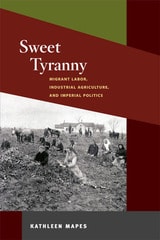
Sweet Tyranny
Migrant Labor, Industrial Agriculture, and Imperial PoliticsKathleen Mapes
University of Illinois Press, 2008
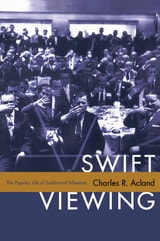
Swift Viewing
The Popular Life of Subliminal InfluenceCharles R. Acland
Duke University Press, 2012
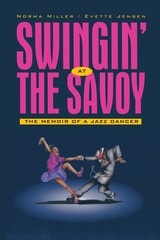
Swingin' at the Savoy
Norma Miller
Temple University Press, 1996
A dance contest winner by 14, Norma Miller became a member of Herbert White's Lindy Hoppers and a celebrated Savoy Ballroom Lindy Hop champion. Swingin' at the Savoy chronicles a significant period in American cultural history and race relations, as it glorifies the home of the Lindy Hop and he birthplace of memorable dance hall fads. Miller shares fascinating anecdotes about her youthful encounters with many of the greatest jazz legends in music history, including Ella Fitzgerald, Count Basie, Benny Goodman, Billie Holiday, Artie Shaw, Duke Ellington, Ethel Waters, and even boxer Joe Louis. Readers will experience the legend of the celebrated Harlem ballroom and the phenomenal Swing generation that changed music and dance history forever.

Swinging Single
Representing Sexuality in the 1960sHilary Radner
University of Minnesota Press, 1999
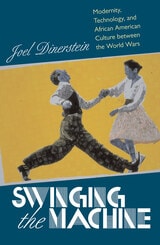
Swinging the Machine
Modernity, Technology, and African American Culture between the World WarsJoel Dinerstein
University of Massachusetts Press, 2003
In any age and any given society, cultural practices reflect the material circumstances of people's everyday lives. According to Joel Dinerstein, it was no different in America between the two World Wars—an era sometimes known as the “machine age”—when innovative forms of music and dance helped a newly urbanized population cope with the increased mechanization of modern life. Grand spectacles such as the Ziegfeld Follies and the movies of Busby Berkeley captured the American ethos of mass production, with chorus girls as the cogs of these fast, flowing pleasure vehicles.
Yet it was African American culture, Dinerstein argues, that ultimately provided the means of aesthetic adaptation to the accelerated tempo of modernity. Drawing on a legacy of engagement with and resistance to technological change, with deep roots in West African dance and music, black artists developed new cultural forms that sought to humanize machines. In “The Ballad of John Henry,” the epic toast “Shine,” and countless blues songs, African Americans first addressed the challenge of industrialization. Jazz musicians drew on the symbol of the train within this tradition to create a set of train-derived aural motifs and rhythms, harnessing mechanical power to cultural forms. Tap dance and the lindy hop brought machine aesthetics to the human body, while the new rhythm section of big band swing mimicked the industrial soundscape of northern cities. In Dinerstein's view, the capacity of these artistic innovations to replicate the inherent qualities of the machine-speed, power, repetition, flow, precision-helps explain both their enormous popularity and social function in American life.
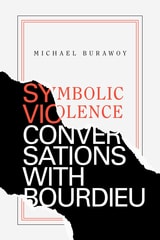
Symbolic Violence
Conversations with BourdieuMichael Burawoy
Duke University Press, 2019
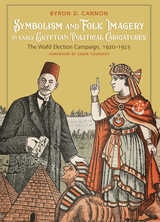
Symbolism and Folk Imagery in Early Egyptian Political Caricatures
The Wafd Election Campaign, 1920–1923Byron D. Cannon, Foreword by Samir Toubassy
University of Utah Press, 2019
Art is politics and politics is art in this study of post–World War I caricature art in Egypt and Egyptian politics. This book explores the complex meaning and significance of caricature art drawn to support the ascendant Egyptian Wafdpolitical party and its push for independence from British colonial control. The works of previously neglected Egyptian lithographers are also explored, especially those who adopted sophisticated European techniques while experimenting with a variety of new styles during a remarkable period in Egyptian history.
Caricature art by Wafd party artists was almostsui generis. It is distinguished especially by its sincere use of iconic, folkloric imagery, intended to rally nationalistic sentiments among an emerging Egyptian electorate that included many nonliterate citizens. Cannon’s research breathes new life into an influential yet largely forgotten artistic movement in Egypt, one that deserves recognition for its contribution to Egypt’s share of modern Middle East cultural history. Includes full color reproductions.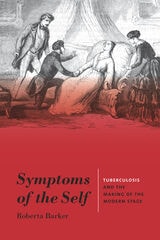
Symptoms of the Self
Tuberculosis and the Making of the Modern StageRoberta Barker
University of Iowa Press, 2022
Symptoms of the Self offers the first full study of the stage consumptive. In the nineteenth and early twentieth centuries in France, Britain, and North America, tuberculosis was a leading killer. Its famous dramatic and operatic victims—Marguerite Gautier in La Dame aux Camélias and her avatar Violetta in La Traviata, Mimì in La Bohème, Little Eva in Uncle Tom’s Cabin, and Edmund Tyrone in Long Day’s Journey into Night, to name but a few—are among the most iconic figures of the Western stage. Its classic symptoms, the cough and the blood-stained handkerchief, have become global performance shorthand for life-threatening illness.
The consumptive character became a vehicle through which standards of health, beauty, and virtue were imposed; constructions of class, gender, and sexuality were debated; the boundaries of nationhood were transgressed or maintained; and an exceedingly fragile whiteness was held up as a dominant social ideal. By telling the story of tuberculosis on the transatlantic stage, Symptoms of the Self uncovers some of the wellsprings of modern Western theatrical practice—and of ideas about the self that still affect the way human beings live and die.
Syncopations
The Stress of Innovation in Contemporary American PoetryJed Rasula
University of Alabama Press, 2004
Syncopations is an analysis of the sustaining vitality behind contemporary American poetry from 1975 to the present day by one of the most astute observers and critics in the field. The 12 essays reflect Jed Rasula’s nearly 30 years of advocacy on behalf of “opening the field” of American poetry.
From the Beats and the Black Mountain poets in the 1950s and 1960s to the impact of language poetry, the specter of an avant-garde has haunted the administrative centers of poetic conservatism. But the very concept of avant-garde is misleading, implying organized assault. Incentives for change can be traced to other factors, including the increased participation of women, critical theory’s self-reflection, and a growing interest in the book as a unit of composition. Syncopations addresses these and other issues evident in the work of such poets and critics as Clayton Eshleman, Marjorie Perloff, Ronald Johnson, Clark Coolidge, Nathaniel Mackey, and Robin Blaser. Its chapters range in modes and include close readings, sociological analysis, philosophical-aesthetic meditations, and career appraisals.
By examining both exemplary innovators and the social context in which innovation is either resisted, acclaimed, or taken for granted, Rasula delivers an important conceptual chronicle of the promise of American poetry.
Systems, Institutions, and Values in East and West
Engaging with János Kornai's ScholarshipMiklós Rosta
Central European University Press, 2020
Leading social scientists, empirical analysts, and policy practitioners demonstrate the various ways in which the insights of János Kornai, a renowned early analyst and critic of the command economies of Eastern European communist states, are stirring academic and policy discussions about current challenges. While dissecting the economic theories and practices in the Soviet Bloc, Kornai devised and applied concepts such as soft-budget constraints, rush versus harmonic growth, surplus versus shortage economy, non-Walrasian equilibrium, bureaucratic coordination, and the invisible power of the communist party. These concepts are commonly applied to a variety of issues in the contexts of fundamental transformation. The cases discussed in this volume include the transitional paths of post-communist economies, the pitfalls of East European market-building, economic repercussions of the dissolution of Yugoslavia, and the process of integration in the Eurozone.
In conclusion János Kornai’s thoughts on a variety of research topics as well as the value of democracy are included as he delivered at the conference celebrating his 90th birthday in 2018.