Results by title
975 books match the query 'Case studies' and 68 start with s
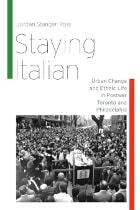
Staying Italian
Urban Change and Ethnic Life in Postwar Toronto and PhiladelphiaJordan Stanger-Ross
University of Chicago Press, 2009
Despite their twin positions as two of North America’s most iconic Italian neighborhoods, South Philly and Toronto’s Little Italy have functioned in dramatically different ways since World War II. Inviting readers into the churches, homes, and businesses at the heart of these communities, Staying Italian reveals that daily experience in each enclave created two distinct, yet still Italian, ethnicities.
As Philadelphia struggled with deindustrialization, Jordan Stanger-Ross shows, Italian ethnicity in South Philly remained closely linked with preserving turf and marking boundaries. Toronto’s thriving Little Italy, on the other hand, drew Italians together from across the wider region. These distinctive ethnic enclaves, Stanger-Ross argues, were shaped by each city’s response to suburbanization, segregation, and economic restructuring. By situating malleable ethnic bonds in the context of political economy and racial dynamics, he offers a fresh perspective on the potential of local environments to shape individual identities and social experience.
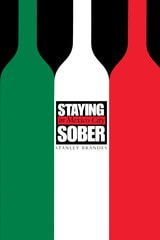
Staying Sober in Mexico City
By Stanley Brandes
University of Texas Press, 2002
Staying sober is a daily struggle for many men living in Mexico City, one of the world's largest, grittiest urban centers. In this engaging study, Stanley Brandes focuses on a common therapeutic response to alcoholism, Alcoholics Anonymous (A.A.), which boasts an enormous following throughout Mexico and much of Latin America.
Over several years, Brandes observed and participated in an all-men's chapter of A.A. located in a working class district of Mexico City. Employing richly textured ethnography, he analyzes the group's social dynamics, therapeutic effectiveness, and ritual and spiritual life. Brandes demonstrates how recovering alcoholics in Mexico redefine gender roles in order to preserve masculine identity. He also explains how an organization rooted historically in evangelical Protestantism has been able to flourish in Roman Catholic Latin America.
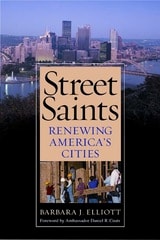
Street Saints
Renewing American CitiesBarbara J. Elliott
Templeton Press, 2006
Based on eight years of hands-on experience and more than 300 interviews, Street Saints is both a book of motivational stories about unsung heroes and a sociological study of the "faith factor," documenting faith-based programs that are treating social maladies in America. This book takes readers on a tour of communities and institutions in America where faith-based initiatives are making a difference. It offers inspiration, role models, and guidelines for people who would like to give back to their own communities.
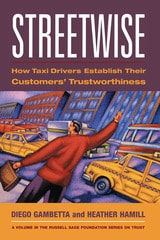
Streetwise
How Taxi Drivers Establish Customer's TrustworthinessDiego Gambetta
Russell Sage Foundation, 2005

Structures of Indifference
An Indigenous Life and Death in a Canadian CityMary Jane Logan McCallum
University of Manitoba Press, 2018
Struggle For Academic Democr
Abraham Edel
Temple University Press, 1990

Students Lead The Library
The Importance Of StudentCarissa Tomlinson
Assoc of College & Research Libraries, 2016
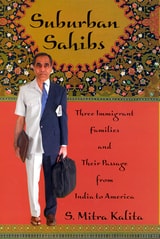
Suburban Sahibs
Kalita, S. Mitra
Rutgers University Press, 2003
In this updated edition, journalist S. Mitra Kalita shows that although the reception from long-time residents has not been entirely welcoming, Indians have come to achieve economic success and their desire for political and social parity continues to grow stronger. She traces the evolution of the suburb from a destination for new arrivals to a launching pad for them.
In the late nineteenth century, tourists descended upon Edison to gawk at its Christmas lights displays. Today, thousands of Indians from all over the United States arrive in the same bedroom community to celebrate their own festivals of lights and colors. Suburban Sahibs attempts to answer the question of how and why they arrived, and offers a window into what America has become: a nation of suburbs as well as a nation of immigrants.
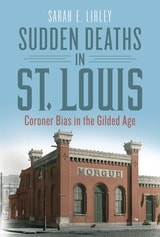
Sudden Deaths in St. Louis
Coroner Bias in the Gilded AgeSarah E. Lirley
Southern Illinois University Press, 2024
Honorable Mention, 2025 Society of Midland Authors Award in History!
A social history of death investigations in the urban Midwest
The scene of myriad grisly deaths, late nineteenth-century St. Louis was a hotbed for homicide, suicide, alcoholism, abortion, and workplace accidents. The role of the city’s Gilded Age coroners has not been fully examined, contextualized, or interrogated until now. Sarah E. Lirley investigates the process in which these outcomes were determined, finding coroners’ rulings were not uniform, but rather varied by who was conducting the inquest. These fascinating case studies explore the lives of the deceased, as well as their families, communities, press coverage of the events, and the coroners themselves.
Sudden Deaths in St. Louis is a study of 120 coroners’ inquests conducted between 1875 and 1885. Each chapter analyzes the typical versus the atypical in verdicts of death. At the time, inaccurate findings and cursory investigations fueled criticisms of coroner’s offices for employing poorly trained laymen. The coroners featured in this book had the power to shape public perception of the deceased, and they often relied on preexisting reputations to determine cause of death. For instance, women who worked as prostitutes were likely to be ruled as suicides, whether or not that was actually the case, and women who were respected members of their communities, particularly mothers, frequently received rulings of suicide caused by insanity. Verdicts also depended in part on availability of witnesses, including family members, to determine whether another person could be held liable for the death. Lirley’s book highlights the stories of ordinary men and women whose lives were tragically cut short, and the injustice they received even after death.

Sugar's Life in the Hood
The Story of a Former Welfare MotherBy Sugar Turner and Tracy Bachrach Ehlers
University of Texas Press, 2002
All her life, Sugar Turner has had to hustle to survive. An African American woman living in the inner city, she has been a single mother juggling welfare checks, food stamps, boyfriends and husbands, illegal jobs, and home businesses to make ends meet for herself and her five children. Her life's path has also wandered through the wilderness of crack addiction and prostitution, but her strong faith in God and her willingness to work hard for a better life pulled her through. Today, Turner is off welfare and is completing her education. She is computer literate, holds a job in the local school system, has sent three of her children to college, and is happily married.
In this engrossing book, Sugar Turner collaborates with anthropologist Tracy Bachrach Ehlers in telling her story. Through conversations with Ehlers, diary entries, and letters, Turner vividly and openly describes all aspects of her life, including motherhood, relationships with men, welfare and work, and her attachment to her friends, family, and life in the "hood." Ehlers also gives her reactions to Turner's story, discussing not only how it belies the "welfare queen" stereotype, but also how it forced her to confront her own lingering confusions about race, her own bigotry.
What emerges from this book is a fascinating story of two women from radically different backgrounds becoming equal witnesses to each other's lives. By allowing us into the real world of an inner-city African American mother, they replace with compassion and insight the stereotypes, half-truths, and scorn that too often dominate public discourse.

Summer Matters
Making All Learning CountElizabeth M. McChesney
American Library Association, 2017
Supercharged Storytimes
An Early Literacy Planning and Assessment GuideKathleen Campana
American Library Association, 2016
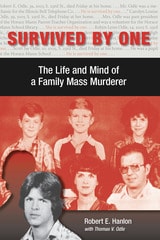
Survived by One
The Life and Mind of a Family Mass MurdererRobert E. Hanlon, PhD with Thomas V. Odle
Southern Illinois University Press, 2013
On November 8, 1985, 18-year-old Tom Odle brutally murdered his parents and three siblings in the small southern Illinois town of Mount Vernon, sending shockwaves throughout the nation. The murder of the Odle family remains one of the most horrific family mass murders in U.S. history. Odle was sentenced to death and, after seventeen years on death row, expected a lethal injection to end his life. However, Illinois governor George Ryan’s moratorium on the death penalty in 2000, and later commutation of all death sentences in 2003, changed Odle’s sentence to natural life.
The commutation of his death sentence was an epiphany for Odle. Prior to the commutation of his death sentence, Odle lived in denial, repressing any feelings about his family and his horrible crime. Following the commutation and the removal of the weight of eventual execution associated with his death sentence, he was confronted with an unfamiliar reality. A future. As a result, he realized that he needed to understand why he murdered his family. He reached out to Dr. Robert Hanlon, a neuropsychologist who had examined him in the past. Dr. Hanlon engaged Odle in a therapeutic process of introspection and self-reflection, which became the basis of their collaboration on this book.
Hanlon tells a gripping story of Odle’s life as an abused child, the life experiences that formed his personality, and his tragic homicidal escalation to mass murder, seamlessly weaving into the narrative Odle’s unadorned reflections of his childhood, finding a new family on death row, and his belief in the powers of redemption.
As our nation attempts to understand the continual mass murders occurring in the U.S., Survived by One sheds some light on the psychological aspects of why and how such acts of extreme carnage may occur. However, Survived by One offers a never-been-told perspective from the mass murderer himself, as he searches for the answers concurrently being asked by the nation and the world.
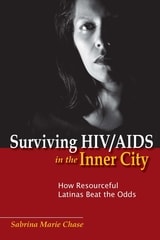
Surviving HIV/AIDS in the Inner City
How Resourceful Latinas Beat the OddsChase, Sabrina
Rutgers University Press, 2011
Based on her work with minority women living in Newark, New Jersey, Sabrina Marie Chase illuminates the hidden traps and land mines burdening our current health care system as a whole. For the women she studied, alliances with doctors, nurses, and social workers could literally mean the difference between life and death. By applying the theories of sociologist Pierre Bourdieu to the day-to-day experiences of HIV-positive Latinas, Chase explains why some struggled and even died while others flourished and thrived under difficult conditions. These gripping, true-life stories advocate for those living with chronic illness who depend on the health care "safety net." Through her exploration of life and death among Newark's resourceful women, Chase provides the groundwork for inciting positive change in the U.S. health care system.

Surviving Sudden Environmental Change
Answers From ArchaeologyJago Cooper
University Press of Colorado, 2012
Swaying
Essays On Intercultural LoveJessie Carroll Grearson
University of Iowa Press, 1995
Intercultural couples struggle, often quite successfully, with the kind of questions anyone who wants to live responsibly in a multicultural world must raise. They live, as we must all learn to do, in a place where multiple cultures find expression. This engaging anthology of literary nonfiction celebrates the creative potential of choosing diversity and explores in many voices the real-life social, cultural, and spiritual consequences of this choice. These are the honest voices of women who have made commitments across national and cultural lines, who have moved toward the revitalizing and educating potential of such partnerships.
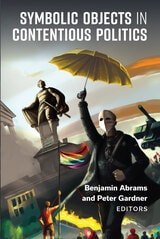
Symbolic Objects in Contentious Politics
Benjamin Abrams and Peter Gardner, Editors
University of Michigan Press, 2023
When we observe protest marches, striking workers on picket lines, and insurgent movements in the world today, a litany of objects routinely fill our field of vision. Some such objects are ubiquitous the world over, like flags, banners, and placards. Others are situationally unique: Who could have anticipated the historical importance of a flower placed in the barrel of a gun, a flaming torch, a sea of umbrellas, a motorist’s yellow vest, a feather headdress, an AK-47, or a knitted pink hat? This book explores the “stuff” at the heart of protests, revolutions, civil wars, and other contentious political events, with particular focus on those objects that have or acquire symbolic importance. In the context of “contentious politics” (disruptive political episodes where people try to change societies without going through institutions), certain objects can divide and unite social groups, tell stories, make declarations, spark controversy, and even trigger violent upheavals.
This book draws together scholars from a variety of fields to discuss symbolic objects in contentious politics: their meanings, uses, functions, and social responses. In bringing these phenomena together, this book offers a serious, distinctive, and cohesive theoretical contribution that draws upon diverse scholarly work in order to form the building blocks for future inquiry in the field. The aim is not merely to “close the gap” in the literature, but to create space in the field for further and more fruitful inquiry.
Symptoms of Unknown Origin
A Medical OdysseyClifton K. Meador
Vanderbilt University Press, 2005
Recounting a series of fascinating case studies, Meador shows in this book how he came to reject a strict adherence to the prevailing biomolecular model of disease and its separation of mind and body. He studied other theories and approaches—George Engel's biopsychosocial model of disease, Michael Balint's study of physicians as pharmacological agents—and adjusted his practice accordingly to treat what he called "nondisease." He had to retool, learn new and more in-depth interviewing and listening techniques, and undergo what Balint termed a "slight but significant change in personality."
In chapters like "The Woman Who Believed She Was a Man" and "The Diarrhea of Agnes," Meador reveals both the considerable harm that can result from wrong diagnoses of nonexistent diseases and the methods he developed to help patients with chronic symptoms not defined by a medical disease. Throughout the book, he recommends subsequent studies to test his observations, and he urges full application of the scientific method to the doctor-patient relationship, pointing out that few objective studies of these all-important interactions have ever been done.