Results by title
917 books match the query 'Economics' and 58 start with s
Studies in the Economics of Aging
Edited by David A. Wise
University of Chicago Press, 1994
Studies on the Abuse and Decline of Reason
Text and DocumentsF. A. Hayek
University of Chicago Press, 2010
Hayek argues that the vast number of elements whose interactions create social structures and institutions make it unlikely that social science can predict precise outcomes. Instead, he contends, we should strive to simply understand the principles by which phenomena are produced. For Hayek this modesty of aspirations went hand in hand with his concern over widespread enthusiasm for economic planning. As a result, these essays are relevant to ongoing debates within the social sciences and to discussion about the role government can and should play in the economy.
Successful Fisheries Management
Issues, Case Studies, PerspectivesEdited by Stephen Cunningham and Tim Bostock
Eburon Academic Publishers, 2005

Suing for Medical Malpractice
Frank A. Sloan, Penny B. Githens, Ellen Wright Clayton, Gerald B. Hickson, Dougl
University of Chicago Press, 1993
The authors survey claims filed in Florida between 1986 and 1989 by people who suffered permanent injury or death during birth or during treatment in an emergency room. How often did illegitimate claims result in financial awards? What was the relation between the injury and the amount the patient lost economically? How much did the plaintiffs actually recover? How did the claimants choose their lawyers and what kind of relationship did they have?
Contrary to common perceptions, in the majority of cases the claims were merited, and the authors found that claimants were on average substantially undercompensated—only about one-fifth of plaintiffs recovered more than their economic loss caused by injury or death. The evidence in this book suggests that placing dollar limits on malpractice cases is unjustified and that our tort system is not so faulty after all.
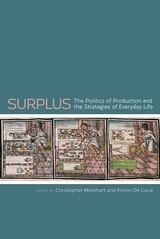
Surplus
The Politics of Production and the Strategies of Everyday LifeChristopher T. Morehart
University Press of Colorado, 2015
The concept of surplus captures the politics of production and also conveys the active material means by which people develop the strategies to navigate everyday life. Surplus: The Politics of Production and the Strategies of Everyday Life examines how surpluses affected ancient economies, governments, and households in civilizations across Mesoamerica, the Southwest United States, the Andes, Northern Europe, West Africa, Mesopotamia, and eastern Asia.
A hallmark of archaeological research on sociopolitical complexity, surplus is central to theories of political inequality and institutional finance. This book investigates surplus as a macro-scalar process on which states or other complex political formations depend and considers how past people—differentially positioned based on age, class, gender, ethnicity, role, and goal—produced, modified, and mobilized their social and physical worlds.
Placing the concept of surplus at the forefront of archaeological discussions on production, consumption, power, strategy, and change, this volume reaches beyond conventional ways of thinking about top-down or bottom-up models and offers a comparative framework to examine surplus, generating new questions and methodologies to elucidate the social and political economies of the past.
Contributors include Douglas J. Bolender, James A. Brown, Cathy L. Costin, Kristin De Lucia, Timothy Earle, John E. Kelly, Heather M. L. Miller, Christopher R. Moore, Christopher T. Morehart, Neil L. Norman, Ann B. Stahl, Victor D. Thompson, T. L. Thurston, and E. Christian Wells.
Surrender
How the Clinton Administration Completed the Reagan RevolutionMichael Meeropol
University of Michigan Press, 2000
Meeropol provides compelling evidence of the failure of the U.S. economy between 1990 and 1994 to generate rising incomes for most of the population or improvements in productivity. This caused, first, the electoral repudiation of President Bush in 1992, followed by a repudiation of President Clinton in the 1994 Congressional elections. The Clinton administration made a half-hearted attempt to reverse the Reagan Revolution in economic policy, but ultimately surrendered to the Republican Congressional majority in 1996 when Clinton promised to balance the budget by 2000 and signed the welfare reform bill. The rapid growth of the economy in 1997 caused surprisingly high government revenues, a dramatic fall in the federal budget deficit, and a brief euphoria evident in an almost uncontrollable stock market boom. Finally, Meeropol argues powerfully that the next recession, certain to come before the end of 1999, will turn the predicted path to budget balance and millennial prosperity into a painful joke on the hubris of public policymakers.
Accessibly written as a work of recent history and public policy as much as economics, this book is intended for all Americans interested in issues of economic policy, especially the budget deficit and the Clinton versus Congress debates. No specialized training in economics is needed.
"A wonderfully accessible discussion of contemporary American economic policy. Meeropol demonstrates that the Reagan-era policies of tax cuts and shredded safety nets, coupled with strident talk of balanced budgets, have been continued and even brought to fruition by the neo-liberal Clinton regime." --Frances Fox Piven, Graduate School, City University of New York
Michael Meeropol is Chair and Professor of Economics, Western New England College.
Sustainable Capitalism
Essential Work for the AnthropoceneEdited by Inara Scott
University of Utah Press, 2024
Sustainable Capitalism takes on the challenge of sustainability from a uniquely interdisciplinary and diverse perspective, offering both theory and tools for action. Topics range from an analysis of the foundations and definition of capitalism to the specific regulatory mechanisms that may be necessary to rein in its current, unsustainable trajectory. Readers will find nuanced and important analyses of options and potential outcomes that are not available in any other work. This book is essential reading for anyone concerned about the path we are on and how we might improve the lives of people around the globe.
https://www.sustainablecapitalismbook.com/
Systemic Choices
Nonlinear Dynamics and Practical ManagementGregory A. Daneke
University of Michigan Press, 1999